





















A Spacecraft Captured Earth’s Northern Lights Even in Daylight
Oct 2, 2026
Soumyadeep Mukherjee
Soumyadeep Mukherjee is an award-winning astrophotographer from India. He has a doctorate degree in Linguistics. His work extends to the sub-genres of nightscape, deep sky, solar, lunar and optical phenomenon photography. He is also a photography educator and has conducted numerous workshops. His works have appeared in over 40 books & magazines including Astronomy, BBC Sky at Night, Sky & Telescope among others, and in various websites including National Geographic, NASA, Forbes. He was the first Indian to win “Astronomy Photographer of the Year” award in a major category.
Share:
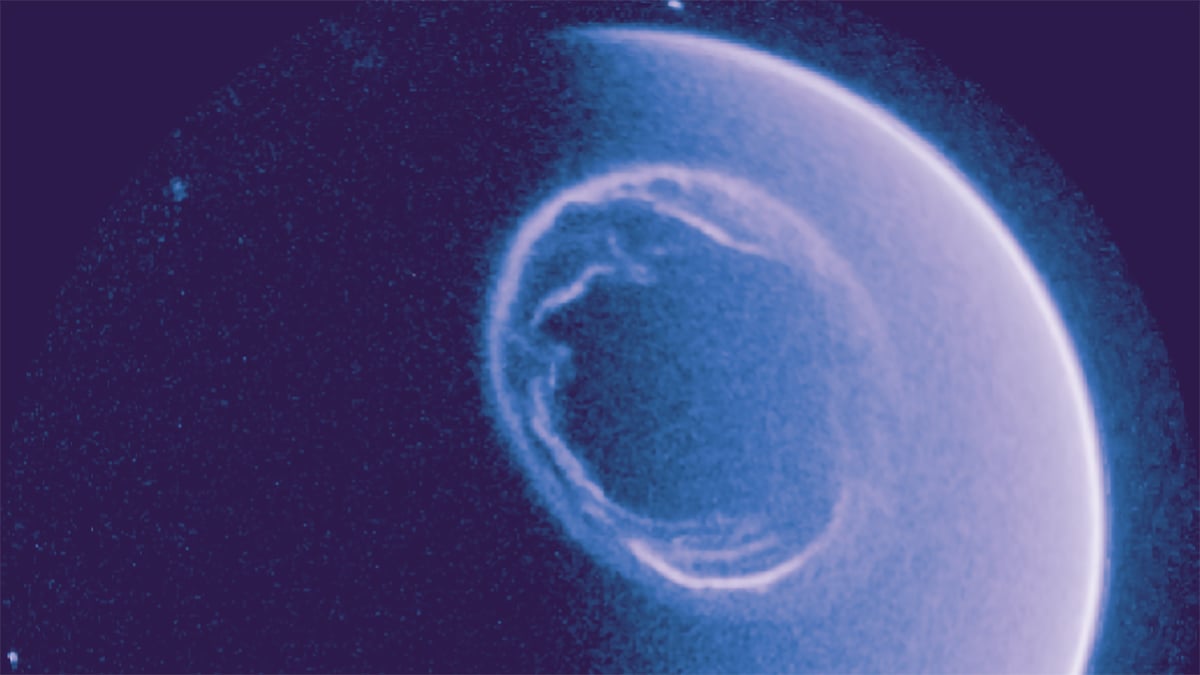
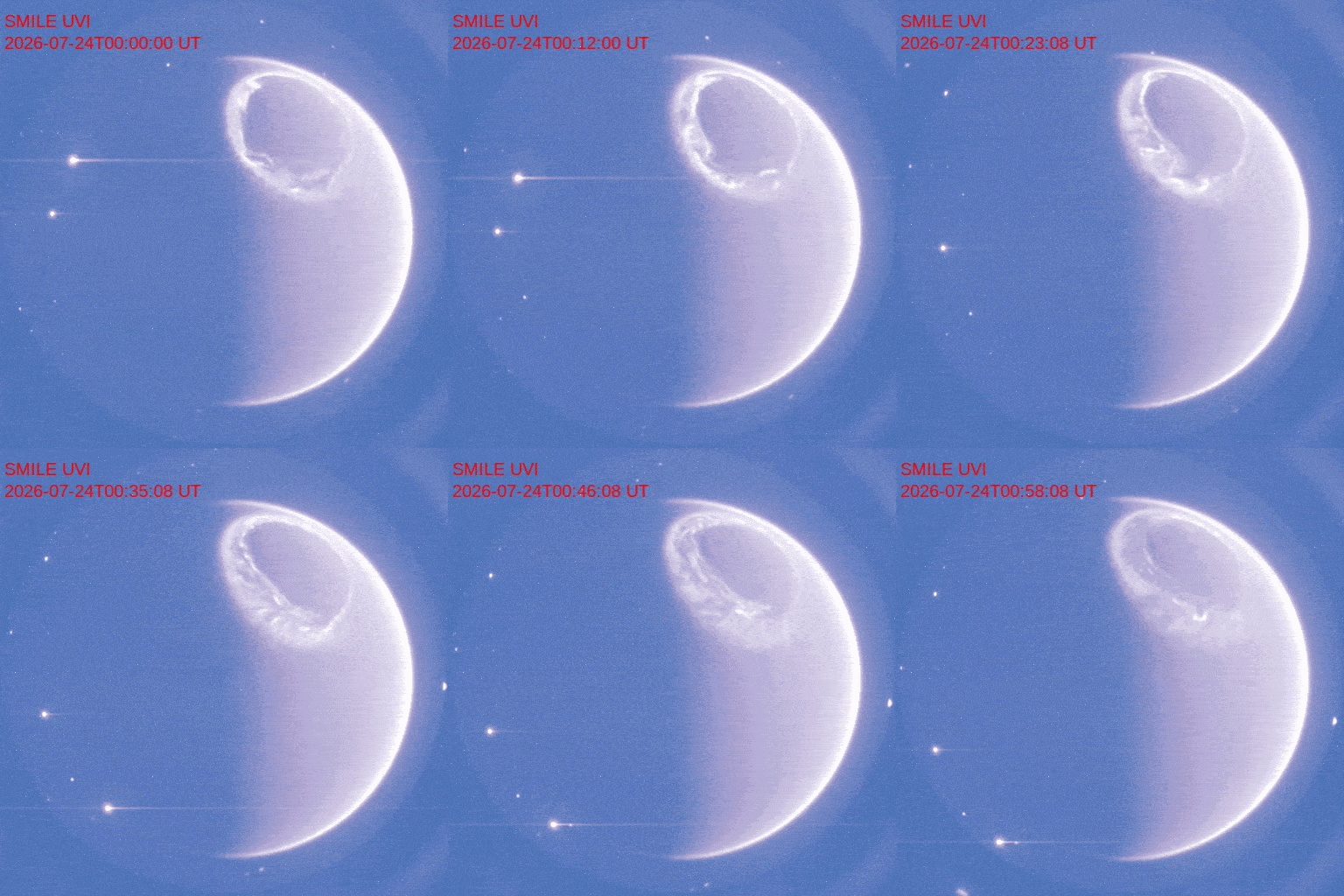
We now have a very interesting and unique view of the aurora. ESA has released the first ultraviolet footage from the SMILE spacecraft’s Ultraviolet Imager (UVI). It shows the northern auroral oval surrounding the North Pole and changing shape over nearly an hour. The observation took place on July 24, 2026, while SMILE was still going through its in-space commissioning.
The footage captures the whole auroral region, something that is impossible to do from the ground. A broad ring of light surrounds the polar area, with parts of the ring brightening and shifting as a substorm moves through Earth’s magnetosphere. This also makes SMILE the first spacecraft since 2008 to capture the complete northern auroral oval in ultraviolet.
A new view of Earth’s aurora
Most photographs of the aurora show only a small part of the phenomenon. A camera on the ground sees curtains and patches of light above the horizon, often against a background of stars. Even spacecraft with visible-light cameras face a limitation because the Sun illuminates part of Earth, while the aurora on the night side remains easier to see.
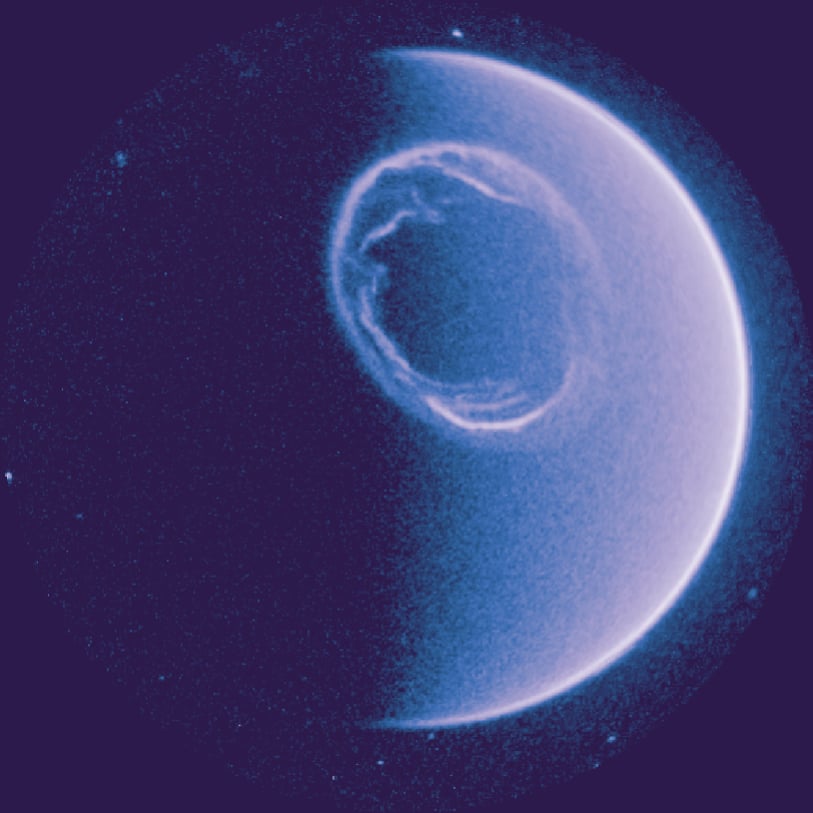
SMILE’s UVI looks down towards the North Pole and can see the auroral oval spread around it. Auroras produce strong ultraviolet emissions, so the instrument can detect them even when sunlight illuminates the upper atmosphere. Its optical system also filters out much of the faint ultraviolet glow produced by sunlight in the atmosphere.
The sequence runs from 00:00 to 00:58 Universal Time on July 24. During those 58 minutes, the auroral oval changes as activity moves through the magnetosphere. The changes are subtle in some frames and more obvious in others, but the ring remains recognizable throughout the sequence.
Before SMILE, NASA‘s Dynamics Explorer spacecraft produced full-oval ultraviolet observations in the past, but the last comparable observations date back to 2008.
Why ultraviolet?
Auroras produce strong ultraviolet emissions, and those wavelengths let scientists follow the auroral oval even when part of Earth faces the Sun.
A conventional visible-light camera would struggle on the dayside. Sunlight reflected by Earth’s atmosphere and surface would make it difficult to pick out the much fainter auroral emissions. From the ground, we normally wait for darkness before photographing an aurora. The aurora itself does not stop existing when the Sun rises.
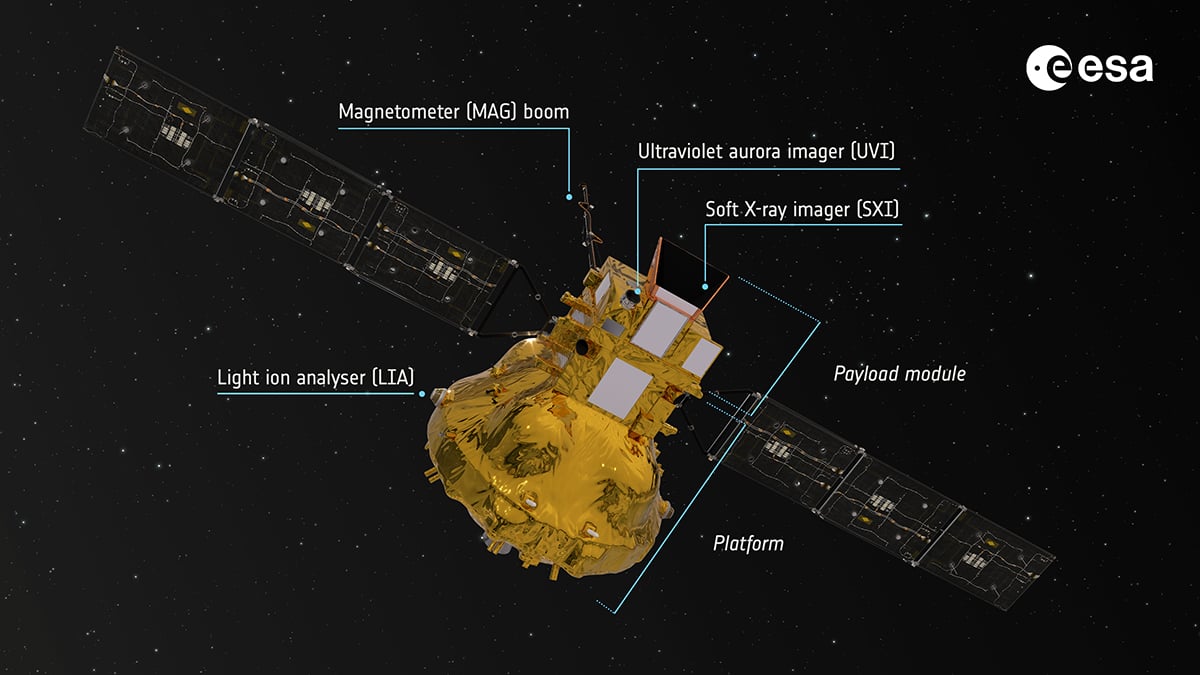
The UVI camera can observe the auroral region on both the day and night sides of Earth. It still has to deal with ultraviolet dayglow from the upper atmosphere, but the instrument can filter out that background and isolate the auroral signal.
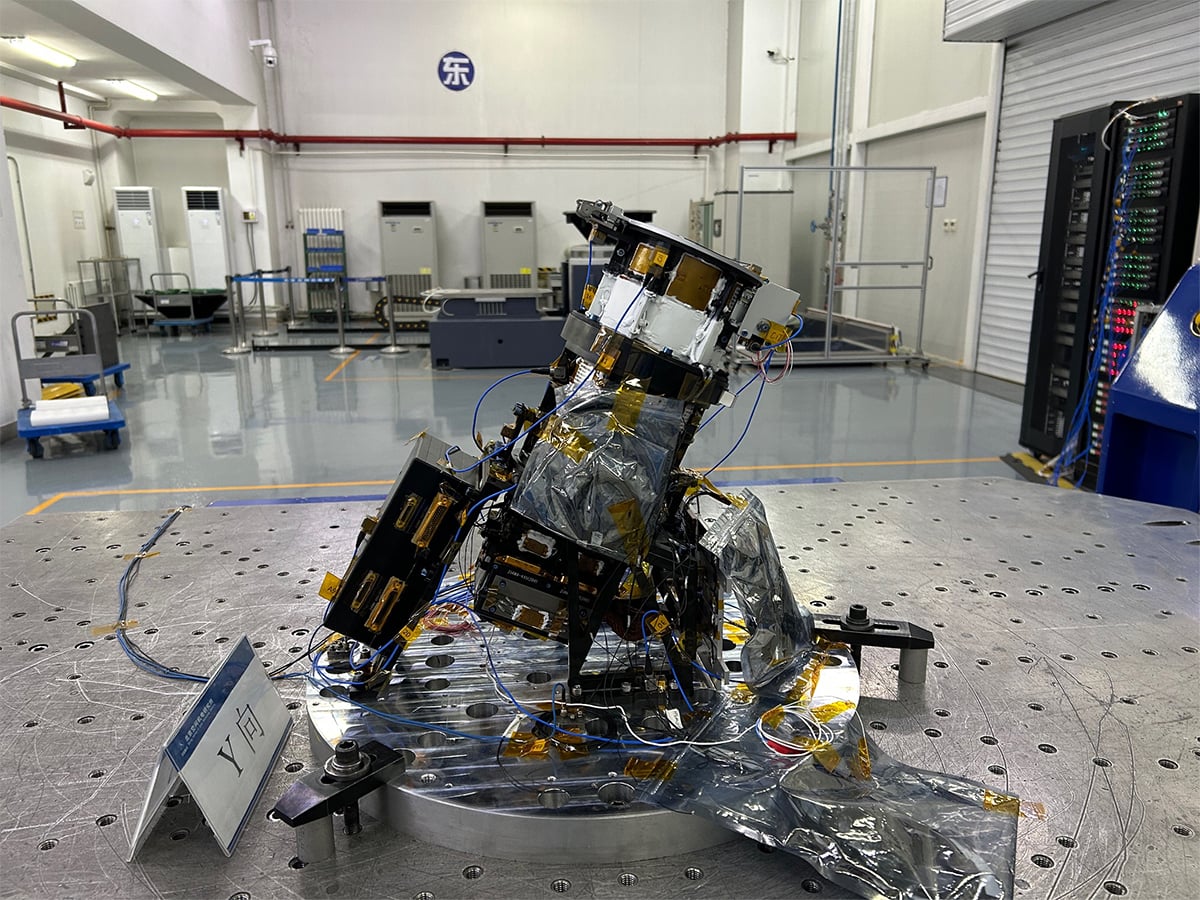
The camera works with four thin-film-coated mirrors that direct ultraviolet light towards its detector. An image intensifier increases the weak signal coming from the aurora before the detector records it.
More images with an X-ray camera
SMILE carries four scientific instruments. That includes the Soft X-ray Imager, or SXI. It will observe the boundary of Earth’s magnetosphere in X-rays. That boundary, called the magnetopause, faces the incoming solar wind and moves as the pressure from the Sun changes.
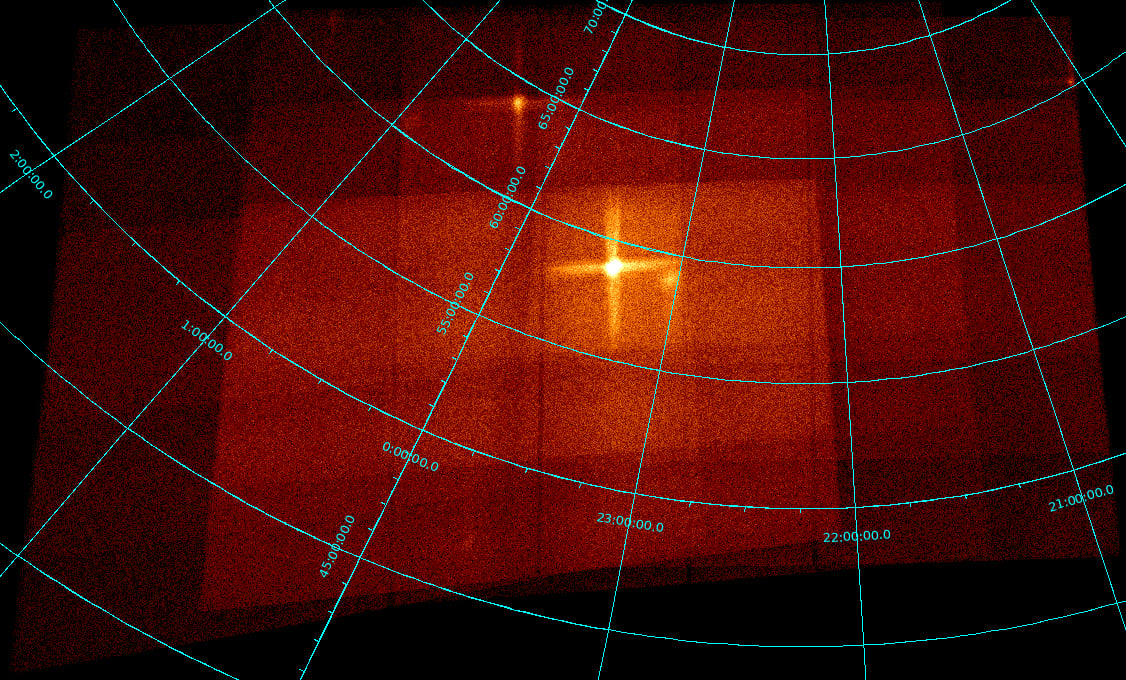
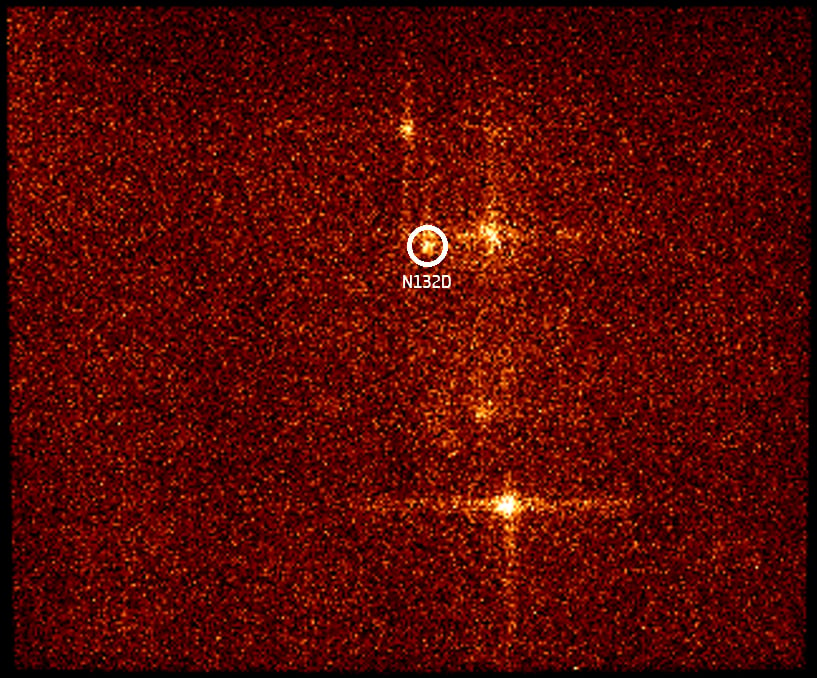
The Soft X-ray Imager (SXI) captured two early test images during SMILE’s commissioning. These observations gave the team an early check of the instrument before it begins its main task of imaging Earth’s magnetosphere in X-rays. One of them captures N132D, a supernova remnant in the Large Magellanic Cloud about 160,000 light-years away. The other shows Cassiopeia A, the expanding remains of a stellar explosion around 11,000 light-years from Earth.
SXI will eventually watch the Sun-facing edge of Earth’s magnetic field and track how that boundary changes as the solar wind reaches it. Its X-ray observations will then be combined with UVI’s ultraviolet views of the aurora, giving scientists two different views of the same interaction between the Sun and Earth.
Clear skies!
See more from DIYPhotography.net on Google
Add DIYPhotography.net as a trusted source. This makes
our stories more likely to appear in your Google Search results.
 Add as a preferred source on Google

Soumyadeep Mukherjee
Soumyadeep Mukherjee is an award-winning astrophotographer from India. He has a doctorate degree in Linguistics. His work extends to the sub-genres of nightscape, deep sky, solar, lunar and optical phenomenon photography. He is also a photography educator and has conducted numerous workshops. His works have appeared in over 40 books & magazines including Astronomy, BBC Sky at Night, Sky & Telescope among others, and in various websites including National Geographic, NASA, Forbes. He was the first Indian to win “Astronomy Photographer of the Year” award in a major category.
Related Posts
 Aputure brings bicolour, daylight and RGB LED panels and Bowens mount COB lights to the entry level
 Godox expands its high-end LED range with 200W and 300W daylight and bi-colour LED lights
 Colbor quietly releases low-budget CL60 bi-colour and daylight portable modular LED lights
 NOAA Satellite Captures Mesmerizing Northern Lights from Space
Join the Discussion
DIYP Comment Policy
Be nice, be on-topic, no personal information or flames.