
















A Familiar Sky Object: Six Remarkable Views of the Orion Nebula
Nov 16, 2026
Soumyadeep Mukherjee
Soumyadeep Mukherjee is an award-winning astrophotographer from India. He has a doctorate degree in Linguistics. His work extends to the sub-genres of nightscape, deep sky, solar, lunar and optical phenomenon photography. He is also a photography educator and has conducted numerous workshops. His works have appeared in over 40 books & magazines including Astronomy, BBC Sky at Night, Sky & Telescope among others, and in various websites including National Geographic, NASA, Forbes. He was the first Indian to win “Astronomy Photographer of the Year” award in a major category.
Share:
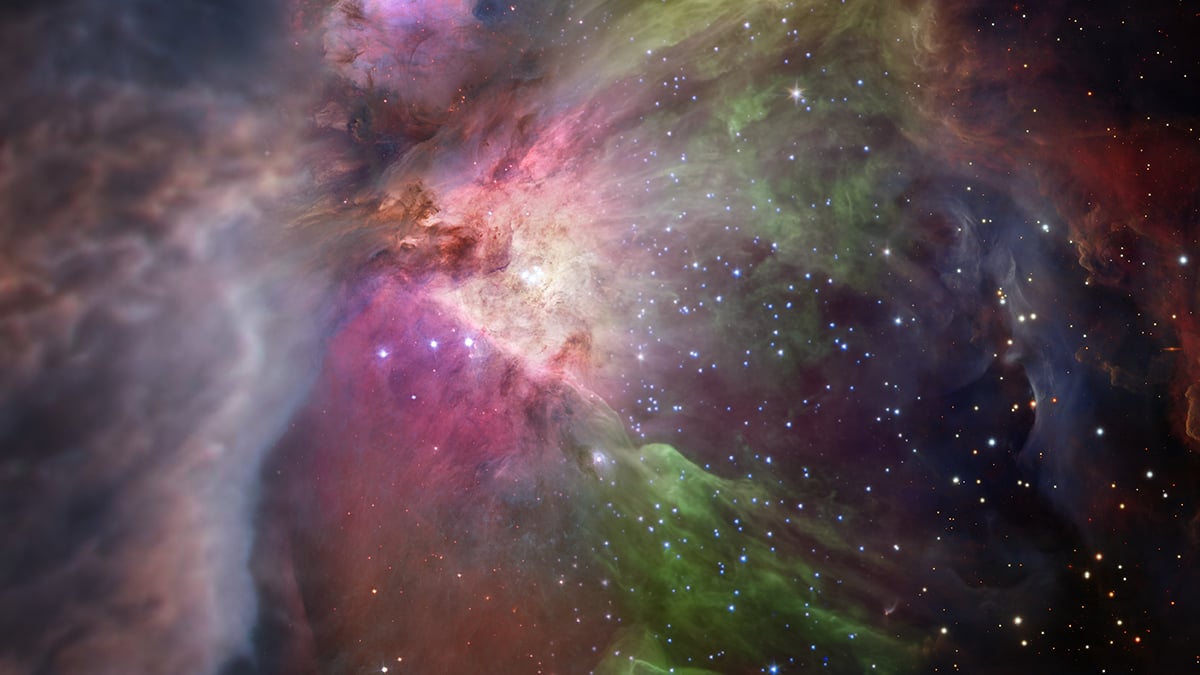
The Orion Nebula is one of the easiest deep-sky objects to recognize in the winter sky. Located about 1,400 light-years from Earth, this vast star-forming region sits just below Orion’s Belt. Its bright central region makes it a favourite target for amateur astronomers. Even a small telescope reveals its glowing gas, while long-exposure photographs bring out the surrounding clouds and dust lanes.
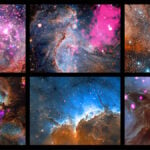
Astronomers have studied the Orion Nebula with telescopes that cover almost the entire electromagnetic spectrum. Each observation records a different part of its environment. Far-infrared images trace cold dust, near-infrared observations uncover young stars, and X-ray telescopes catch powerful stellar flares. Radio observations reveal how ionized gas spreads through the region.
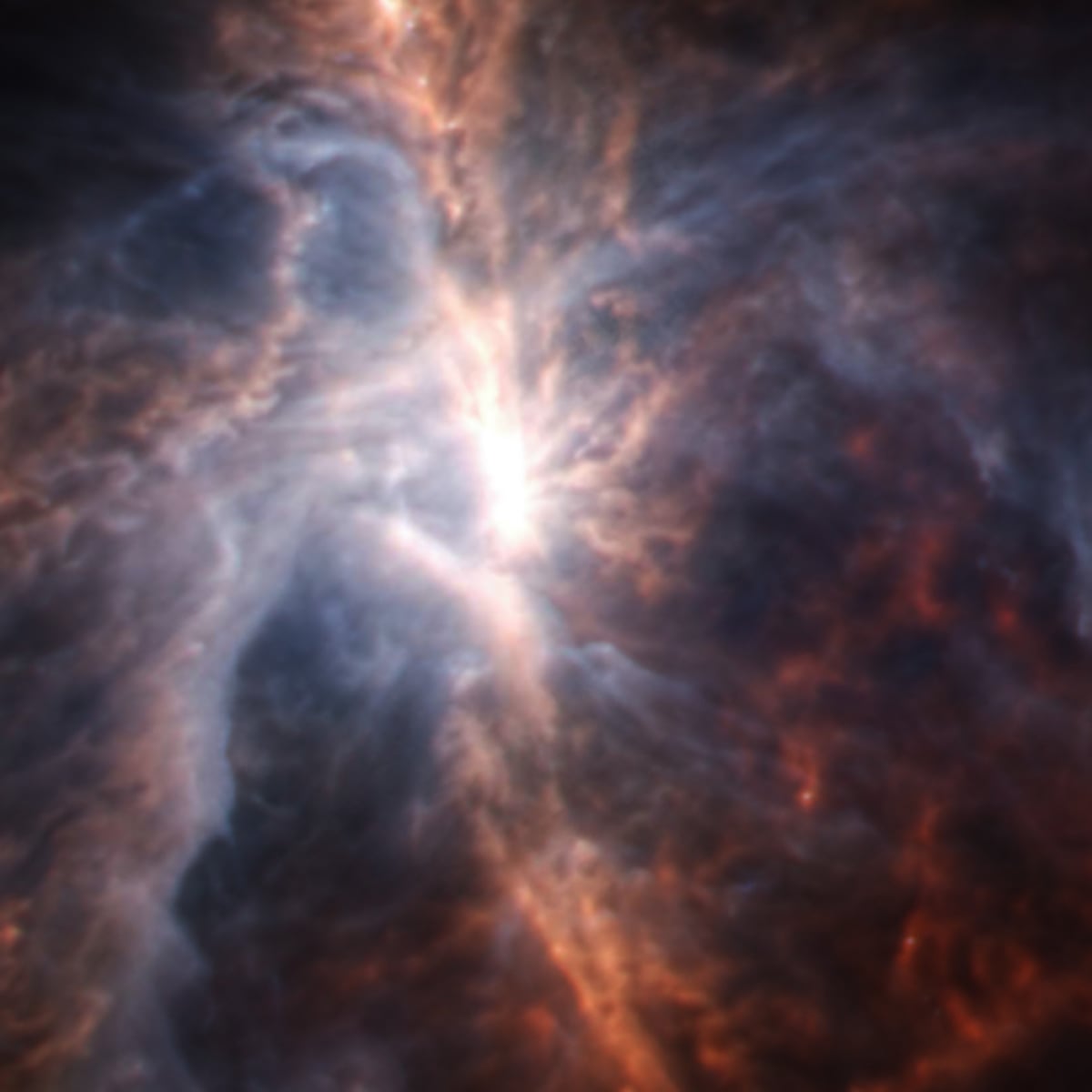
Cold dust surrounding the Orion Nebula
The bright central region of the Orion Nebula sits within a much larger cloud of gas and dust. Much of this material remains relatively cold, even though massive young stars occupy nearby regions. ESA‘s Herschel Space Observatory studied this material through far-infrared observations. Its image uses wavelengths between 100 and 250 micrometers to trace the thermal emission from dust grains.
Dust absorbs energy from nearby stars and releases it at longer wavelengths. At far-infrared wavelengths, Herschel could detect this emission across large areas of the Orion region. The resulting image reveals the distribution of cold material that optical photographs tend to obscure. Dense concentrations of dust stand out alongside more diffuse structures. These clouds contain the raw material for future generations of stars.
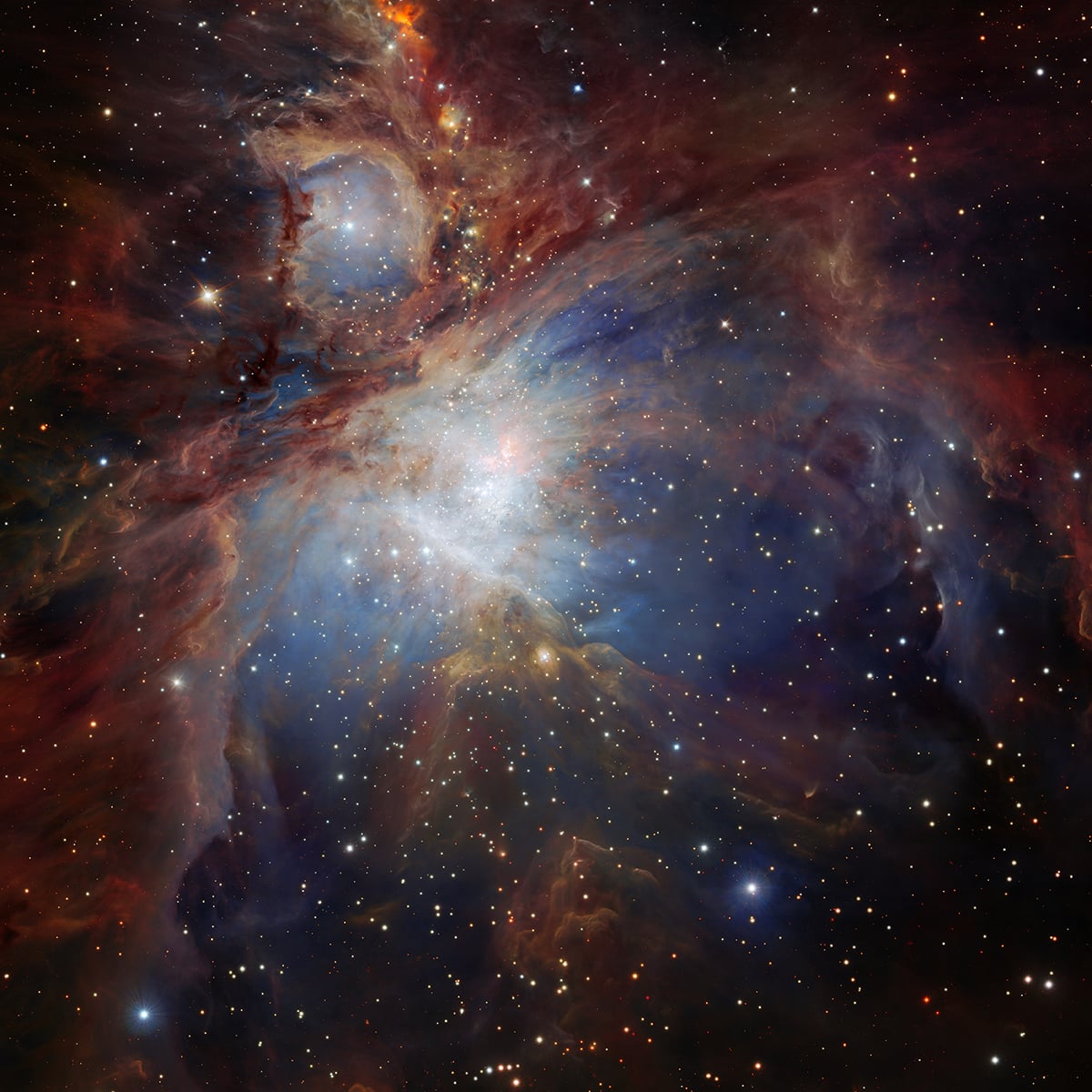
VISTA finds young stars behind the nebula’s dust
A near-infrared photograph of the Orion Nebula reveals a much busier stellar population. ESO‘s Visible and Infrared Survey Telescope for Astronomy, or VISTA, captured the region using its VIRCAM instrument. The observations cover infrared bands around 1.25 and 2.14 micrometers. These wavelengths let astronomers detect light from stars hidden behind surrounding dust.
Dust absorbs and scatters visible light, making embedded stars difficult to observe. Near-infrared light passes through some of these clouds more easily. As a result, VISTA reveals numerous faint stars across the region.
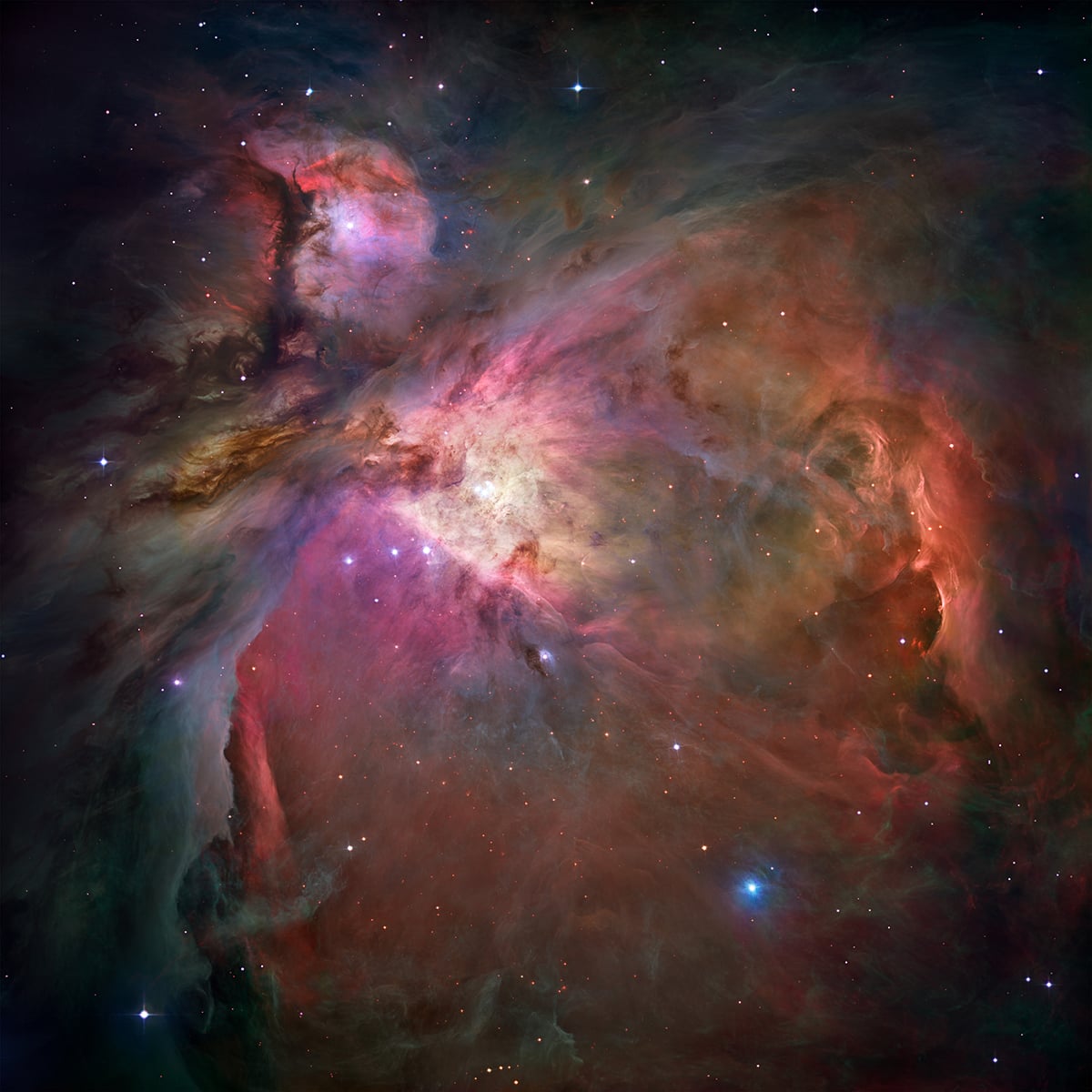
Hubble reveals thousands of stars in the Orion Nebula
The Hubble Space Telescope offers one of the most detailed optical views of the Orion Nebula. Its famous mosaic reveals more than 3,000 stars against a complex background of glowing gas and dark dust. Some of these objects are extremely faint. Others remain partly embedded in the material that formed them. The image gives astronomers a detailed look at the different stages of stellar development within one region.
Hubble’s Advanced Camera for Surveys collected the observations between 2004 and 2005. Astronomers combined 520 exposures, taken through five filters, to build the mosaic.
Chandra catches powerful X-ray flares
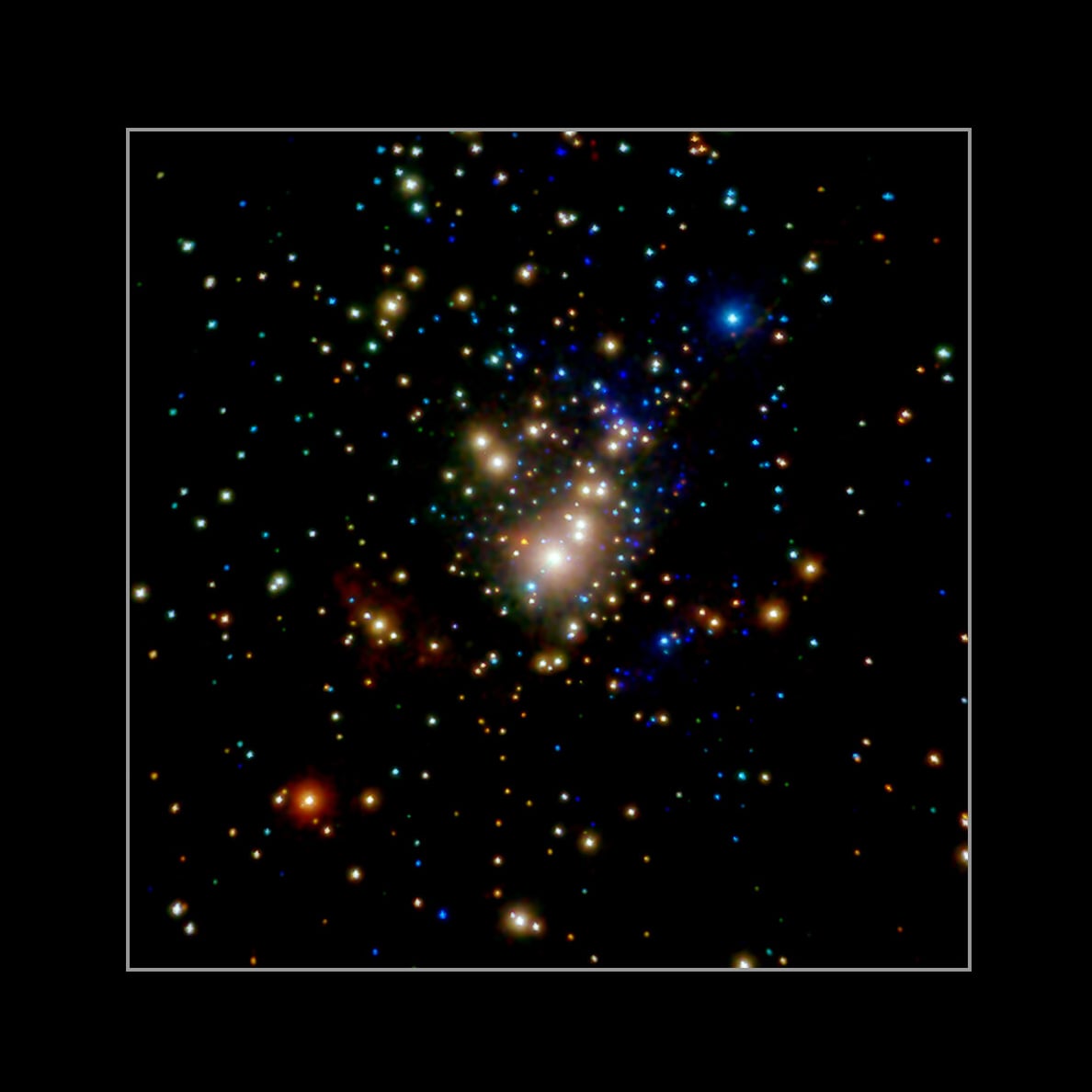
The young stars in Orion are more magnetically active than the Sun is today. Their rapid rotation and vigorous internal motions generate strong magnetic fields. These fields can twist and reconnect, releasing energy into the stars’ outer atmospheres. The resulting temperatures reach millions of degrees, producing X-rays that NASA’s Chandra X-ray Observatory can detect.
One major Chandra observing campaign examined the Orion Nebula Cluster almost continuously for 13 days. The observations covered around 1,400 young stars, including about 30 objects that researchers considered early-Sun analogues.
VLA and Green Bank trace the movement of ionised gas
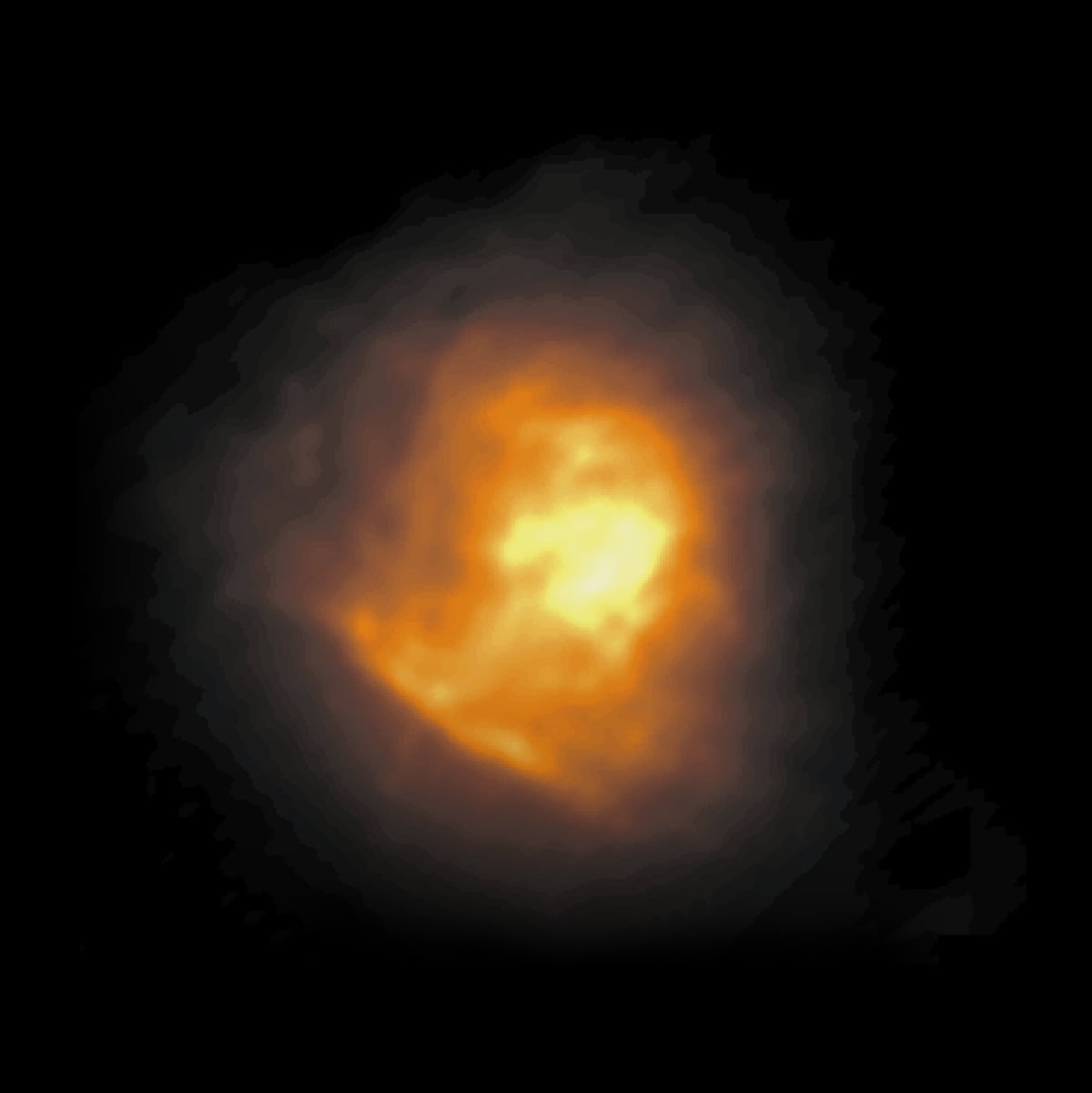
The Radio image of Orion combines data from the Karl G. Jansky Very Large Array (VLA) and the Green Bank Telescope (GBT). The two facilities have very different designs. The VLA uses multiple antennas to capture fine details, while Green Bank’s single large dish records extended emission across a wider area.
The radio emission comes from ionized gas around the massive young stars near the nebula’s center. Their ultraviolet radiation strips electrons from hydrogen atoms. The resulting free electrons interact with ions and produce radio waves through a process called free-free emission.
Spitzer follows the young stars and their surrounding disks
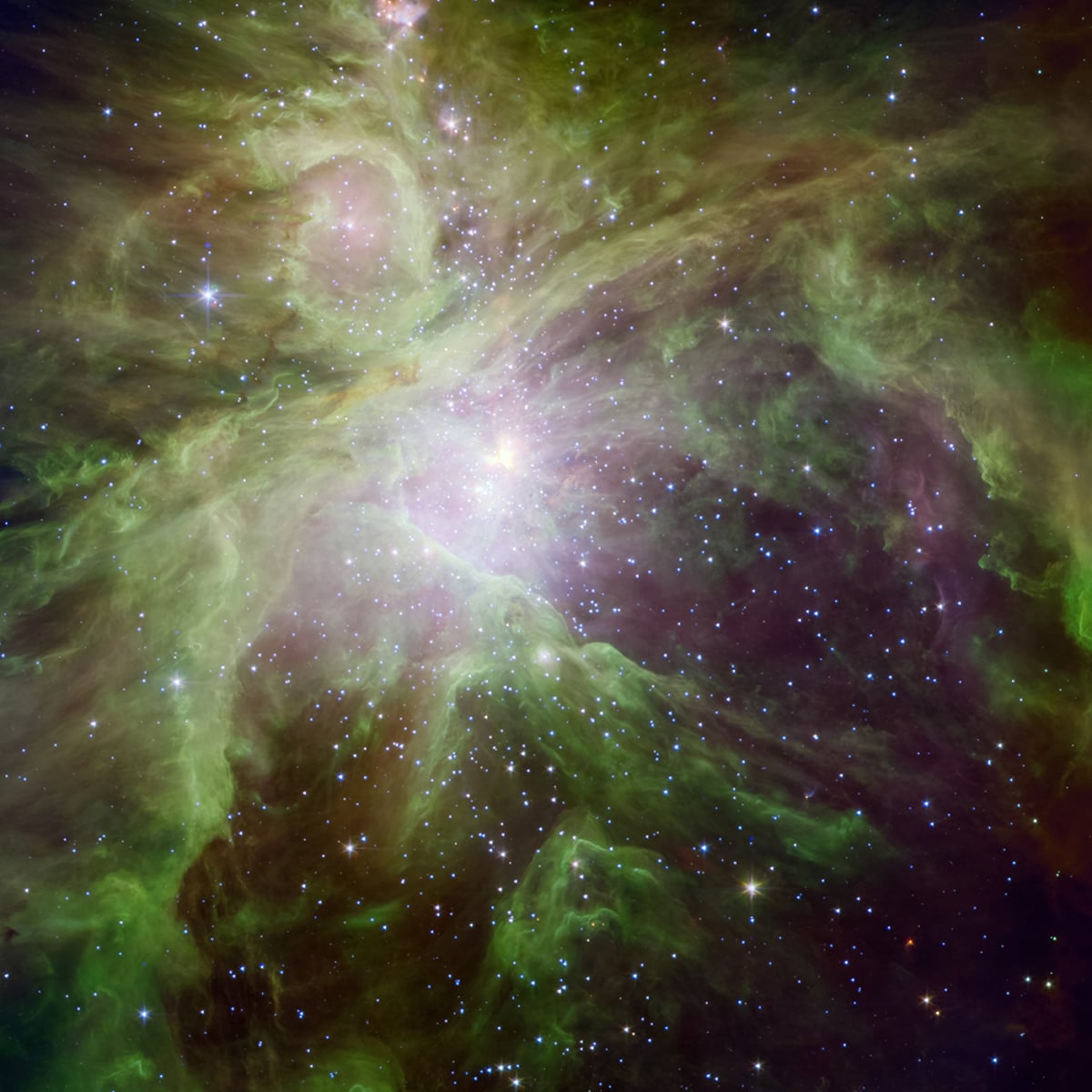
NASA‘s Spitzer Space Telescope provides another infrared view of the Orion Nebula. Its image combines Spitzer observations with data from the Two Micron All Sky Survey (2MASS). The composite uses infrared bands at approximately 2.2, 3.6, and 4.5 micrometres. These observations reveal young stars and the material surrounding them.
The stars in this region often retain disks of gas and dust after their formation. Over time, material within these disks can gather into larger bodies and eventually form planets. The central star heats the surrounding dust, which then emits infrared radiation.
Clear skies!
See more from DIYPhotography.net on Google
Add DIYPhotography.net as a trusted source. This makes
our stories more likely to appear in your Google Search results.
 Add as a preferred source on Google

Soumyadeep Mukherjee
Soumyadeep Mukherjee is an award-winning astrophotographer from India. He has a doctorate degree in Linguistics. His work extends to the sub-genres of nightscape, deep sky, solar, lunar and optical phenomenon photography. He is also a photography educator and has conducted numerous workshops. His works have appeared in over 40 books & magazines including Astronomy, BBC Sky at Night, Sky & Telescope among others, and in various websites including National Geographic, NASA, Forbes. He was the first Indian to win “Astronomy Photographer of the Year” award in a major category.

Join the Discussion
DIYP Comment Policy
Be nice, be on-topic, no personal information or flames.