















NASA’s ESCAPADE Captures Images of Earth on Its Way to Mars
Nov 26, 2026
Soumyadeep Mukherjee
Soumyadeep Mukherjee is an award-winning astrophotographer from India. He has a doctorate degree in Linguistics. His work extends to the sub-genres of nightscape, deep sky, solar, lunar and optical phenomenon photography. He is also a photography educator and has conducted numerous workshops. His works have appeared in over 40 books & magazines including Astronomy, BBC Sky at Night, Sky & Telescope among others, and in various websites including National Geographic, NASA, Forbes. He was the first Indian to win “Astronomy Photographer of the Year” award in a major category.
Share:
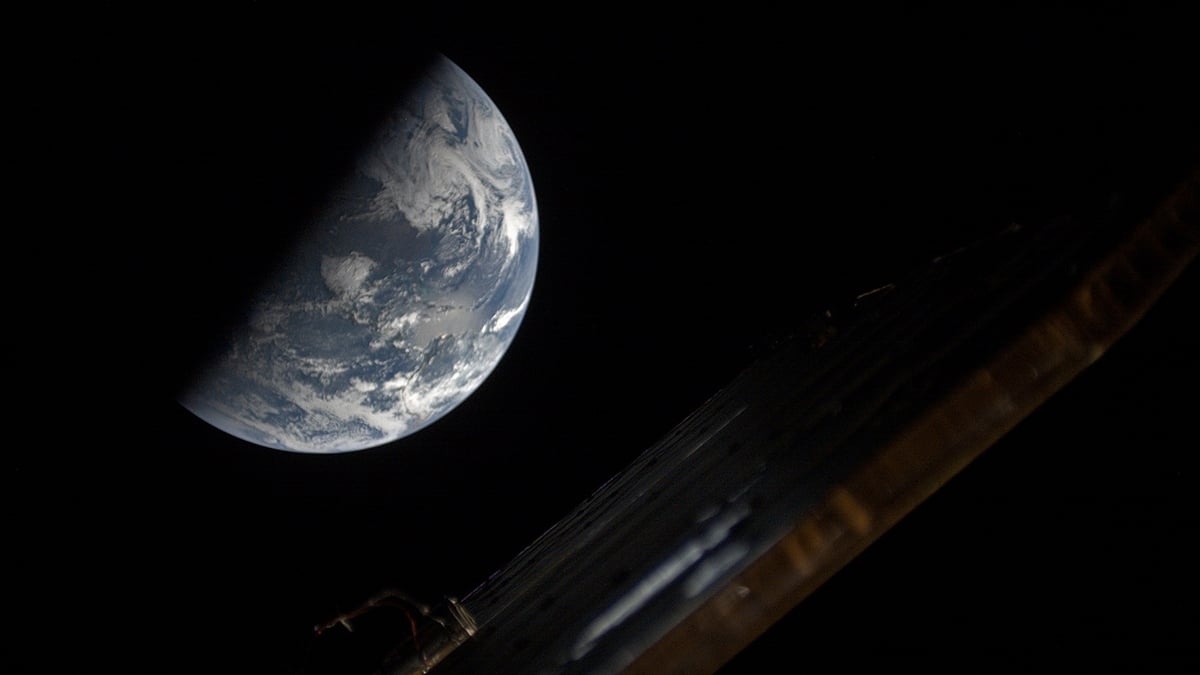
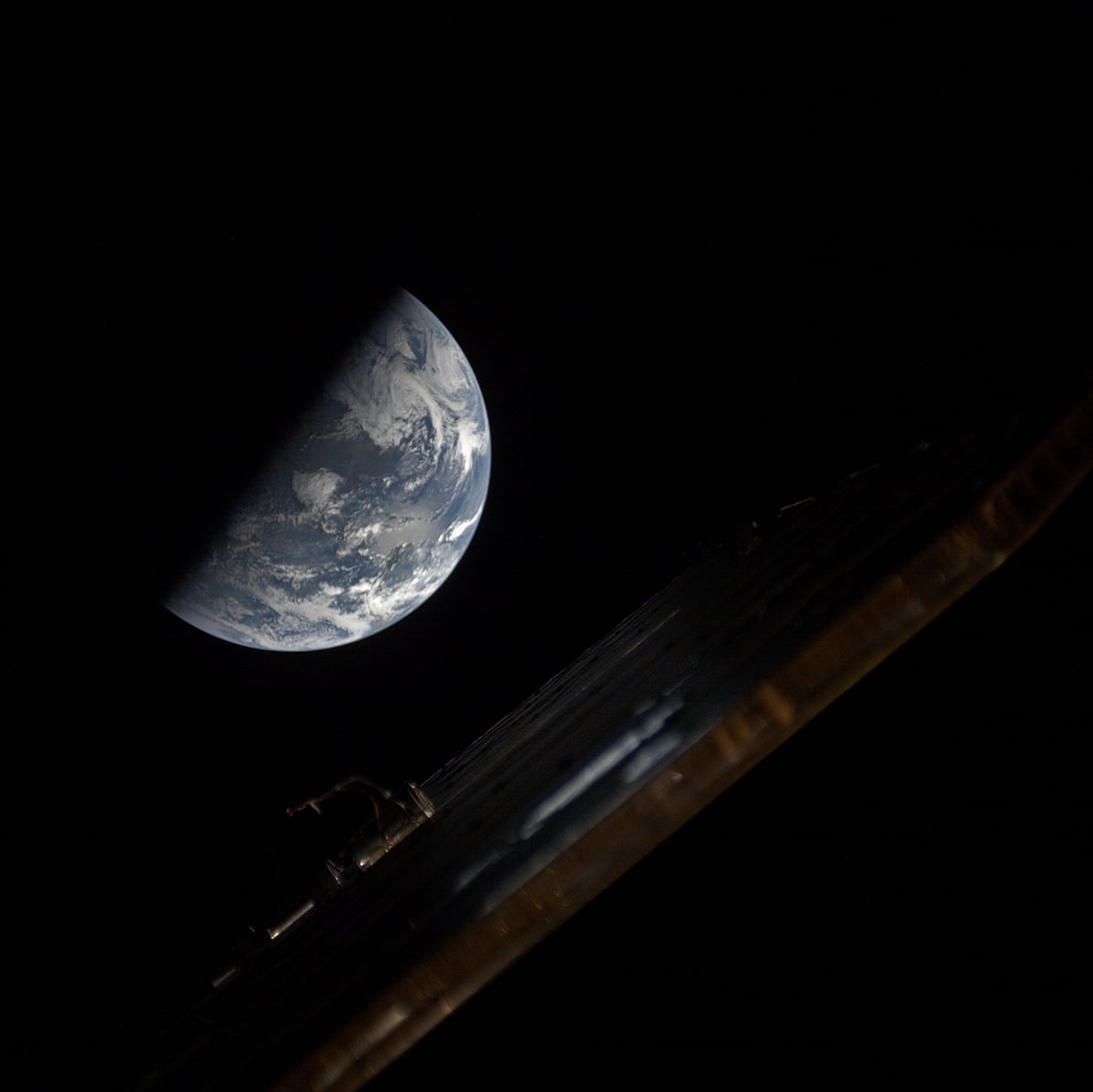
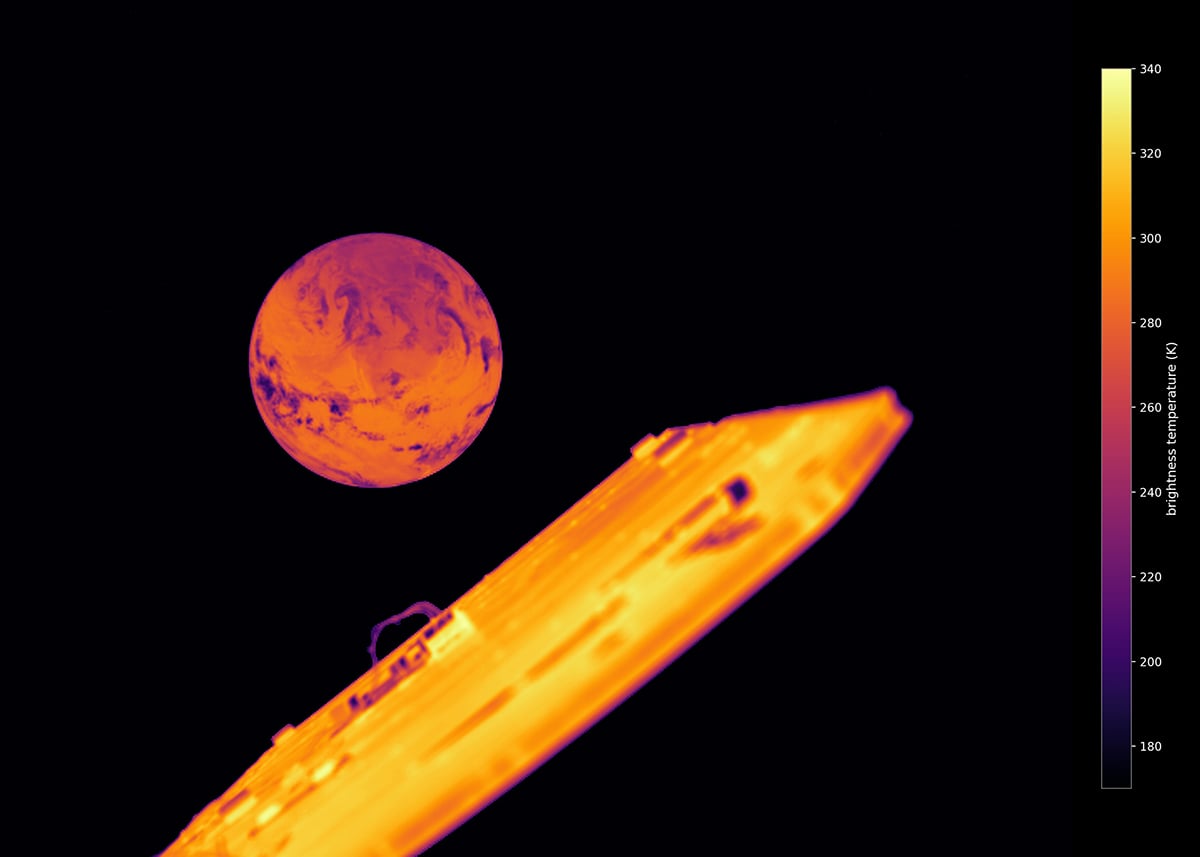
A spacecraft heading for Mars has turned its camera toward Earth for one last look. On November 9, 2026, NASA’s ESCAPADE Gold photographed the Western Hemisphere from about 38,500 miles (61,960 kilometers) away. The images show Earth in visible and infrared light, with one of the spacecraft’s solar panels appearing in the foreground. Gold took the photographs just three hours after using Earth’s gravity to change its course towards Mars.
Photographing Earth from 38,500 miles away
The photographs of Earth came from the second ESCAPADE spacecraft, Gold. It captured them around 9 a.m. Eastern Standard Time on November 9. By then, the spacecraft had passed its closest point to Earth roughly three hours earlier. It was about 38,500 miles from the planet and could see the Western Hemisphere.
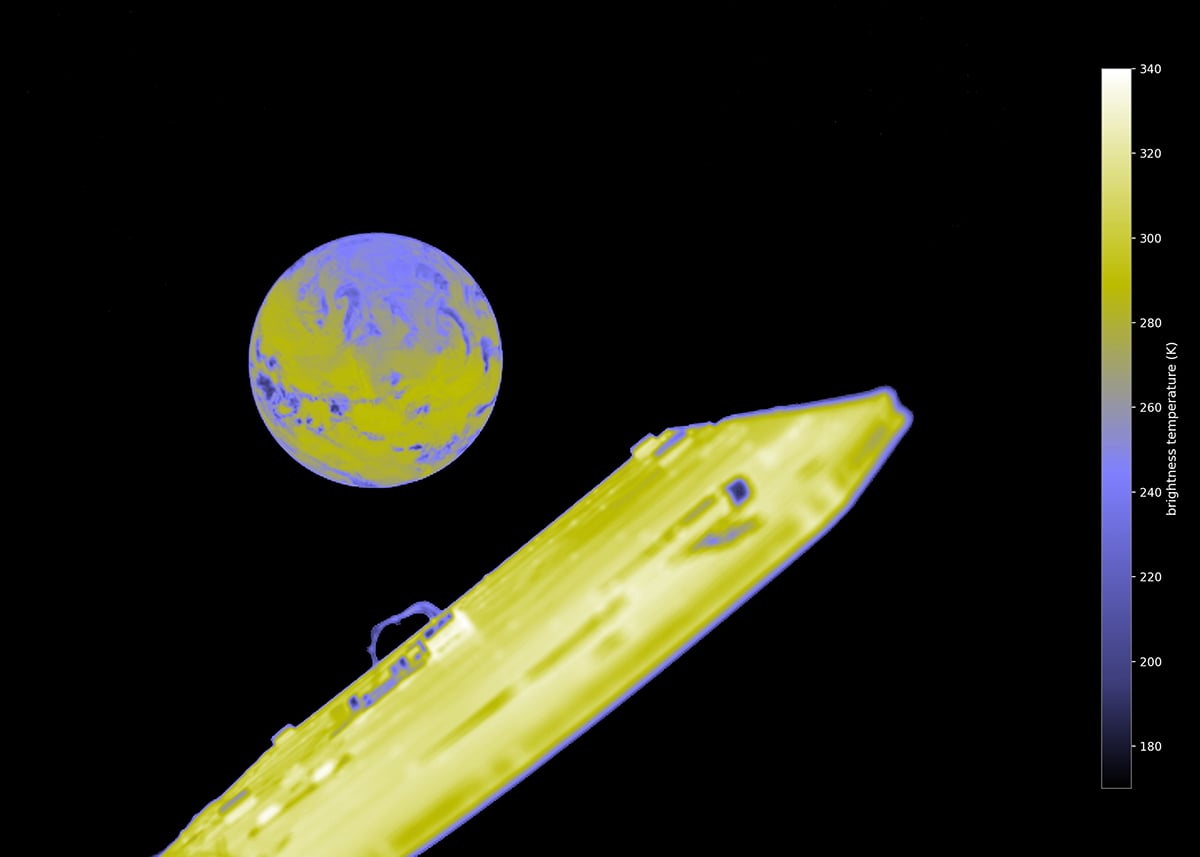
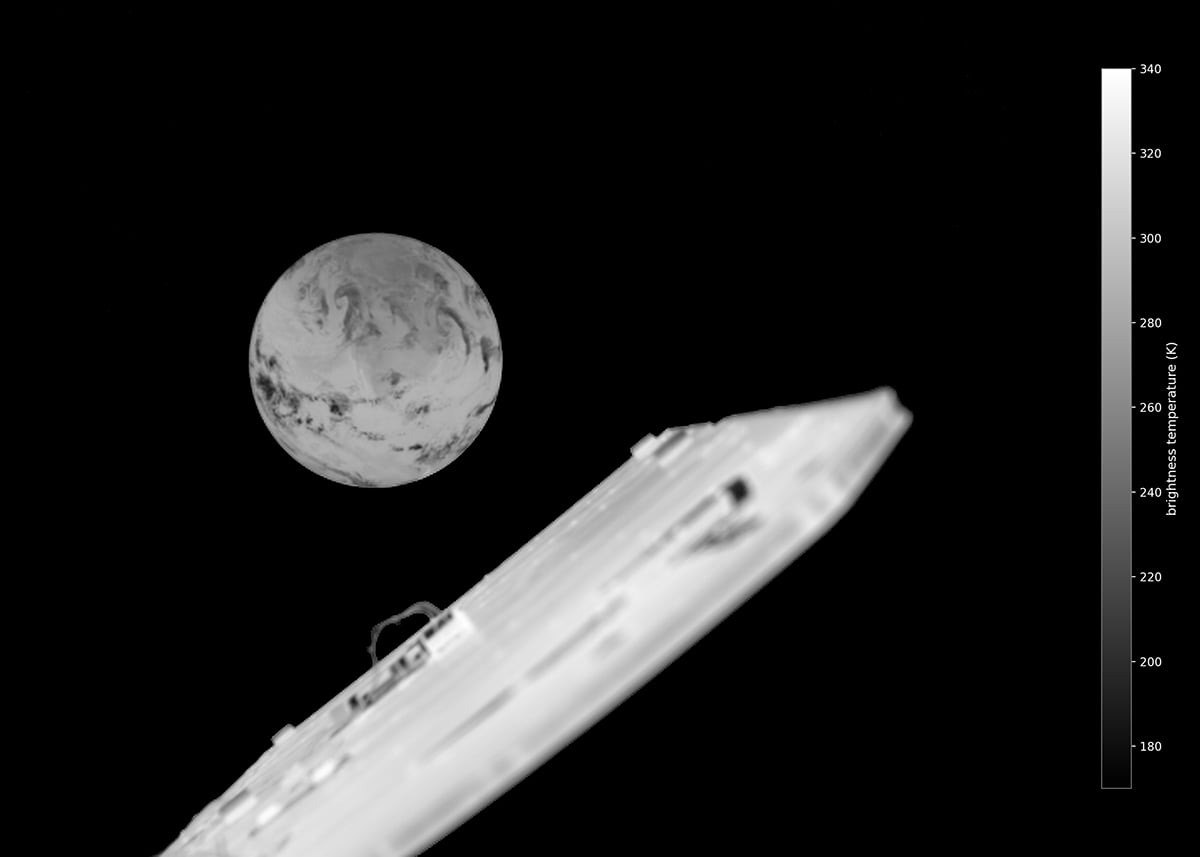
The visible-light photograph shows Earth against the darkness of space. Part of Gold’s solar panel occupies the foreground, giving viewers a sense of where the spacecraft is. Gold also photographed Earth in infrared light. These images reveal temperature differences across the Western Hemisphere. NASA released several versions, including photographs with different false-color treatments.
Using Earth to send the spacecraft towards Mars
ESCAPADE stands for Escape and Plasma Acceleration and Dynamics Explorers. NASA designed the mission with two identical spacecraft, Blue and Gold. They will study how the solar wind interacts with Mars’ magnetic environment and contributes to the loss of its atmosphere.
Both spacecraft were launched together on November 13, 2025, from Cape Canaveral Space Force Station in Florida. However, they could not take the usual direct route to Mars. Earth and Mars occupied opposite sides of the Sun at the time.
The mission planners placed the spacecraft in an orbit around the Sun-Earth Lagrange point 2, or L2. The arrangement allowed Blue and Gold to remain in space until Earth and Mars reached a more favorable alignment. In November 2026, both spacecraft returned towards Earth to perform their planned flybys.
The visible and infrared Images of Earth
The ESCAPADE photographs show Earth through two different parts of the electromagnetic spectrum. The visible-light camera records sunlight reflected from the planet. It captures the familiar appearance of continents, oceans, and clouds. Infrared imaging provides a different view by detecting radiation associated with the temperature of objects.
This, in fact, explains why the infrared photographs look so different from the visible-light image. Warmer areas produce brighter signals, while cooler areas appear darker. NASA’s false-color versions make these variations easier to identify. The assigned colors help viewers interpret the measurements, but they do not show what those regions would look like to the human eye.
Commercial satellites photograph the ESCAPADE Spacecraft
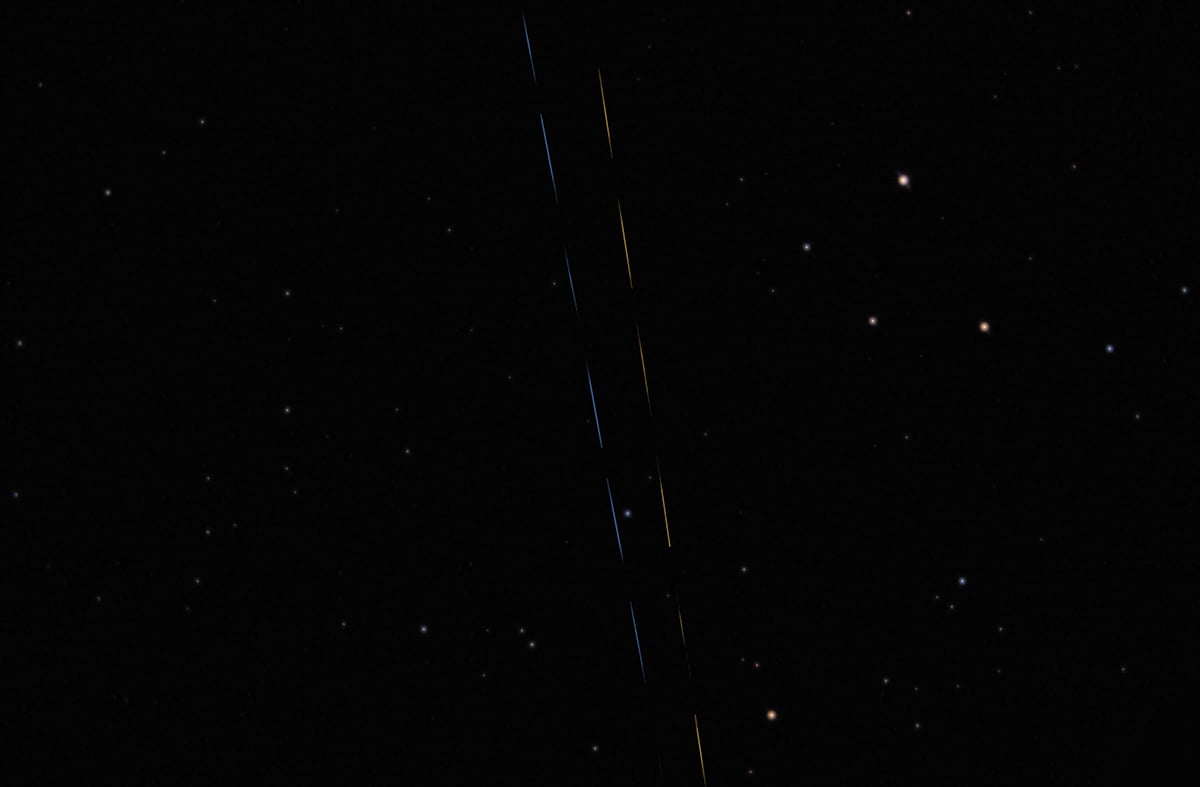
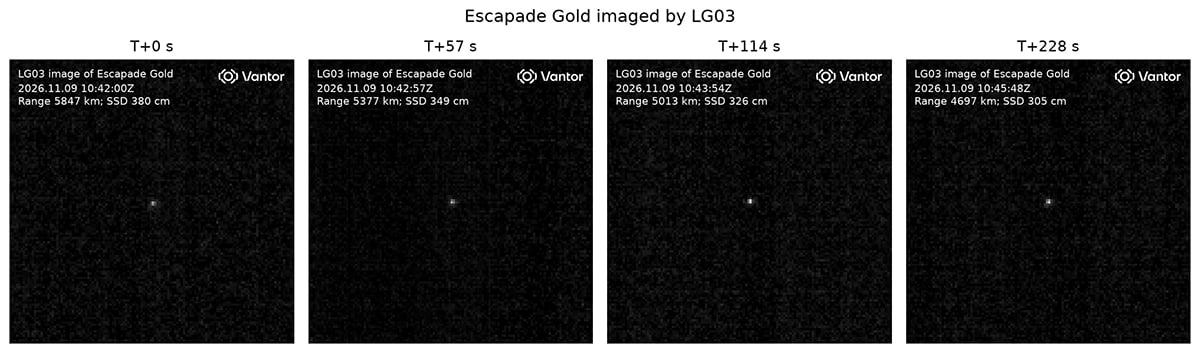
The two Earth encounters produced another interesting set of photographs. While ESCAPADE Gold photographed Earth, commercial imaging satellites turned their cameras towards the spacecraft themselves. Vantor’s WorldView Legion satellites captured Blue and Gold during their respective approaches.
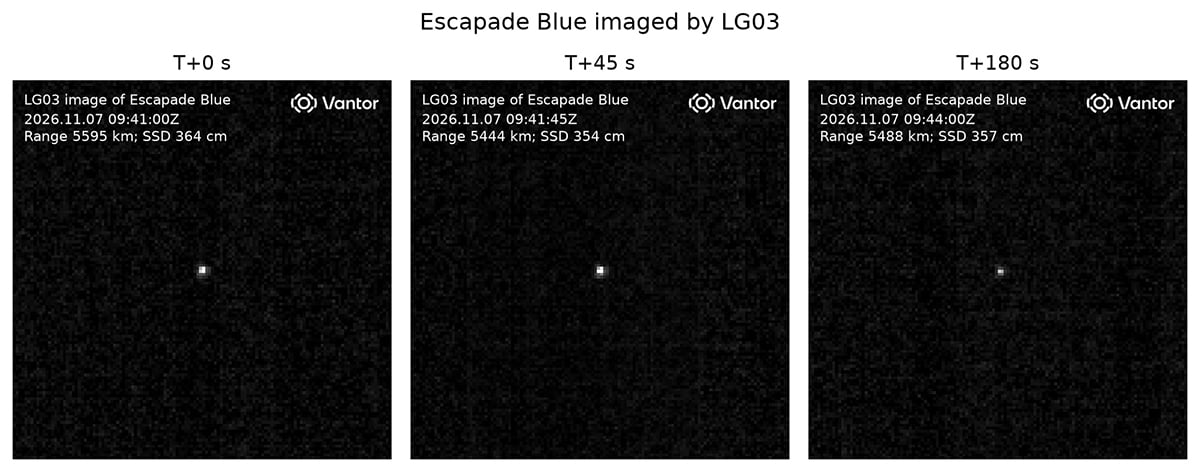
Vantor photographed Blue on November 7, shortly before its closest approach. The satellite captured three images between 4:41 and 4:44 a.m. EST. It also photographed Gold on November 9. This time, the satellite captured four images between 5:42 and 5:45 a.m. EST.
Clear skies!
See more from DIYPhotography.net on Google
Add DIYPhotography.net as a trusted source. This makes
our stories more likely to appear in your Google Search results.
 Add as a preferred source on Google

Soumyadeep Mukherjee
Soumyadeep Mukherjee is an award-winning astrophotographer from India. He has a doctorate degree in Linguistics. His work extends to the sub-genres of nightscape, deep sky, solar, lunar and optical phenomenon photography. He is also a photography educator and has conducted numerous workshops. His works have appeared in over 40 books & magazines including Astronomy, BBC Sky at Night, Sky & Telescope among others, and in various websites including National Geographic, NASA, Forbes. He was the first Indian to win “Astronomy Photographer of the Year” award in a major category.


Join the Discussion
DIYP Comment Policy
Be nice, be on-topic, no personal information or flames.