

















Hubble Captures Stars Moving Inside an Ancient Star Cluster
Nov 8, 2026
Soumyadeep Mukherjee
Soumyadeep Mukherjee is an award-winning astrophotographer from India. He has a doctorate degree in Linguistics. His work extends to the sub-genres of nightscape, deep sky, solar, lunar and optical phenomenon photography. He is also a photography educator and has conducted numerous workshops. His works have appeared in over 40 books & magazines including Astronomy, BBC Sky at Night, Sky & Telescope among others, and in various websites including National Geographic, NASA, Forbes. He was the first Indian to win “Astronomy Photographer of the Year” award in a major category.
Share:
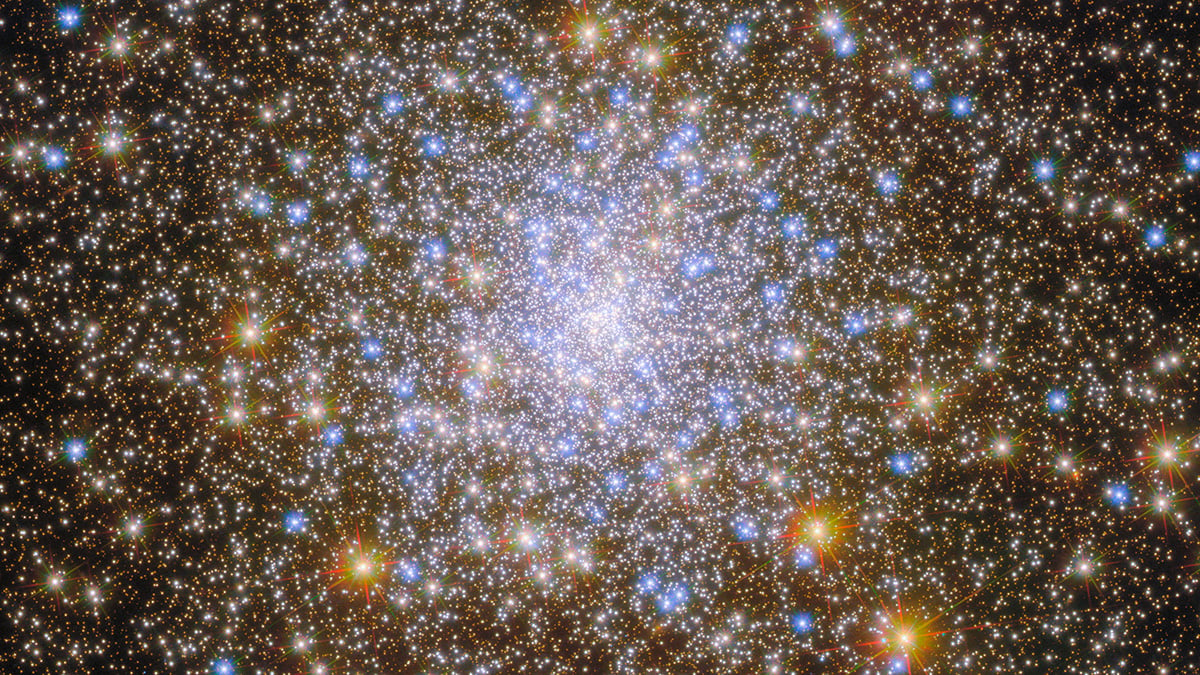
The Hubble Space Telescope has captured a new view of Messier 30, located approximately 27,500 light-years from Earth. The image combines observations from three separate Hubble programmes, each using different instruments and filters.
The new Hubble image is part of a longer observing effort that began with a survey of Milky Way globular clusters. Astronomers returned to M30 to investigate unusual stars and examine its different stellar populations. The latest observations focus on changes in stellar positions over time.
Messier 30: Early days of the Milky Way
Messier 30, also known as M30 or NGC 7099, lies in the constellation Capricornus. French astronomer Charles Messier discovered it in 1764 while compiling a catalogue of objects that comet hunters might mistake for comets. He recorded diffuse patches of light that didn’t move like the comets he was looking for. He listed M30 as the thirtieth entry in his catalogue, and it remains a familiar target for astronomers.
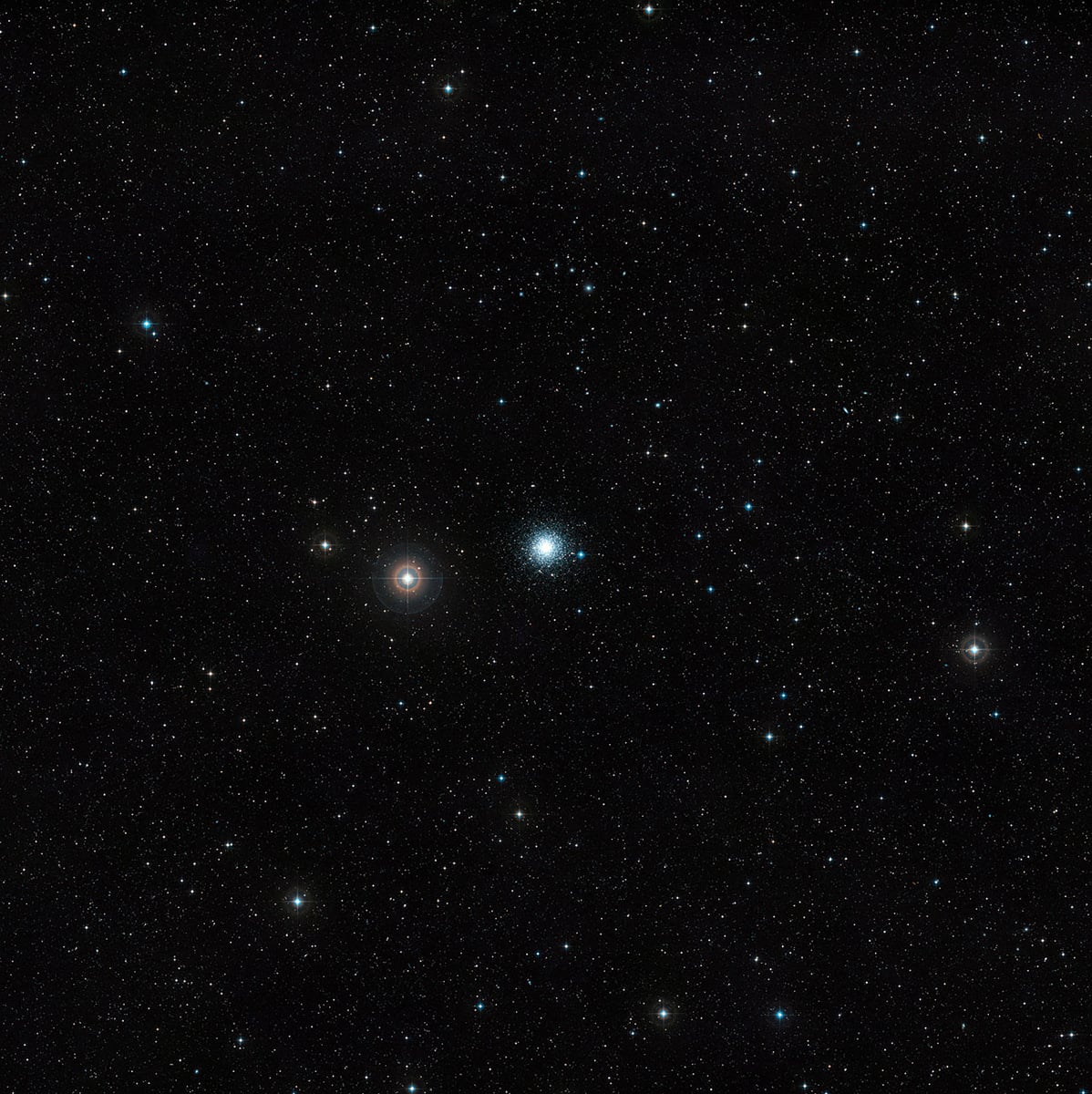
M30 belongs to a class of objects called globular clusters. These systems contain tens of thousands to millions of stars held together by gravity. They generally have a spherical shape and orbit their host galaxies in the galactic halo. The Milky Way contains at least 150 known globular clusters, with some lying thousands of light-years from Earth. Their dense stellar populations and great ages make them valuable subjects for studying galactic evolution.
Astronomers estimate that globular clusters formed between 11.5 and 13.5 billion years ago. Some are almost as old as the Universe itself, which is about 13.8 billion years old. Their stars preserve information about the chemical conditions that existed during the early stages of galaxy formation. By studying these objects, researchers can piece together how the Milky Way assembled its different components.
Three Hubble observing programmes
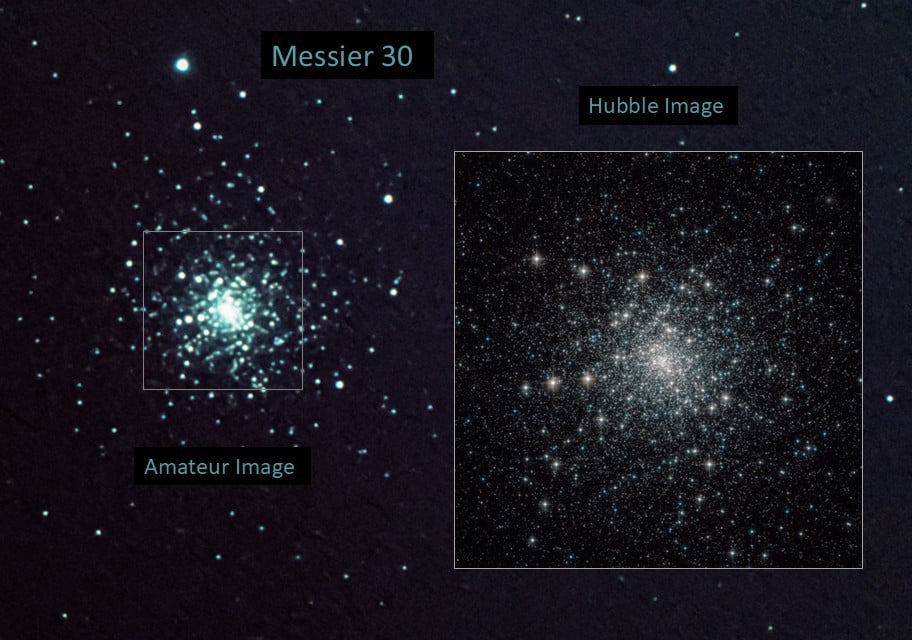
The new image combines observations from three Hubble programmes. Each programme examined M30 with a different scientific question in mind. The earliest observations came from programme 10775, led by principal investigator Ata Sarajedini. Hubble’s Advanced Camera for Surveys (ACS) examined dozens of globular clusters across the Milky Way. The survey included observations in red and near-infrared light, allowing astronomers to detect stars with masses as low as 20 percent of the Sun’s mass.
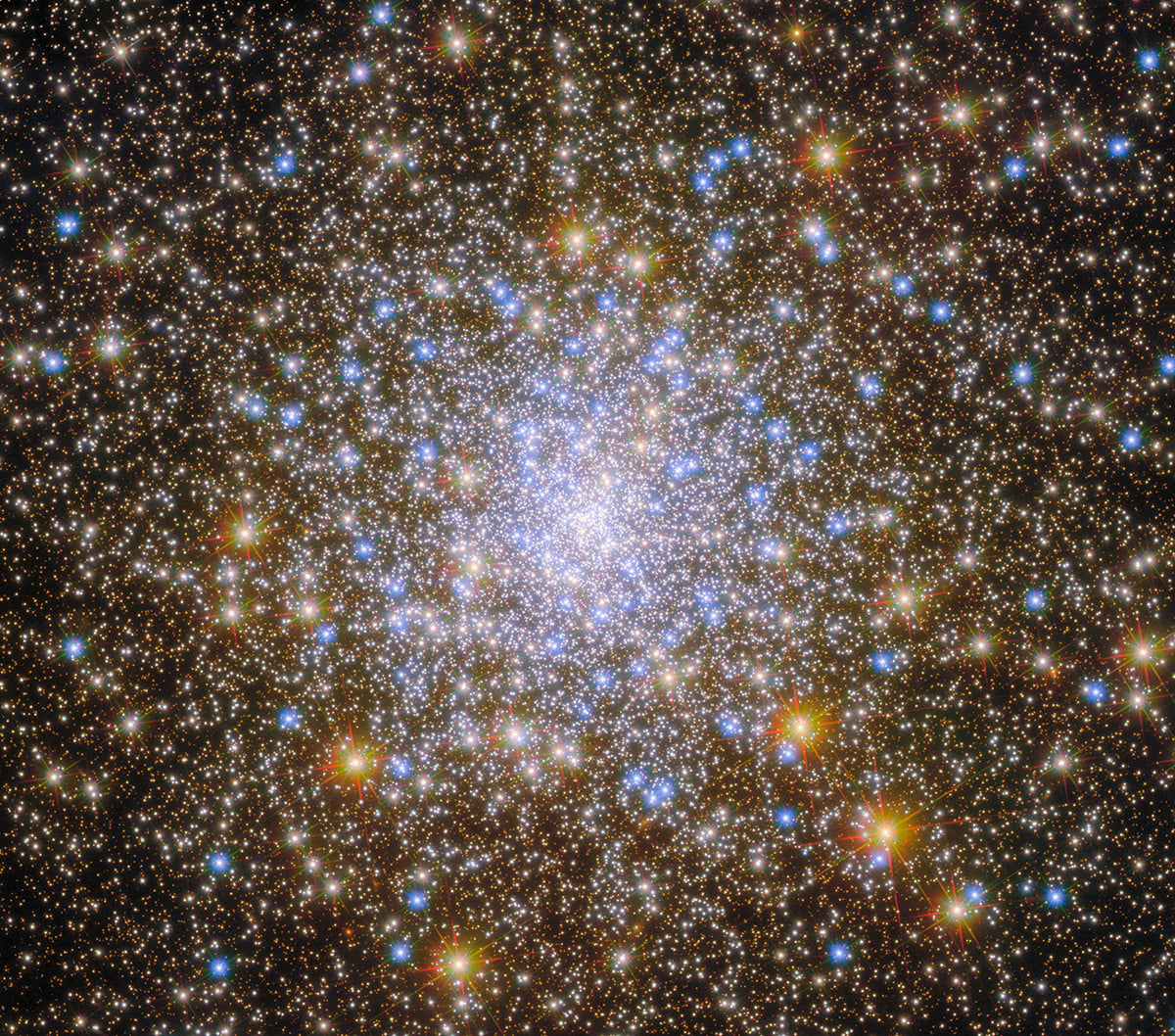
Astronomers returned to M30 through programme 13297, led by Giampaolo Piotto. This project used Hubble’s Wide Field Camera 3 (WFC3) and three filters that captured bluer light. The observations helped researchers investigate the different stellar populations within globular clusters. They also supplied important data for studying blue straggler stars, unusual objects that appear younger and hotter than other stars of similar ages.
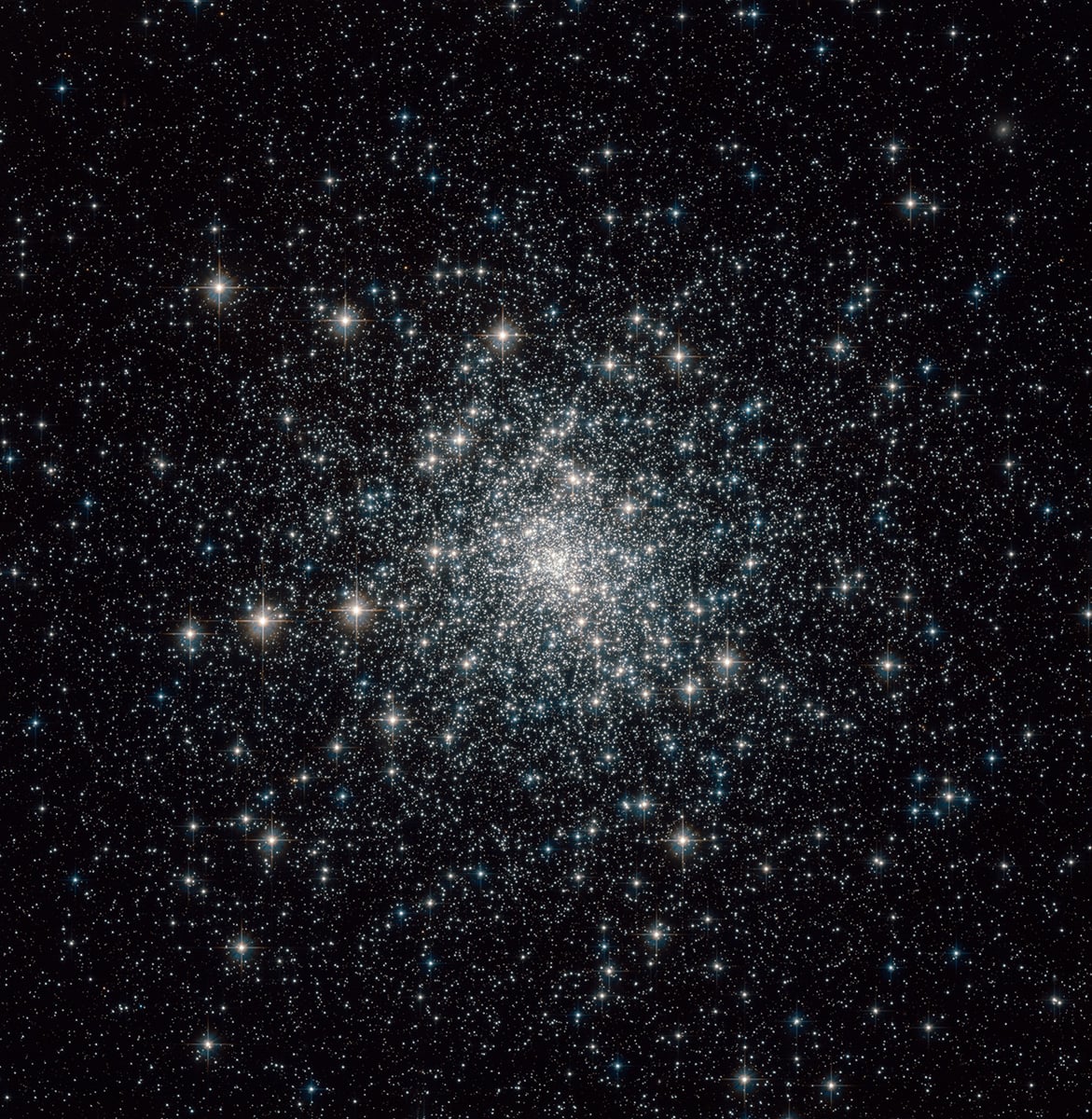
The third programme, numbered 16298, brought astronomers back to many of these clusters once again. Mattia Libralato led the project, which used Hubble’s Advanced Camera for Surveys. This time, the team wanted to measure how stars had changed position over approximately 15 years. Comparing the older observations with the newer ones allowed researchers to examine the movements of different stellar populations.
Five filters to examine the cluster’s stars
The new M30 image combines observations at five wavelengths, ranging from ultraviolet to visible light. Hubble’s Wide Field Camera 3 recorded light at 275, 336, and 438 nanometers. Its Advanced Camera for Surveys supplied observations at 606 and 814 nanometers. These measurements help astronomers distinguish stars with different temperatures and physical properties.
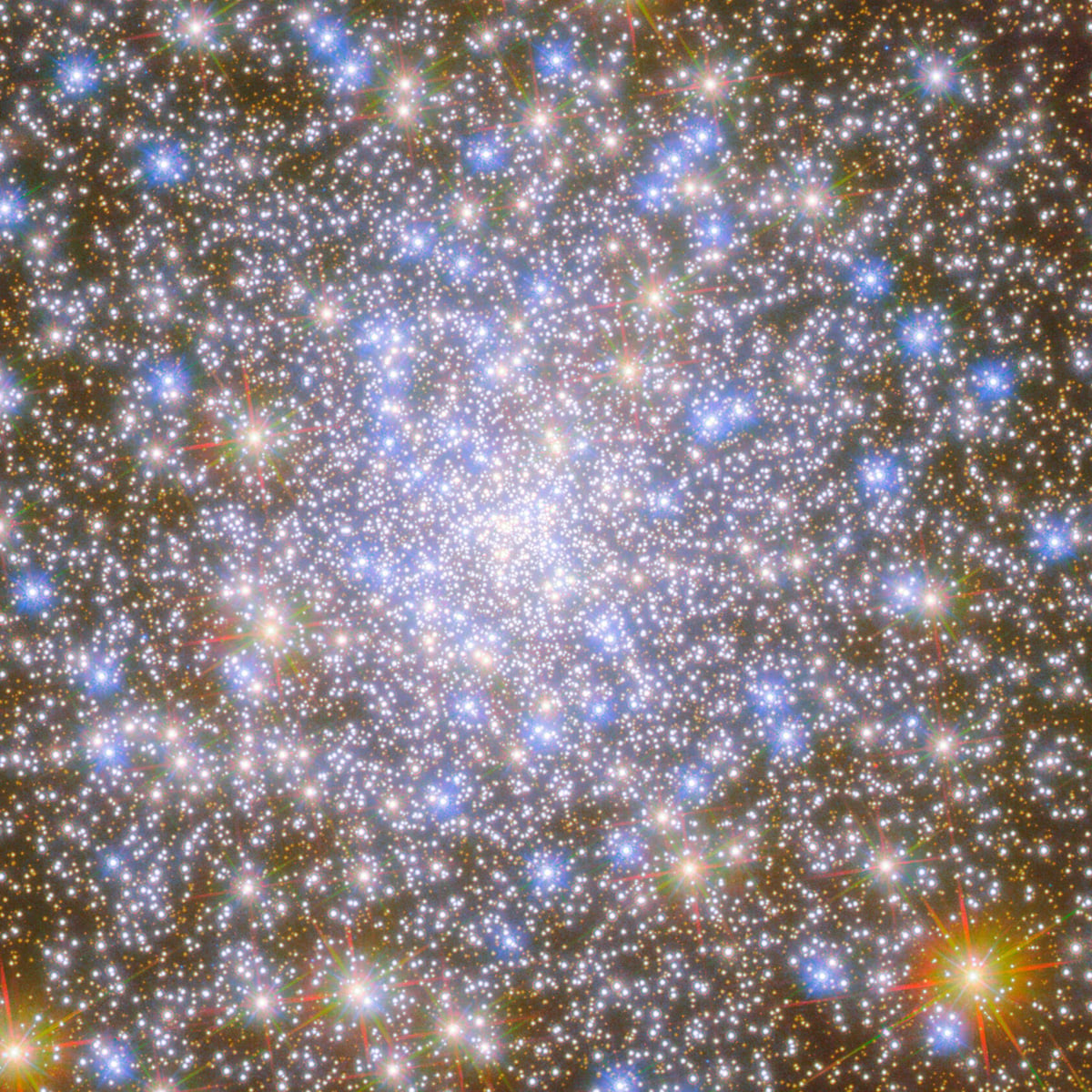
Each filter records a different portion of the light reaching the telescope. Hotter stars generally emit more strongly at shorter wavelengths, while cooler stars contribute more light at longer wavelengths. Comparing observations across several filters helps astronomers examine the cluster’s stellar populations. It also allows them to identify stars whose colors and brightness differ from those of their neighbors.
Clear skies!
See more from DIYPhotography.net on Google
Add DIYPhotography.net as a trusted source. This makes
our stories more likely to appear in your Google Search results.
 Add as a preferred source on Google

Soumyadeep Mukherjee
Soumyadeep Mukherjee is an award-winning astrophotographer from India. He has a doctorate degree in Linguistics. His work extends to the sub-genres of nightscape, deep sky, solar, lunar and optical phenomenon photography. He is also a photography educator and has conducted numerous workshops. His works have appeared in over 40 books & magazines including Astronomy, BBC Sky at Night, Sky & Telescope among others, and in various websites including National Geographic, NASA, Forbes. He was the first Indian to win “Astronomy Photographer of the Year” award in a major category.

Join the Discussion
DIYP Comment Policy
Be nice, be on-topic, no personal information or flames.