
























This Satellite Photograph Shows a Black Sun: Why did the Sun Turn Black?
Oct 9, 2026
Soumyadeep Mukherjee
Soumyadeep Mukherjee is an award-winning astrophotographer from India. He has a doctorate degree in Linguistics. His work extends to the sub-genres of nightscape, deep sky, solar, lunar and optical phenomenon photography. He is also a photography educator and has conducted numerous workshops. His works have appeared in over 40 books & magazines including Astronomy, BBC Sky at Night, Sky & Telescope among others, and in various websites including National Geographic, NASA, Forbes. He was the first Indian to win “Astronomy Photographer of the Year” award in a major category.
Share:
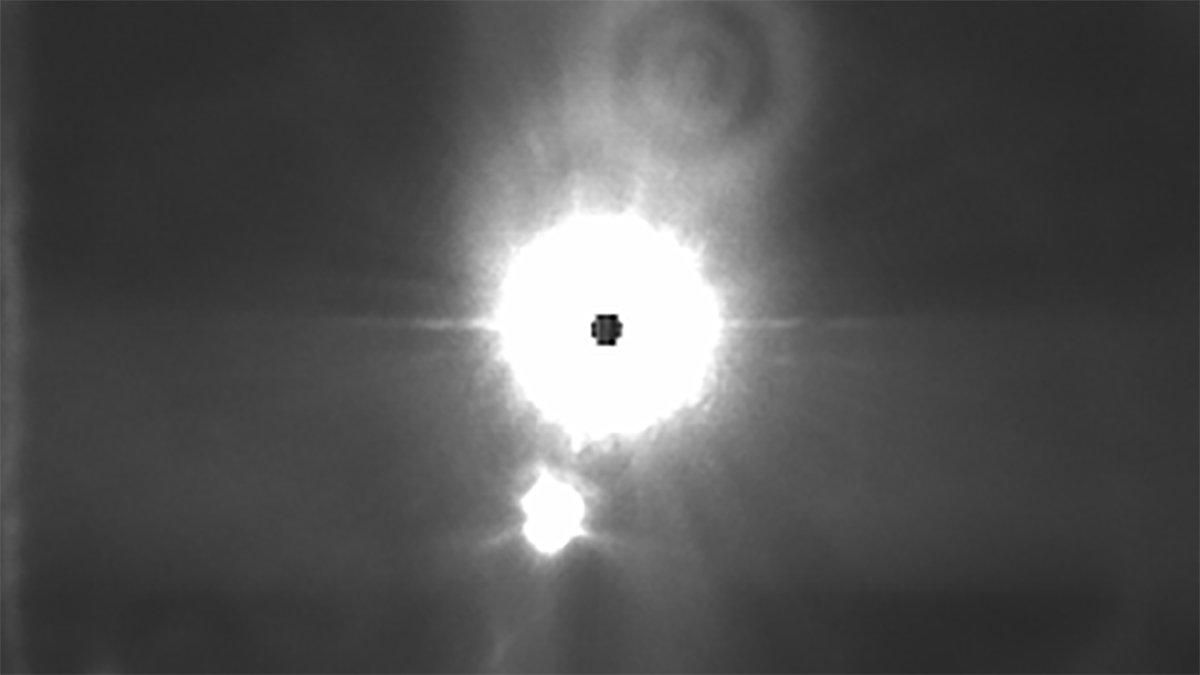
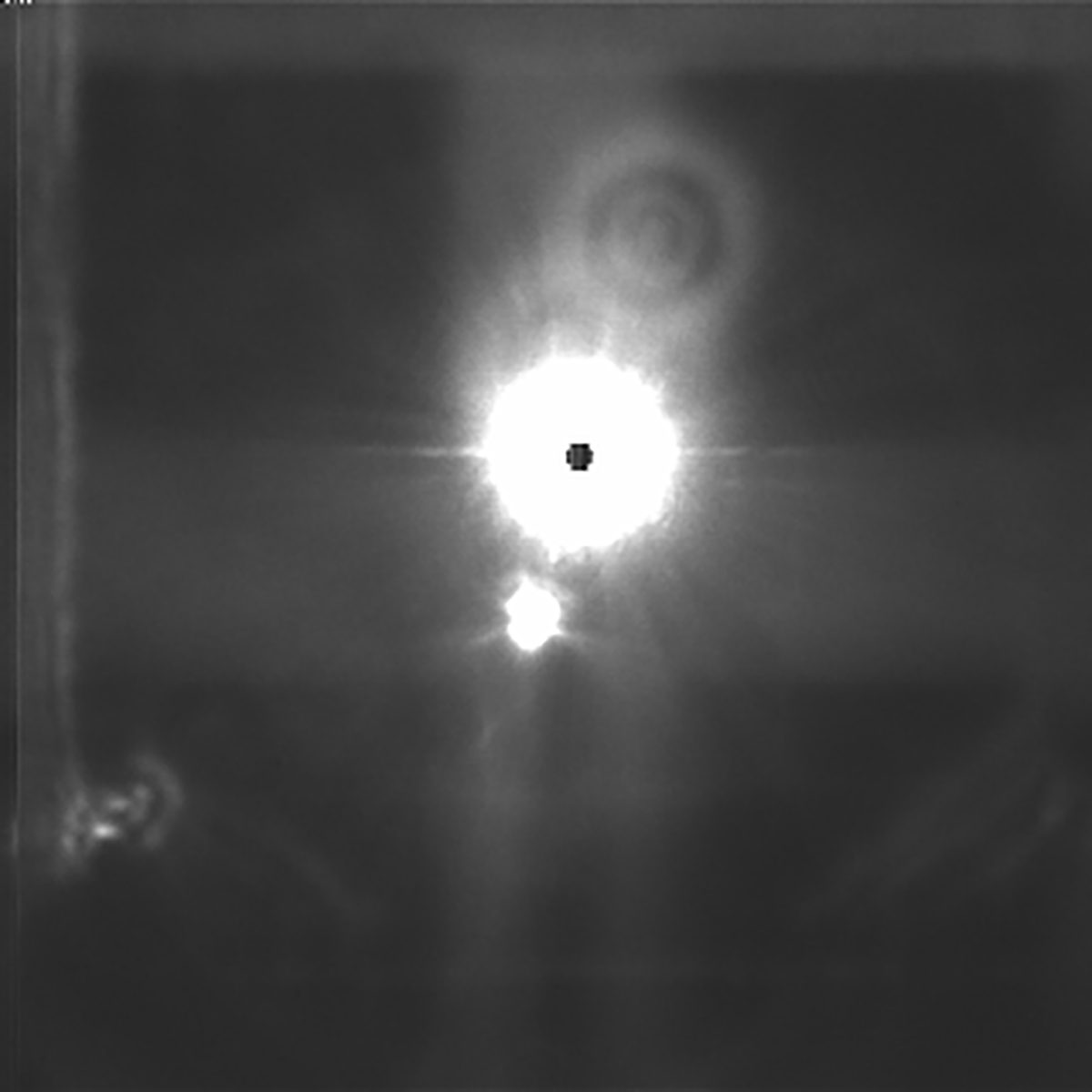
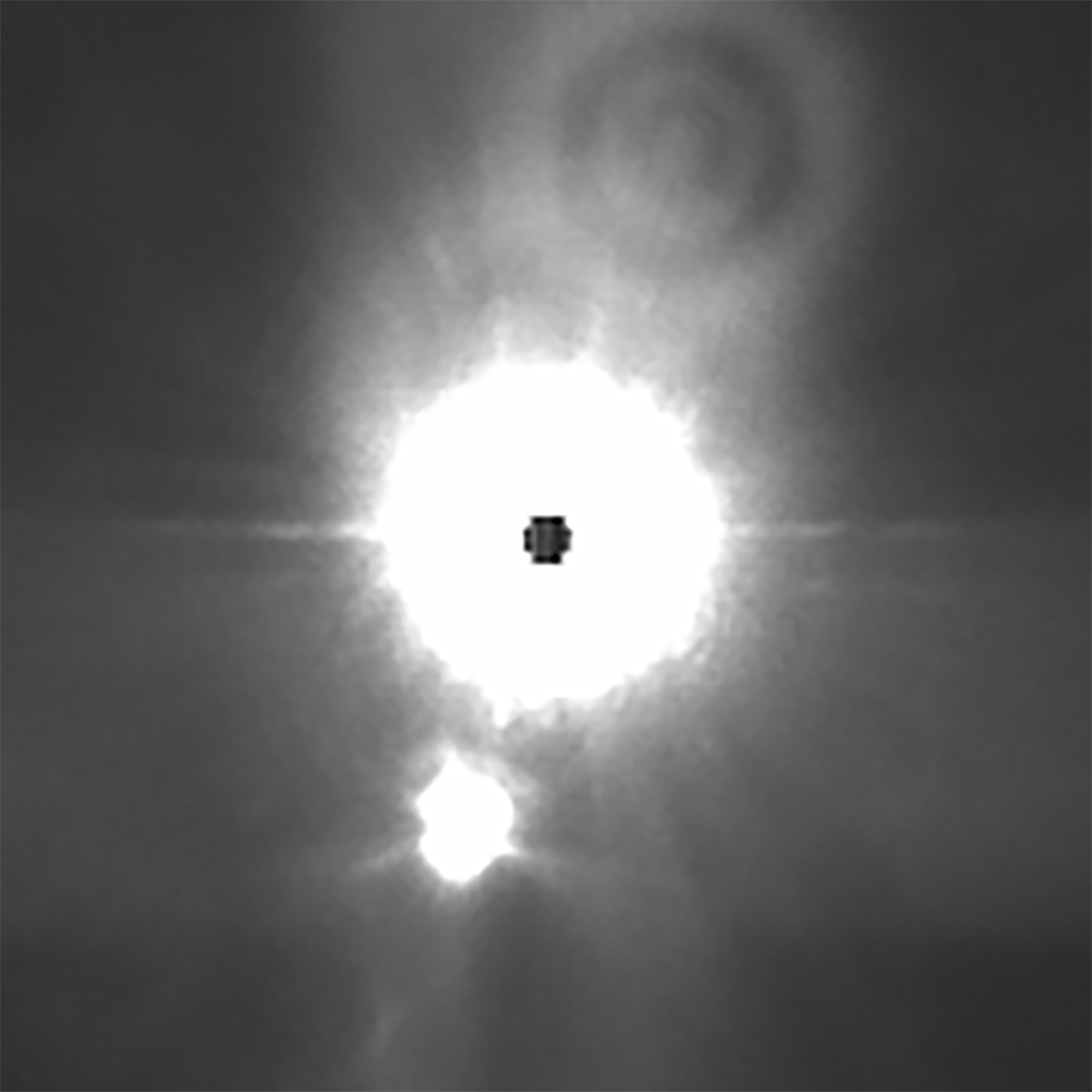
Can you make the Sun turn black? Well, you can. But a fair warning: do not try this at home (or outside). In this article, we take a look at a photograph taken from orbit that shows the Sun with a small black circle at its center. The surrounding disc is intensely bright, but the middle appears almost completely dark.
The image looks like the result of a severe exposure problem, but the unusual pattern comes from the way the camera sensor responds to extreme light. The photograph was captured by TRISAT-S, a small satellite developed by the University of Maribor in Slovenia with the Slovenian space company SkyLabs. The image is a result of the Black Sun effect, a phenomenon that occurs when a CMOS image sensor receives far more light than it can normally handle.
Why an overexposed Sun can turn black
The strange appearance of the Sun begins inside the camera sensor. A CMOS sensor contains millions of photosensitive pixels, and each pixel converts incoming light into an electrical signal. During an exposure, the pixel collects charge according to the amount of light reaching it. Under normal conditions, this process gives the camera enough information to build an image.
There is a limit to how much charge each pixel can handle. Once a pixel reaches that limit, it becomes saturated. This is familiar to anyone who has photographed a bright light source without controlling the exposure. The brightest parts of the scene become white, and any detail within them disappears.
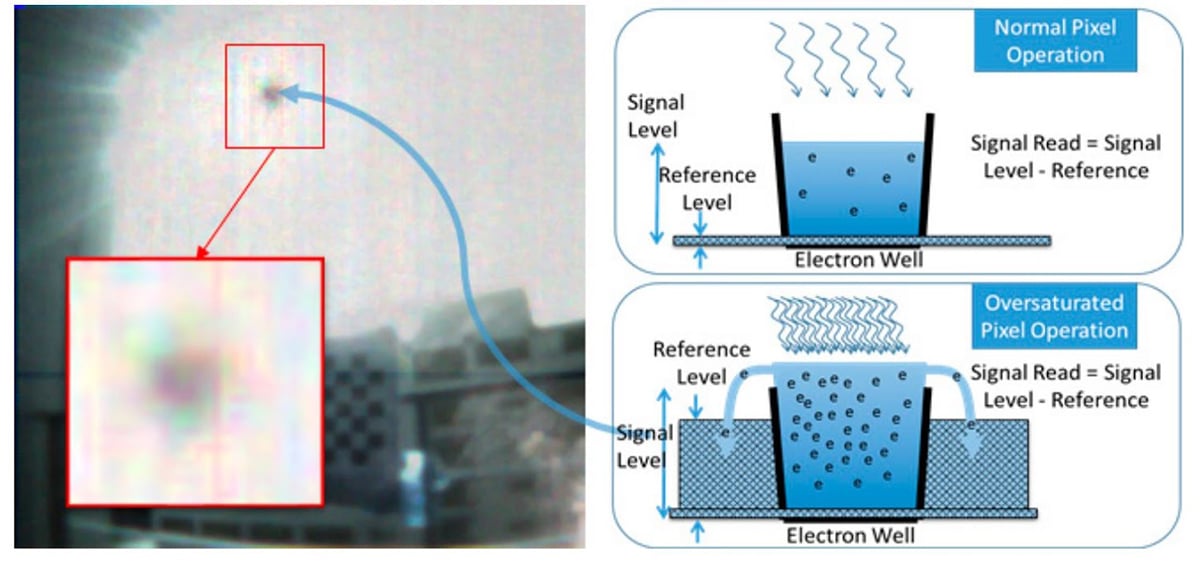
The Sun presents an extreme case. It delivers an enormous amount of light to a camera compared with most subjects photographers normally encounter. Even a very short exposure can overwhelm the sensor when the camera looks towards it.
The Black Sun effect appears when the illumination becomes extreme enough to produce an unusual response from the CMOS sensor. Instead of simply recording a featureless white area, the most strongly illuminated part can appear dark.
The black Sun works as a navigation tool
TRISAT-S carries six miniature cameras as part of an experiment in visual awareness and navigation. The University of Maribor leads the mission, while SkyLabs has developed much of the spacecraft‘s avionics and imaging technology.
The cameras give the satellite several views of the space around it. This allows the mission team to investigate how a small spacecraft can use images of its surroundings to determine its altitude and orbit.

“The Black Sun effect might at first appear to be an unwanted imaging artefact, but for us it is a very useful visual feature. Together with the observations of Earth and the Moon, the ‘Black Sun’ serves as a visual reference that can be used by a spacecraft to determine its altitude and orbit.”
-Iztok Kramberger, Principal Investigator, Trisat programme, University of Maribor, Slovenia
The Sun provides an especially useful reference. Its apparent position changes across the camera’s field of view as the spacecraft rotates. If the onboard system can identify the Sun accurately, it gains a reference against which it can compare the spacecraft’s orientation.
Clear skies!
See more from DIYPhotography.net on Google
Add DIYPhotography.net as a trusted source. This makes
our stories more likely to appear in your Google Search results.
 Add as a preferred source on Google

Soumyadeep Mukherjee
Soumyadeep Mukherjee is an award-winning astrophotographer from India. He has a doctorate degree in Linguistics. His work extends to the sub-genres of nightscape, deep sky, solar, lunar and optical phenomenon photography. He is also a photography educator and has conducted numerous workshops. His works have appeared in over 40 books & magazines including Astronomy, BBC Sky at Night, Sky & Telescope among others, and in various websites including National Geographic, NASA, Forbes. He was the first Indian to win “Astronomy Photographer of the Year” award in a major category.




Join the Discussion
DIYP Comment Policy
Be nice, be on-topic, no personal information or flames.
One response to “This Satellite Photograph Shows a Black Sun: Why did the Sun Turn Black?”
Black hole sun, won’t you come, and waaash away the raaain… :)