






















Inside NGC 6951: Hubble Reveals a Star-forming Core of a Galaxy
Oct 7, 2025
Soumyadeep Mukherjee
Soumyadeep Mukherjee is an award-winning astrophotographer from India. He has a doctorate degree in Linguistics. His work extends to the sub-genres of nightscape, deep sky, solar, lunar and optical phenomenon photography. He is also a photography educator and has conducted numerous workshops. His works have appeared in over 40 books & magazines including Astronomy, BBC Sky at Night, Sky & Telescope among others, and in various websites including National Geographic, NASA, Forbes. He was the first Indian to win “Astronomy Photographer of the Year” award in a major category.
Share:

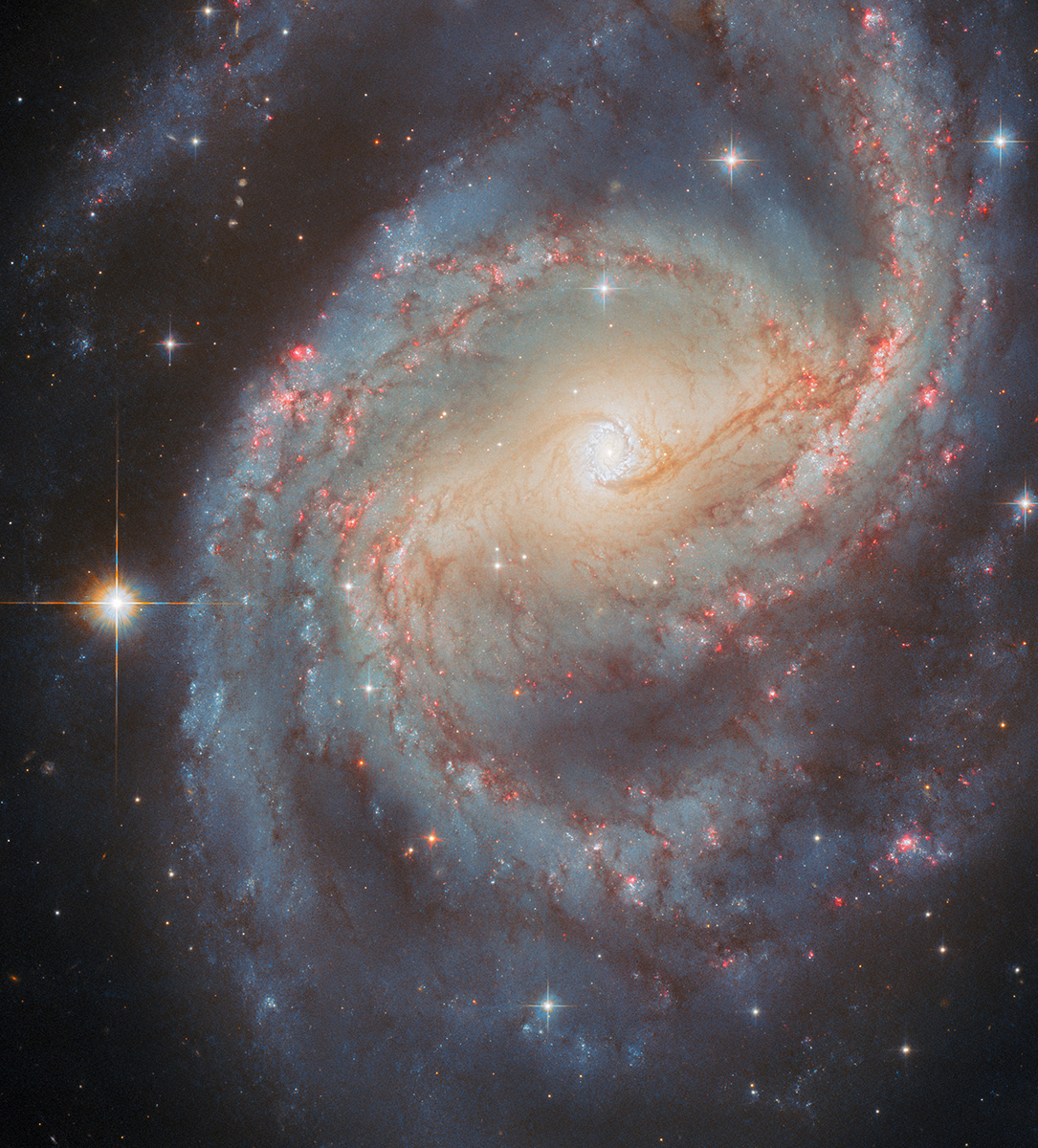
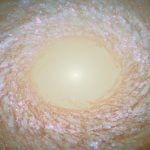
The Hubble Space Telescope has captured another remarkable view of a nearby galaxy. This time, it’s NGC 6951, a spiral system glowing with young stars and dense gas near its core. The image shows how star formation and galactic structure interact in extraordinary detail, and it tells a clear story about how galaxies feed themselves and evolve.
A galaxy with a busy centre
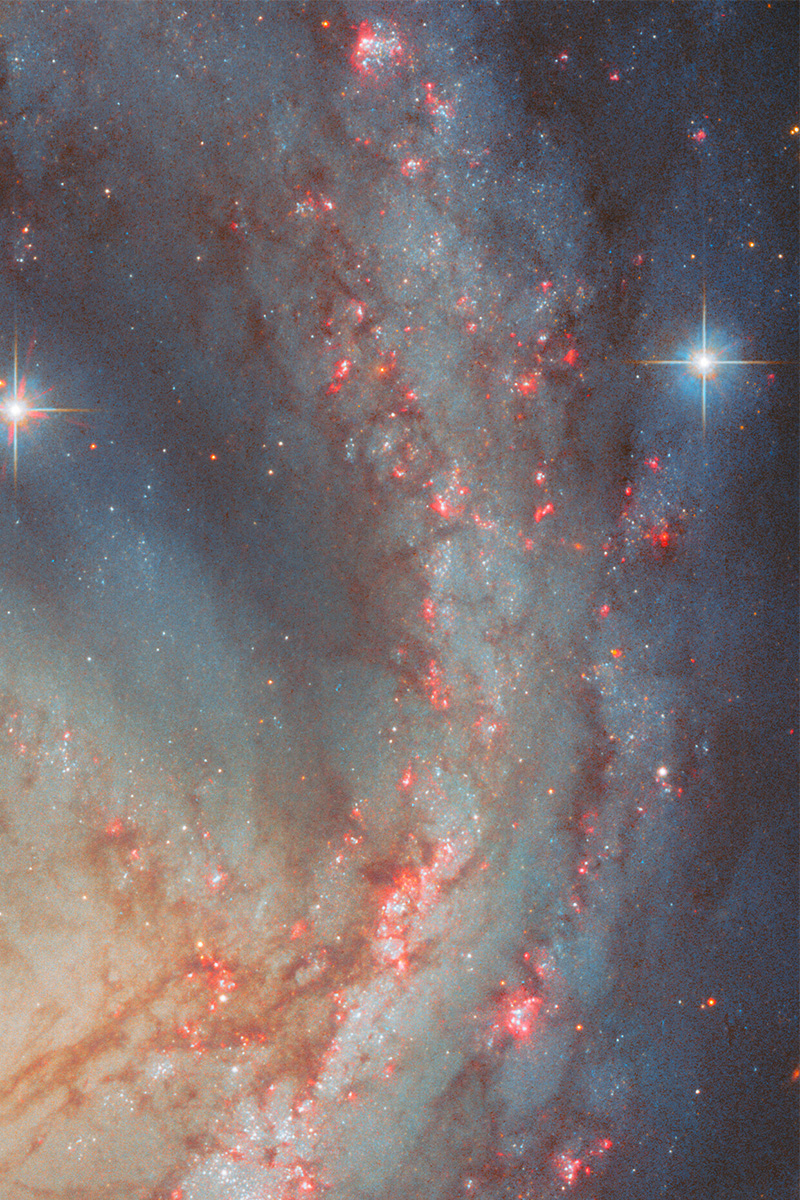
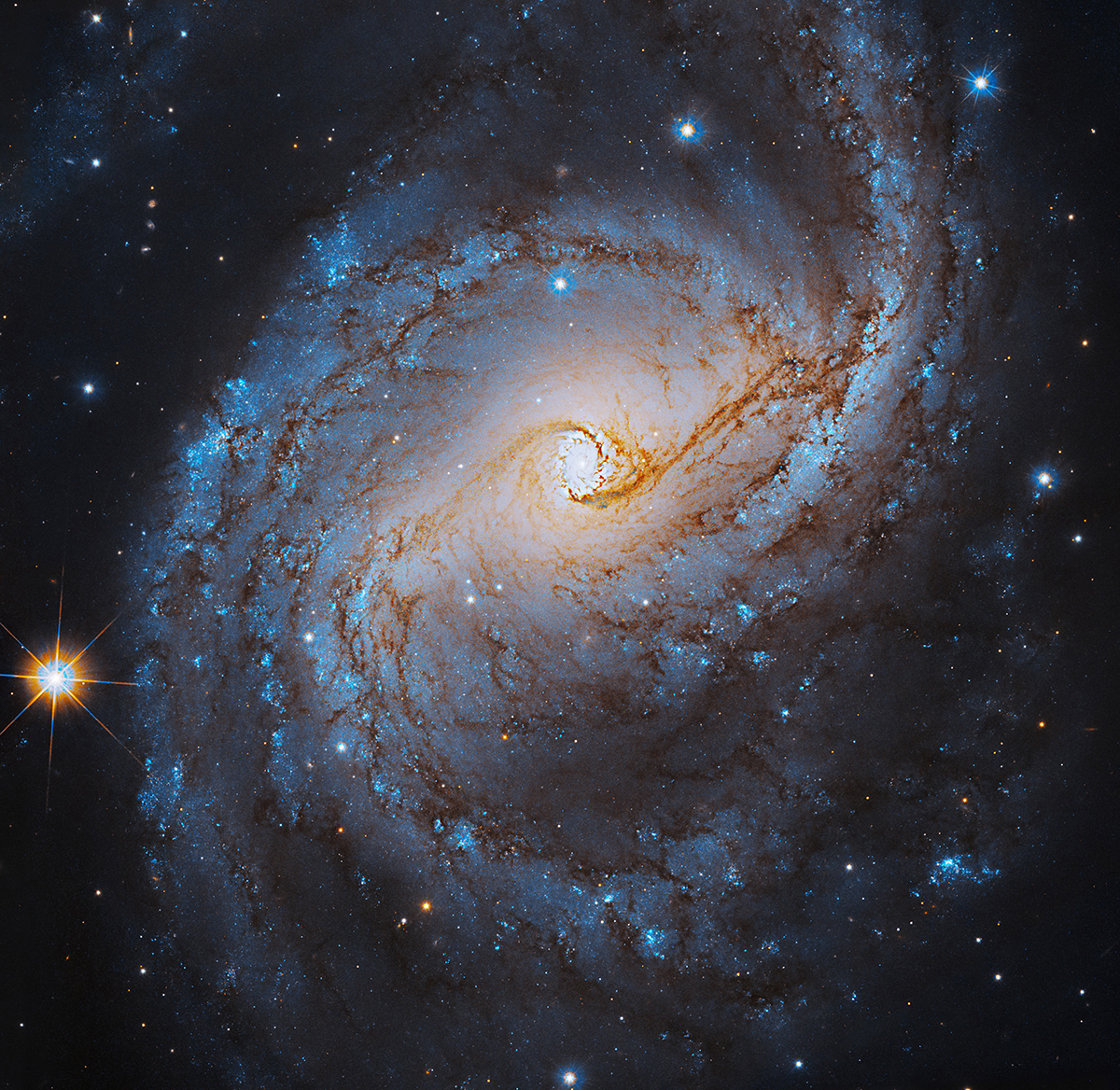
NGC 6951 lies about 70 million light-years away in the constellation Cepheus. Through Hubble’s eyes, it looks like a classic barred spiral. A yellowish bar stretches through its middle, while two bright arms curl outward. The blue knots in those arms mark regions filled with young, hot stars. Between them, dark lanes of dust wind toward the core.
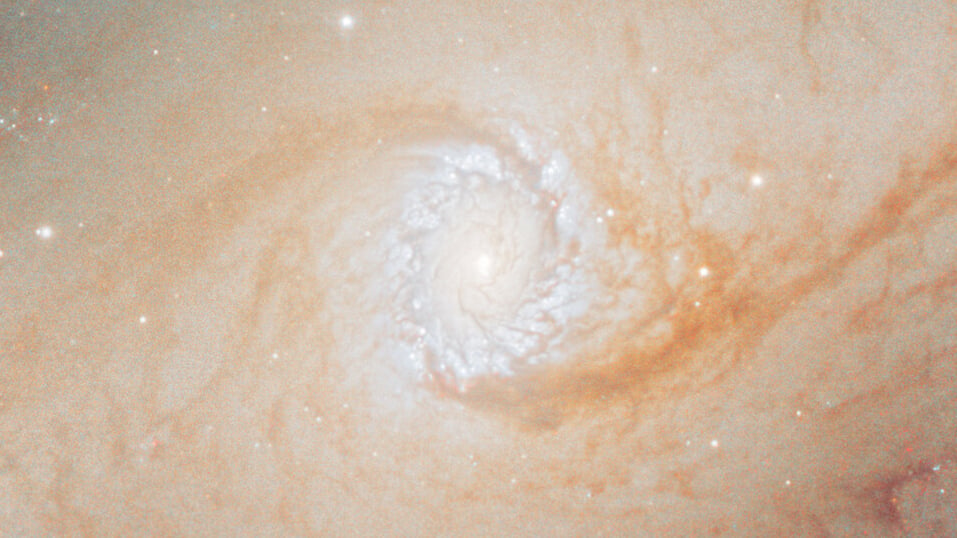
The centre of the galaxy, though, is what really stands out. It glows in gold tones, older stars mixed with clouds of dust and gas. That area hides a circumnuclear starburst ring, a compact ring where stars form at a furious pace. It spans roughly 3,800 light-years, which is only a small part of the whole galaxy, yet it dominates the activity inside.
The ring of starbirth
Gas from the outer parts of the galaxy flows inward along the bar structure. When it reaches the right distance from the centre, it piles up and becomes dense enough to trigger bursts of star formation. The result is a ring that acts like a factory for new clusters.
Astronomers studying the Hubble data identified over 80 star cluster candidates within this ring. Most of them are young, less than 100 million years old, but the ring itself may have been active for over a billion years. That means waves of star formation have been sweeping through the same region repeatedly. Each generation of stars leaves its mark before fading into the glow of the central bulge.
Inside the ring sits a faintly active nucleus. NGC 6951 is classified as a LINER or a Seyfert Type 2 galaxy, meaning its core hosts a modestly feeding black hole. The black hole isn’t consuming matter at a dramatic rate, but the gas inflow that fuels star formation can also drift inward, keeping the nucleus alive.
How Hubble took the shot
The image was captured using the Advanced Camera for Surveys (ACS) aboard the NASA/ESA Hubble Space Telescope. Astronomers used multiple filters to isolate different features of the galaxy. Broad filters in the visible range recorded the stars, while narrowband filters traced the reddish glow of ionized hydrogen gas. Combining those exposures helped separate the young, blue star clusters from the older yellow populations.
Once the data reached Earth, scientists processed the raw images to remove cosmic rays and instrumental noise. They aligned and merged the exposures from each filter. Colour assignments followed physical meaning: red for hydrogen emission, blue for young stars, and gold for older populations. The result is a scientifically accurate composite that reveals how the galaxy’s structure, dust, and star-forming regions interact.
NGC 6951: Revelations from the image
The sharpness of Hubble’s image allows astronomers to see the fine dust lanes spiraling into the ring. These lanes trace the inward flow of gas along the bar. As the gas loses angular momentum, it feeds the starburst region. That process, repeated over millions of years, explains why the ring remains active for such a long time.
By studying the colour and brightness of the clusters, researchers can estimate their ages and masses. The youngest are rich in blue stars. The older ones fade toward yellow. This age spread gives insight into how often new stars form and how quickly older clusters disperse into the galaxy’s bulge.
NGC 6951 also helps scientists understand how energy and matter move through galactic centres. The inflow of gas fuels both star formation and the faint activity of the central black hole. These two processes, stellar birth and nuclear accretion, are closely linked. They may even regulate each other over cosmic time.
The science beyond the picture
Behind every Hubble image is a long chain of data analysis. Researchers cross-check Hubble observations with data from other telescopes. Radio observations map the cold gas that feeds the starburst. Infrared images reveal dust structures hidden from visible light. Spectroscopy measures motion, temperature, and chemical composition. Together, these tools show a detailed portrait of how energy flows through a galaxy’s heart.
NGC 6951 has been observed at many wavelengths, including with the Atacama Large Millimeter/submillimeter Array (ALMA). Those observations trace molecular gas inflows feeding the central region. Combined with Hubble’s optical image, they confirm the connection between the bar, the starburst ring, and the active nucleus.
Clear skies!
See more from DIYPhotography.net on Google
Add DIYPhotography.net as a trusted source. This makes
our stories more likely to appear in your Google Search results.
 Add as a preferred source on Google

Soumyadeep Mukherjee
Soumyadeep Mukherjee is an award-winning astrophotographer from India. He has a doctorate degree in Linguistics. His work extends to the sub-genres of nightscape, deep sky, solar, lunar and optical phenomenon photography. He is also a photography educator and has conducted numerous workshops. His works have appeared in over 40 books & magazines including Astronomy, BBC Sky at Night, Sky & Telescope among others, and in various websites including National Geographic, NASA, Forbes. He was the first Indian to win “Astronomy Photographer of the Year” award in a major category.


Join the Discussion
DIYP Comment Policy
Be nice, be on-topic, no personal information or flames.