
























A Cosmic Bridge Lights up the Night: DECam’s Portrait of Abell 3667
Aug 7, 2025
Soumyadeep Mukherjee
Soumyadeep Mukherjee is an award-winning astrophotographer from India. He has a doctorate degree in Linguistics. His work extends to the sub-genres of nightscape, deep sky, solar, lunar and optical phenomenon photography. He is also a photography educator and has conducted numerous workshops. His works have appeared in over 40 books & magazines including Astronomy, BBC Sky at Night, Sky & Telescope among others, and in various websites including National Geographic, NASA, Forbes. He was the first Indian to win “Astronomy Photographer of the Year” award in a major category.
Share:
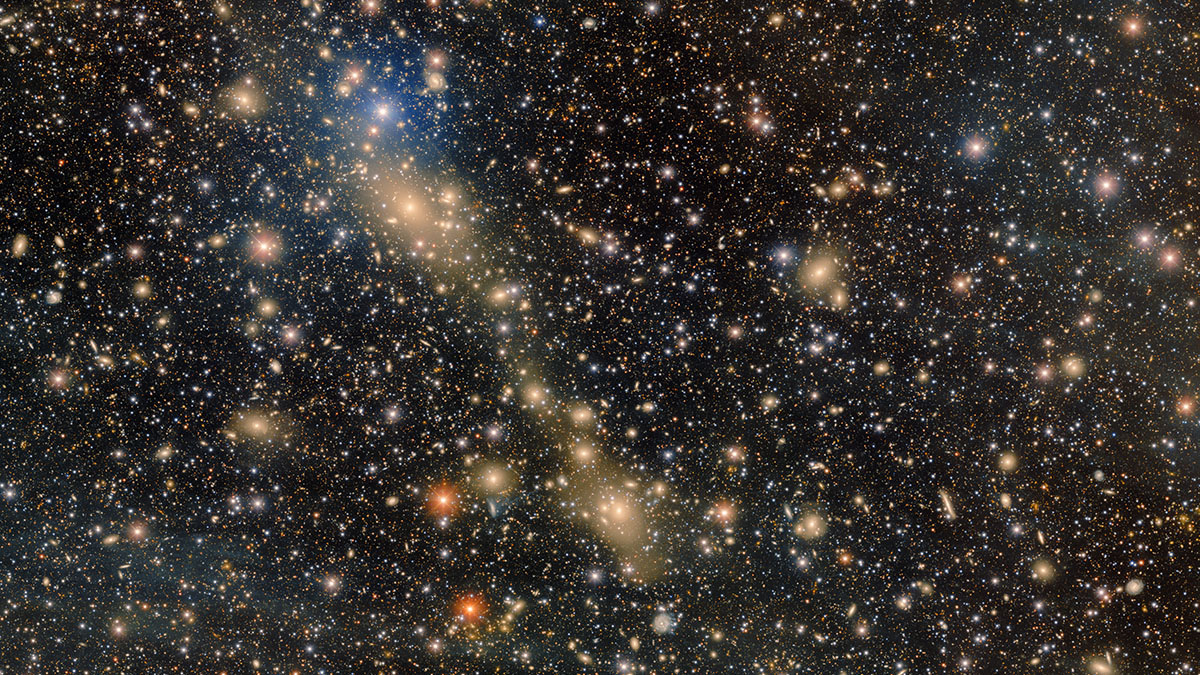
A new cosmic portrait by Dark Energy Camera reveals a tale of power, time, and cosmic design. The galaxy cluster Abell 3667, nestled about 700 million light‑years away, is at the heart of this story. It stands in the southern skies in the constellation of Pavo. Now, a breathtaking image brings its drama into view, showing the birth of a colossal cosmic structure. In this image, astronomers reveal intracluster light, a tenuous glow from stars torn free from their home galaxies. This diffuse light traces the history of interactions among clusters.
28 hours of observation
The image comes from the Dark Energy Camera (DECam), a 570‑megapixel marvel built by the U.S. Department of Energy. It sits on the National Science Foundation Víctor M. Blanco 4‑meter Telescope at Cerro Tololo Inter‑American Observatory, part of NSF NOIRLab. Astronomers worked hard to create this image. They combined more than 28 hours of observations, stretching across years. That long exposure allowed them to bring faint structures into sharp relief. It is now the deepest image of Abell 3667 ever assembled.
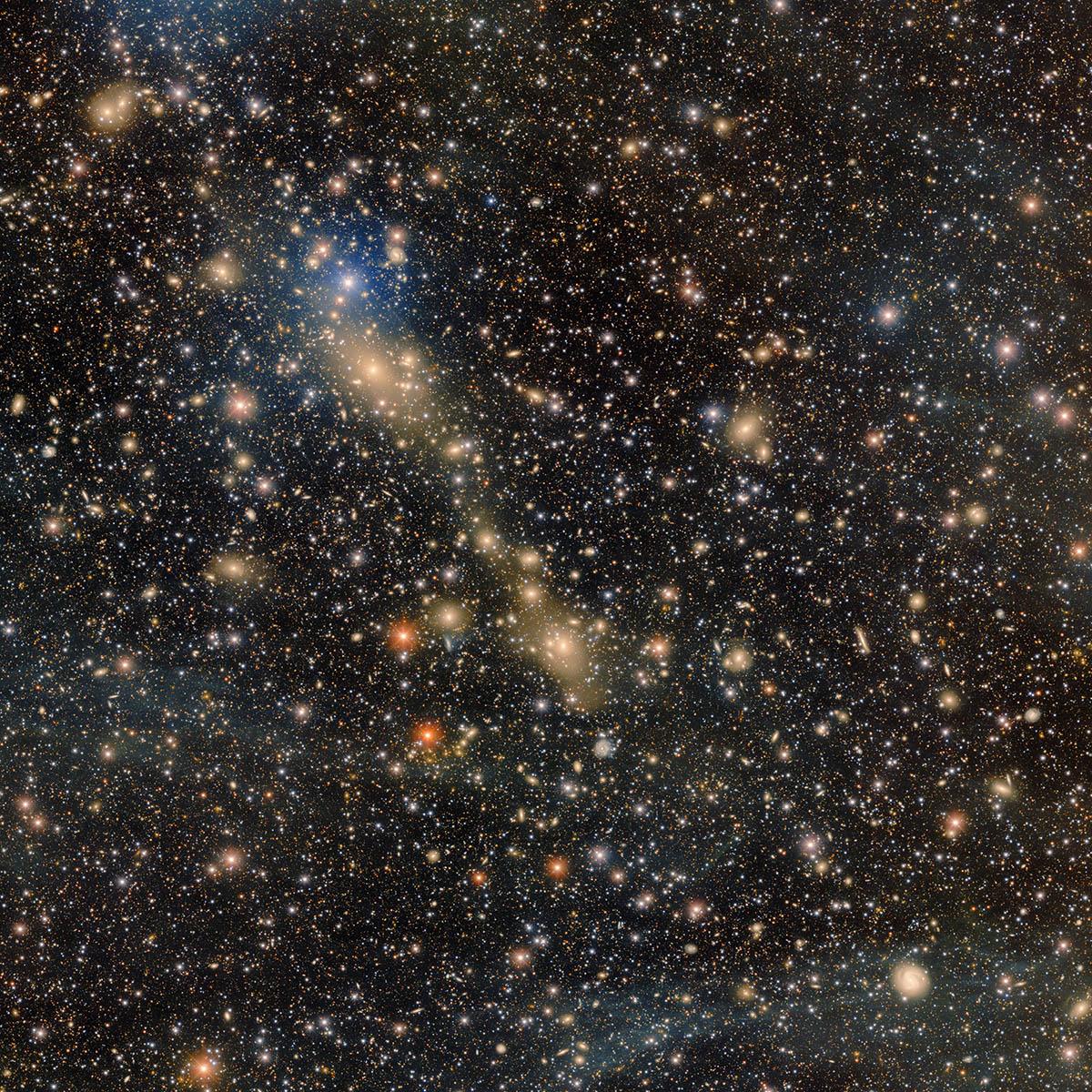
The stellar bridge across the void
In the center of the image, a ghostly bridge of stars stretches between two bright galaxies. It spans nearly a million light‑years and glows faintly yellow. It marks a bridge of intracluster light, the first direct optical evidence of a major merger between the cluster’s two brightest galaxies (BCGs). This bridge stands as a relic of an aggressive merger. One BCG is tearing stars from the other. Normally, cluster galaxies grow quietly by pulling in stars from many smaller companions. But here, two massive galaxies are colliding directly. This discovery confirms that Abell 3667 itself formed from two smaller clusters that merged roughly a billion years ago. The bridge gives astronomers a rare glimpse at this dramatic event in progress.
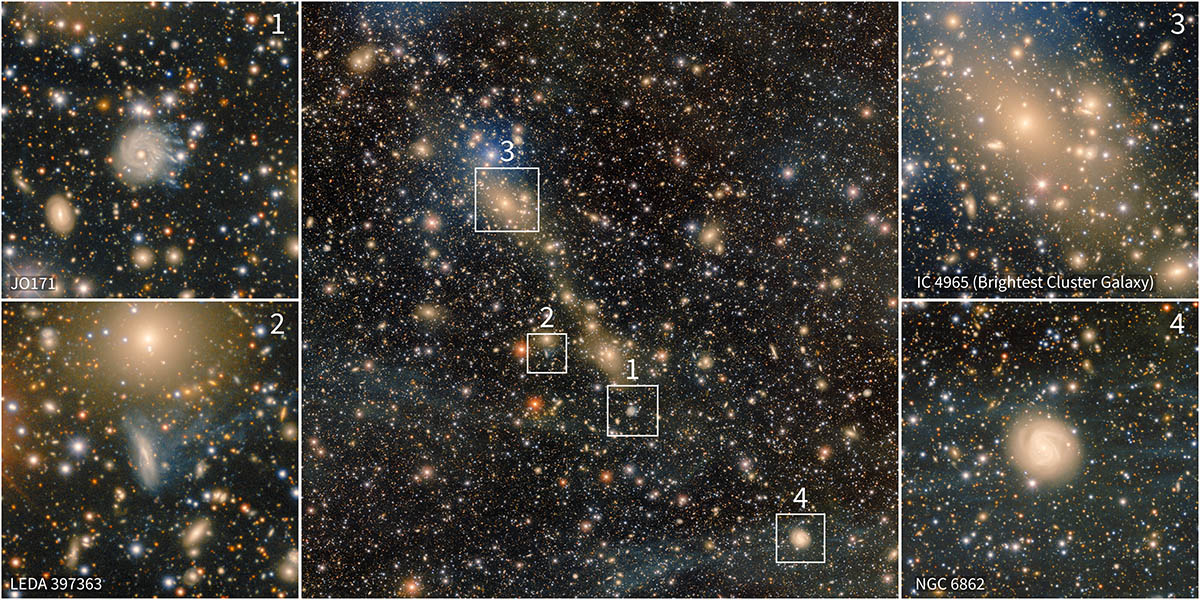
Dust in our own galaxy
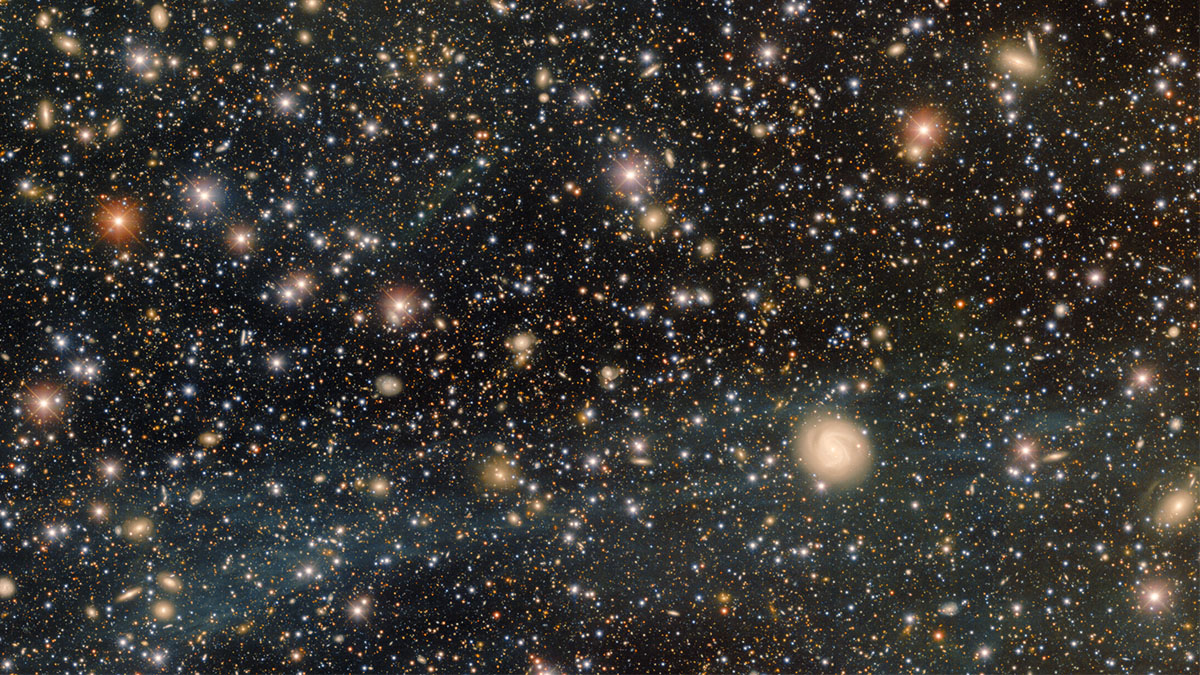
The image also reveals something much closer to home. It shows faint, wispy filaments known as Milky Way cirrus, or integrated flux nebulae. These are clouds of dust in our galaxy. They barely glow under starlight. Long exposure time helped capture their subtle glow. These delicate blue strands crisscross the scene. They remind us that our view of the universe always runs through the veil of our own galaxy.
The science of Abell 3667
An academic study released on arXiv describes a low-surface-brightness optical bridge of 400 kpc (roughly 1.3 million light‑years) connecting two BCGs. It shows that one galaxy’s outskirts are disrupted. That supports the idea of a first‑pass merger, where stars stripped from the smaller galaxy now form the bridge. Another study used NuSTAR X‑ray observations to probe the hot gas in Abell 3667. It found that the central region’s hard X‑ray emission is thermal, likely due to merger‑induced heating. It also set a lower limit on the central magnetic field strength at ~0.2 microgauss. That matches values seen in other dynamically active clusters. Together, the optical and X‑ray data show that Abell 3667 is a dynamic, merging system that shines across light and X‑rays.
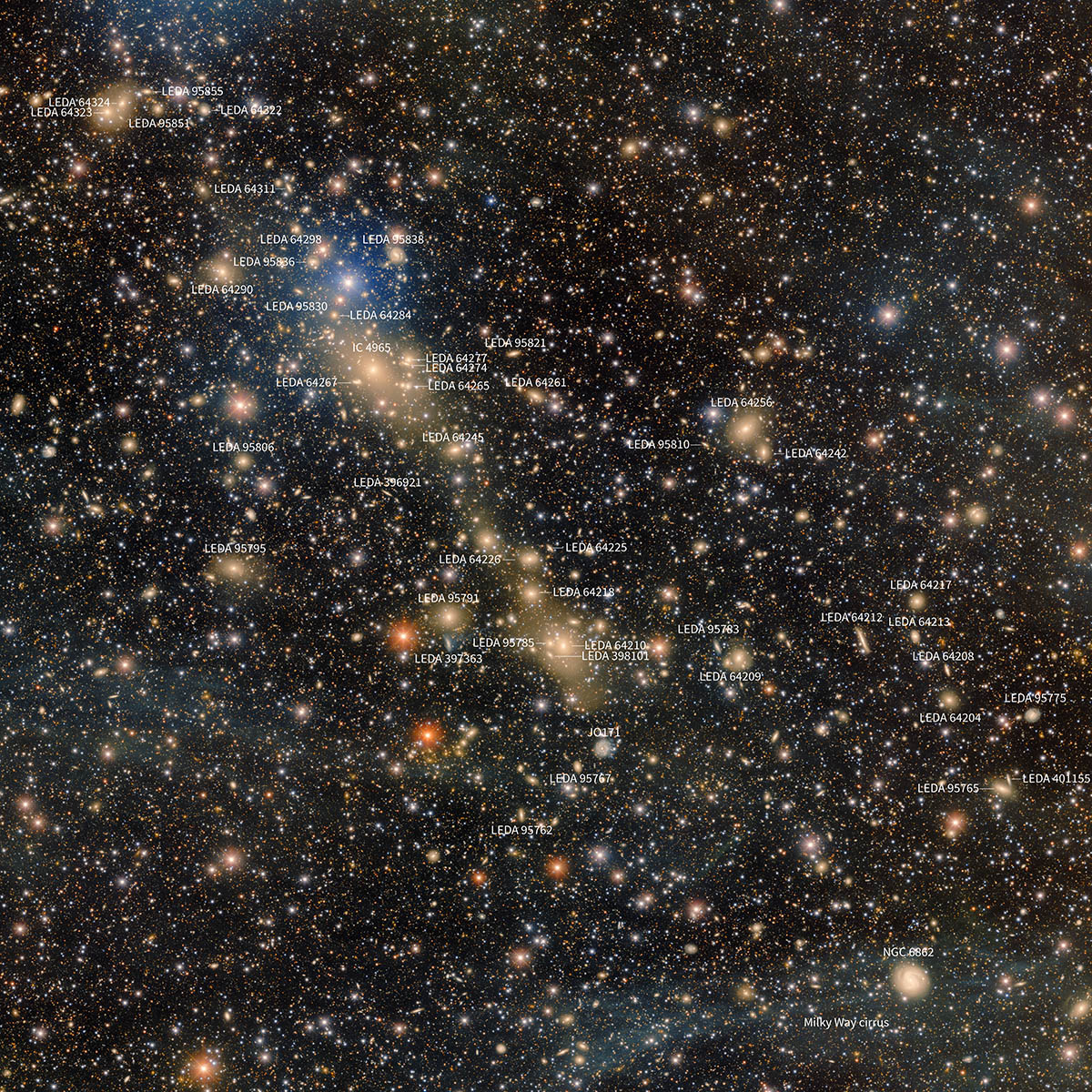
The DECam image of Abell 3667 brings cosmic history into focus. It shows a glowing bridge of stolen stars and captures a rare merger in action. It hints at the Milky Way’s faint dust and also previews what’s coming from the Rubin Observatory soon.
Clear skies!
See more from DIYPhotography.net on Google
Add DIYPhotography.net as a trusted source. This makes
our stories more likely to appear in your Google Search results.
 Add as a preferred source on Google

Soumyadeep Mukherjee
Soumyadeep Mukherjee is an award-winning astrophotographer from India. He has a doctorate degree in Linguistics. His work extends to the sub-genres of nightscape, deep sky, solar, lunar and optical phenomenon photography. He is also a photography educator and has conducted numerous workshops. His works have appeared in over 40 books & magazines including Astronomy, BBC Sky at Night, Sky & Telescope among others, and in various websites including National Geographic, NASA, Forbes. He was the first Indian to win “Astronomy Photographer of the Year” award in a major category.
Related Posts
 Bridge District threathens photographer after noticing he shot the Golden Gate Bridge from an “illegal angle”
 Sidus Link Bridge adds Aputure’s new smartphone control features to their old legacy LED lights
 New LED street lights are killing night photography with a purple hue
 A glimpse of the distant past: JWST’s deep dive into Abell S1063
Join the Discussion
DIYP Comment Policy
Be nice, be on-topic, no personal information or flames.