






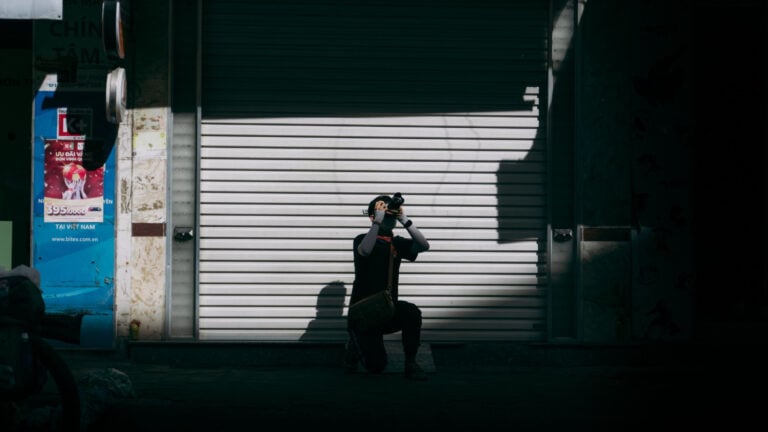












Your photos will get stolen. And what will you do then?
Feb 28, 2017
Dunja Đuđić Kalinin
Dunja Djudjic is a multi-talented artist based in Novi Sad, Serbia. With 15 years of experience as a photographer, she specializes in capturing the beauty of nature, travel, concerts, and fine art. In addition to her photography, Dunja also expresses her creativity through writing, embroidery, and jewelry making.
Share:

From people who download someone else’s photo for the desktop background, to those who steal photos from others and represent them as their own – photo theft is a pretty common occurrence. Many people don’t take the credits, but don’t give them to the author either (just remember the Tyra Banks case). In this episode of Burst Mode, Rick Boost talks about the image theft. He gives some examples of most memorable copyright infringement cases in recent years and discusses how we can fight this issue. Can we fight it at all?
No matter why you do photography and what level you’re on, you probably don’t want your photos to be stolen. And in the modern era, people do steal photos, big time! Even the watermarks are no guarantee of safety. It’s often fairly easy to remove a watermark, and you don’t even have to be a Photoshop master to do it.
Takedown notice and a couple of emails can sometimes solve the problem. But what happens when a famous artist or a brand steals your work? It has happened tons of times – brands stole someone else’s photos or copied their ideas, presented them as their own or didn’t give credits to the photographer. Then what?
Also, I’ve heard of a number of cases where photographers stole photos and sold them as their own, making money on someone else’s work. Now that’s kinda like stealing money from someone, right? Remember Richard Prince? He’s the master of photo theft, as he made millions displaying and selling other people’s Instagram photos.

There are some more bizarre cases of copyright infringement, like when the Wikimedia Commons posted a monkey selfie as public domain. Then, there’s the case of photographer Carol Highsmith. She posted an entire collection of her photos of America as public domain and Getty Images scraped them down and charged for their use. When their software discovered the photos on her website – she was asked to pay for them! She filed a lawsuit, but the court dismissed her copyright claim.
Even I recently used Google Image Search with some of my photos, out of curiosity. I got unpleasantly surprised seeing my photos on other websites. No one was selling them, but they were posted on several Instagram profiles. One bar from Belgrade even has one of my photos as their profile pic on Instagram. So, this happened to me, and I’m not even that good photographer.

At the end of the video, Rick suggests that we must fight against it. We should respect our own rights, just like the rights of other artists. Sign the petitions, report the thieves, work together with websites that prevent image theft and so on. However, he adds that we’ll most likely never win. But I disagree. Sure, there are some cases when it’s difficult to win (like when you’re suing Chipotle or Getty). But this is not the reason to give up the fight altogether. Do you agree?
I’m curious to know, have any of your photos ever been stolen, used without credits or even sold by someone else? How did you resolve this? I’d like to hear about your experiences in the comments.
[Photo Theft, Instagram, & Monkeys! Oh My! | Burst Mode]
See more from DIYPhotography.net on Google
Add DIYPhotography.net as a trusted source. This makes
our stories more likely to appear in your Google Search results.
 Add as a preferred source on Google

Dunja Đuđić Kalinin
Dunja Djudjic is a multi-talented artist based in Novi Sad, Serbia. With 15 years of experience as a photographer, she specializes in capturing the beauty of nature, travel, concerts, and fine art. In addition to her photography, Dunja also expresses her creativity through writing, embroidery, and jewelry making.


Join the Discussion
DIYP Comment Policy
Be nice, be on-topic, no personal information or flames.
8 responses to “Your photos will get stolen. And what will you do then?”
I’ve made more money invoicing people for stolen work than i have from actual paid work. Sad, huh.
Or it might have something to do with me having a fair and open pricing structure for paid work, whereas my pricing strategy for stolen work is “think of a number and double it”.
I love it when my photos get stolen. I’ve got it down to a science now when it comes to collecting money from image thieves and I’m VERY good at it.
Sometimes if your image is stolen by some little guy and his blog, rather than throw a tantrum about it, your best bet is to let them keep using the image in exchange for you making sure you get the credit for it and have a backlink to your website. The guy never would have had the money to pay you for it anyway so it’s no real loss to you but now you’ve just gotten some free SEO to your website.
The court should have ruled in favor of Carol Highsmith, though it may have reduced the monetary awards because Getty Images sent her a collection notice for images that she contributed to public domain that Getty was profiting from. She should probably get a different lawyer.
Getty didn’t do anything illegal; however, it’s shameful of them to claim infringements to Public Domain photographs (unless they created a derivative work).
Carol Highsmith, on the other hand, never thought-through the ramification of dedicating all her 18,000+ photographs into the Public Domain. At the very least, she should have visited with a Copyright/IP attorney to review her legal options BEFORE proceeding.
Highsmith could have permitted (rather than donated) the Library of Congress to “store” digital copies of her photographs, while still retaining her copyrights. By timely registering her photographs with the US Copyright Office, Highsmith would have reaffirmed her copyright ownership (“presumptive-proof”–see 17 U.S. Code § 410(c) or page 7 of http://www.copyright.gov/circs/circ01.pdf).
With her copyright ownership in-hand, Highsmith could have used a number of licensing mechanisms, including Creative Commons, to grant others a FREE (commercial) license, rather than placing them into the Public Domain where Getty was ready to financially exploit them.
Among other best business practices, photographers, filmmakers, and other creatives need to pro-actively protect their artworks (photographs) by doing the following:
1) Timely register their artworks with the US Copyright Office;
2) Affix watermarks (business logos) to works that include their name, copyright logo with year of first publication, and web URL or social media handle; and
3) Add metadata that includes copyright attribution, contact information, and the following language: “THIS WORK IS AVAILABLE FOR LICENSING & REPRINT SALES.”
A “timely” register copyright (before the infringement occurs or within three-months of first-publication) provides artists the right to pursue enhanced statutory money damages and the potential recoupment of attorney fees against US-based infringers. This provides attorneys LEVERAGE to push for (quick) out-of-court settlements. Assuming the unlicensed artwork doesn’t fall within Fair Use, infringers who choose not to settle and don’t prevail during trial, are now liable for up to US$150,000 in damages + full legal costs (both at the court’s discretion).
An un-timely registered copyright can still protect an artwork going forward; if the work has been infringed once, then it’s likely to be infringed again. So, it still pays lots of dividends for artists to register their works with the US Copyright Office.
If a watermark or metadata has been removed or changed to hide an infringement, artists are eligible to pursue DMCA/CMI (Copyright Management Information) statutory damages ($2,500 to $25,000) against US-based infringers (this legal option does not require the work to be registered!). Attorney fees are also available. I’m seeing more and more attorneys using this strategy to pursue US infringers.
1) Options for Recovering Infringement Damages: http://www.photoattorney.com/?s=cmi
2) Did Someone Remove the Copyright Notice from your Photograph? http://www.photolaw.net/did-someone-remove-the-copyright-notice-from-your-photograph.html
If creatives choose not to register their copyrights, they should, at the very least, affix a watermark & metadata to obtain some legal redress against infringements initiated out of the US.
Among other best business practices, photographers need to pro-actively protect their photographs by doing the following:
1) Timely register their photographs with the US Copyright Office;
2) Affix watermarks (business logos) to photographs that include their name, copyright logo with year of first publication, and web URL or social media handle (so they can be located); and
3) Add metadata that includes copyright attribution and contact information. This also helps keep your photographs from being “orphaned.”
If a watermark or metadata has been removed or changed to hide an infringement, photographers are eligible to pursue DMCA/CMI (Copyright Management Information) statutory damages (US$2,500 to US$25,000) against US-based infringers (this legal option does not require the work to be registered!). Attorney fees are also available. I’m seeing more and more attorneys using this strategy to pursue infringers. Options for Recovering Infringement Damages: http://www.photoattorney.com/?s=cmi
If photographers choose not to timely register their copyrights, they should, at the very least, affix a watermark & metadata to obtain some legal redress against infringers.
The Warhol Foundation sued me for my own copy written photo of Prince. I have a gofundme where I explain it. all and why it is so important to help me in this battle as I am not fighting just for me – I am fighting for the rights of all visual artists and their heirs – I am now in the second circuit court of appeals – if I win – we have stronger copyright law to protect us from how Transformative rulings and thus ok under Fair Use has become so broad that we might as well not even have a copyright law – We have to join together if we are to win against those deep pocketed who think they can take work with permission and use. I hope you all will read and help http://www.gofundme.com/warholvsgoldsmith https://uploads.disquscdn.com/images/a7c9a4c716651393989d0dbcc3538ec147c51a9bc5a03c2028a1ba377ba3b80d.jpg
If it was not for a thunderstorm, Nico Trinkhaus would probably never found out there was a million euro stolen from him. It all started with a photoblog, when an aspiring travel photographer back then, discovered his strong fascination with HDR photography. He decided to start uploading a picture a day. There was not much hustle on the blog until one stormy day when he captured lightning striking the television tower in Berlin. The photo went viral on 500px and a press agency contacted him. The picture was published in several newspapers and on the web, but the agency didn’t inform him, where they sold it. He decided to find out on his own. After 2 days of research, he found 150(!) commercial uses of his pictures. And he didn’t get paid for one. He soon realized that there is many more photographers struggling with having their pictures stolen and decided to set up a company that would help photographers in regaining money from their rights. You can read how the story developed here: https://anna-p.medium.com/how-they-stole-1-000-000-from-a-landscape-photographer-dbc5d6b0e5a4