






















A new innovation in the history of the camera strap: the finger cuff
Dec 22, 2024
David Prochnow
Our resident “how-to” project editor, David Prochnow, lives on the Gulf Coast of the United States in Ocean Springs, Mississippi. He brings his expertise at making our photography projects accessible to everyone, from a lengthy stint acting as the Contributing How-To Editor with Popular Science magazine. While you don’t have to actually build each of his projects, reading about these adventures will contribute to your continued overall appreciation of do-it-yourself photography. A collection of David’s best Popular Science projects can be found in the book, “The Big Book of Hacks,” Edited by Doug Cantor.
Share:

All of the cool kids are doin’ it, and you can too; just flip your finger! But first… let’s take a trip down memory lane with a concise, abbreviated history of the camera strap.
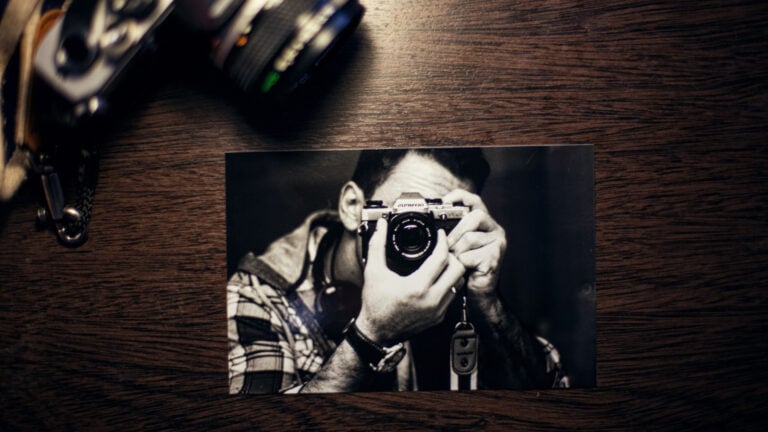
First came the hand grip. This adjustable leather “handle” was a mandatory feature for ungainly Graflex 4×5 and early Polaroid roll cameras. Just slip your hand inside one of these grips and you were reasonably confident that you could heft those early beasts around any photographic venue.

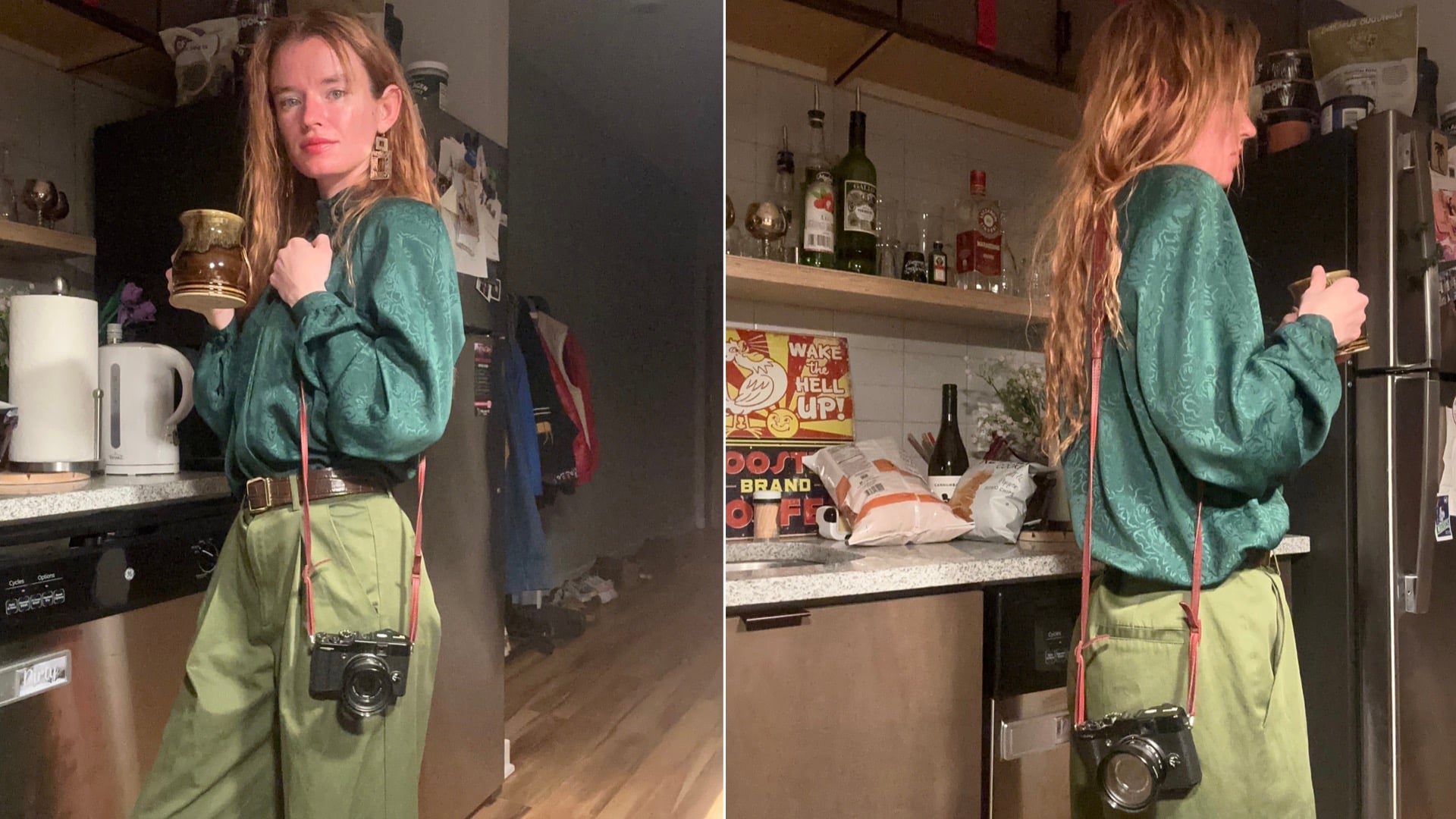
Thank goodness cameras became lighter and more portable, thus eliminating the need for a hand grip. The advent of these more petite portable photo shooters ushered in a new fashionable camera accessory…the neck strap (aka, the camera shoulder strap). From wide to narrow and fabric to leather, the neck strap became a de facto fashion feature of almost every camera. This ubiquity even forced manufacturers to include a neck strap along with every camera sold.
Stick your neck out
One side effect of the camera strap, however, was that the strap attachment D- and O-rings would rotate around the camera lugs and eyelets causing, GASP, abrasion of the camera body’s finish. Thin leather and plastic body finish protectors evolved in response to the continued widespread adoption of the camera neck strap.
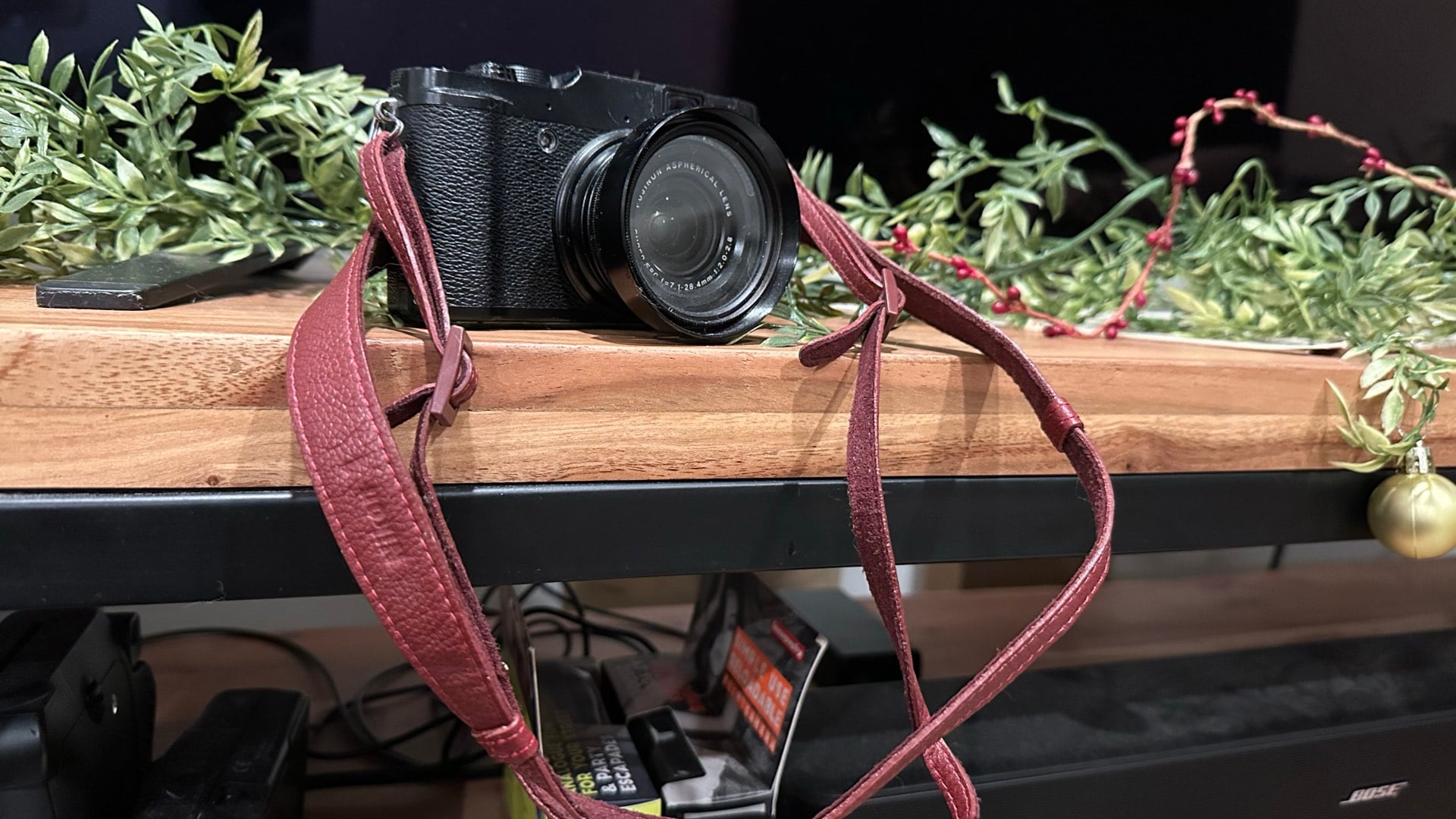
A glaring defect with the neck strap was that the camera was never “at hand” for rapid, unencumbered photography. An interesting mix between the neck strap and the historical hand strap spawned the camera accessory that attached itself to an under-used human appendage; the wrist. Apart from the wristwatch, many photographers had an open and freely-available wrist. Thus the wrist strap was born.
A twist of the wrist
Another hallmark of the wrist strap was the reduction in the amount of leather or fabric that was attached to the camera. Rather than both camera lugs being occupied by a neck strap, a wrist strap was only fastened to one side of the camera. This singular attachment point enable photographers to focus on adding this camera handling aid to the dominant hand/wrist for developing a “gunslinger” proficiency in bringing the camera rapidly up into a “shooting” position.
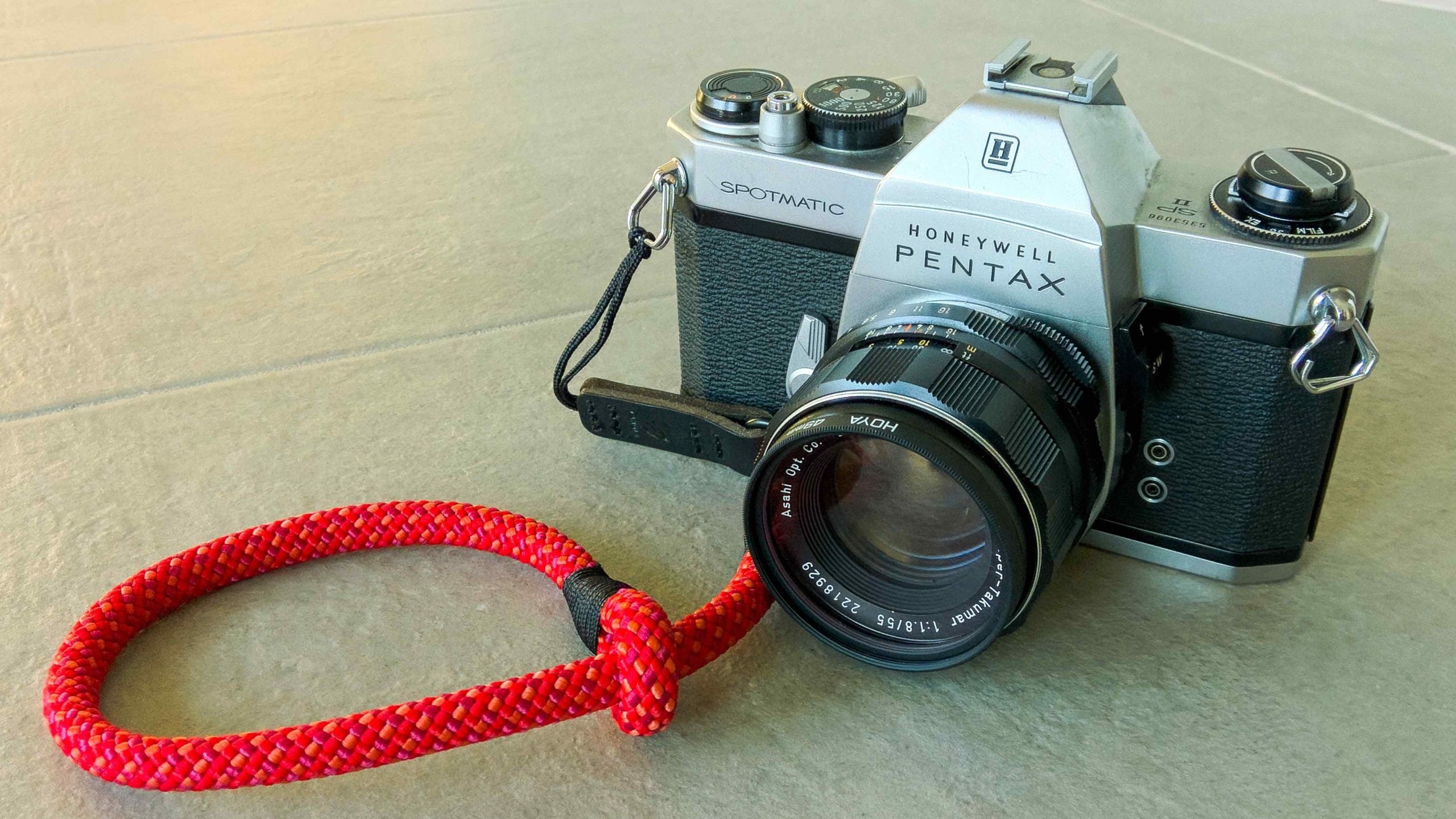
Finally, in the history of the camera strap, the progression from the antique hand grip culminates in the complete and total reduction in camera-holding material, as well as the occupation of the “final frontier” in under-used photographer body parts. Welcome to the newfangled finger strap!
A camera at your fingertip
The finger strap or, more commonly called, the finger cuff is quickly emerging as the next best thing for having your camera always ready at your beckoning call. Unlike neck or wrist straps, forget about dangling a heavy DSLR monster from your finger, the finger cuff is typically limited to smaller rigs weighing under 2 pounds.

Priced at less than $4, the leading finger cuff on today’s marketplace is the OP/TECH USA USA Finger Cuff-QD. If you want something more comfortable PeakDesign makes one as well. Unlike most of today’s black-finish cameras, these finger cuffs are available in a variety of colors suitable for every fashion-conscience photographer: Black, Dots, Green Plaid, Pink Swirl, and Skulls.
Armed with a two-part assembly, the finger cuff incorporates a “quick disconnect” leash enabling it to fit even the most restricted camera attachment point. While the second part of this strap is a comfy neoprene-like material that grips your finger and holds your camera securely at your fingertips.
So, there you have it, every conceivable human body attachment point has been exploited for toting photographic gear. Now, with the evolution of the camera carrying accessory complete, this question begs for an answer: just how many cameras can you carry when using your two hands, neck, two shoulders, two wrists, and ten fingers?
Enjoy.
See more from DIYPhotography.net on Google
Add DIYPhotography.net as a trusted source. This makes
our stories more likely to appear in your Google Search results.
 Add as a preferred source on Google

David Prochnow
Our resident “how-to” project editor, David Prochnow, lives on the Gulf Coast of the United States in Ocean Springs, Mississippi. He brings his expertise at making our photography projects accessible to everyone, from a lengthy stint acting as the Contributing How-To Editor with Popular Science magazine. While you don’t have to actually build each of his projects, reading about these adventures will contribute to your continued overall appreciation of do-it-yourself photography. A collection of David’s best Popular Science projects can be found in the book, “The Big Book of Hacks,” Edited by Doug Cantor.




Join the Discussion
DIYP Comment Policy
Be nice, be on-topic, no personal information or flames.