












Hera Spots Didymos for the First Time, But It Is Smaller Than a Pixel
Oct 13, 2026
Soumyadeep Mukherjee
Soumyadeep Mukherjee is an award-winning astrophotographer from India. He has a doctorate degree in Linguistics. His work extends to the sub-genres of nightscape, deep sky, solar, lunar and optical phenomenon photography. He is also a photography educator and has conducted numerous workshops. His works have appeared in over 40 books & magazines including Astronomy, BBC Sky at Night, Sky & Telescope among others, and in various websites including National Geographic, NASA, Forbes. He was the first Indian to win “Astronomy Photographer of the Year” award in a major category.
Share:
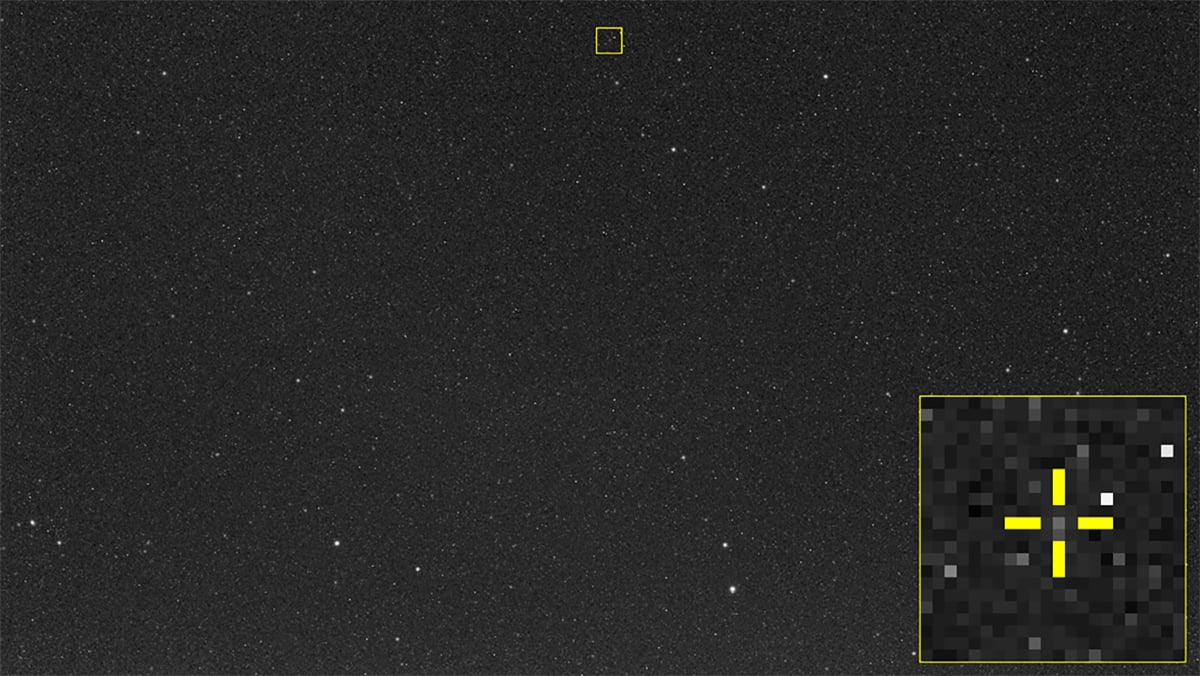
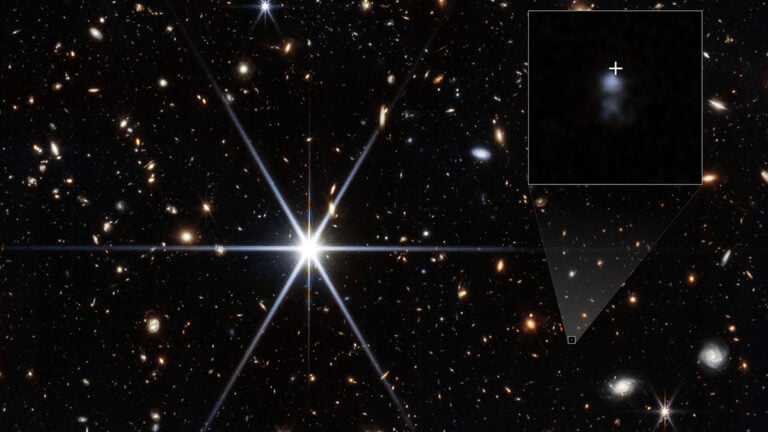
ESA’s Hera spacecraft has photographed its destination for the first time, picking out the Didymos asteroid system against a background of stars. The image, captured from approximately 236,500 kilometers away, shows little more than a point of light. Didymos is still too small for Hera’s camera to reveal its shape.
This image was captured exactly two years after Hera launched. The mission team identified the asteroid by combining multiple images and analyzing their brightness. This gave them their first image-based confirmation of the target ahead. Hera is travelling to Didymos and its smaller companion, Dimorphos, to investigate the aftermath of NASA’s DART impact in 2022.
How Hera found the asteroid
The image, however, does not show the kind of rocky landscape we might expect from an asteroid mission. Didymos appears as a faint point among the stars, with no visible surface or outline. But the observation marks a useful step for a spacecraft that must find its target before it can begin close-up science.
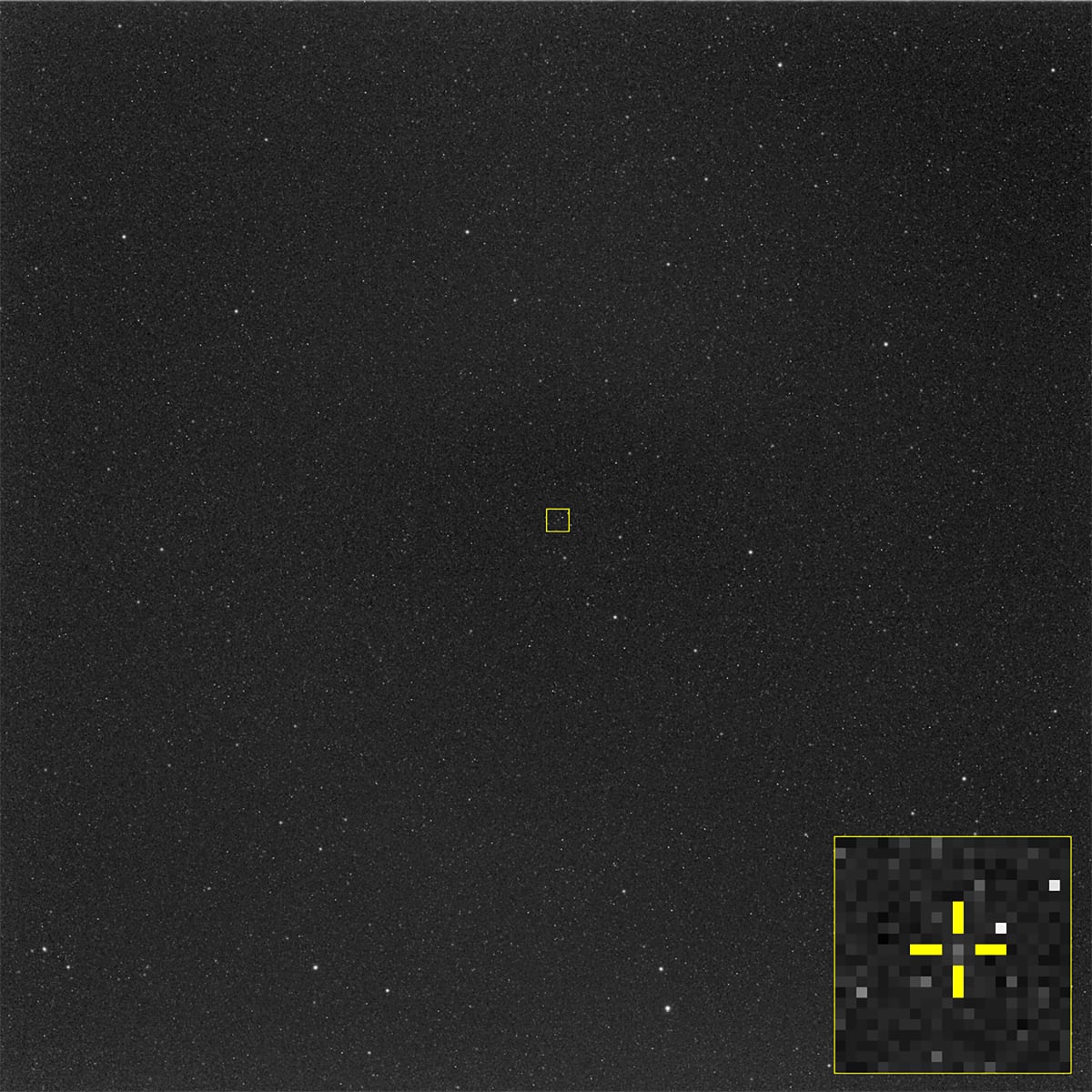
At a distance of 236,500 kilometers, Didymos appeared smaller than a single pixel in Hera’s image. When an object appears smaller than the camera can resolve, its light may register in one pixel or spread across neighboring pixels. The camera cannot show the object’s shape, but it can still detect its brightness.
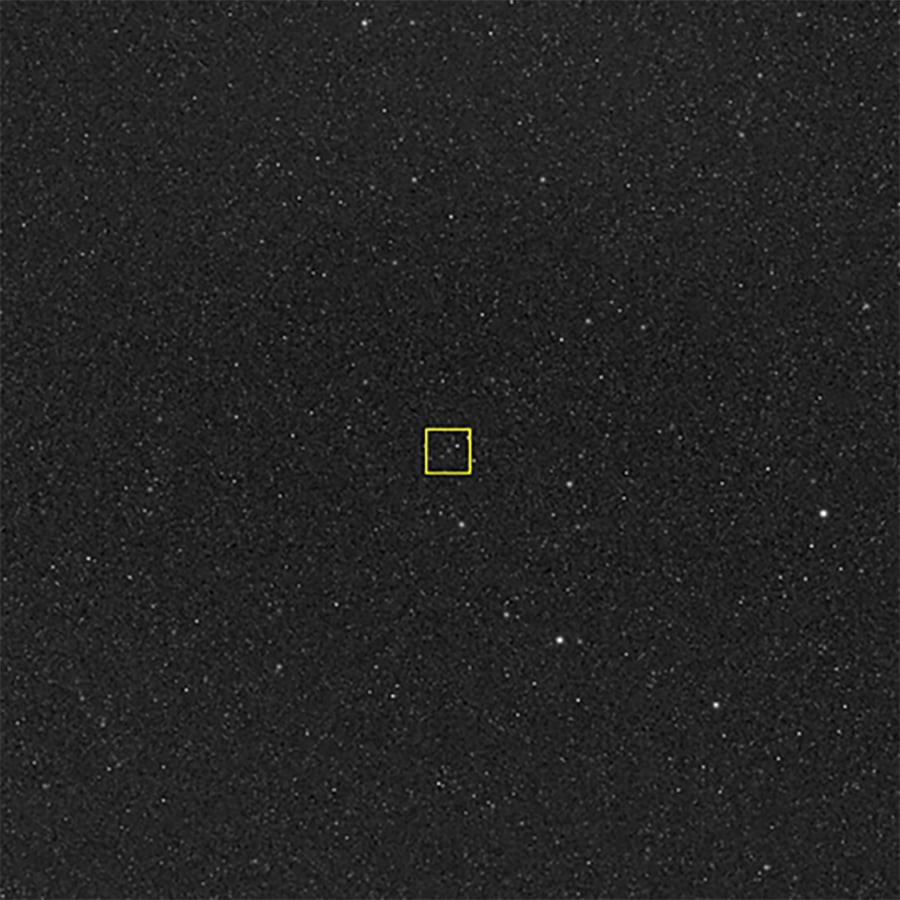
The team combined several images and used photometric analysis to identify Didymos against the background star field. Photometry measures an object’s brightness. By analysing the recorded light, the team could distinguish the asteroid from the surrounding stars.
Two asteroids with a shared history
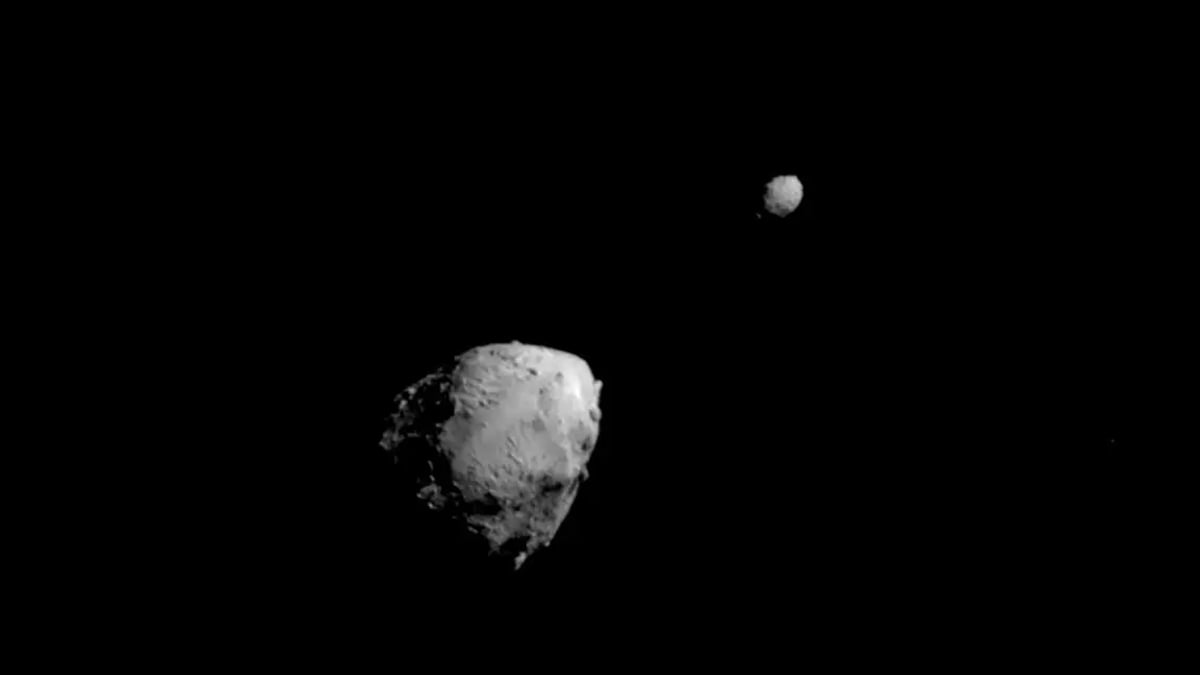
The point of light represents a binary asteroid system. Didymos, the larger body, measures about 780 meters across. Its companion Dimorphos measures roughly 150 meters in diameter and orbits Didymos. From Hera’s current distance, the camera cannot distinguish the two objects.
The pair is very important for planetary-defence research because scientists can measure Dimorphos’s orbit around Didymos. If an impact changes that orbit, astronomers can measure the difference. Researchers can then compare the results with models of how a spacecraft transfers momentum to an asteroid.
The system became the target of NASA’s Double Asteroid Redirection Test, known as DART. On September 26, 2022, DART deliberately collided with Dimorphos. The impact shortened the moonlet’s orbital period by about 33 minutes, according to NASA’s analysis.
Hera’s journey to the Didymos system
ESA launched Hera on October 7, 2024, aboard a SpaceX Falcon 9 rocket. The spacecraft travelled through the inner Solar System and flew past Mars in March 2025. That encounter helped adjust its trajectory towards the asteroid system.
The journey now brings Hera into the approach phase of its mission. Reaching a small asteroid system will require careful navigation. The spacecraft must reduce its relative speed, establish its position, and approach the two bodies safely. Their weak gravity also makes close operations more challenging than manoeuvring around a large planet.
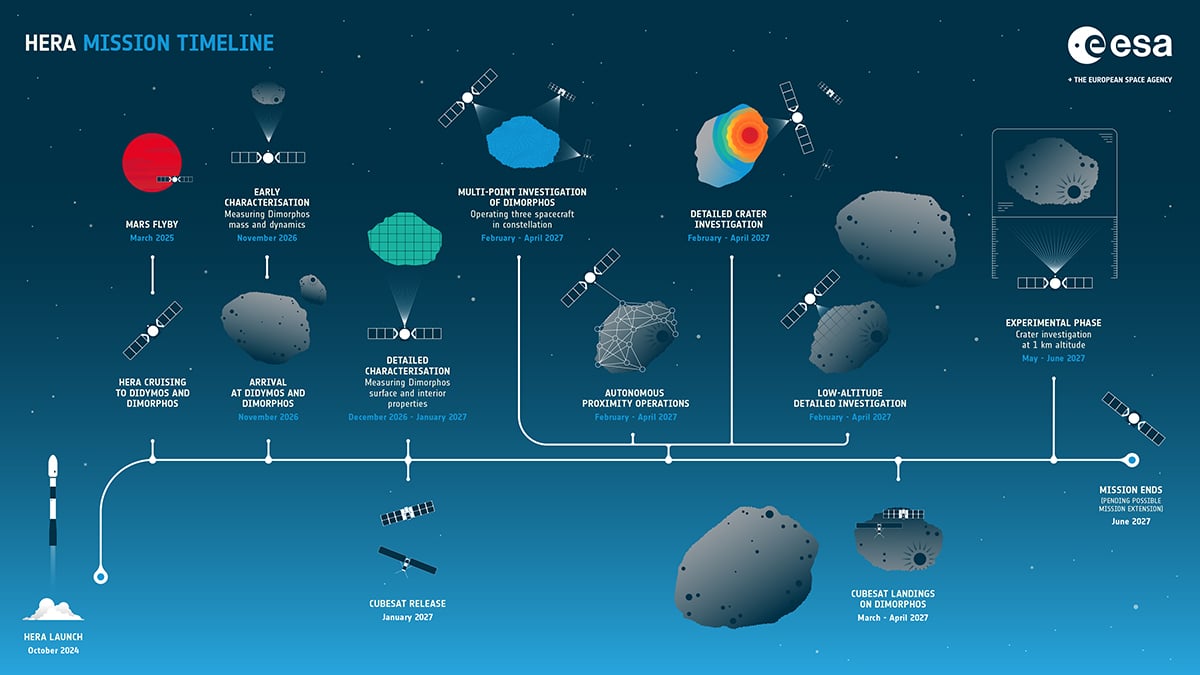
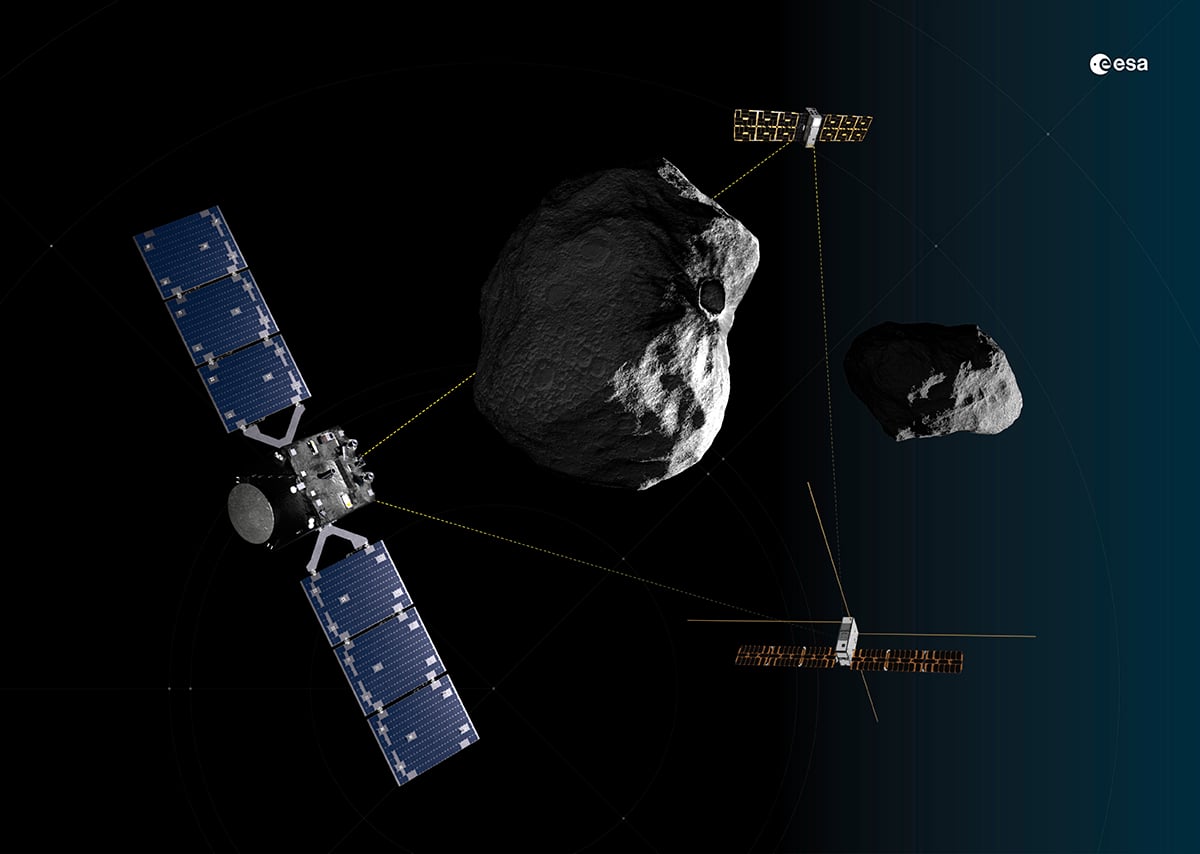
Hera carries two CubeSats, Milani and Juventas, which will add their own observations. Milani will investigate surface composition, while Juventas will use radar to probe Dimorphos’s interior. Their measurements will complement Hera’s work and help scientists build a more complete picture of the asteroid pair.
Clear skies!
See more from DIYPhotography.net on Google
Add DIYPhotography.net as a trusted source. This makes
our stories more likely to appear in your Google Search results.
 Add as a preferred source on Google

Soumyadeep Mukherjee
Soumyadeep Mukherjee is an award-winning astrophotographer from India. He has a doctorate degree in Linguistics. His work extends to the sub-genres of nightscape, deep sky, solar, lunar and optical phenomenon photography. He is also a photography educator and has conducted numerous workshops. His works have appeared in over 40 books & magazines including Astronomy, BBC Sky at Night, Sky & Telescope among others, and in various websites including National Geographic, NASA, Forbes. He was the first Indian to win “Astronomy Photographer of the Year” award in a major category.


Join the Discussion
DIYP Comment Policy
Be nice, be on-topic, no personal information or flames.