





















Unistellar Envision Brings Augmented Reality to a 10×50 Binocular
Sep 16, 2026
Soumyadeep Mukherjee
Soumyadeep Mukherjee is an award-winning astrophotographer from India. He has a doctorate degree in Linguistics. His work extends to the sub-genres of nightscape, deep sky, solar, lunar and optical phenomenon photography. He is also a photography educator and has conducted numerous workshops. His works have appeared in over 40 books & magazines including Astronomy, BBC Sky at Night, Sky & Telescope among others, and in various websites including National Geographic, NASA, Forbes. He was the first Indian to win “Astronomy Photographer of the Year” award in a major category.
Share:
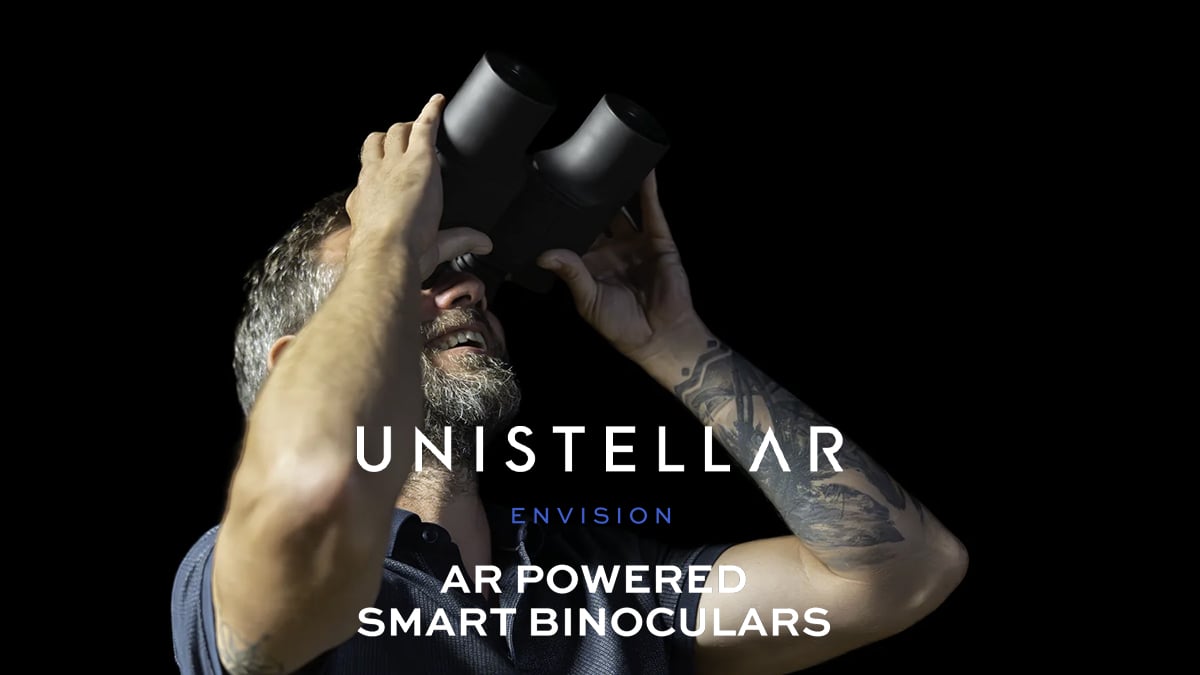
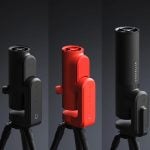
Finding an object in the night sky usually means doing two things at once. You look through your binoculars, then look away to check a star chart or astronomy app. Unistellar‘s new Envision smart binoculars are designed to remove that gap.
ENVISION adds a red augmented-reality display to the optical view, so information about the objects in front of you appears inside the binoculars. That makes Envision quite different from digital binoculars that use cameras to create an electronic view. Unistellar has kept the optical image at the center of the system.
A conventional optical view with something extra
The easiest way to understand Envision is to start with what has not changed. It is still a pair of binoculars, and its optical system follows a familiar 10×50 format.
The binoculars use 50mm objective lenses and a Porro-prism design. Unistellar uses BAK4 glass with full multi-coating, along with 10× magnification. The resulting 6.5° field of view gives observers enough sky around a target to make the view useful for navigation as well as observation. The exit pupil measures 5mm.
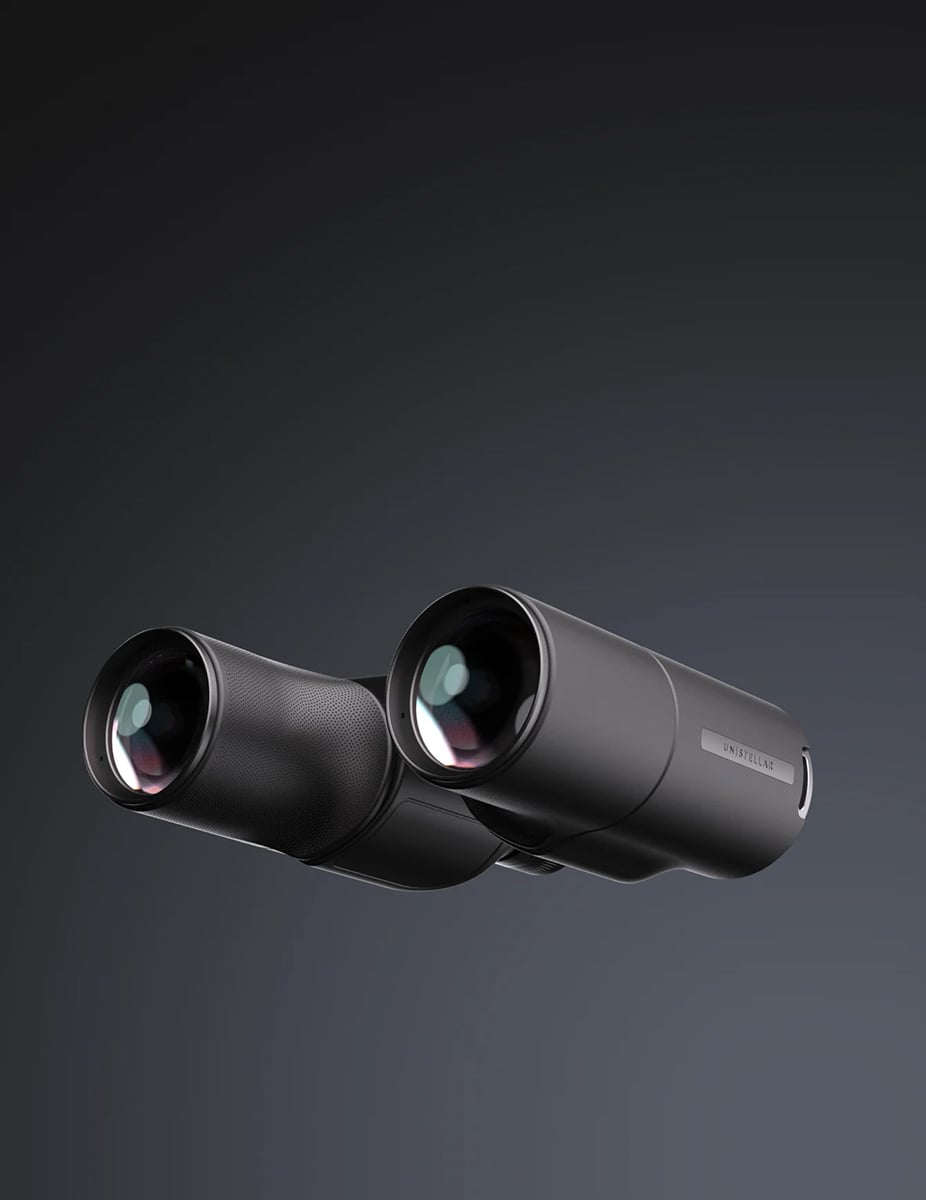
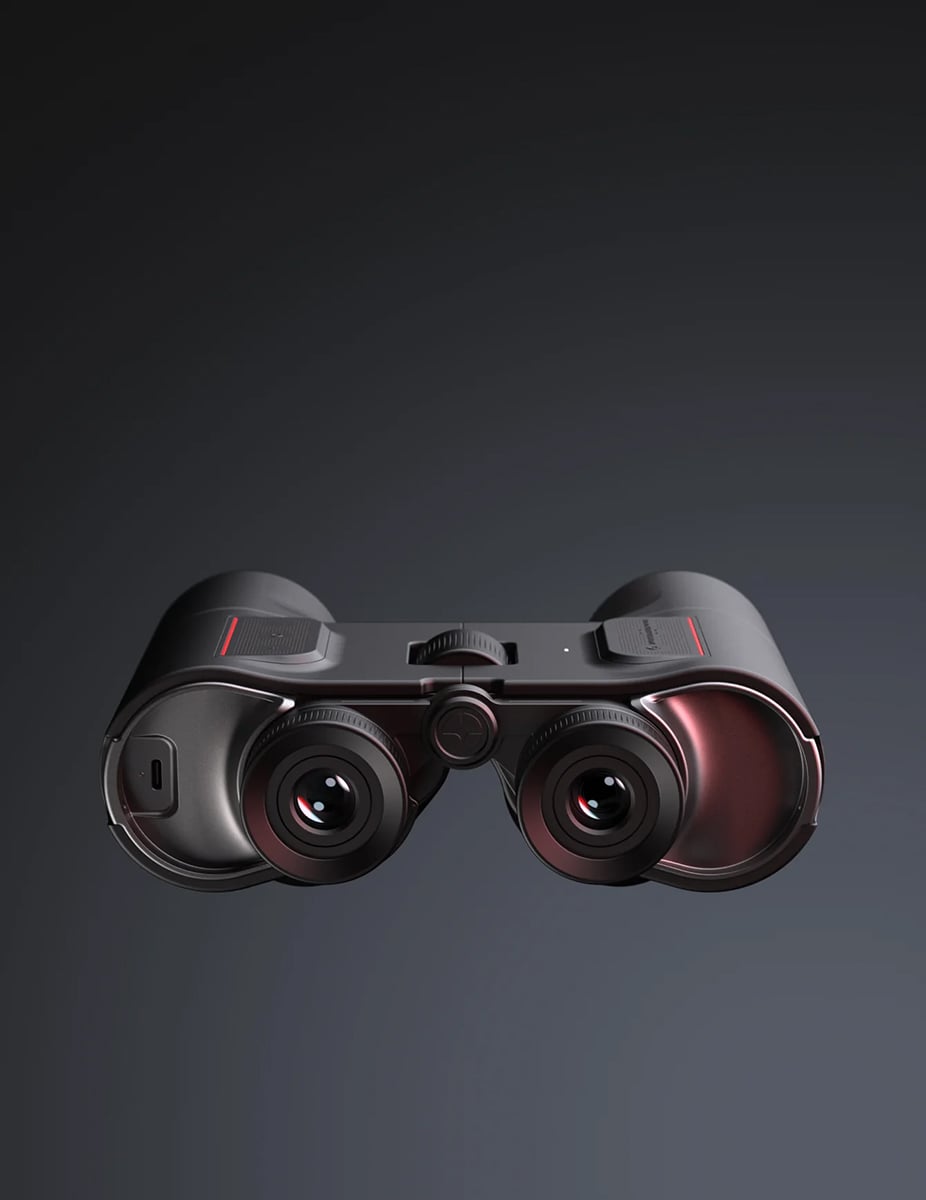
Unistellar developed the optical system with support from Nikon‘s experts. The binoculars have 11.8mm of eye relief and retractable eyecups, so people who wear glasses can use them. Dioptric correction sits on the left eyepiece, while an adapter allows the binoculars to go on a tripod.
Envision uses a 960 × 960 red OLED display to project information into the optical path. The display covers 85 percent of the field, which Unistellar describes as full-field AR. Users can also change the size of the overlay text.
Envision does not use a camera to capture what you are looking at. There is no video feed between the scene and your eyes. You see the landscape or night sky through the binocular optics, with the red AR information added on top.
The binoculars can also work without a battery. Switch off the electronic system, and they continue to function as conventional binoculars. The battery only powers the augmented-reality features.
The night sky becomes easier to read
The astronomy features give Envision its most distinctive role. Anyone who has tried to find an unfamiliar object through binoculars knows the problem. At 10×, the view looks very different from the naked-eye sky.
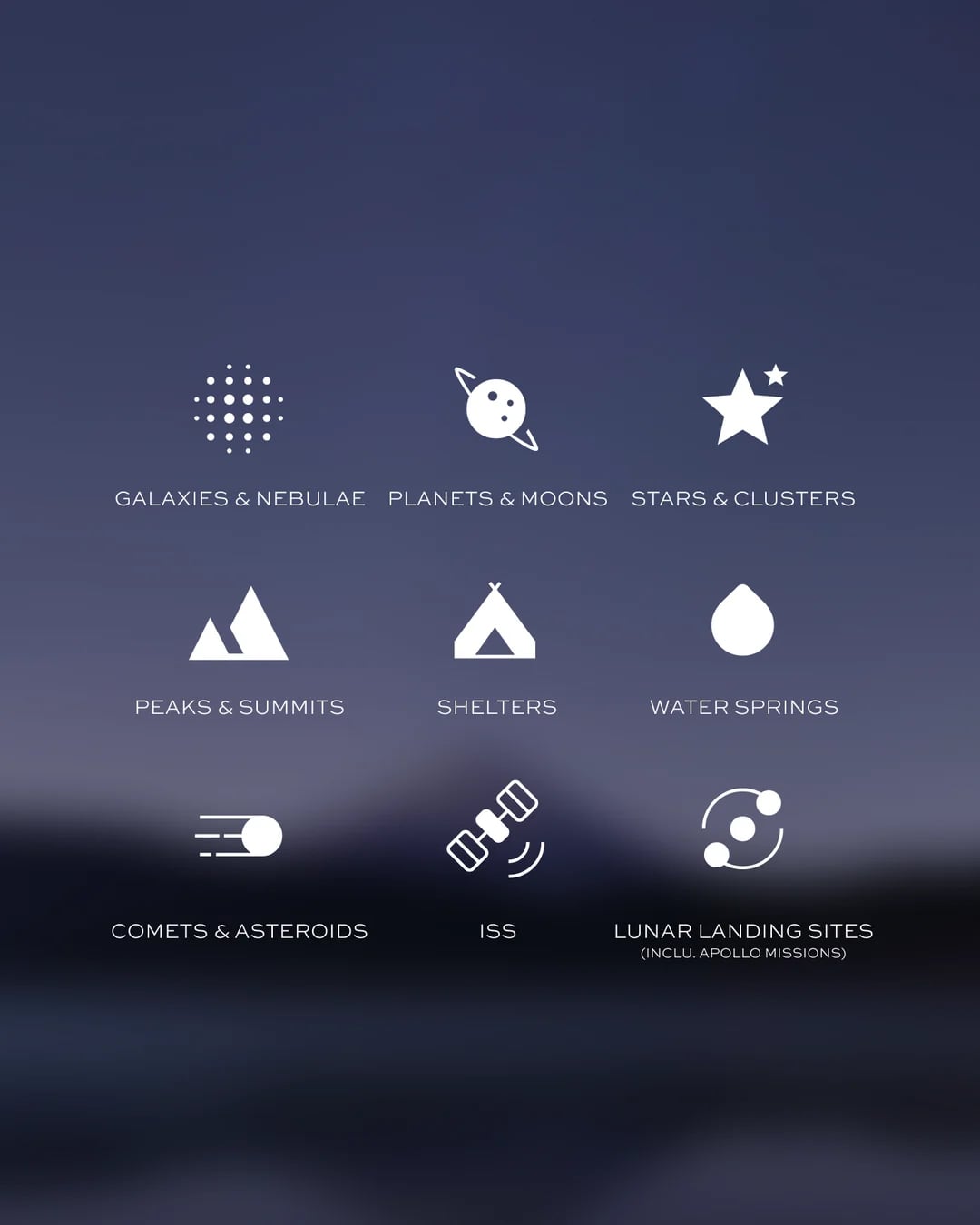
Envision’s Night Exploration system can recognise stars, clusters, nebulae, planets and the International Space Station. It also covers comets, asteroids, and lunar landing sites. As you move the binoculars, names, magnitudes, and distances can appear around the relevant objects.
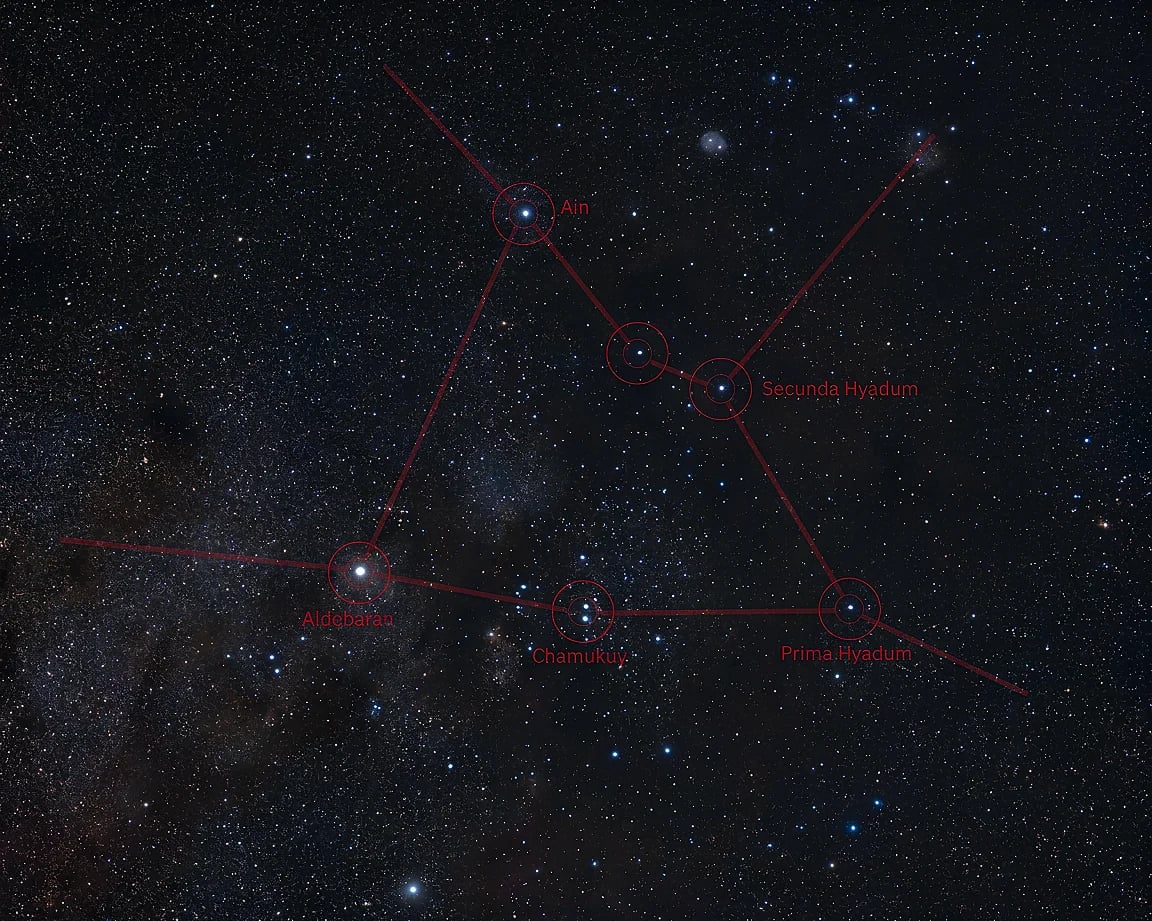
The database contains more than 200,000 visible stars and more than 1,000 astronomical points of interest. That includes targets across the Solar System as well as objects beyond it. The Moon also gets its own collection of points of interest, including landing sites from the Apollo missions.
The system does not require a constant internet connection. Users can download the maps and regional information they need before travelling. Envision can then use that stored information in places where the phone has little or no connectivity.
The same system works on mountains and trails
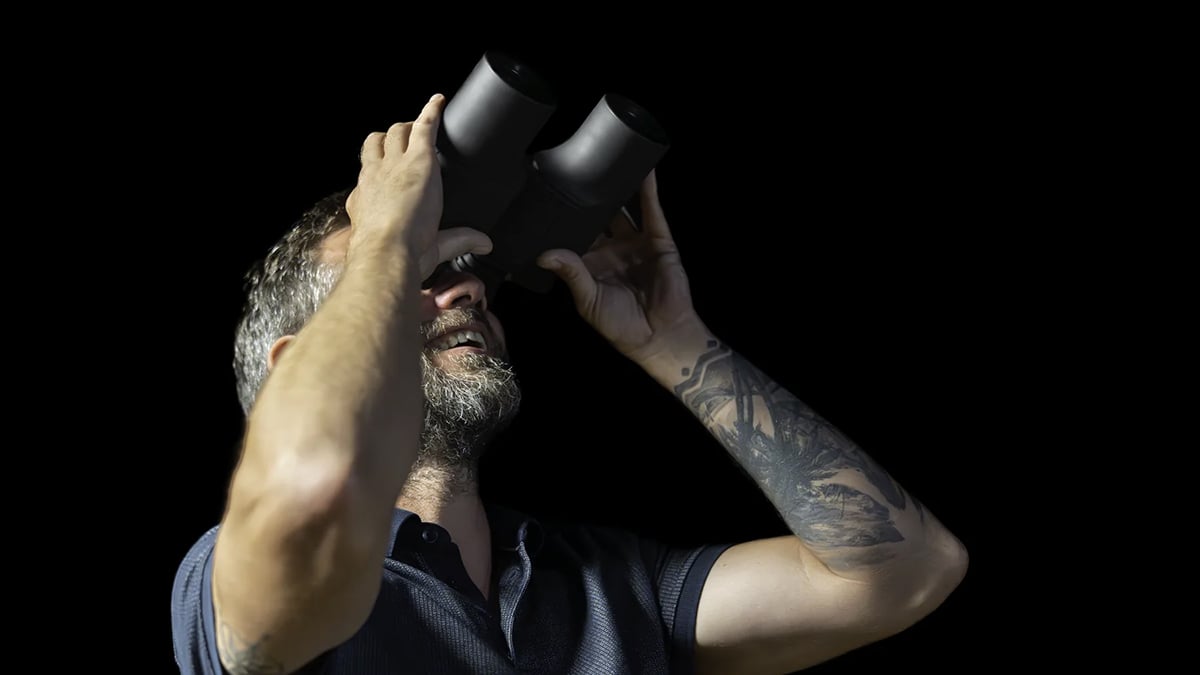
Once the Sun comes up, Envision changes from an astronomy guide into a geographical guide. The Smart Scouting system can identify peaks and ridgelines. It can also recognise trails, shelters, lakes and springs.
Unistellar says its terrestrial database contains billions of topographic nodes and millions of cartographic features. Those data include summits, hiking routes, shelters, lakes, rivers, and springs. The company continues to expand the content through software updates.
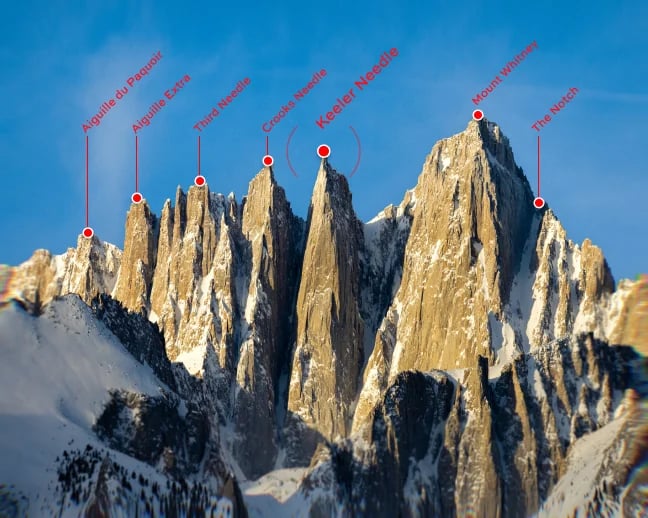
Guided Navigation also works during daytime use. A hiker can select a point of interest in the app and follow the AR guidance towards it. Advanced Compass mode adds another layer by projecting altitude and azimuth into the field of view.
How does it know where the binoculars are pointing?
Envision has no camera for image recognition. Unistellar combines several sensors with location information from the connected smartphone. Gyroscopes, magnetometers, gravity, and ambient-light measurements all contribute to the orientation system.
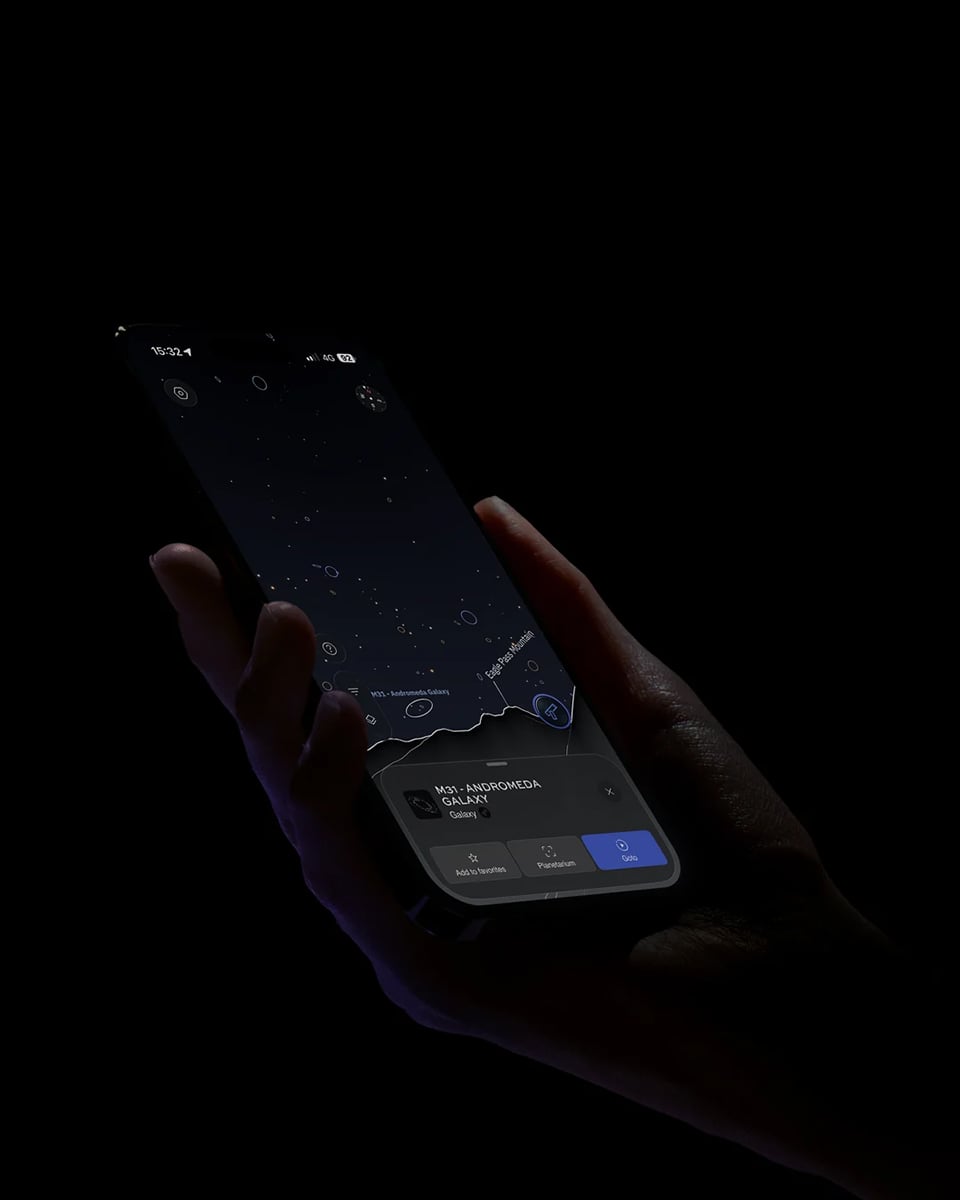
The phone supplies GPS positioning. Unistellar’s software combines these sources to work out the binoculars’ orientation. The user then performs a single anchoring gesture to align the AR information with the optical view.
Key specifications, price, and availability
Here are the key specifications of the Envision:
| Magnification power | 10× |
| Diameter | 50mm |
| Architecture | Porro |
| AR Battery life | 5h or 1,000 binocular engagements per charge |
| Field of view | 6° |
| Exit pupil diameter | 5mm |
| Optical glass | BAC4 Fully Multicoated |
| Astronomical targets of interest | 1,000+ sky objects |
| Number of visible stars | 200,000 |
| App compatibility | iOS and Android |
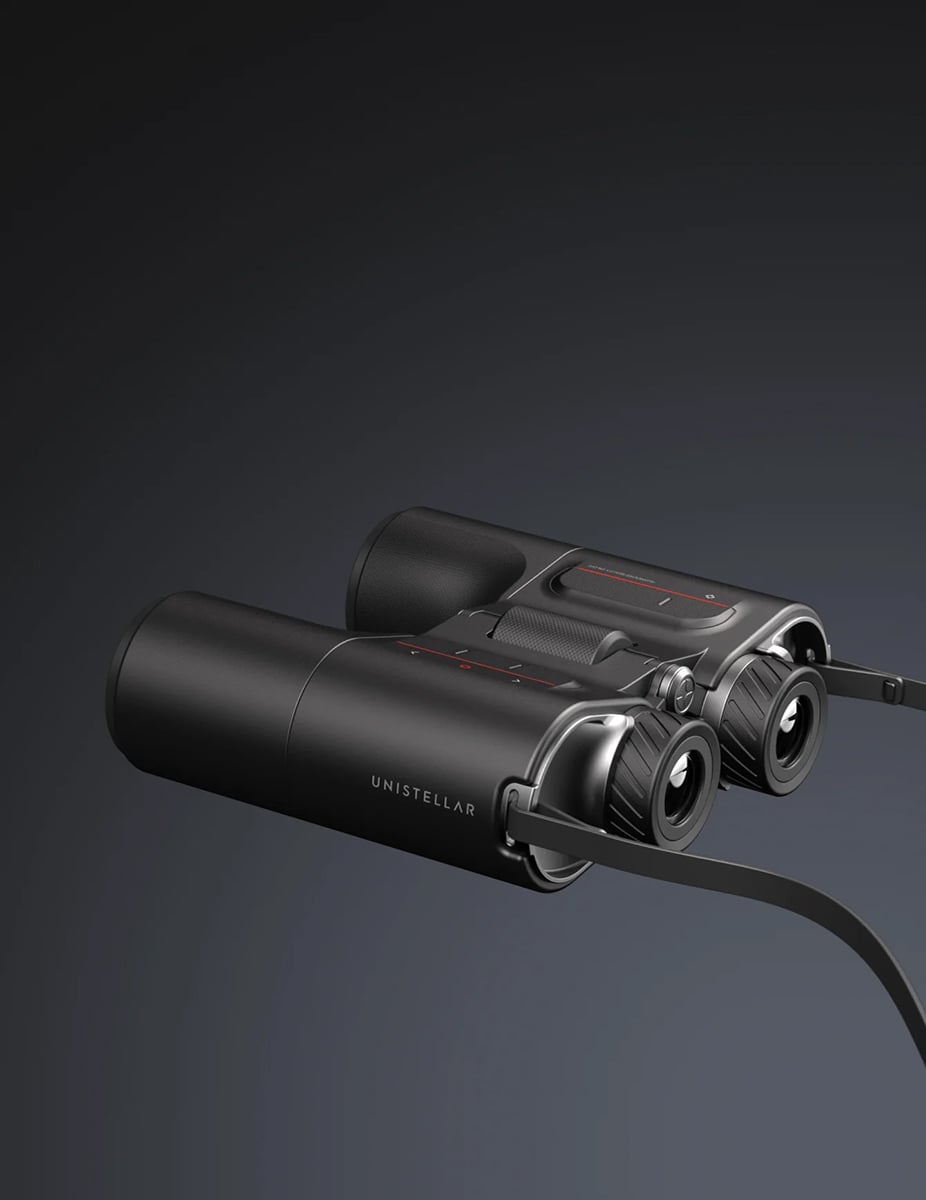
The Envision binocular is priced at $1,499. It is currently available for pre-ordering via Unistellar’s official website. The first batch is expected to be delivered by the end of November 2026. Unistellar plans an official public release in 2027.
Clear skies!
See more from DIYPhotography.net on Google
Add DIYPhotography.net as a trusted source. This makes
our stories more likely to appear in your Google Search results.
 Add as a preferred source on Google

Soumyadeep Mukherjee
Soumyadeep Mukherjee is an award-winning astrophotographer from India. He has a doctorate degree in Linguistics. His work extends to the sub-genres of nightscape, deep sky, solar, lunar and optical phenomenon photography. He is also a photography educator and has conducted numerous workshops. His works have appeared in over 40 books & magazines including Astronomy, BBC Sky at Night, Sky & Telescope among others, and in various websites including National Geographic, NASA, Forbes. He was the first Indian to win “Astronomy Photographer of the Year” award in a major category.



Join the Discussion
DIYP Comment Policy
Be nice, be on-topic, no personal information or flames.