






















OM System Is Bringing the PEN Into the Modern Camera Era
Sep 16, 2026
Alysa Gavilan
Alysa Gavilan has spent years exploring photography through photojournalism and street scenes. She enjoys working with both film and mirrorless cameras, and her fascination with the craft has grown over the decades. Inspired by Vivian Maier, she is drawn to capturing everyday moments that often go unnoticed.
Share:
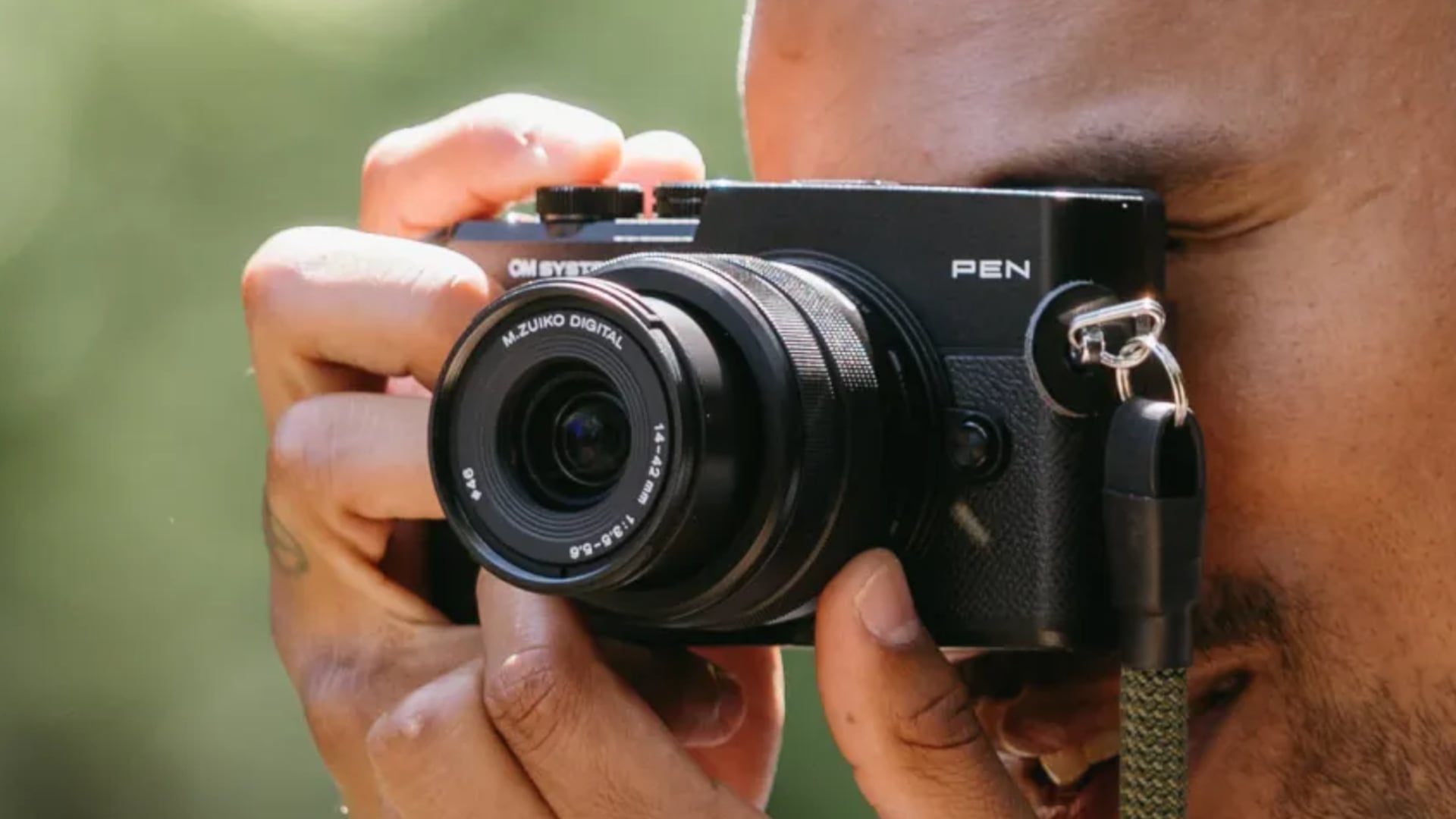
The PEN has been around long enough to have seen photography change several times. From a half frame film camera launched in 1959 to the digital PEN models that followed decades later, the name has always been associated with making interchangeable lens photography smaller and more approachable.
Now OM SYSTEM is giving the PEN another update, combining its compact rangefinder style design with computational photography, weather resistance, and a set of controls aimed at photographers who want to shape the look of their images in camera.
The OM SYSTEM PEN is the first PEN series camera to carry the OM SYSTEM name. It is scheduled to ship in late October 2026 at $999.99, with lens kits starting at $1,099.99.
A familiar PEN with modern hardware
The new camera uses a 20.37 megapixel Micro Four Thirds Live MOS sensor and TruePic IX processor. It has a built-in electronic viewfinder, 5 axis image stabilization and a 121 point all cross type phase detection autofocus system.
OM SYSTEM claims up to 5.5 stops of stabilization at the center of the frame and 4.5 stops at the edges. The system works with all compatible Micro Four Thirds lenses, making stabilization one of the camera’s more practical advantages for handheld shooting.
AI subject detection is also making its way into the PEN for the first time, with recognition for people, cats and dogs. Starry Sky AF is available for night photography, while Pro Capture can record up to 12 frames before the shutter is fully pressed.
The body is also dustproof and has an IPX1 rated splashproof design when paired with a compatible weather resistant lens. That makes the PEN more useful as an everyday camera, rather than something that needs to stay home when the weather turns questionable.
The PEN wants you to play with your photos
The most interesting part of the new PEN may be its approach to image making.
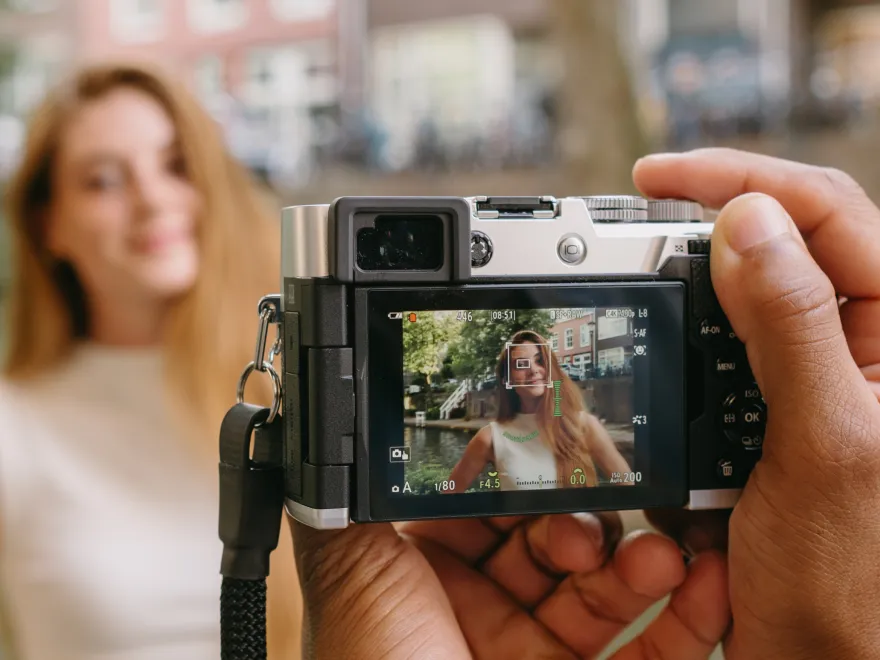
A dedicated Profile Control switch on the front of the camera gives quick access to color and monochrome settings. Four color presets include Film Rich Color, Film Vivid, Film Soft Tone and Standard, while four monochrome presets offer different approaches to black and white photography.
Photographers can also adjust the saturation of 12 individual colors across 11 levels. Monochrome profiles can combine effects such as film grain, color filters, highlight and shadow control, shading and tone adjustments.
That puts some of the fun of film simulation and in camera processing directly into the shooting experience.
The PEN also brings computational photography features that would normally require several exposures or post processing. A dedicated CP button provides access to Tripod High Res Shot, Handheld High Res Shot, Live ND, focus stacking, HDR and multiple exposure modes.
The camera can therefore do considerably more than its small body suggests.
Small camera, big expectations
The new M.Zuiko Digital 14 42mm F3.5 5.6 III zoom is designed to complement the PEN’s compact format. It provides a 28 84mm equivalent range and uses a retractable design to keep the package small. OM SYSTEM is also offering a double lens kit with the 40 150mm F4.0 5.6 R.
Battery life is rated at approximately 410 shots under CIPA testing. The camera also supports vertical video, slow and quick motion recording, OM Cinema picture modes and a video tally light.
At $999.99, the PEN sits well above the point and shoot category. It is instead competing for attention from photographers who could buy a more conventional mirrorless camera but want something smaller and more visually distinctive.
That feels consistent with the PEN’s history. OM SYSTEM is not trying to turn the series into a miniature professional camera. It is keeping the basic idea intact while adding the technology expected from a modern interchangeable lens camera.
After nearly seven decades, the PEN’s biggest trick may still be the simplest one: making a camera that you actually want to carry.
See more from DIYPhotography.net on Google
Add DIYPhotography.net as a trusted source. This makes
our stories more likely to appear in your Google Search results.
 Add as a preferred source on Google

Alysa Gavilan
Alysa Gavilan has spent years exploring photography through photojournalism and street scenes. She enjoys working with both film and mirrorless cameras, and her fascination with the craft has grown over the decades. Inspired by Vivian Maier, she is drawn to capturing everyday moments that often go unnoticed.
Related Posts
 Olympus announces the uber retro Pen E-PL8 Micro Four Thirds camera + lenses and a strobe
 3D photos taken with a $20,000 DSLR rig, go head to head with a $300 film era setup
 End of an era? The Sony A9 is showing up discontinued at online retailers
 Rare Soviet-era 14K gold ring spy camera is now available on eBay
Join the Discussion
DIYP Comment Policy
Be nice, be on-topic, no personal information or flames.