

























Hubble Captures a Giant “Decagon” Around Saturn’s South Pole
Sep 3, 2026
Soumyadeep Mukherjee
Soumyadeep Mukherjee is an award-winning astrophotographer from India. He has a doctorate degree in Linguistics. His work extends to the sub-genres of nightscape, deep sky, solar, lunar and optical phenomenon photography. He is also a photography educator and has conducted numerous workshops. His works have appeared in over 40 books & magazines including Astronomy, BBC Sky at Night, Sky & Telescope among others, and in various websites including National Geographic, NASA, Forbes. He was the first Indian to win “Astronomy Photographer of the Year” award in a major category.
Share:
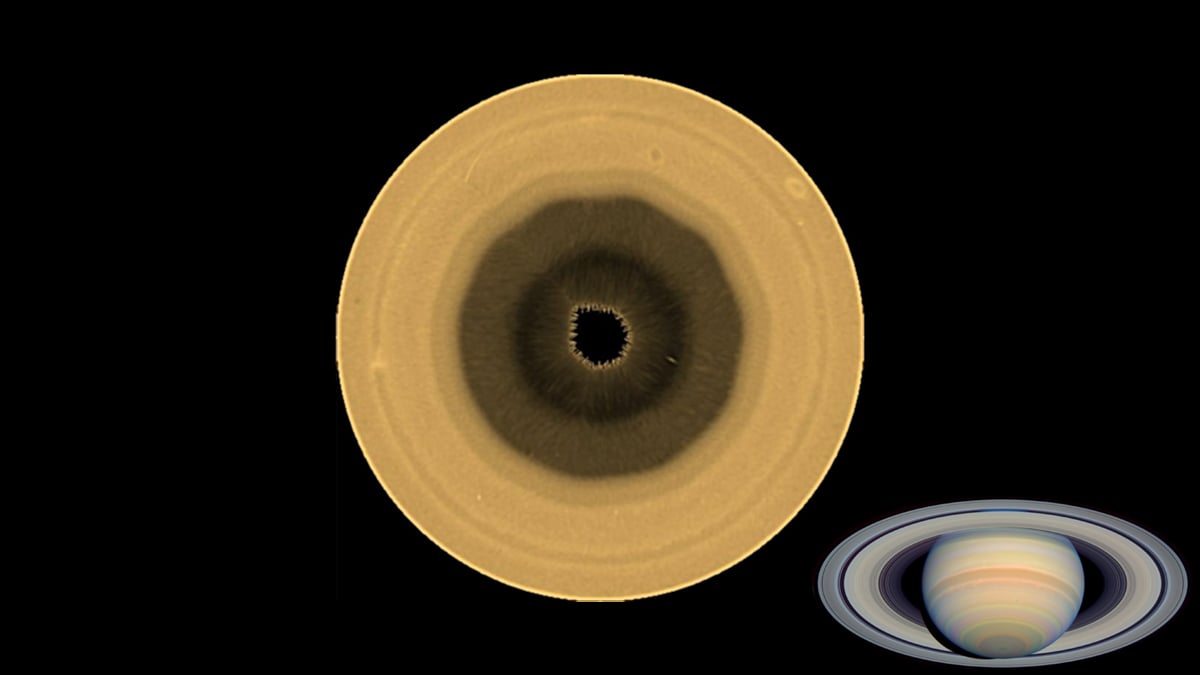
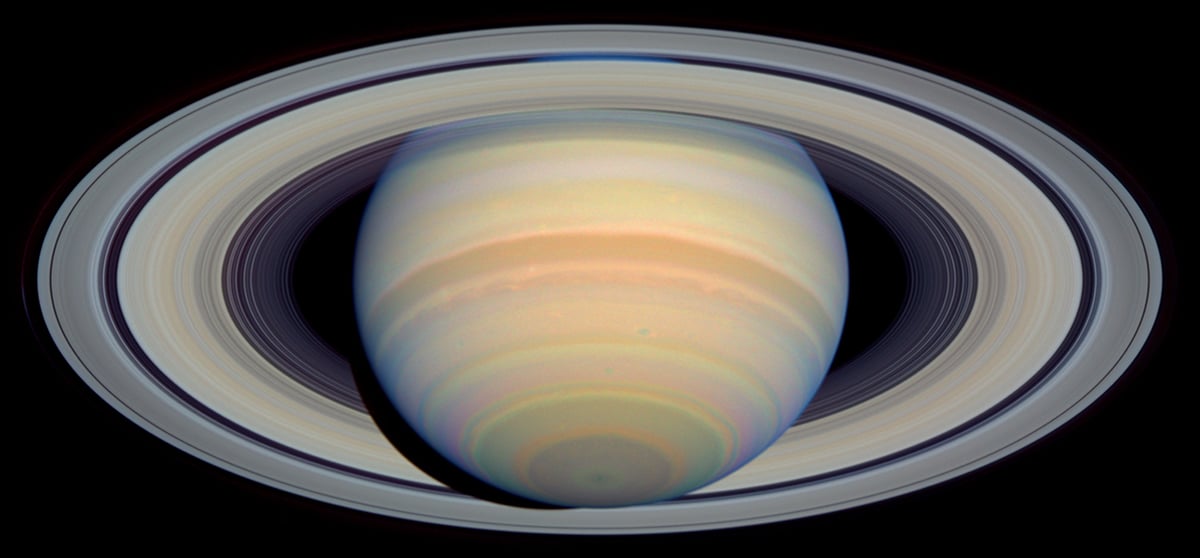
Saturn has surprised astronomers with a strange shape around its poles. This time, it is not the famous hexagon that has fascinated scientists for decades. NASA’s Hubble Space Telescope has found a huge ten-sided pattern around Saturn’s south pole. The feature is part of a powerful jet stream in Saturn’s atmosphere. It looks like a giant decagon in Hubble images. Hubble observations show that it was already present in 2023, but it has become much easier to see since then.
A ten-sided wave around Saturn’s south pole
The feature first becomes very interesting when viewed as part of Saturn’s wider atmospheric circulation. Saturn rotates once in roughly 10.7 hours, driving strong winds through its atmosphere. These winds form alternating eastward and westward jet streams that encircle the planet. Near the poles, some of these jets can develop large waves that remain organized over huge distances.
The newly identified southern decagon belongs to one of these polar jets. It is not a ring of storms arranged into a geometric shape. The pattern can look surprisingly regular in images, but the atmosphere is constantly moving through it.
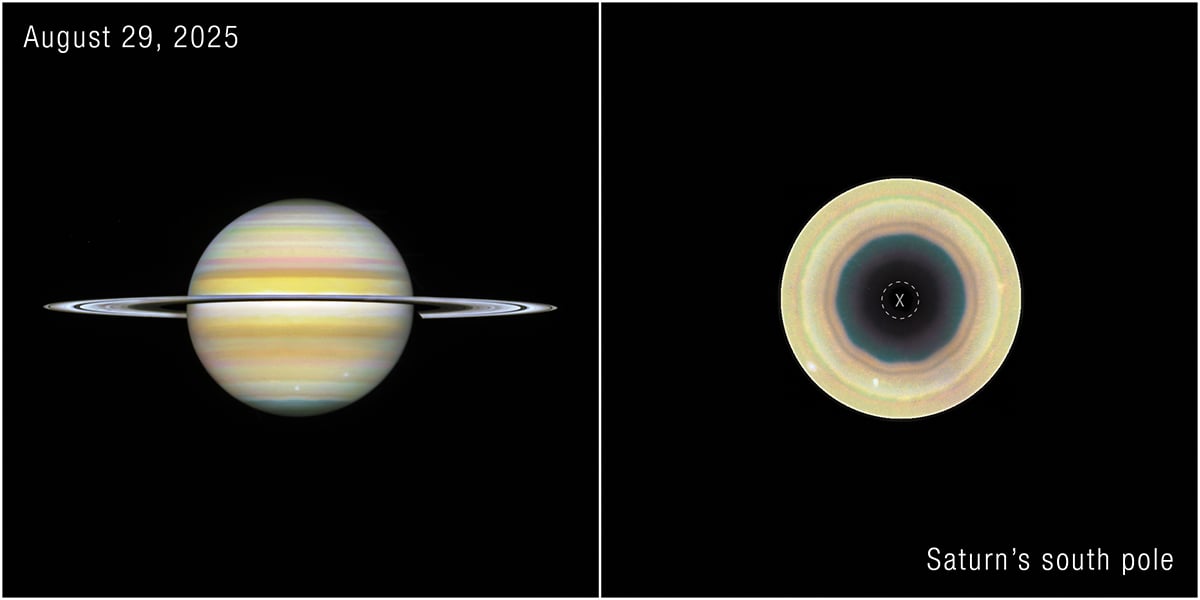
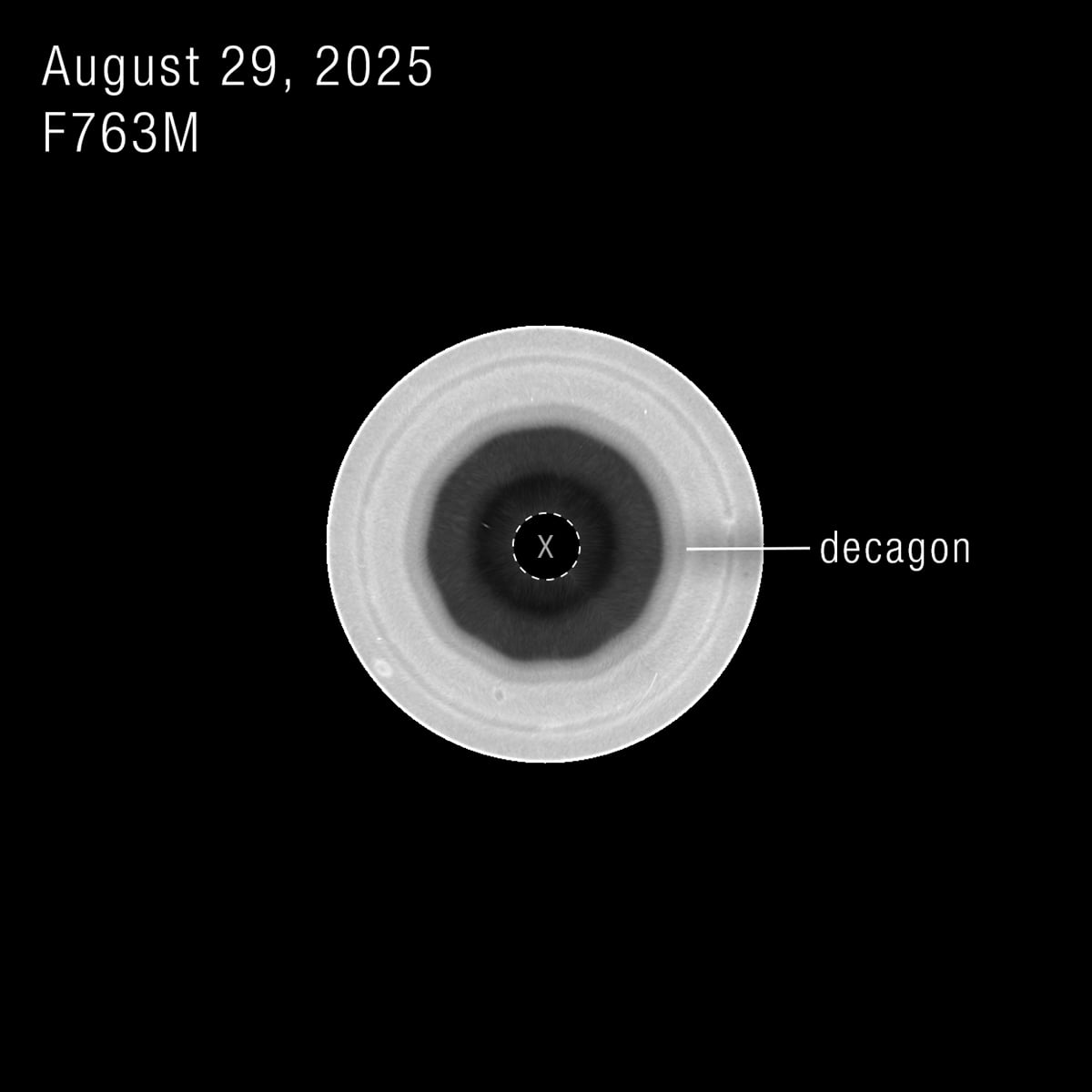
Hubble observations have revealed the feature at several wavelengths. This matters because different wavelengths can probe different levels of Saturn’s atmosphere. The decagon shifts slightly with altitude, giving researchers a way to examine how the wave extends vertically. The observations suggest that the structure reaches through multiple atmospheric layers rather than existing at one narrow cloud deck.
One of the clearest observations came from Hubble on August 29, 2025. The telescope used its Wide Field Camera 3 to image Saturn in a filter that made the southern pattern particularly visible. When astronomers compared this observation with earlier data, they found that the structure had become easier to identify.
Astronomers are watching the decagon develop
Saturn takes about 29.5 Earth years to complete one orbit around the Sun. Its seasons therefore last for several Earth years, and the amount of sunlight reaching each hemisphere changes slowly.
As Saturn moves through its southern summer, its south pole becomes easier to observe. Astronomers using ground-based telescopes began seeing changes in the polar atmosphere. In 2024, planetary scientist Agustín Sánchez-Lavega and amateur observers Trevor Barry and Jean-Paul Oger noticed an unusual undulating band around the pole.
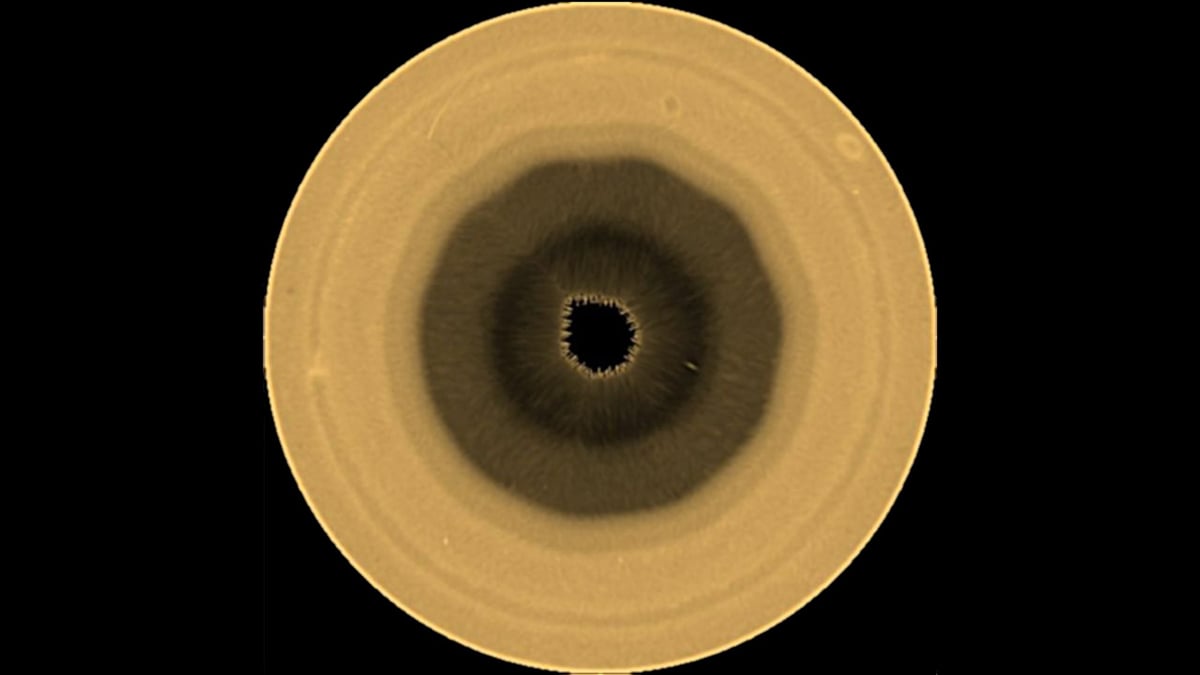
Further observations in 2025 revealed the pattern more clearly. Hubble then provided sharper views and allowed researchers to compare the features with earlier observations.
When the team examined Hubble’s archive, they found evidence of the structure in 2023. It was already present, but its geometry was less obvious. Later observations showed the wave becoming more defined.
Hubble’s long-term monitoring of Saturn
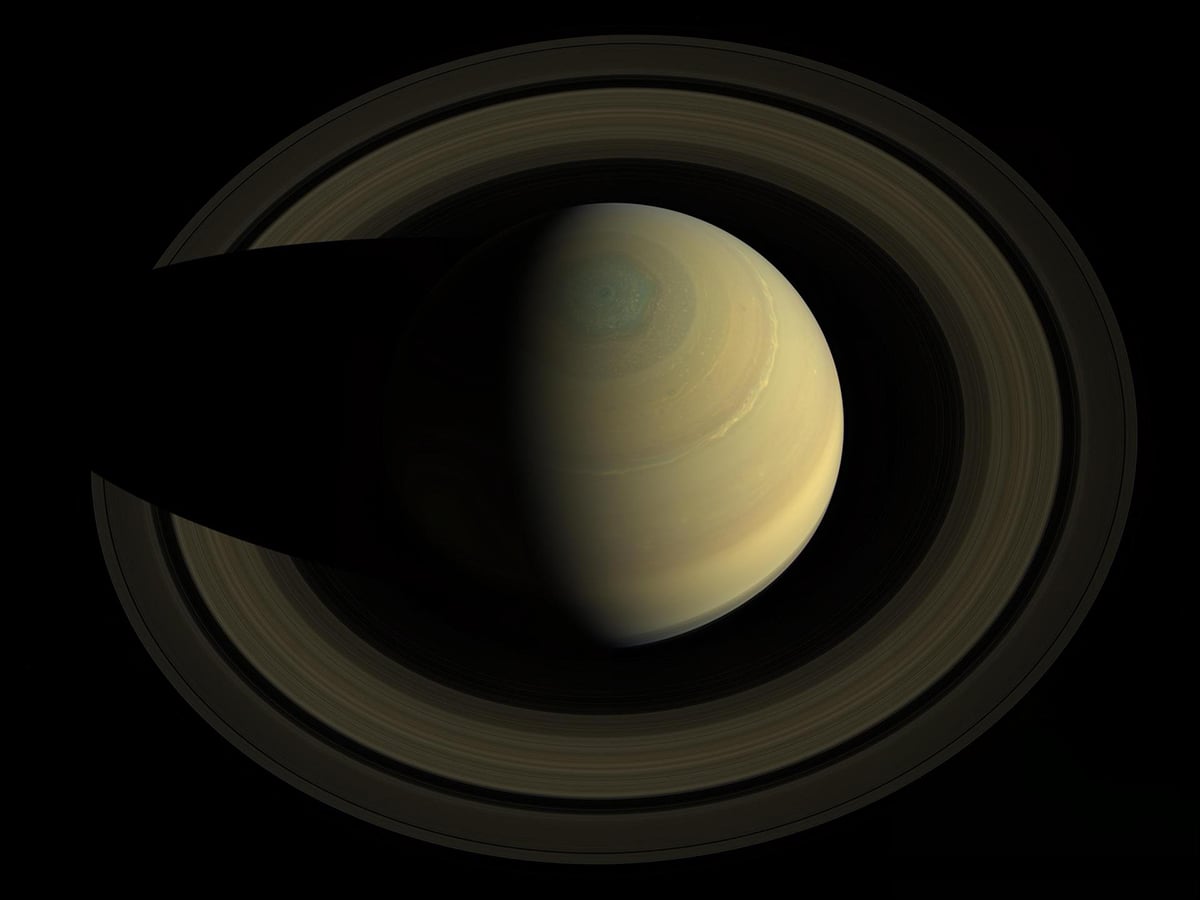
Hubble’s Outer Planet Atmospheres Legacy program, known as OPAL, has monitored Jupiter, Saturn, Uranus, and Neptune since 2014. OPAL builds a long-term record so that researchers can compare observations from different years and identify gradual changes.
Saturn is particularly well suited to this kind of work. Its slow seasonal cycle means that major atmospheric changes can unfold over many years. A single observing campaign could easily miss them.
Ground-based observers still played an important role in this discovery. Their images helped identify changes in Saturn’s southern atmosphere and added observations between Hubble visits. Amateur astronomers were among those who noticed the unusual wave in 2024.
Clear skies!
See more from DIYPhotography.net on Google
Add DIYPhotography.net as a trusted source. This makes
our stories more likely to appear in your Google Search results.
 Add as a preferred source on Google

Soumyadeep Mukherjee
Soumyadeep Mukherjee is an award-winning astrophotographer from India. He has a doctorate degree in Linguistics. His work extends to the sub-genres of nightscape, deep sky, solar, lunar and optical phenomenon photography. He is also a photography educator and has conducted numerous workshops. His works have appeared in over 40 books & magazines including Astronomy, BBC Sky at Night, Sky & Telescope among others, and in various websites including National Geographic, NASA, Forbes. He was the first Indian to win “Astronomy Photographer of the Year” award in a major category.



Join the Discussion
DIYP Comment Policy
Be nice, be on-topic, no personal information or flames.