























A Year Later, Does the Canon EOS R50V Still Hold Its Own?
Jun 24, 2026

Share:
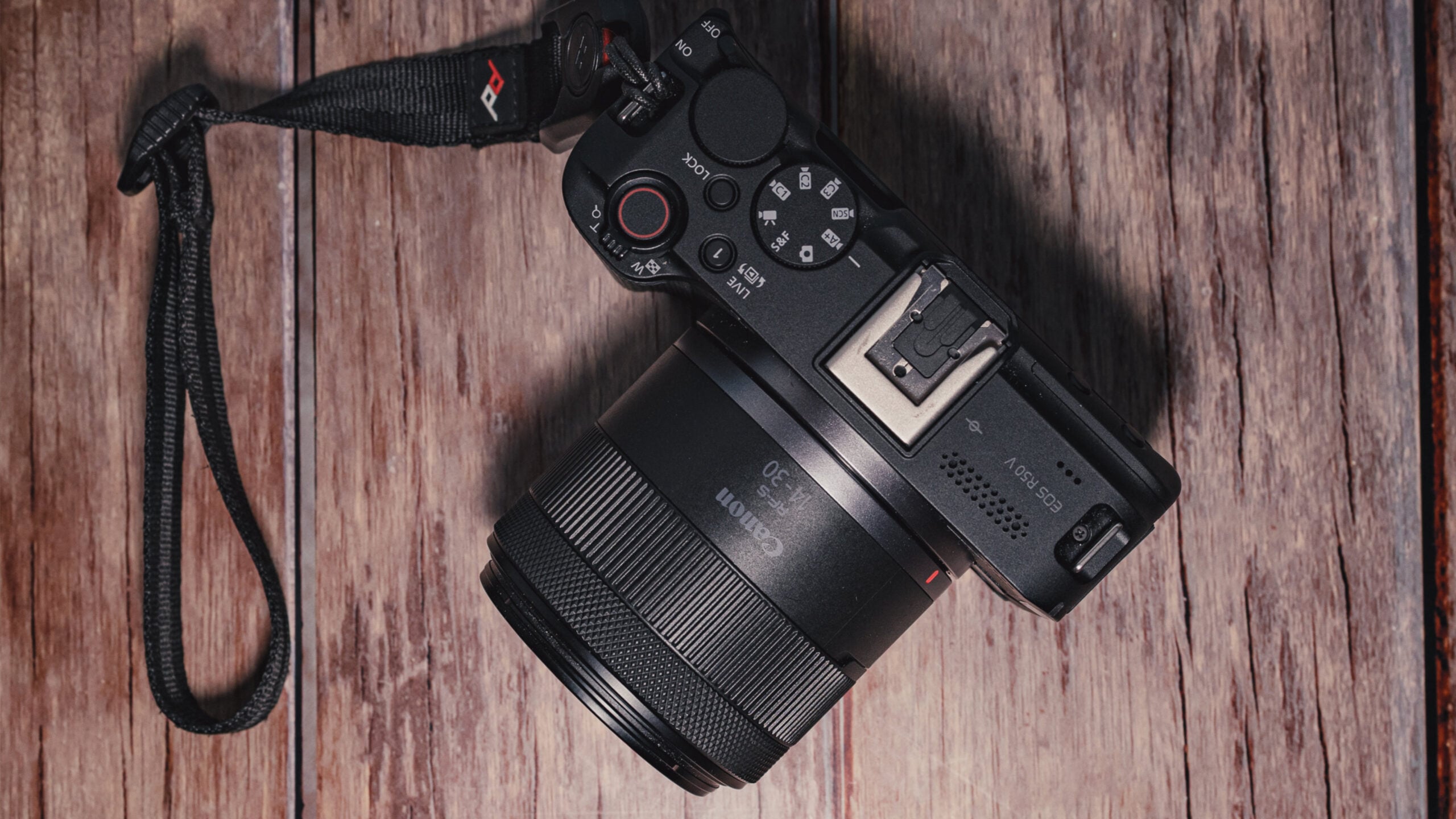
For anyone who has considered content creation or hybrid photography, the Canon EOS R50V sits somewhere between an entry-level camera and a serious video rig that can also capture still images. It’s one of the most competitively priced cameras to be released in the past few years and it put Canon in conversations that have long been dominated by Sony and action camera companies like DJI and GoPro. But after one year since its release, is the Canon EOS R50V a camera you should consider buying?
Canon EOS R50V and RF14-30mm F4-6.3 Key Features
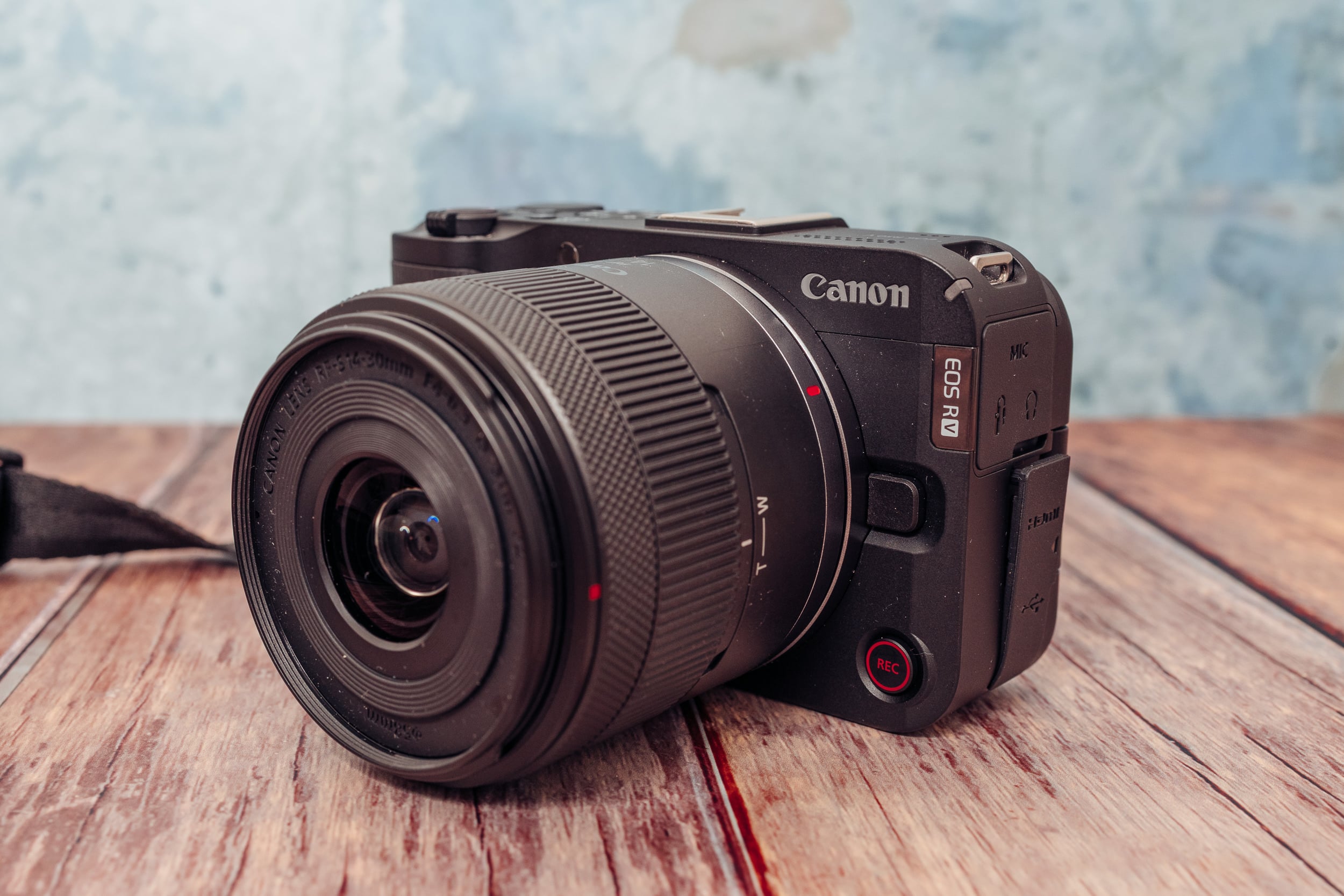
The following list of tech specs/key features was taken from the B&H Photo Video product page. B&H loaned us the linked kit for this review.
- For Content Creators and Vloggers
- 24.2MP APS-C CMOS Sensor
- DIGIC X Image Processor
- UHD 4K60p Cropped, 4K30 6K Oversampled
- Dual Pixel CMOS AF II
- 3.0″ 1.04m-Dot Vari-Angle Touchscreen
- Vertical Mount, Front Record Button
- Multi-Function Shoe, Wi-Fi & Bluetooth
- RF-S 14-30mm f/4.5-6.3 IS STM PZ Lens
The Canon EOS R50V’s larger, 24-megapixel APS-C sensor will provide most vloggers and content creators with a considerable bump in image quality over smaller vlogging kits like the uber popular DJI OSMO Pocket 3. And like with many full-frame mirrorless cameras, the R50V has the expandability of being an interchangeable lens system. The Canon R50V also includes both a vertical and traditional tripod mount so you could record content in their native outputs – i.e., portrait (9:16) for social media, or landscape (16:9) for everything else.
Making the Canon EOS R50V My Everyday Camera
I think it’s important to note that I am not the primary audience for this camera. I’m an event photographer, yes, but rarely will I record any BTS content or companion video footage for a client. You can fight me in the forums if you disagree with how I choose to run my business. That said, there was something that felt natural in picking up the R50V. For the first time that I could remember, I found myself gravitating to the R50V as a regular “walking around” camera – in no small part because of its compact size. One of the key differences between the Canon EOS R50 and R50V is the latter’s lack of an EVF. This significantly reduces the camera’s footprint and almost makes it pocketable.
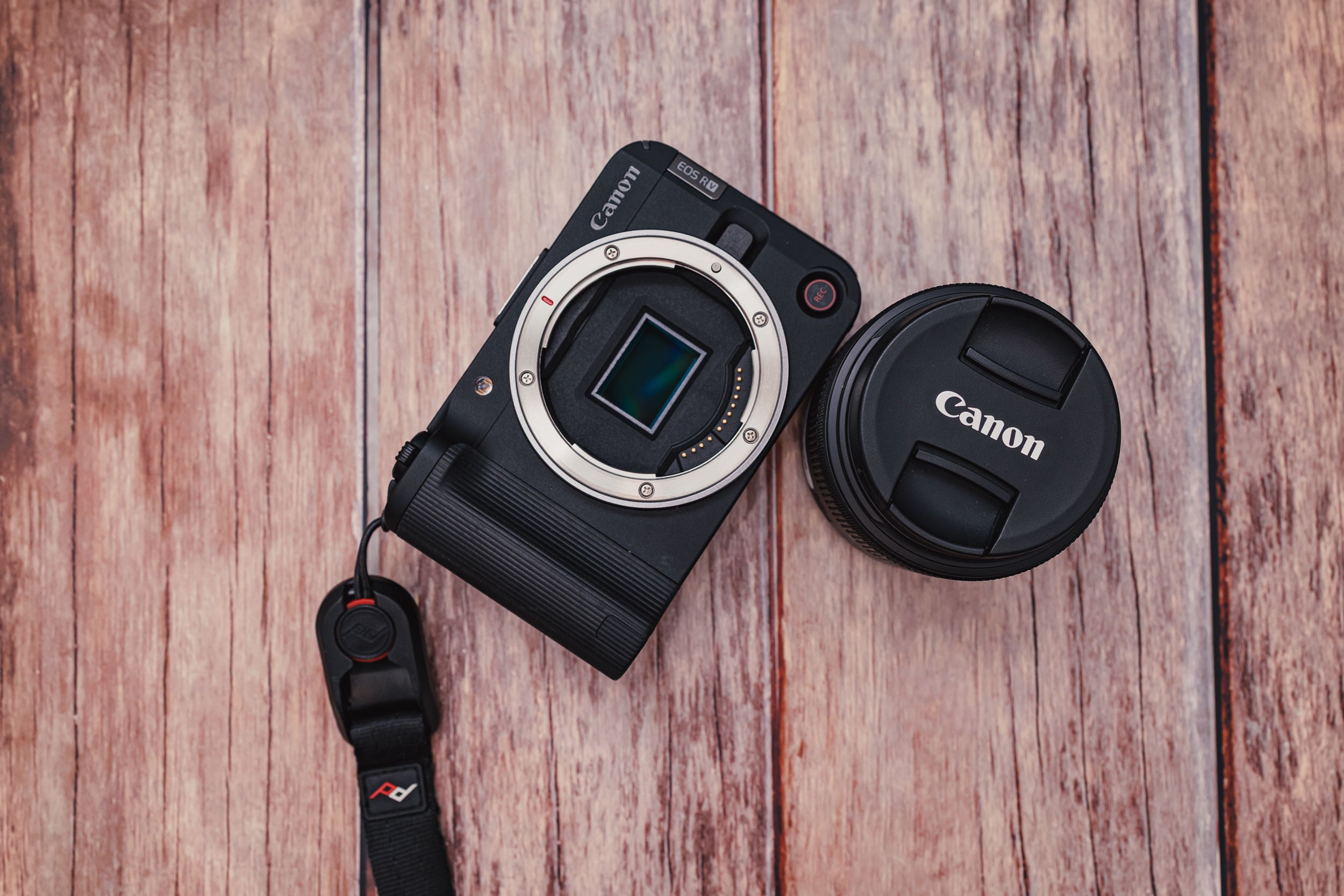
In terms of ergonomics, the flat body style that’s become common among today’s vlogging cameras can usually feel a bit awkward, especially if you’ve got larger hands, but for the most part, the R50V felt comfortable hand-holding – even when shooting longer video clips. I work with a few houses of worship helping them start or expand their A/V setups, and I also volunteer in the media team with my local church. In both scenarios, I found that the R50V could be easily deployed as a secondary or main camera but because it can easily and natively capture 9:16 video, it makes it an amazing camera that can be used just for capturing social media clips. Yes, today there are plenty of software options that you could run to automatically pull and crop standard 16:9 video and repackage for social, but most churches are relying on volunteers to produce their online services. Having a dedicated camera for 9:16 that’s affordable (and not a congregant’s personal phone) is a gamechanger.
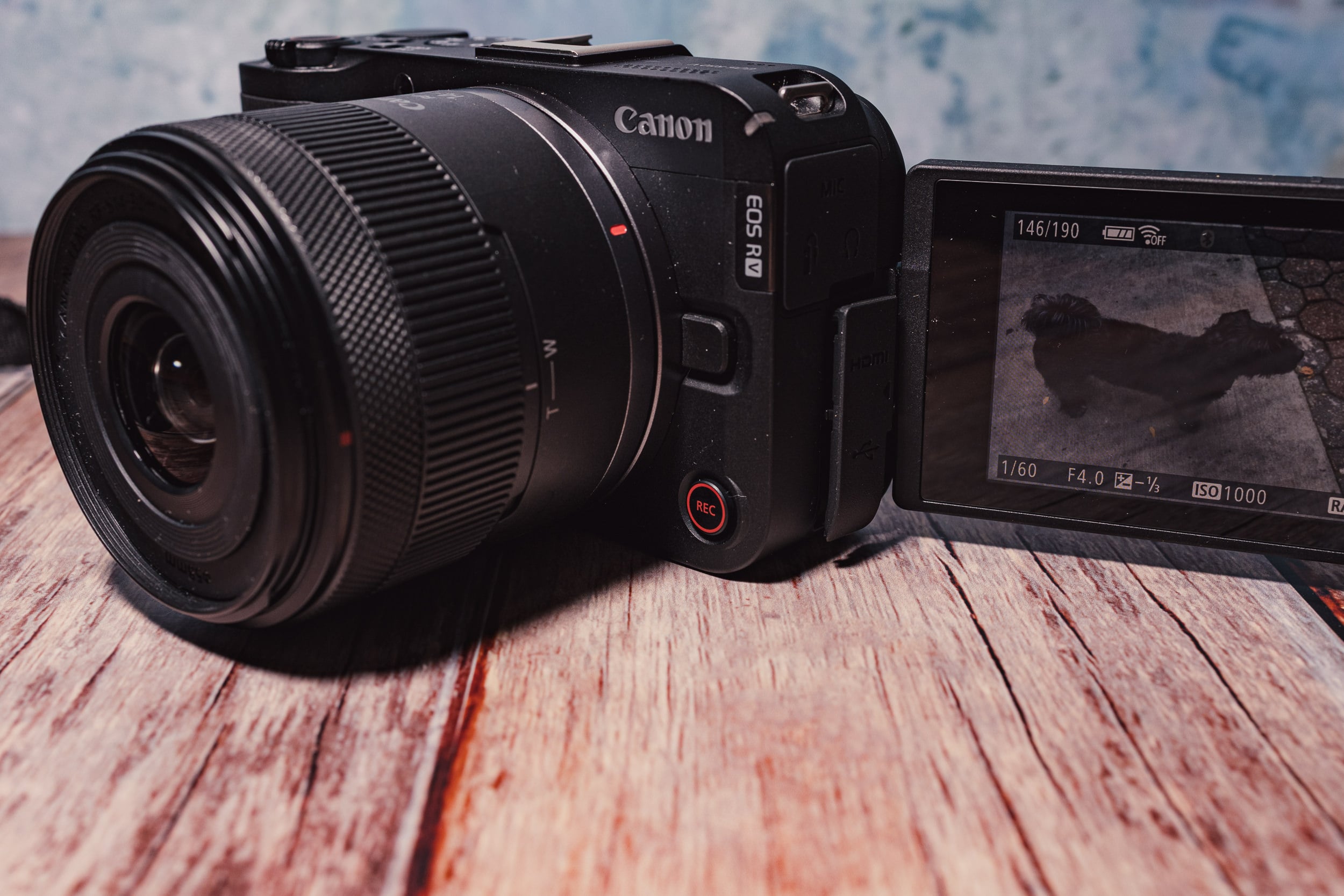
For vloggers and content creators who don’t have an entire production team behind them, you’ll love the flip-out screen, tally light, and front-facing record button. These are the kinds of minor details that should be considered when choosing the right camera for the specific kind of creative endeavor you set out on. While the R50V is in large part a Canon EOS R50 without a viewfinder, these details make all the difference when considering the camera to get started with. With buttons, dials, features designed to make run-and-gun, solo video capture easier, the Canon EOS R50V is a better fit for content creators who will be primarily making video content.
There are some caveats to the system, with the biggest potential pain point being the cropped sensor with an additional crop when shooting 4K60 video. Another possible issue that vloggers and creators might encounter, especially those just starting, is the lack APS-C specific lenses made by Canon and the general lack of third-party, autofocusing lenses for the system. Lastly, the Canon EOS R50V is using the old LP-E17 battery which to be honest leaves a lot to be desired. If you do end up using this camera as a livestream camera, be ready to pick up a dummy battery and power cable as Canon still doesn’t allow for power through over USB-C like Nikon and Sony – which is a true shame.
Another consideration is the lack of weather sealing. The EOS R50V lacks any reliable sealing from dust and moisture and as a result will largely have to be kept indoors or out when the weather is nice. About a year ago I happened to have this camera on hand when capturing video of an engagement on the Brooklyn Bridge Park pier on a soggy day – I spent a lot of time with my jacket over the camera as I did not feel that the camera would survive a steady, light rain. Keep this in mind if you plan more “adventure” styled video making – you might be better served with larger, professional camera bodies and lenses. Just keep in mind that it will also mean you’ll have heavier equipment to contend with.
As a stills camera, the R50V is more than capable of delivering solid images but there is a serious limitation here: The lack of a proper hot shoe means you’ll only be able to use available light or panel LED lights. Good light makes all the difference in being able to deliver beautiful images and being able to use a proper strobe allows for control of light that I need for any kind of serious photography work. Unfortunately, the Canon EOS R50V doesn’t allow for this – a serious mark against it for me.
Below are some samples of still photos taken with the Canon EOS R50V:














Sample Video Taken with the Canon EOS R50V
Should You Buy a Canon EOS R50V in 2026
As I write this review, I can’t help but thing about a number of factors before answering the main question: “Should you buy this camera in 2026?” Canon has recently announced the new full-frame Canon EOS R6V – a camera that appears to have learned many lessons from what I consider Canon’s test run, the EOS R50V. Despite the new internal competition, the EOS R50V works very well as a starter camera for enthusiasts that are looking to dip their toes in the content creation pool and as a backup camera for other applications. Like I mentioned earlier, the Canon EOS R50V made for a great secondary option specific for social media capture. Additionally, you could just as easily add the R50V as a travel companion when you need to travel light. With the RF 14-30mm PZ lens, you’re not only traveling light but have a great “normal” focal length range to work with. Just avoid the odd monsoon if you can.
The Canon EOS R50V is available Canon EOS R50Vand as a kit bundled with the Canon RF 14-30mm F4-6.3 IS STM PZ Lens for $799 at B&H.

See more from DIYPhotography.net on Google
Add DIYPhotography.net as a trusted source. This makes
our stories more likely to appear in your Google Search results.
 Add as a preferred source on Google




Join the Discussion
DIYP Comment Policy
Be nice, be on-topic, no personal information or flames.