














A Cake Tin, Soil, and a Camera Are All You Need to Make This Delightfully Weird Timelapse
Mar 10, 2026
Alex Baker
Alex Baker is a portrait and lifestyle driven photographer based in Valencia, Spain. She works on a range of projects from commercial to fine art and has had work featured in publications such as The Daily Mail, Conde Nast Traveller and El Mundo, and has exhibited work across Europe
Share:
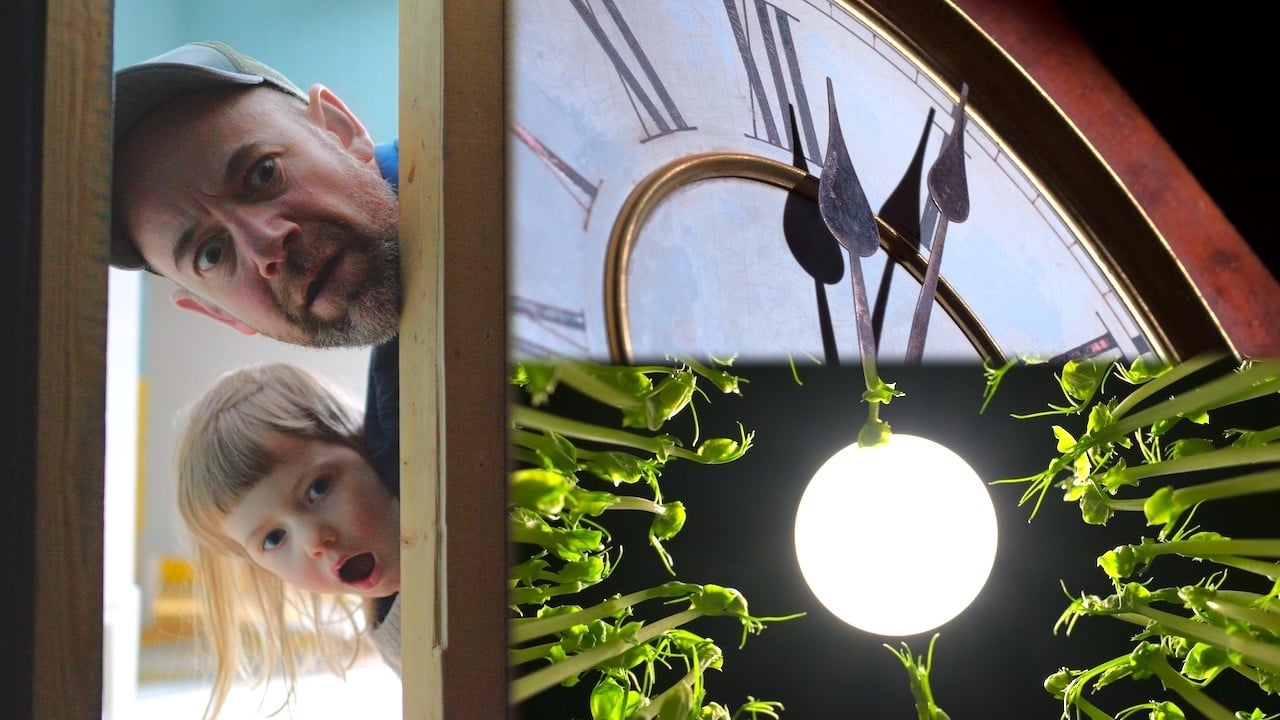
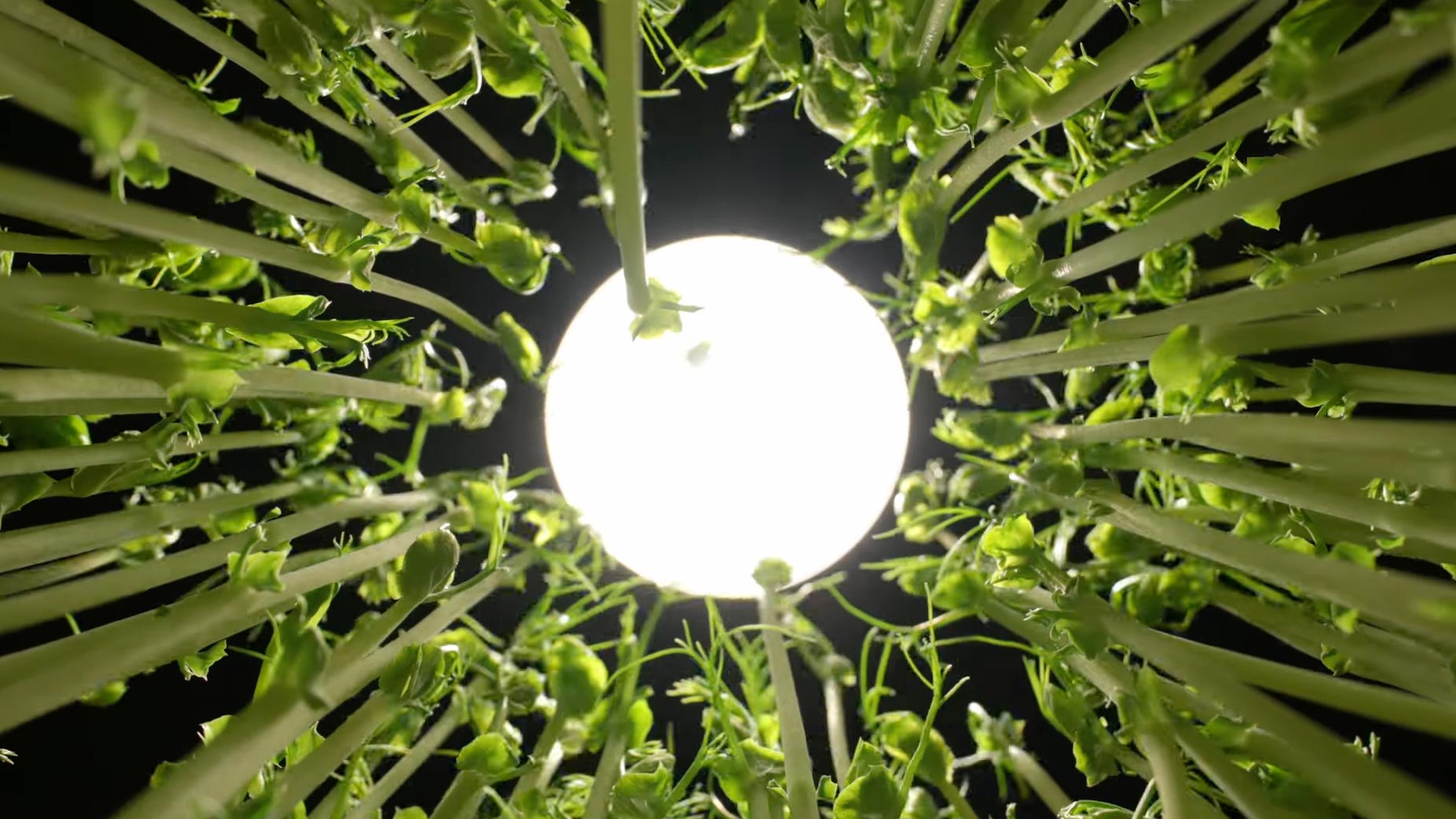
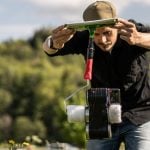
Every now and then, a filmmaking trick comes along that’s so simple it makes you wonder why you didn’t think of it first. That’s exactly the case with Woody James‘ delightfully low-tech plant time-lapse experiment, which uses a setup involving a modified cake tin, some soil, pea seeds, a light, and a camera.
The result is a charming, organic timelapse where plants slowly grow toward a single light source. It’s vaguely reminiscent of some of the more creative shots from series and movies like Breaking Bad or Pixar’s A Bug’s Life. Except that this is all done in-camera, with no CGI or AI. Let’s take a look at how it was made.
The Simple DIY Setup
At the heart of Woody’s setup is an item you’d normally find in the kitchen rather than a camera bag: a bundt cake tin.
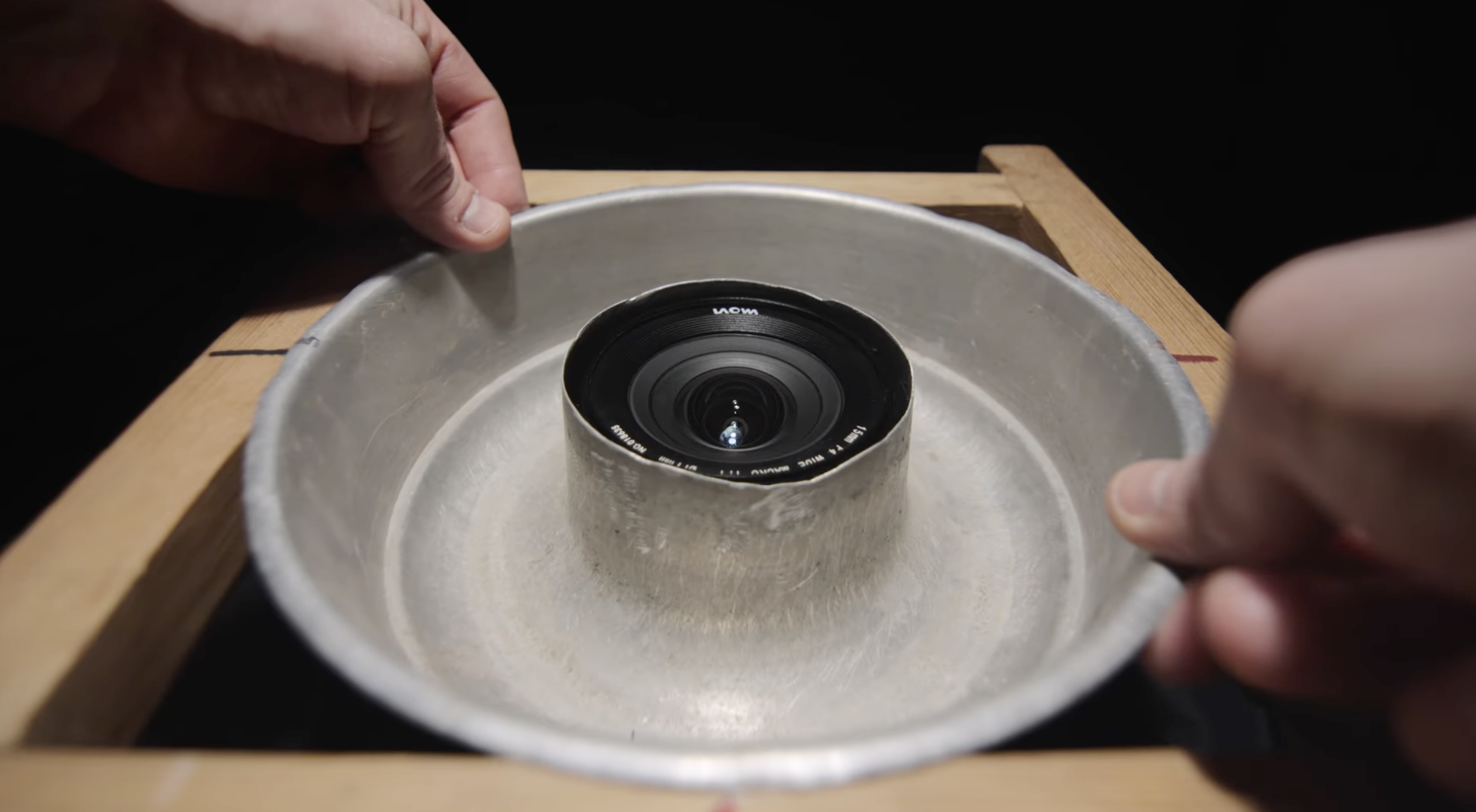
By removing the central tube from the tin, Woody created a circular container that could sit neatly over the lens of a DSLR lying flat on its back. The camera effectively becomes the centre of the garden. He then filled the tin with soil and planted pea seeds around the lens opening. With a single overhead light acting as the sun, the seeds naturally began growing toward the light source, creating the perfect subject for a time-lapse.
The setup looked something like this:
- DSLR lying flat, lens pointing upward
- Bundt cake tin placed around the lens
- Centre piece removed to allow the lens through
- Soil packed into the tin
- Pea seeds planted around the lens
- A single light source positioned above
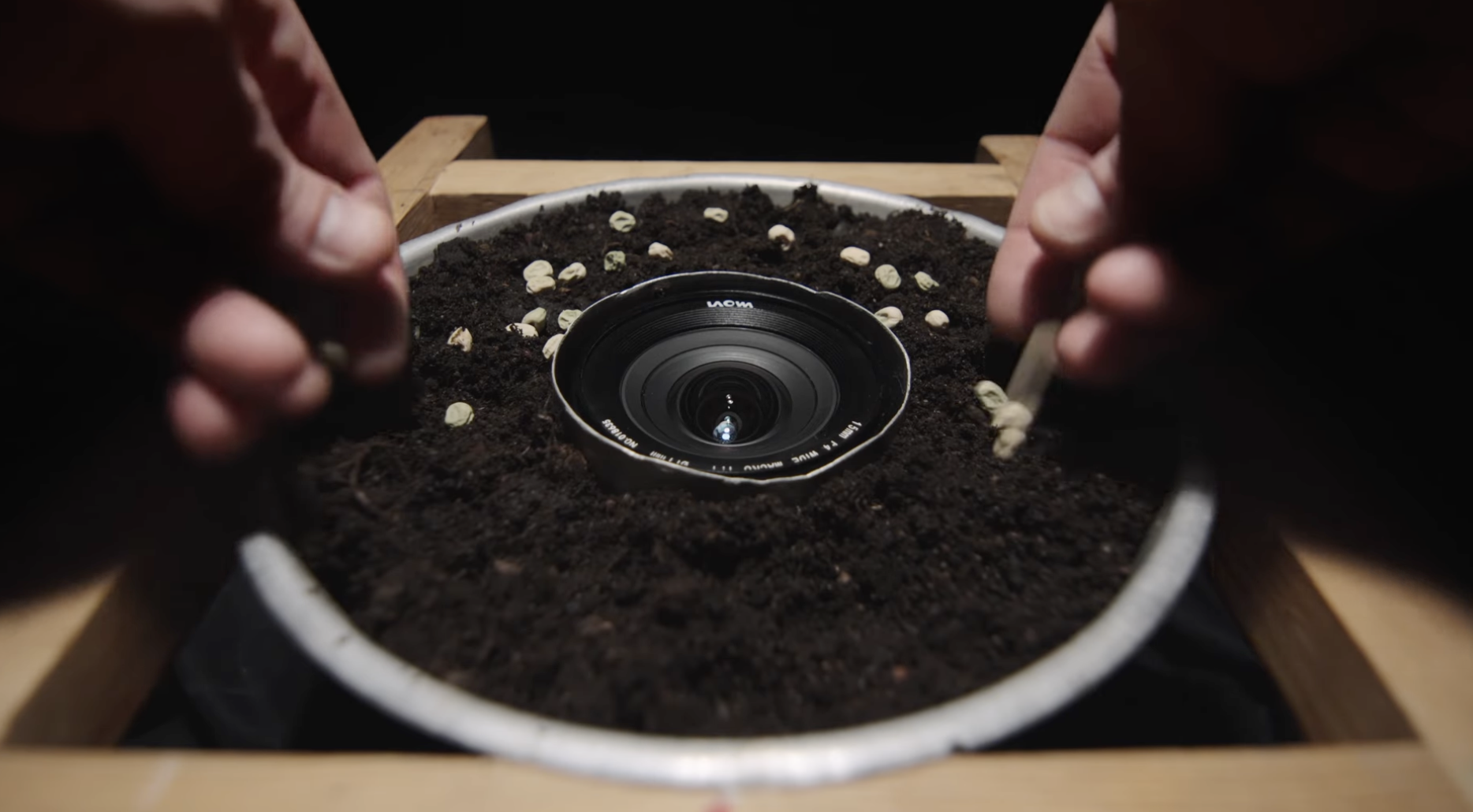
Once everything was in place, all Woody had to do was start the time-lapse and let nature take over. The time-lapse was shot over a three-week period, with one photo taken per hour.
It’s the kind of wonderfully DIY filmmaking solution we all love, proving you don’t need elaborate rigs to create something visually interesting.
The Magic of a Single Light Source
One of the cleverest elements in Woody’s setup is the single overhead light. Plants naturally grow toward light, so by placing the light directly above the cake tin, Woody created a natural directional cue that caused the pea shoots to lean and stretch upward surrounding the camera lens. This produces a beautifully organic motion in the timelapse.
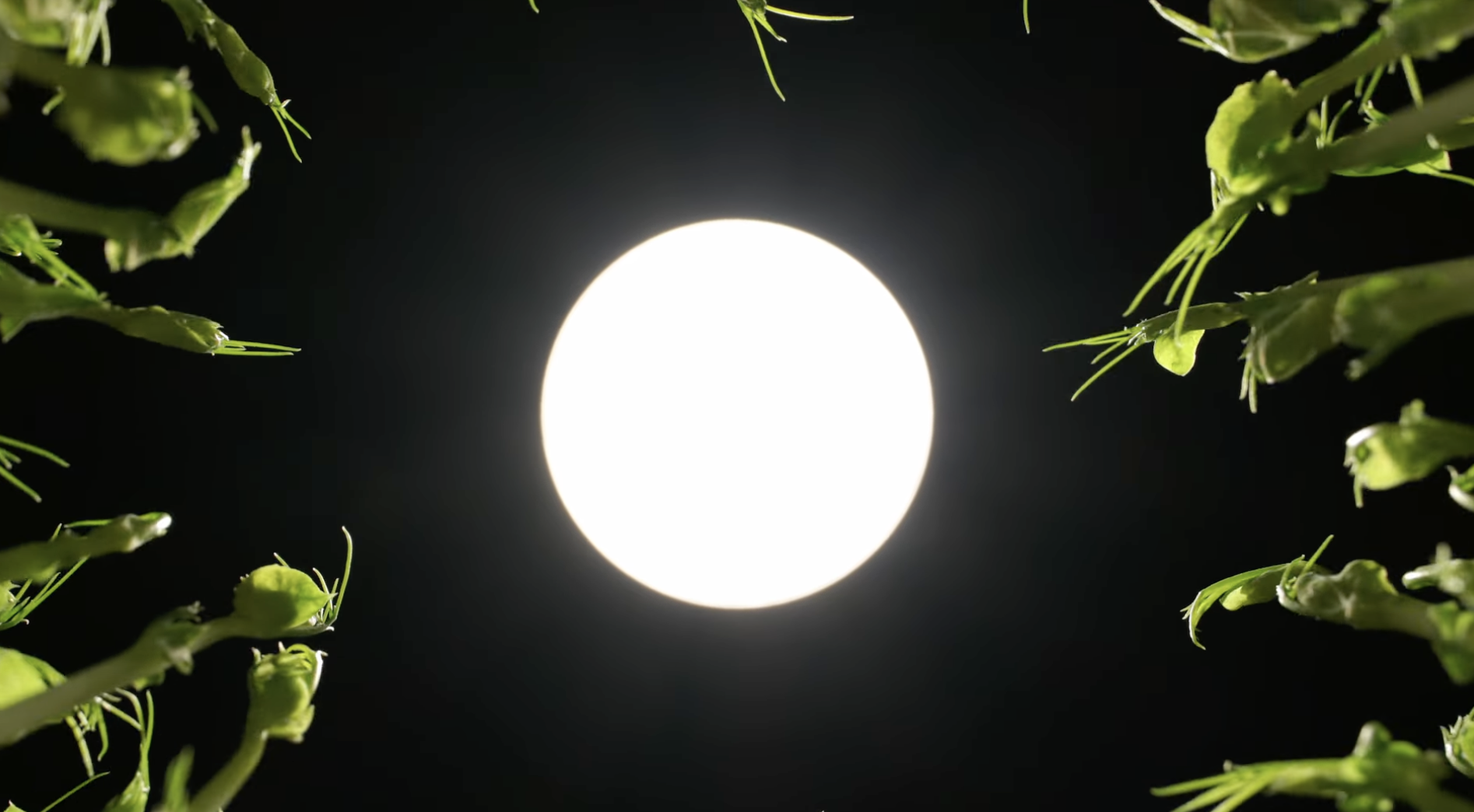
For best results:
- Use a constant light source (LED panel or soft light)
- Keep the light fixed in position
- Maintain consistent brightness
Even small changes in lighting can create flicker in long timelapse sequences, so stability is key.
Practical Effects are Still Important
What makes Woody’s little project so appealing isn’t just the final shot, it’s the philosophy behind it. Modern filmmaking tools make it easy to simulate almost anything digitally, but practical experiments like this bring a different kind of creativity into the process. The unpredictability of real-world elements often produces visuals that would be difficult to replicate artificially.
There’s also something satisfying about letting a shot develop naturally over time rather than constructing it entirely in post.
Creative Ideas to Try Yourself
If Woody’s cake-tin garden sparks your imagination, there are plenty of ways photographers could build on the concept.
Some ideas:
- Sunflower time-lapse for dramatic directional growth
- Mushroom growth in a dark macro environment
- Roots growing through glass containers
- Sprouting herbs or microgreens shot from below
You can also experiment with different lighting directions to influence how plants move within the frame. Nature documentaries are often great places to find timelapse inspiration.
Finally, check out the full video below. It’s a cleverly made little story, which is both entertaining and shows the behind-the-scenes and details of the set-up as well. All in one minute!
See more from DIYPhotography.net on Google
Add DIYPhotography.net as a trusted source. This makes
our stories more likely to appear in your Google Search results.
 Add as a preferred source on Google
Alex Baker
Alex Baker is a portrait and lifestyle driven photographer based in Valencia, Spain. She works on a range of projects from commercial to fine art and has had work featured in publications such as The Daily Mail, Conde Nast Traveller and El Mundo, and has exhibited work across Europe


Join the Discussion
DIYP Comment Policy
Be nice, be on-topic, no personal information or flames.