


















A Faint Smudge from Mars: Did Perseverance Really Capture Interstellar Comet 3I/ATLAS?
Oct 6, 2025
Soumyadeep Mukherjee
Soumyadeep Mukherjee is an award-winning astrophotographer from India. He has a doctorate degree in Linguistics. His work extends to the sub-genres of nightscape, deep sky, solar, lunar and optical phenomenon photography. He is also a photography educator and has conducted numerous workshops. His works have appeared in over 40 books & magazines including Astronomy, BBC Sky at Night, Sky & Telescope among others, and in various websites including National Geographic, NASA, Forbes. He was the first Indian to win “Astronomy Photographer of the Year” award in a major category.
Share:

When a small object from deep space entered our Solar System earlier this year, astronomers took notice. It was 3I/ATLAS, the third known interstellar visitor ever recorded. Moving at extraordinary speed, it passed near Mars before disappearing into the dark beyond. Now, an intriguing claim has emerged: an astrophotographer believes that NASA’s Perseverance rover might have captured this cosmic traveler from the Martian surface.
The idea sounds extraordinary. If proven, it would mark the first time a comet from another star system was imaged from another planet. But between possibility and proof lies a long process of careful verification.
The interstellar traveler
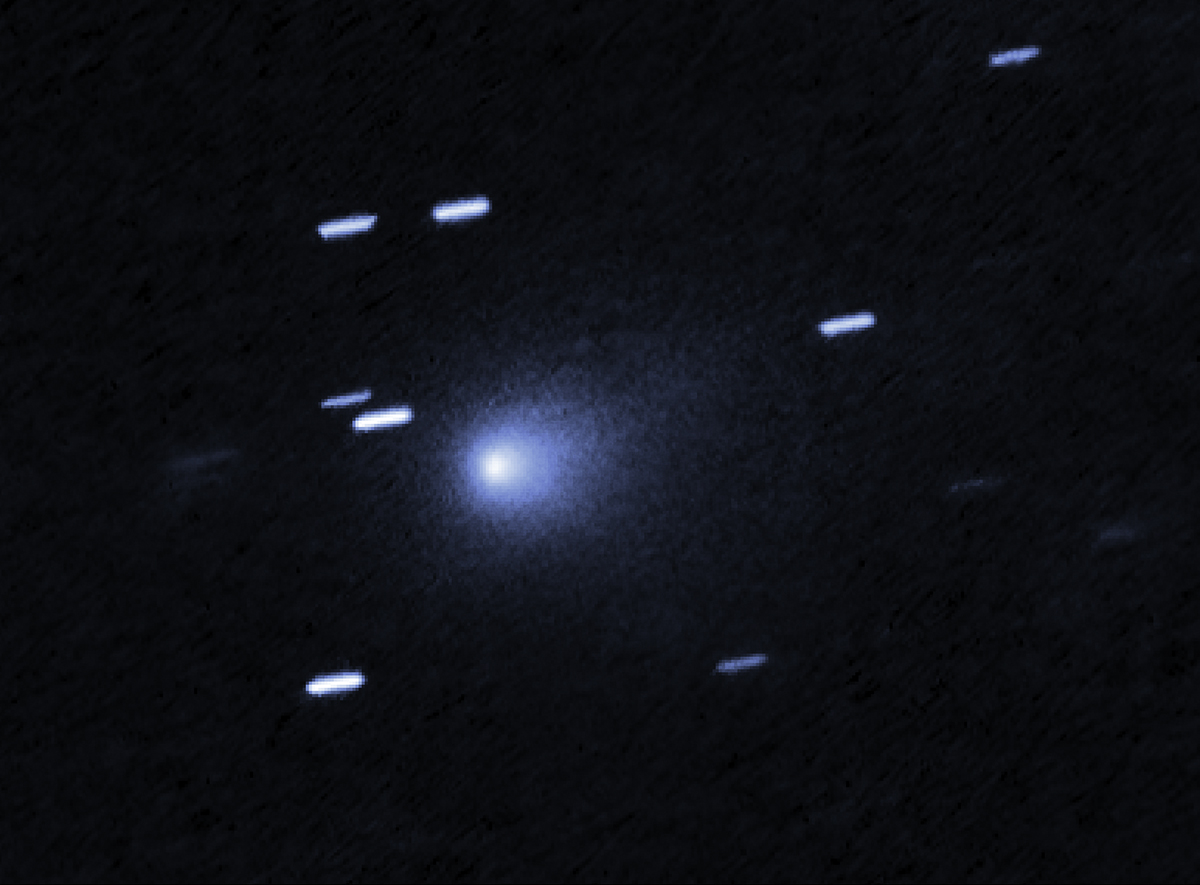
3I/ATLAS was discovered in mid-2025 by the Asteroid Terrestrial-impact Last Alert System (ATLAS) survey in Hawaii. Its orbit revealed an unmistakable signature: a hyperbolic path, meaning it is not bound to the Sun. This trajectory confirmed that it came from beyond our Solar System. Only two other objects share that distinction: Oumuamua, found in 2017, and Borisov, in 2019.
According to NASA’s Planetary Science Division, 3I/ATLAS is traveling at tens of kilometers per second. It passed within roughly 29 million kilometers of Mars in early October 2025, giving spacecraft and rovers around the Red Planet the best vantage point.
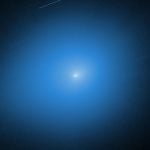
Telescopes on Earth and in space turned to watch it. Observations from JWST and Hubble revealed that the comet’s coma is rich in carbon dioxide, with traces of water and dust. The nucleus appears small, perhaps a few hundred meters to a few kilometers in diameter, but that remains uncertain. For scientists, every glimpse of such a body offers valuable information about how materials form around distant stars.
A possible sighting from Mars
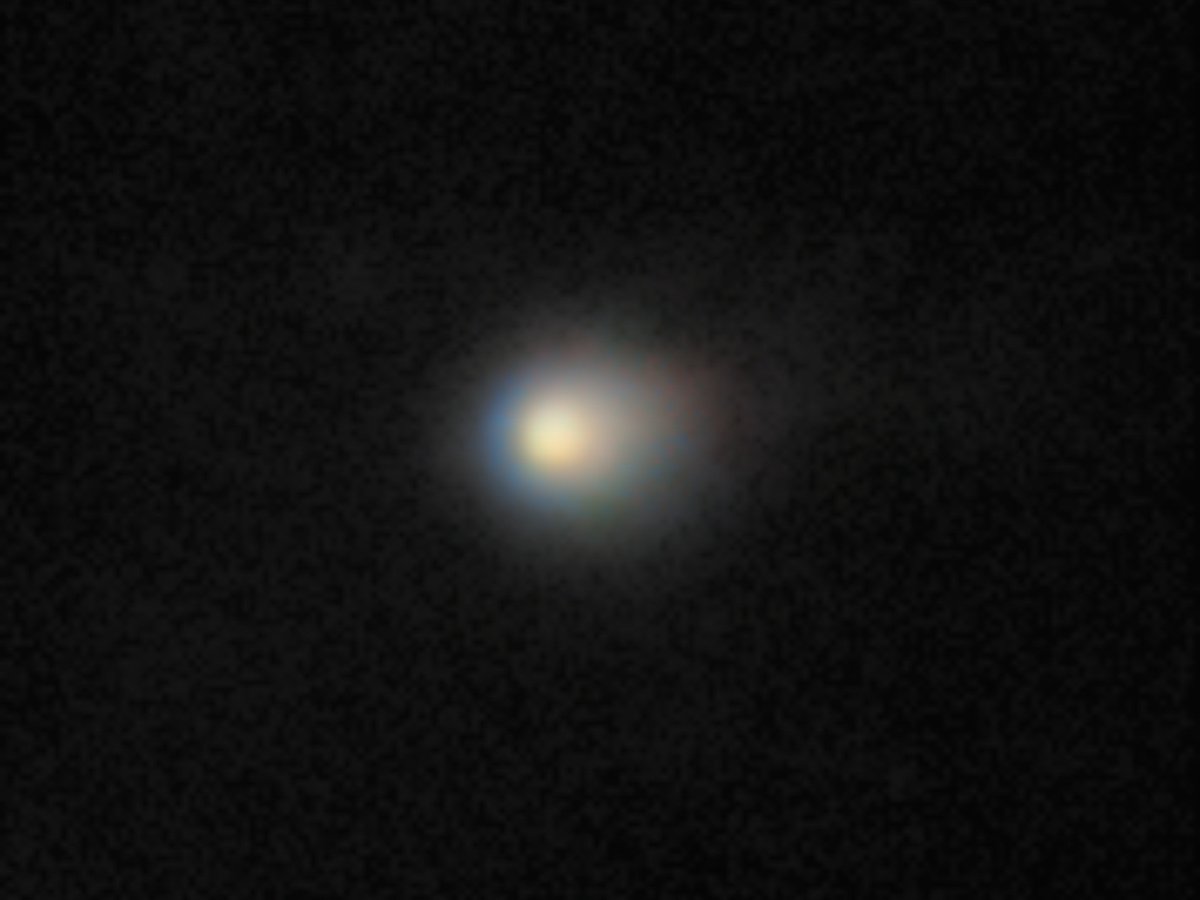
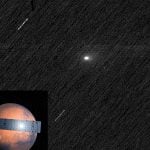
The claim about the Perseverance rover’s observation began with astrophotographer Simeon Schmauß, who examined raw images from the rover’s Mastcam-Z cameras. These cameras routinely capture the Martian sky for calibration and research. Schmauß noticed that a set of twenty frames, taken on October 2, 2025, pointed toward the section of sky where 3I/ATLAS should have appeared.
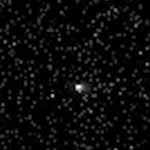
By carefully stacking the images, he said he detected a faint, elongated smudge near the comet’s predicted location. Another observer later posted a time-lapse from the same data, showing a faint streak that seemed to move differently from the background stars. The discovery quickly spread online and caught the attention of several media outlets and people.
The suggestion was cautious rather than dramatic. Schmauß described it as a “possible detection,” not a confirmation. Still, if the signal is real, it would mean the Perseverance rover saw an interstellar comet from another world, a remarkable first in planetary observation.
I think Perseverance may have spotted interstellar comet 3I/Atlas last night from Mars! After stacking 20 images from Mastcam-Z, I found a faint smudge of light in the constellation Corona Borealis close to the location where the comet was expected. 🔭 Credit: NASA/JPL-Caltech/ASU/Simeon Schmauß
— Simeon Schmauß (@stim3on.bsky.social) 3 October 2025 at 05:20
[image or embed]
Why does this need verification?
Astronomers were intrigued, but they were also quick to point out how complex such detections can be. Perseverance’s cameras were not built for deep-sky imaging. They are optimized for daylight landscapes, not faint moving objects millions of kilometers away. Detecting a comet that dim would push the limits of what those sensors can do.
Stacking images is a trusted method to bring out faint details, but it also amplifies every imperfection. Cosmic rays often strike the sensors, leaving streaks or bright dots. Slight misalignments, noise patterns, or compression artifacts can mimic the appearance of a faint moving source. To separate a real object from these effects, the data must be reprocessed under strict calibration standards.
So far, NASA and the Perseverance science team have not confirmed the claim. They have not released any statement identifying the smudge as 3I/ATLAS. Verification will likely involve reanalyzing the raw data, checking for cosmic-ray interference, and comparing the feature’s position with the official ephemerides of the comet.
Last night, NASA's Perseverance rover looked up at the night sky once more, to capture interstellar #comet 3I/Atlas flying by the red planet. The distance was "only" 0.2 AU or 30 Mio km, far closer than the comet ever got to Earth. 🔭 #3IAtlas Credit: NASA/JPL-Caltech/ASU/Simeon Schmauß
— Simeon Schmauß (@stim3on.bsky.social) 4 October 2025 at 21:49
[image or embed]
What scientists look for in confirmation
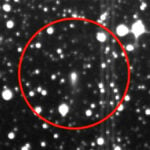
To confirm a detection like this, the first step would be to retrieve the original, lossless images from Perseverance’s database. Engineers and scientists would apply corrections for distortion, temperature, and noise. Then they would compare the object’s apparent position with 3I/ATLAS’s predicted motion using JPL’s Horizons system.
If the feature aligns with the comet’s path over multiple frames, and if its shape and brightness are consistent with expectations, that would strongly support the claim. Ideally, other Mars-based instruments, such as the Mars Reconnaissance Orbiter’s HiRISE camera or ESA’s ExoMars Trace Gas Orbiter, could provide confirmation.
At this stage, the detection remains a hypothesis. It is plausible, but it must pass through several layers of scrutiny before being considered valid science.
Well, forget what I said, turns out you can process marsrover images on the train too :) There is a super faint smudge where comet 3I/Atlas should be. The new orbit parameters in Stellarium are a pretty good match. 🔭 #3iatlas
— Simeon Schmauß (@stim3on.bsky.social) 3 October 2025 at 20:23
[image or embed]
3I/ATLAS continues to fascinate
Regardless of the outcome, the episode highlights the importance of open access to planetary data. NASA’s public archives allow anyone, from students to professionals, to download and analyze images from missions like Perseverance. This openness has led to several genuine discoveries over the years. Independent analyses like Schmauß’s don’t replace official science, but they can complement it. They can point mission teams toward interesting possibilities and inspire new ways to use existing data.
Whether Perseverance truly caught it or not, the possibility adds another layer of fascination to its story. A camera on a distant planet might have looked up at the same moment and seen a traveler from another star, a fleeting connection between two worlds separated by billions of kilometers.
Clear skies!
See more from DIYPhotography.net on Google
Add DIYPhotography.net as a trusted source. This makes
our stories more likely to appear in your Google Search results.
 Add as a preferred source on Google

Soumyadeep Mukherjee
Soumyadeep Mukherjee is an award-winning astrophotographer from India. He has a doctorate degree in Linguistics. His work extends to the sub-genres of nightscape, deep sky, solar, lunar and optical phenomenon photography. He is also a photography educator and has conducted numerous workshops. His works have appeared in over 40 books & magazines including Astronomy, BBC Sky at Night, Sky & Telescope among others, and in various websites including National Geographic, NASA, Forbes. He was the first Indian to win “Astronomy Photographer of the Year” award in a major category.
Join the Discussion
DIYP Comment Policy
Be nice, be on-topic, no personal information or flames.