



















How to Photograph African Elephants
Oct 5, 2025
Johan Siggesson

Dunja Djudjic is a multi-talented artist based in Novi Sad, Serbia. With 15 years of experience as a photographer, she specializes in capturing the beauty of nature, travel, concerts, and fine art. In addition to her photography, Dunja also expresses her creativity through writing, embroidery, and jewelry making.
Share:

Swedish wildlife photographer Johan Siggesson is a multi award-winning artist whose work has been exhibited internationally and published widely. Known especially for his striking black and white photography, he has spent countless hours in the field creating photographs of elephants and refining ways to capture their presence on camera. In this article he shares practical ideas and techniques for photographing these giants of the wild.
[Related Reading: The Ultimate Guide to Wildlife Photography: Gear, Tips & Ethics]
Respect Comes First
Photographing elephants is not about running after the shot at all costs. These are powerful, intelligent animals with emotions and complex social structures. Respect for their space and behavior always comes first. If an elephant shows signs of unease such as ear flapping, mock charges, or stopping to stare directly, it is time to pull back. Safety, both for the animal and the photographer, is non-negotiable.
Having an experienced local guide with you is invaluable. Guides understand the subtle signals elephants give long before they escalate into something dangerous. They know when it is safe to wait, when it is time to reposition, and when it is best to leave altogether. Their knowledge not only keeps everyone safe but also gives photographers a deeper understanding of elephant behavior, which often leads to stronger images.
Use Wider Lenses for a Sense of Place
While it is easy to reach for long telephoto lenses, it can be more rewarding to work with wider lenses or short to medium range telephoto lenses such as 24–70mm or 70–200mm whenever possible. These focal lengths allow the elephant to be placed in its environment, whether that is the golden savanna grass of Amboseli or the dramatic backdrop of Kilimanjaro. If you manage to get close enough to fill the frame with the animal, the result is a very different perspective that conveys power and intimacy in a way that longer lenses cannot. As someone once said, you would not photograph a model with a 400mm lens from 100 meters away. Why do that with an elephant?
Get Low for Impact
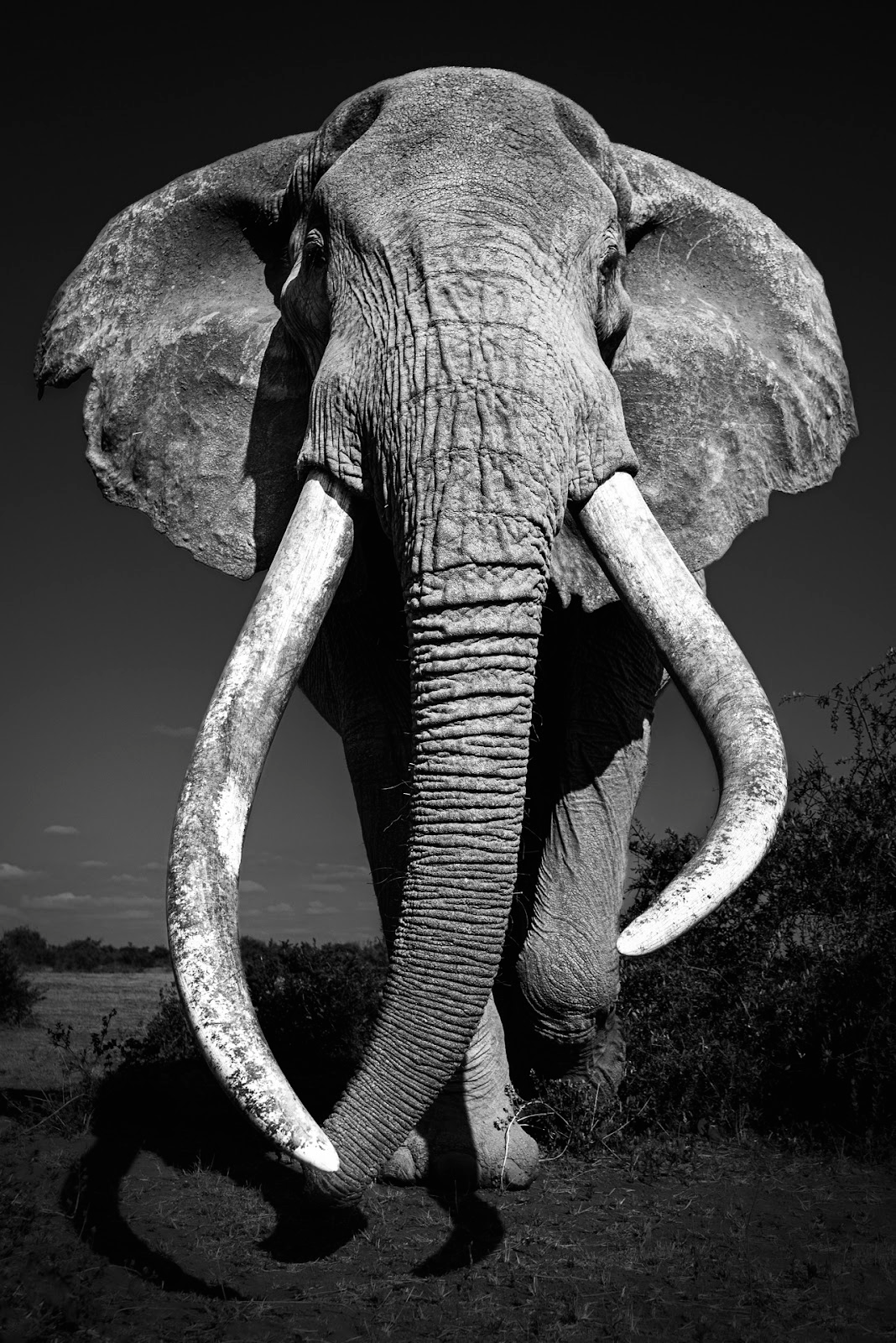
Shooting from a low level exaggerates the animal’s size and power, making the viewer look up in awe. It is a simple technique in theory, but not always easy in practical terms.
Getting low also helps remove distractions from the frame. When the horizon drops behind the elephant rather than cutting through its body, the animal stands out in a clean and dramatic way. This approach works particularly well in open landscapes where the wide plains create uncluttered horizons and the sky becomes an important part of the composition. With a low viewpoint, dramatic clouds can fill the background, adding scale and atmosphere that match the elephant’s presence.
The challenge is that shooting from low level in the field is not always comfortable or practical. Sometimes it means crouching in awkward positions in the vehicle, or even lying flat in the dust when conditions allow. Using the flip screen on modern cameras can help a lot in these situations, allowing the photographer to compose at low level without needing to physically press their face to the dirt.
Work with Light and Dust
African landscapes offer some of the most dramatic light a photographer will ever encounter. Early morning and late afternoon are prime times when the sun sits low and casts long, soft shadows across the savanna. Elephants moving through this light gain an added sense of dimension and depth.
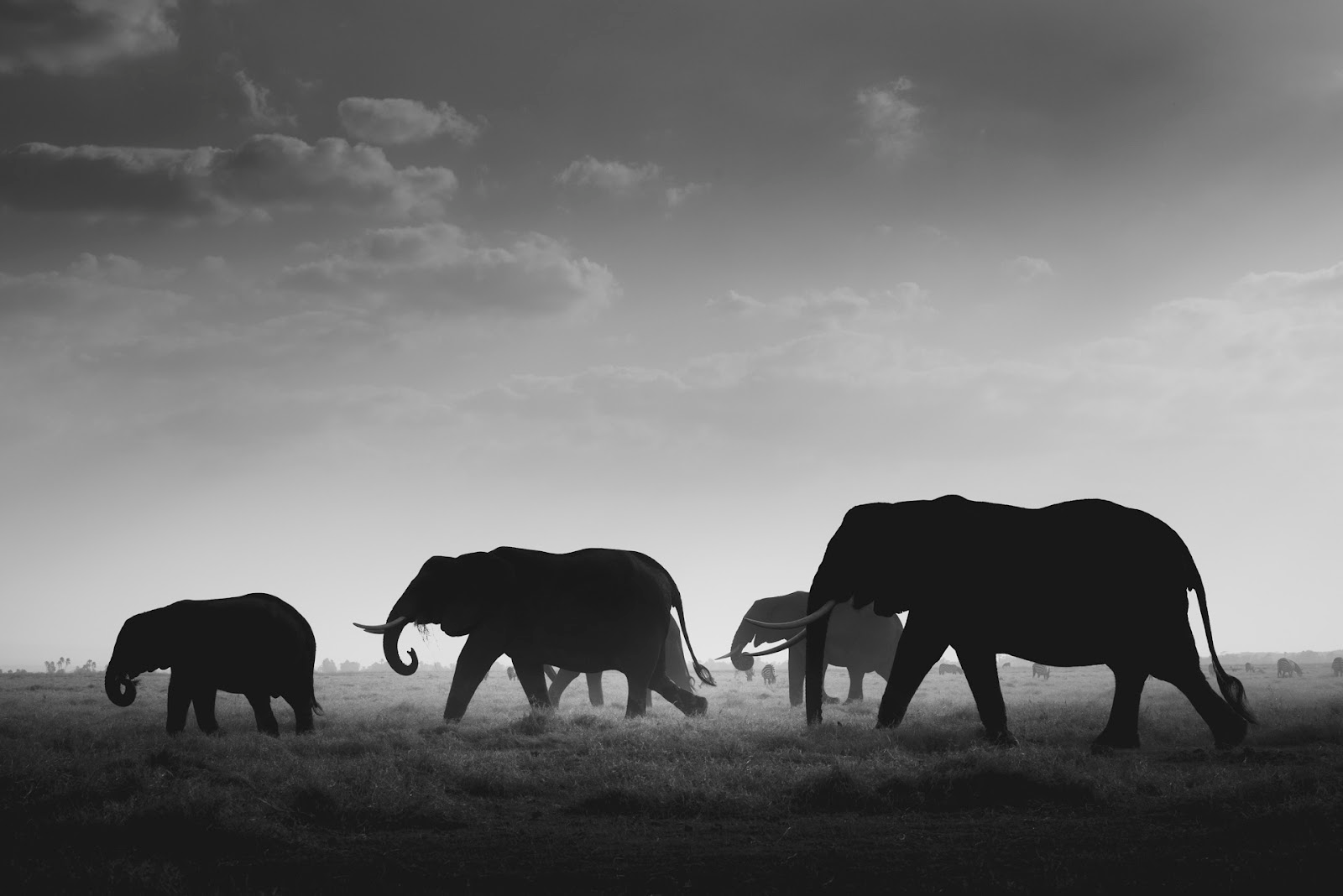
Dust plays a huge role too. As elephants walk, dig, or throw dust over themselves, they create a natural filter in the air. With the sun positioned behind the animals, the particles glow and form a halo that gives images a sense of atmosphere. Shooting into the light can be challenging, but exposing for the highlights and allowing shadows to fall deeper often produces far more striking results than a flat, evenly lit scene.
Do not overlook storm light either. Heavy clouds gathering in the distance can darken the background and make the elephants stand out like silhouettes.
Focus on the Details Too
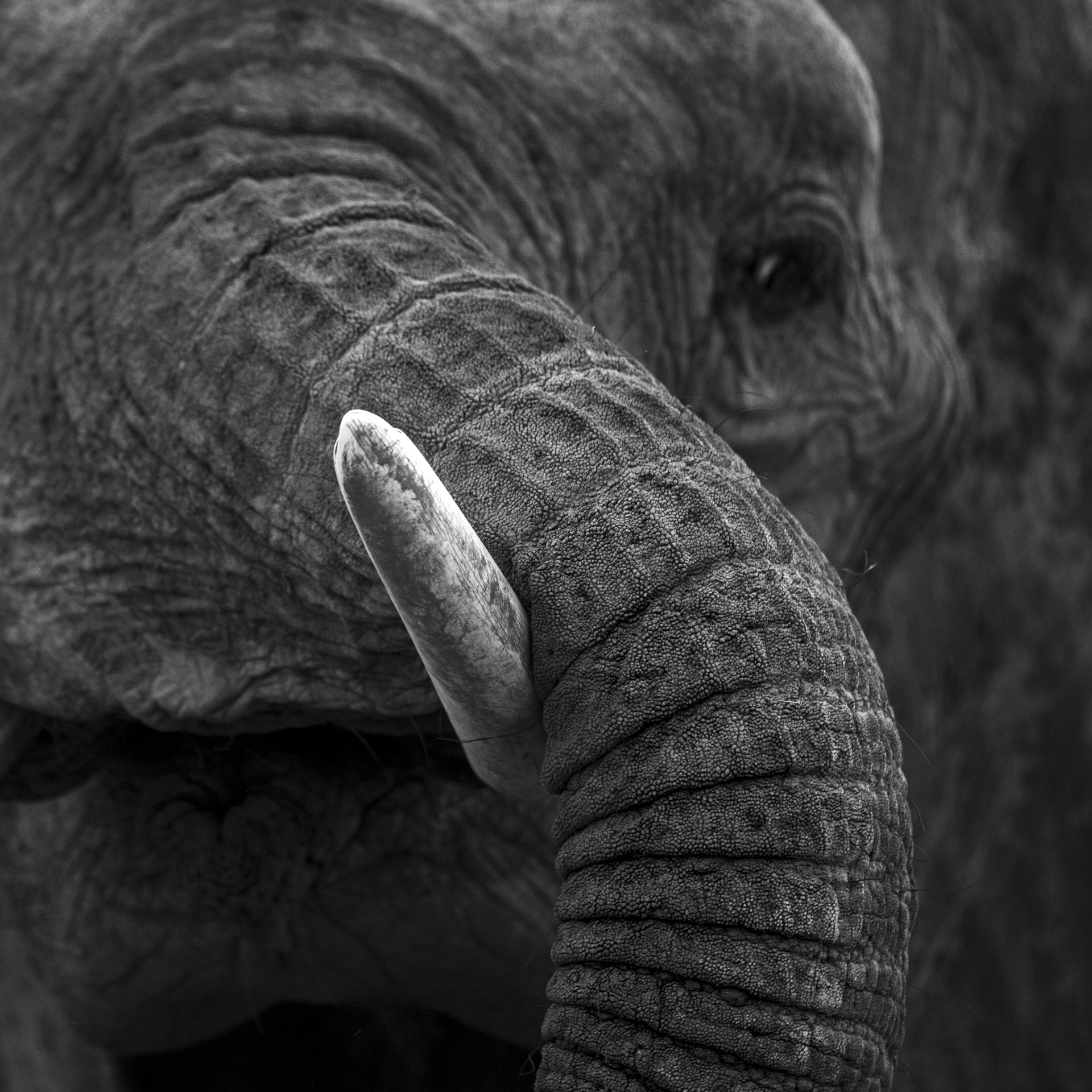
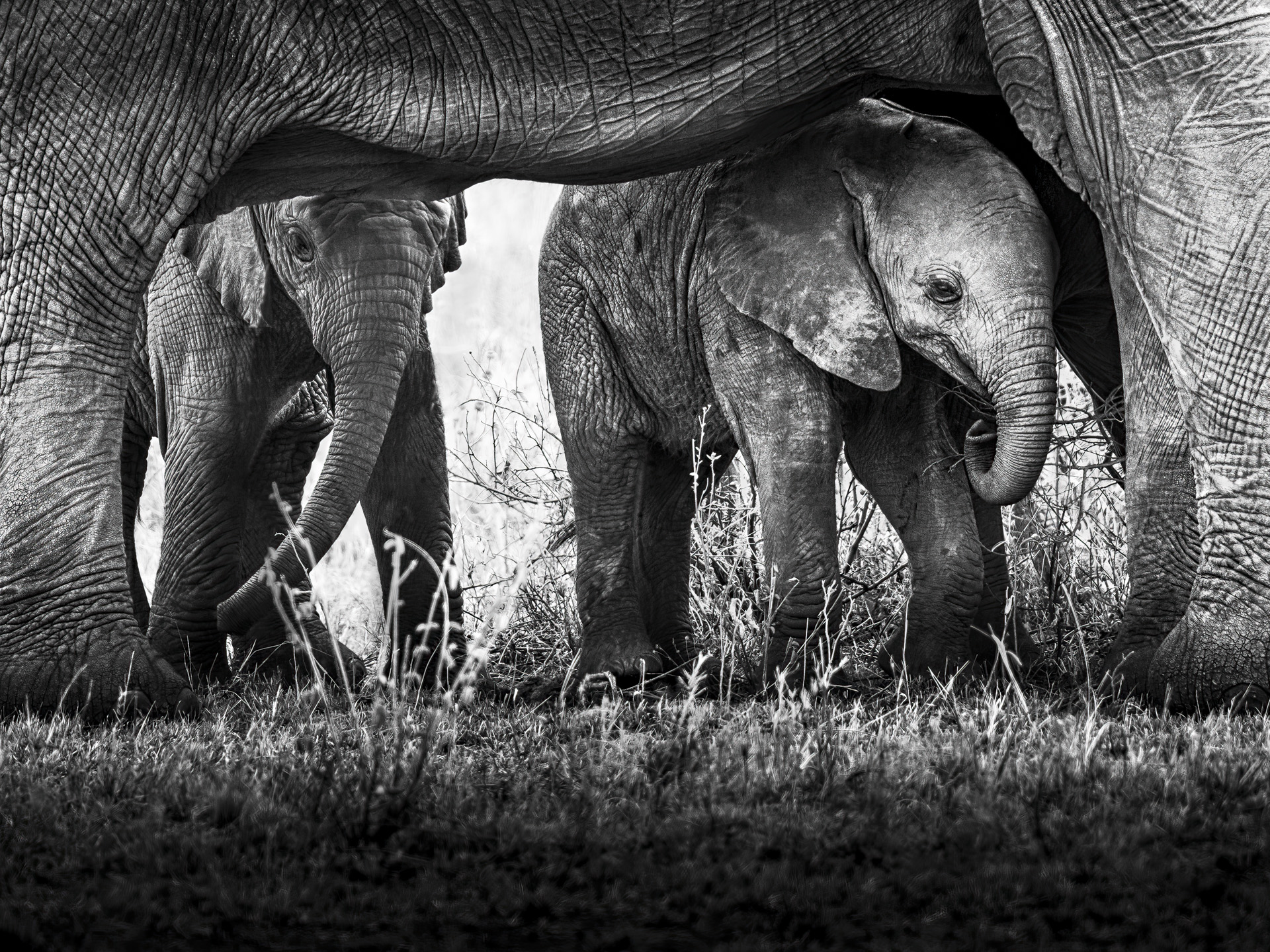
Elephants are extraordinary subjects because their power is matched by subtle, intricate details. Wide shots convey grandeur, but close studies reveal character. Their skin is a canvas of texture, cracked and folded in patterns that speak of age and resilience. A close crop of a tusk worn smooth over decades or a trunk curling in mid-action can be just as evocative as a full-body portrait.
Eyes deserve special attention. Despite their size, elephants’ eyes are small, but they carry a surprising amount of emotion. Capturing a glint of light in the eye or the gentle way a mother looks at her calf can give an image human-like intimacy.
These detailed studies also lend themselves beautifully to black and white. Removing color brings all attention to line, form, and texture. Contrast between deep shadows in the wrinkles and highlights along the skin emphasizes the sheer sculptural quality of the animal.
Patience Pays Off
Wildlife photography rewards those who wait, and elephants are no exception. A herd might appear calm and static at first, but with time their social dynamics unfold. Younger elephants may play, adults may interact, or a matriarch may lead her family to water. The key is learning to anticipate rather than just react.
Patience also builds trust. By staying still and allowing the herd to relax, elephants often drift closer at their own pace. When this happens, the resulting images feel natural rather than forced. The photographer becomes part of the environment rather than an intrusion.
Some of the most powerful frames happen in fleeting moments: a calf running between adults for protection, trunks intertwined in greeting, or a sudden spray of dust into the air. These moments rarely come to those in a rush. They come to the photographer who has invested the time to simply watch, listen, and wait.
Tell a Story, Not Just a Scene
Above all, think in terms of storytelling. A single elephant crossing a plain can be majestic, but a sequence showing family bonds such as a calf pressed against its mother or an older sibling gently nudging it forward reveals deeper truths about their world. A series of images that follow a herd’s journey to water or capture the rhythm of their movement across the land can become more powerful than any single frame.
Storytelling encourages the photographer to go beyond documentation and create a narrative that resonates emotionally with the viewer. This is the difference between an image that is simply admired and one that is remembered.
Final Thoughts
Photographing African elephants is both a privilege and a responsibility. Blending technique, patience, and respect leads to images that do more than capture an animal’s likeness. They reveal the beauty, dignity, and presence of one of the world’s most remarkable creatures.
See more from DIYPhotography.net on Google
Add DIYPhotography.net as a trusted source. This makes
our stories more likely to appear in your Google Search results.
 Add as a preferred source on Google

About Johan Siggesson
We love it when our readers get in touch with us to share their stories. This article was contributed to DIYP by a member of our community. If you would like to contribute an article, please contact us here.
Related Posts
 Photographer creates miniature desert scene from scratch. Yes, even the elephants!
 Spanish tourists trampled to death after getting too close to elephants for a photo
 Heartbreaking Series on Sri Lankan Elephants Wins Nature inFocus 2024
 Close and personal portrait of pensive gorilla wins 2022 African Wildlife Photography Awards
Join the Discussion
DIYP Comment Policy
Be nice, be on-topic, no personal information or flames.