

















First Light for STELES at SOAR: Photographing Eta Carinae and the Southern Sky
Oct 4, 2025
Soumyadeep Mukherjee
Soumyadeep Mukherjee is an award-winning astrophotographer from India. He has a doctorate degree in Linguistics. His work extends to the sub-genres of nightscape, deep sky, solar, lunar and optical phenomenon photography. He is also a photography educator and has conducted numerous workshops. His works have appeared in over 40 books & magazines including Astronomy, BBC Sky at Night, Sky & Telescope among others, and in various websites including National Geographic, NASA, Forbes. He was the first Indian to win “Astronomy Photographer of the Year” award in a major category.
Share:
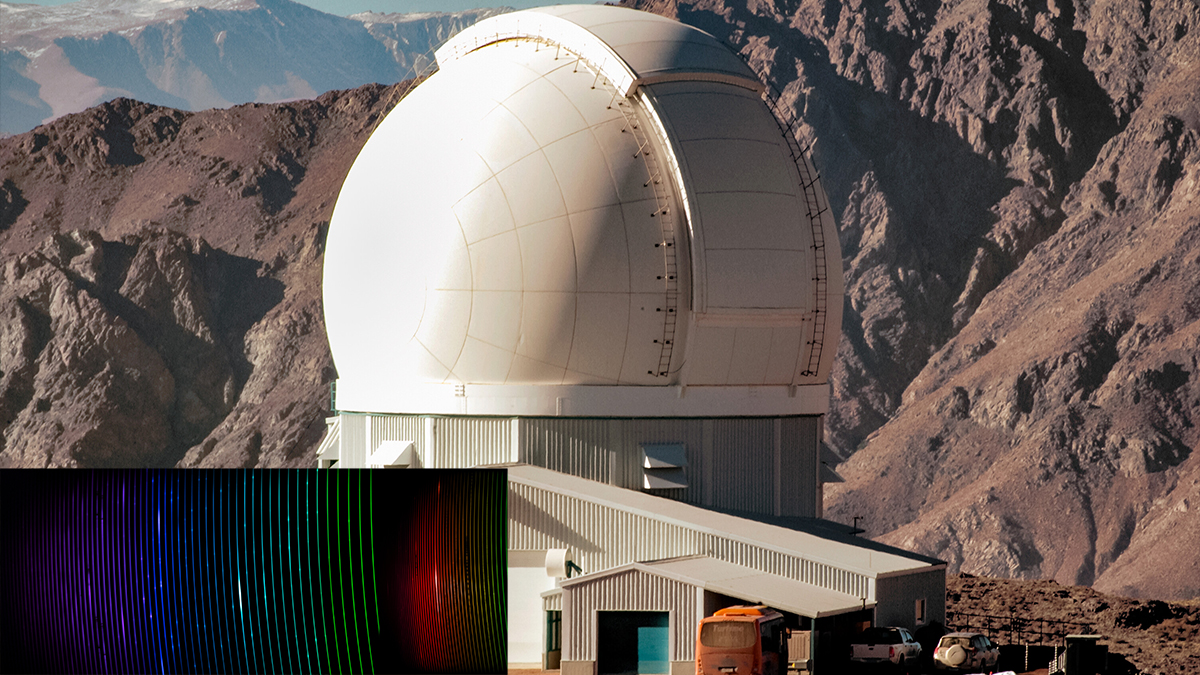
There’s something quietly poetic about a telescope catching first light through a new instrument. It’s the moment theory meets reality. Months of design, alignment, and testing come down to a few seconds of exposure. For the team at Cerro Pachón in Chile, that moment arrived on August 6, 2025. The 4.1-meter Southern Astrophysical Research (SOAR) Telescope recorded its first spectra through a new instrument called STELES, the SOAR Telescope Echelle Spectrograph.
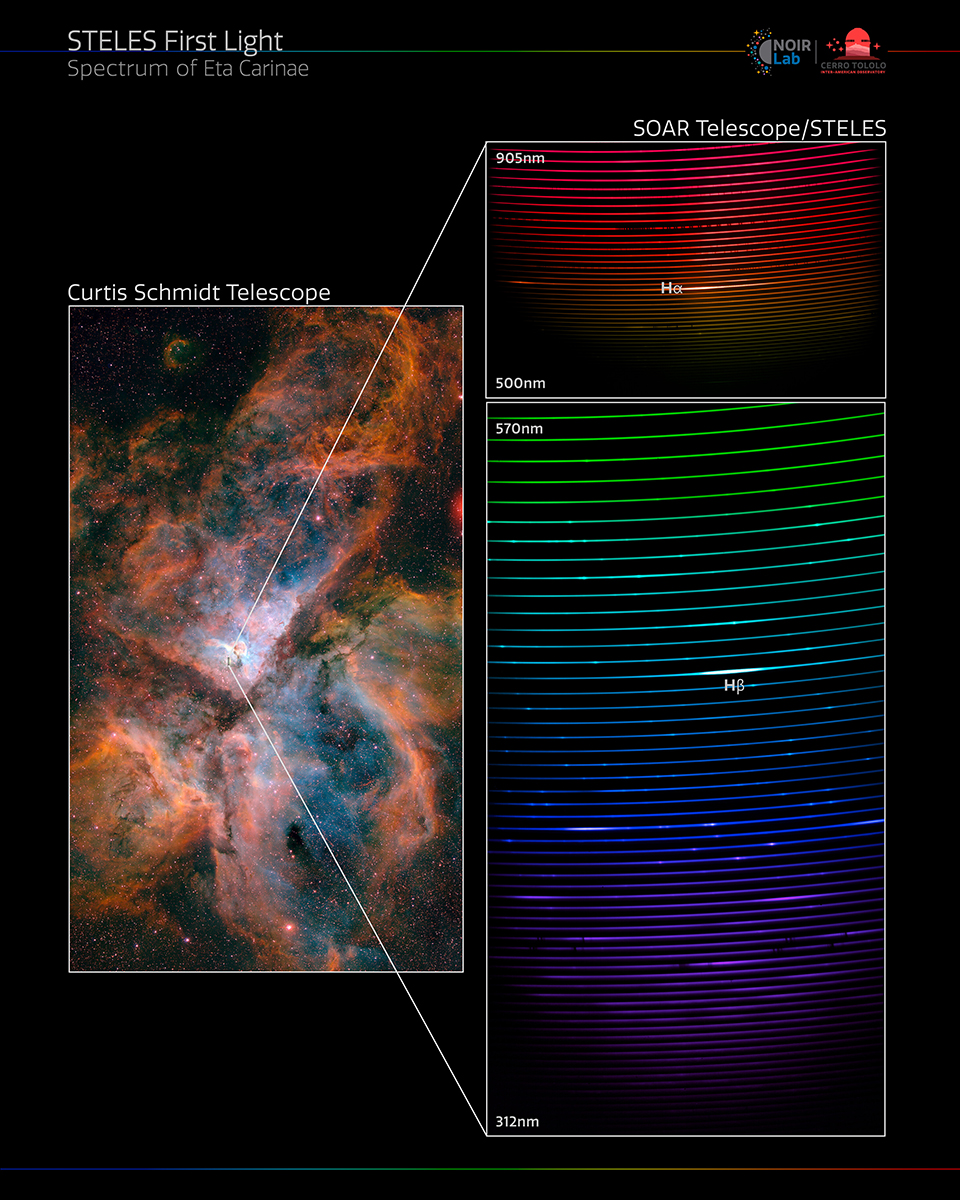
The target for that debut wasn’t chosen by chance. Astronomers pointed STELES at Eta Carinae, one of the most dramatic and unstable star systems in our galaxy. That observation marked more than a technical success. It was a signal that SOAR now holds a sharper, more precise tool for understanding the restless southern sky.
The “first light” milestone
In astronomy, “first light” carries a special meaning. It’s not just the first time an instrument works; it’s the moment it begins its scientific life. For STELES, that moment came less than a week after being installed on July 30, 2025. Within days, it was already recording clean, detailed spectra.
Those first results confirmed what engineers had hoped: the instrument was performing to expectation. The data, later released by NOIRLab, showed a level of precision that allows astronomers to measure even tiny changes in a star’s motion and chemical composition. Thirteen more targets followed Eta Carinae, each chosen to test a different aspect of the instrument’s performance. Together, they proved that STELES was ready to move from lab calibration to real science.
What STELES brings to the table
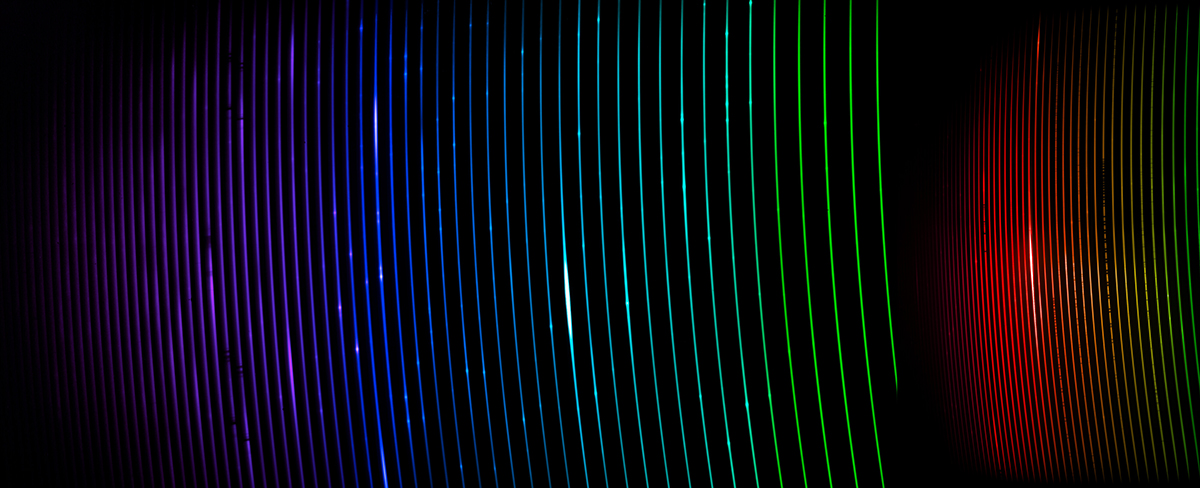
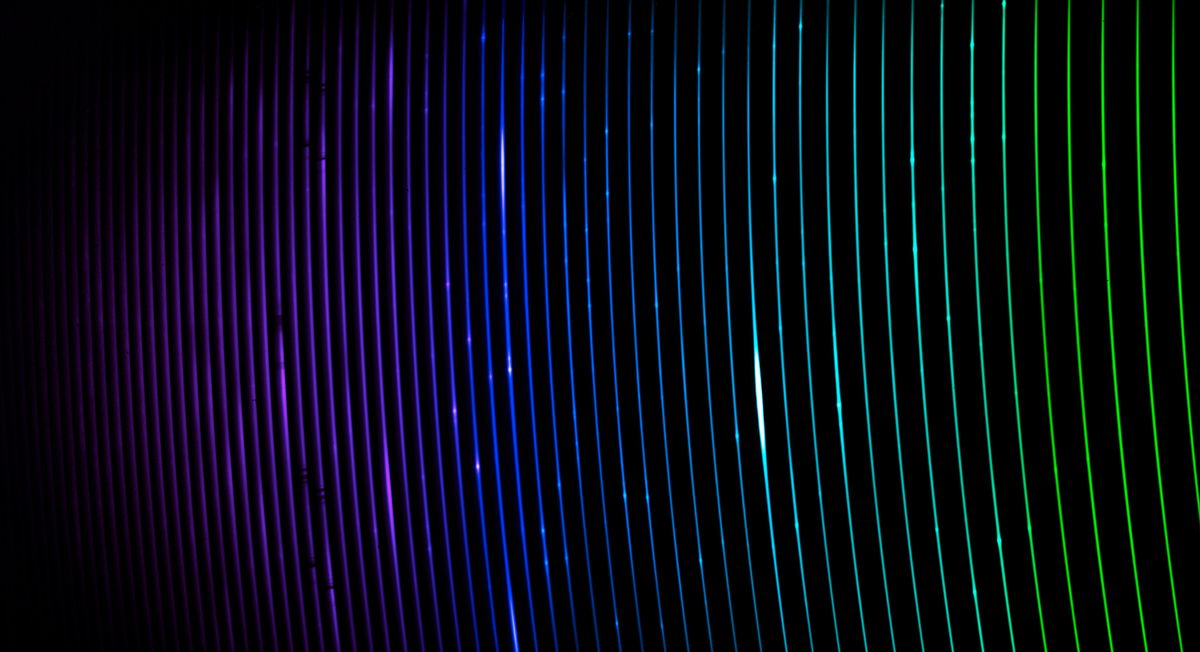
STELES is an echelle spectrograph, a type of instrument that spreads starlight into thousands of narrow lines. Each line corresponds to a specific wavelength of light. By studying these lines, astronomers can decode a star’s temperature, composition, and motion.
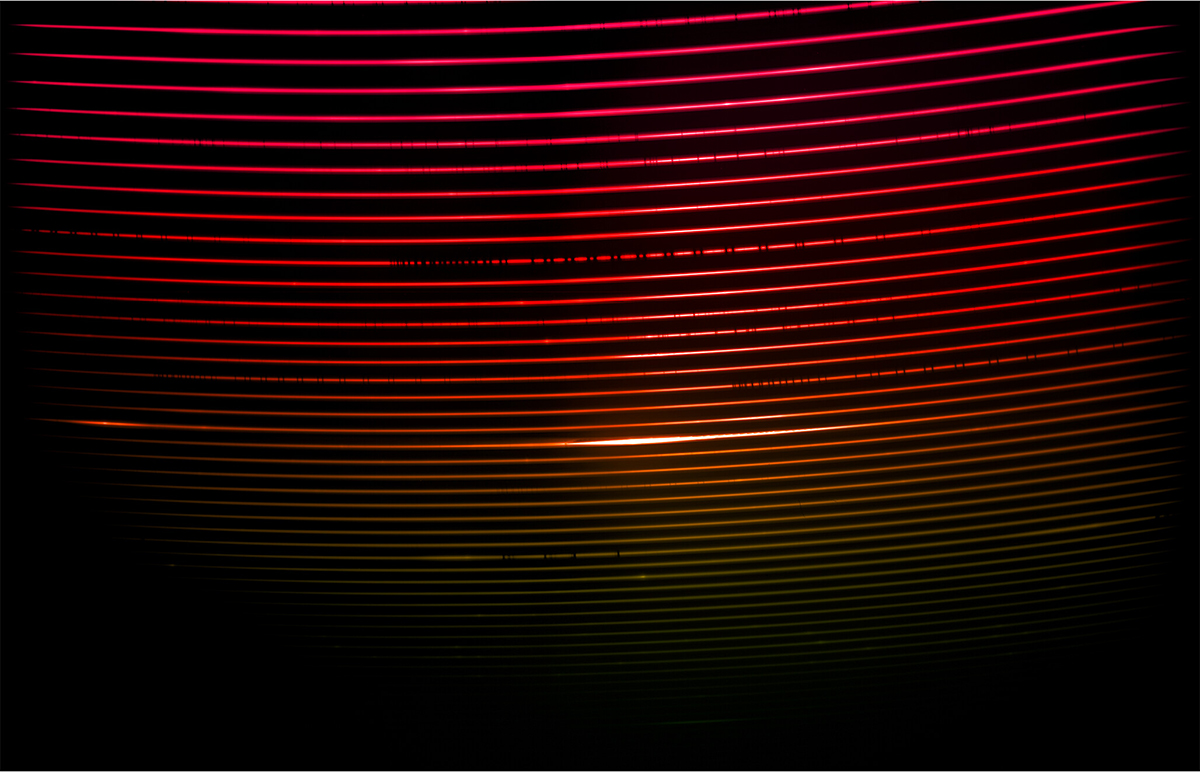
Before STELES, SOAR already had a solid lineup of imagers and lower-resolution spectrographs. But this new instrument fills an important gap: high-resolution optical spectroscopy. It can detect subtle shifts in spectral lines, sometimes just a few meters per second, revealing details about stellar winds, binary systems, and circumstellar gas.
Technically, STELES works through a slit-fed echelle design with a compact 28-arcsecond circular field of view. It uses a dichroic system that can split the light beam into blue and red channels, allowing broad wavelength coverage in a single observation. This design makes it ideal for bright, compact sources such as emission nebulae or massive stars with complex winds.
Eta Carinae: The perfect first test
If you were designing a trial for a spectrograph, you’d want something both bright and complicated. Eta Carinae is exactly that. It’s a colossal binary system sitting about 7,500 light-years away in the Carina Nebula. The primary star is thought to be about 90 times more massive than the Sun. Its companion is smaller but still about 30 solar masses, a giant in its own right.
The system is known for its violent past. In the mid-1800s, Eta Carinae erupted in an event called the “Great Eruption,” briefly becoming the second-brightest star in the night sky. It expelled so much material that a dense, dumbbell-shaped cloud called the Homunculus Nebula now surrounds it.
That nebula glows with emission lines across the visible spectrum. Those lines constantly change as the stars interact and their winds collide. A high-resolution spectrograph like STELES can pick apart each line, showing how gas moves and evolves. For its first light, STELES captured Eta Carinae’s spectrum in both blue and red wavelengths. The results showed crisp, well-defined features, a clear sign that the instrument could handle one of the most challenging spectral fields in the southern sky.
SOAR telescope and STELES
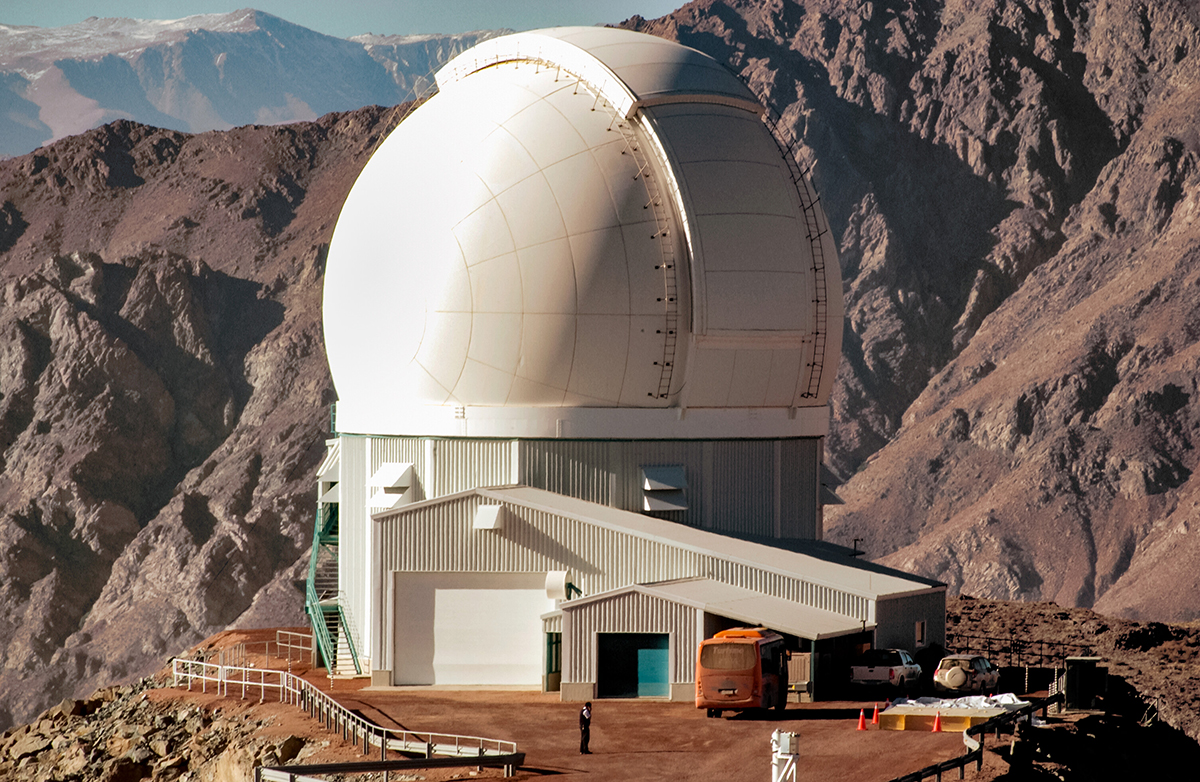
The installation of a new spectrograph may not sound groundbreaking. But in practice, however, instruments like STELES transform what a telescope can do. SOAR’s 4.1-meter mirror sits on a mountain shared with some of the world’s most advanced observatories, including Gemini South and the upcoming Vera C. Rubin Observatory. With STELES now online, SOAR gains a tool that complements those facilities.
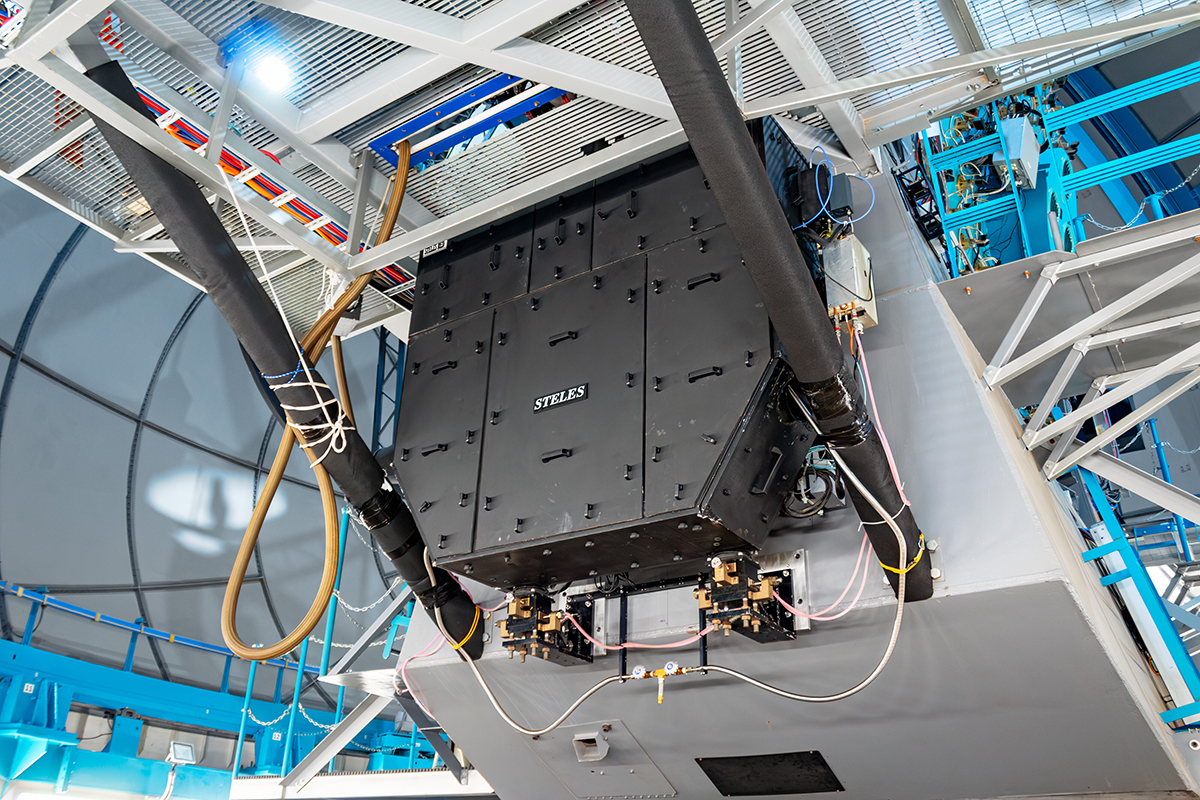
When a transient, say a nova, a supernova, or an unusual stellar outburst, appears in the southern hemisphere, STELES can provide high-resolution spectra quickly. That data can tell scientists what elements are present, how fast material is moving, and how the outburst evolves over hours or days.
It’s also a powerful asset for long-term monitoring. Massive binaries like Eta Carinae or WR 140 need continuous observations to follow their periodic cycles. Until now, much of that work depended on larger, oversubscribed telescopes. STELES gives researchers a reliable, mid-sized option with the precision needed to make those studies routine rather than occasional.
Clear skies!
See more from DIYPhotography.net on Google
Add DIYPhotography.net as a trusted source. This makes
our stories more likely to appear in your Google Search results.
 Add as a preferred source on Google

Soumyadeep Mukherjee
Soumyadeep Mukherjee is an award-winning astrophotographer from India. He has a doctorate degree in Linguistics. His work extends to the sub-genres of nightscape, deep sky, solar, lunar and optical phenomenon photography. He is also a photography educator and has conducted numerous workshops. His works have appeared in over 40 books & magazines including Astronomy, BBC Sky at Night, Sky & Telescope among others, and in various websites including National Geographic, NASA, Forbes. He was the first Indian to win “Astronomy Photographer of the Year” award in a major category.
Related Posts
 Kodak boards the blockchain train – announces own cryptocurrency and stocks soar 60%
 This timeslice image shows comet Tsuchinshan-ATLAS rising in the southern hemisphere
 Explore the Southern Hemisphere skies: Interview with an astrophotographer
 All about astrophotography: Introduction to photographing the night sky
Join the Discussion
DIYP Comment Policy
Be nice, be on-topic, no personal information or flames.