

















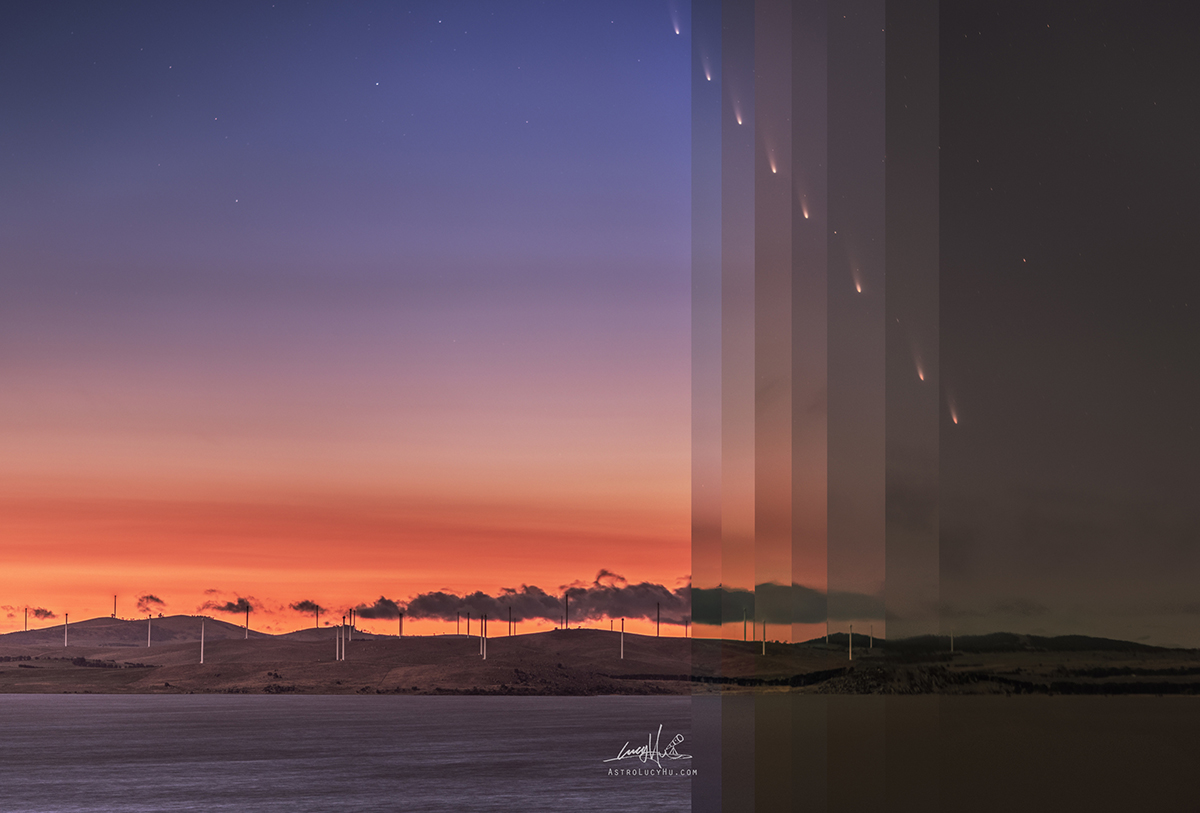
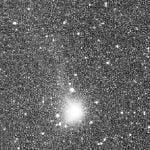
This timeslice image shows comet Tsuchinshan-ATLAS rising in the southern hemisphere
Sep 25, 2024
Soumyadeep Mukherjee
Soumyadeep Mukherjee is an award-winning astrophotographer from India. He has a doctorate degree in Linguistics. His work extends to the sub-genres of nightscape, deep sky, solar, lunar and optical phenomenon photography. He is also a photography educator and has conducted numerous workshops. His works have appeared in over 40 books & magazines including Astronomy, BBC Sky at Night, Sky & Telescope among others, and in various websites including National Geographic, NASA, Forbes. He was the first Indian to win “Astronomy Photographer of the Year” award in a major category.
Share:
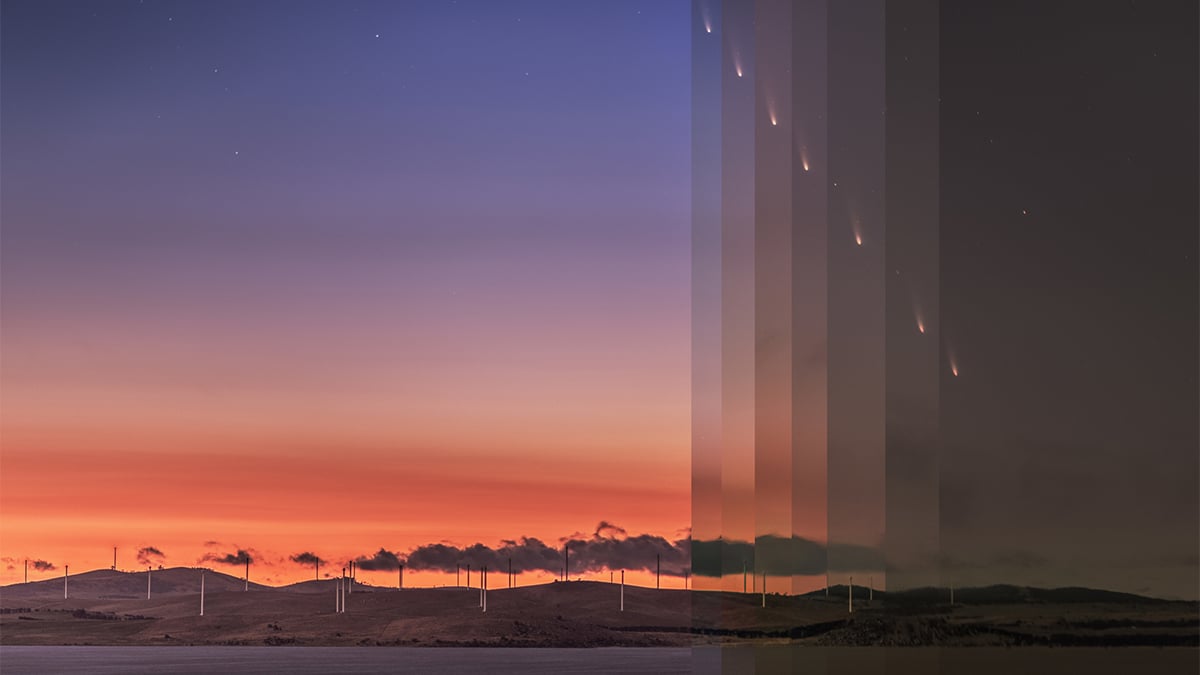
Comets are always interesting to see and photograph, and comet Tsuchinshan-ATLAS is no exception. The comet is currently visible to lovers of the southern hemisphere sky. Canberra-based astrophotographer Lucy Yunxi Hu grabbed this opportunity to capture this fascinating image of the comet rising just before sunrise.
Planning behind the image
For astrophotographers, and especially for images like this, planning is essential. Lucy came across the news of some amateur astronomers being able to photograph the comet Tsuchinshan-ATLAS. This got her thinking, “Why not give it a shot?” And the planning began. The first step for her was to check for the brightness of the comet. She found it to be around magnitude 4.3, which is perfectly suited to photograph with a medium telephoto lens. Next, she checked for the weather forecast via Ventusky, which predicted clear skies in the region. The next step was to check for the comet’s location via Heavens-Above, which she found near the constellation Hydra. The third step was to research and find the best possible focal length and exposure settings for the image. Lucy found that a 135 mm lens with 1-second exposure would give her the desired results.. The final step was to pick a spot with minimal light pollution and a clear view of the horizon towards the east. She decided to choose Lake George, a place that filled all the criteria and was 30 minutes away from her place.
The field experience
Lucy chose a Canon R5 camera paired with a 135 mm lens to capture the rising comet on the early morning of 21st September. She had to wait patiently for the comet to rise. Spending a night in the Australian outback comes with some surprises.
One fun (and slightly nerve-wracking) moment was on the way to the site, we saw at least three kangaroos trying to cross the highway! Maybe they were out for an early breakfast?
Although the comet was not visible to the naked eye, it could be easily spotted with a binocular. Long exposure with a camera would also pick up the bright coma of the comet along with its tail.
Story-telling with the image
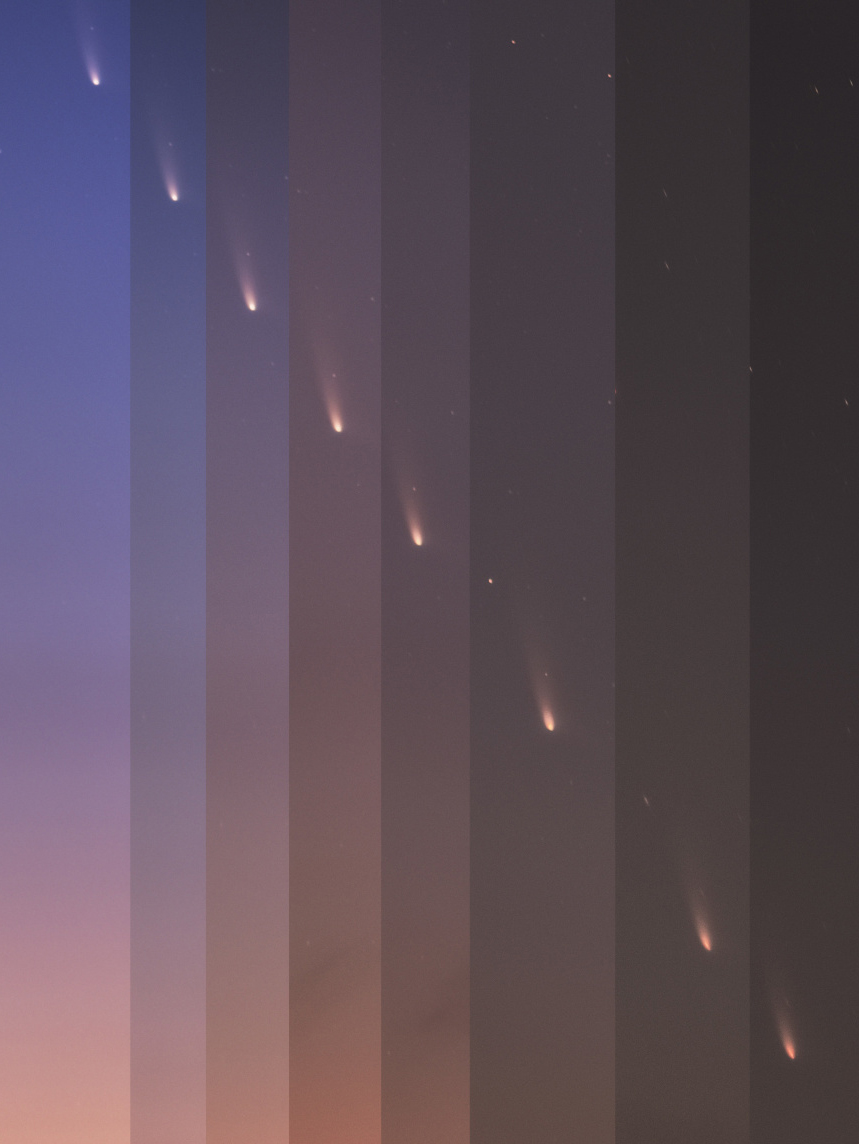
For Lucy, the best part of the final image is its story-telling nature. She decided to compose the final image as a timeslice to show the dynamic nature of the sky along with the movement of the comet. The comet can be seen slowly fading as the sky brightens. This image integrates data taken over 25 minutes, from 4:28 to 4:53 AM. The blue hour colour palette adds to the experience of the image. A closer look at the image reveals the changing colours and brightness of the sky. The foreground of Lake George with the wind turbines also adds to the whole experience.
The final image is a stack of 50 images of 1-second exposure. The stacking technique not only helped the photographer to reduce noise in the image but also revealed more details of the comet and its structure. She chose not to use a tracker this time but plans to do it while revisiting the comet in the coming days.
I’d love to use a star tracker to capture even more detail of the comet. There’s still time in the coming days or weeks, so fingers crossed for another opportunity!
About the photographer
Photographing Tsuchinshan-ATLAS was Lucy’s third time capturing a comet. Previously she had captured Comet NEOWISE in 2020 and Comet Leonard towards the end of 2021. This was the time when Lucy started practising astrophotography.
The main reason I started astrophotography was passion. I’ve been in love with astronomy for a long time—ever since my school days when I joined the astronomy community in high school.
She came across a Youtube video by Peter Zelinka which inspired her to spend her spare time doing astrophotography. Lucy is a research fellow by profession, and an astrophotography enthusiast by passion living in Canberra, Australia. Her images have reached multiple prestigious platforms including NASA APOD, USRA EPOD, Earthsky, Spacewether, and many more. You can check more of her astrophotos on her Instagram feed.
See more from DIYPhotography.net on Google
Add DIYPhotography.net as a trusted source. This makes
our stories more likely to appear in your Google Search results.
 Add as a preferred source on Google

Soumyadeep Mukherjee
Soumyadeep Mukherjee is an award-winning astrophotographer from India. He has a doctorate degree in Linguistics. His work extends to the sub-genres of nightscape, deep sky, solar, lunar and optical phenomenon photography. He is also a photography educator and has conducted numerous workshops. His works have appeared in over 40 books & magazines including Astronomy, BBC Sky at Night, Sky & Telescope among others, and in various websites including National Geographic, NASA, Forbes. He was the first Indian to win “Astronomy Photographer of the Year” award in a major category.

Join the Discussion
DIYP Comment Policy
Be nice, be on-topic, no personal information or flames.