





















The future of Olympus looks positive as deal with JIP is officially concluded
Sep 30, 2020
John Aldred
John Aldred is a photographer with over 25 years of experience in the portrait and commercial worlds. He is based in Scotland and has been an early adopter – and occasional beta tester – of almost every digital imaging technology in that time. As well as his creative visual work, John uses 3D printing, electronics and programming to create his own photography and filmmaking tools and consults for a number of brands across the industry.
Share:

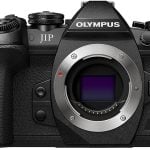
It’s done, it’s final. Olympus has announced today that it has concluded a definitive agreement with Japan Industrial Partners Inc. (JIP) regarding the transfer of the Olympus Imaging Business.
According to the press release, Olympus will be transferring its Imaging business to a new wholly-owned subsidiary called the “New Imaging Company”, through what is called an absorption-type split. This will be followed up on January 1, 2021 by a transfer of 95% of the shares to OJ Holdings, Ltd – a “special purpose company” set up by JIP.
Olympus has been manufacturing and selling cameras and lenses since 1936, but with the rapidly shrinking market over the last few years and the proliferation of smartphone cameras, they just couldn’t adapt. Olympus has recorded losses for three consecutive fiscal years leading up to March 2020, despite taking steps to attempt to overcome the problems they were facing.
Unfortunately, they couldn’t do it, and the decision was made to split off the Imaging business to JIP to create a “more compact, efficient and agile” business that was self-sustainable. They say that the New Imaging Company will be committed to providing customers with innovative, high quality cameras under the new structure.
I would like to express my heartfelt gratitude to all our customers for their patronage and support of Olympus products, and for their passion devoted to photography. I have the utmost confidence that this transfer is the correct step forward in sustaining the value of our products and services.
At the same time, I am certain that this opportunity is the best choice for our long-time patrons, new customers and photography enthusiasts. Under the new company, the development, manufacturing, sales and service functions will continue tight collaboration to introduce new products that will satisfy customers.
– Yasuo Takeuchi, President and CEO, Olympus Corporation
This deal doesn’t just mean that JIP has access to the Olympus brand name and IP. They also get all of the R&D and manufacturing facilities currently serving its Imaging business. So, it’s not like JIP is starting from scratch. They’re essentially taking the existing business and… tweaking it.
But sales and marketing, R&D and design departments will be relocated to the New Imaging Company headquarters in Hachioji, Tokyo, although production will continue at Dong Nai in Vietnam where Olympus cameras are currently being manufactured. New Imaging Company will also provide support for existing Olympus products already in the hands of customers, reaffirming the commitment made earlier in the month.
Overall, though, the future looks quite promising for the Olympus brand. Worst case, I don’t think Olympus is going to be any worse off than it has been. And best case, they turn things around and Olympus becomes a thriving name in the world of photography again. I guess only time will tell.
You can read the complete agreement here.

John Aldred
John Aldred is a photographer with over 25 years of experience in the portrait and commercial worlds. He is based in Scotland and has been an early adopter – and occasional beta tester – of almost every digital imaging technology in that time. As well as his creative visual work, John uses 3D printing, electronics and programming to create his own photography and filmmaking tools and consults for a number of brands across the industry.



Join the Discussion
DIYP Comment Policy
Be nice, be on-topic, no personal information or flames.
17 responses to “The future of Olympus looks positive as deal with JIP is officially concluded”
The future does indeed look promising for Olympus, now that it’s dumped its money-losing camera business. But does it look promising for “the Olympus brand”? Not if JIP decides to break up its newly-acquired money-losing camera business and sell off the parts, which it’s likely to do considering that the alternative is to continue to hemorrhage millions.
Which they’ve said they won’t, and didn’t do with VAIO when they acquired that from Sony.
JIP is accountable to its stakeholders, not to Olympus customers. People are still buying computers, but they have pretty much stopped buying expensive cameras, especially MFT cameras. Like all profit-seeking businesses, JIP is focused on profits, and if there aren’t any they will respond accordingly.
Ok, well, you stick with your doom and gloom, end of the world philosophy. :)
You are absolutely correct that JIP is accountable to its shareholders, just like every other public and private corporation.
Japan Industrial Partners is a private corporation. Its major shareholder is Mizhuo Securities which operates on a global basis and is part of the Mizuho Financial Group. It includes Mizuho bank, one of the world’s largest banks.
It is highly doubtful that Japan Industrial Partners would be allowed to acquire the Olympus Imaging business unless a thorough analysis and strategic assessment was done on the viability of the acquisition.
Olympus Imaging has some very valuable technologies that can be leveraged in other markets outside of the traditional camera business in which it is currently positioned.
This acquisition would not have been done based on the current state of Olympus Imaging, but rather how its technologies can be leveraged for future growth and profitability. For example, moving into the surveillance camera market, self-driving automobiles and other applications that would require sophisticated imaging and camera technologies.These other market opportunities would dwarf the traditional camera market.
When VIAO was acquired from Sony it went through a huge strategic reorientation which was quite successful. I anticipate that Olympus Imaging will also be extremely successful moving forward. See my lengthy comment below for more information.
Tom
Tom, if what you’re saying is that JIP will find a way to make its purchase profitable I agree with you. Whether it will continue to make MFT cameras is another question. My guess is that after a few years they will drop that sector, but I hope I’m wrong.
Hi Alex,
None of us really know what will happen. I think a lot of this depends on how the interchangeable camera market develops and what OM-D Digital Solutions does from a strategic and marketing standpoint.
I think it is possible that the interchangeable camera market will continue to decline until it reaches the size that the market was in the 1970’s The composition of the market may return to what it was back in those days: professional photographers, non=pros that need this type of camera gear for work, and enthusiasts/hobbyists with the disposable income to support and expensive pastime. Whether OM-D Digital Solutions can carve out a segment of that market remains to be seen.
Tom
Olympus sold more mirrorless than Nikon this year…
“Likely to do”? Based on what? That’s not how JIP usually operates. And who would buy those anyway?
They bought the whole service network, too. That is useless if they just intend to sell off components.
So the company that knew how to design advanced cameras couldn’t make a profit but another company, with perhaps some of the experienced designers, will somehow be able to make a profit?
There are excellent photographers struggling to run a business and going bust every single day. There are also shitty photographers making an absolute fortune and turning clients away. One’s ability to produce a good product does not mean that they are good at business, and vice versa. :)
Not a single company on Earth would succeed without proper marketing. Olympus failed massively at that. They can’t do worse than Olympus did.
Part of this is scale. Look at Kodak, for example. They were profitable in film, back in the days of a billion rolls of 35mm film, movie and television industries based on film, etc. Today it’s more like 25 million rolls of film — not sufficient to keep Kodak afloat. But the film spinoff, Kodak Alairis, was created in that era and might just manage.
It’s also difficult as a unit within a company always known for being unprofitable. And so one that gets successively fewer resources, perhaps ensuring ultimate unprofitability.
It’s also potentially corporate culture. If huge multisegmented companies always used their might to the best possible effect, there would be no startup companies. But you look around at many of today’s huge companies and they were little startups a decade or two ago, while so many of the dinosaurs have gone extinct.
As always with a reduced and focused company, just because it might be possible certainly doesn’t mean that the JIP management and the bulk of the existing Olympus Imaging personnel are the ones who can turn this around. But based on all that JIP is acquiring in the deal, it sure sounds like they have a plan and intend to try. They’re not just breaking up the pieces.
A company like Japan Industrial Partners (JIP) would not buy the Olympus Imaging division unless there was a good business case for doing so, and was also appropriate from a strategic perspective.
If the intent was simply to spin off the assets, JIP would not have negotiated the inclusion of R&D and other longer term aspects of the Olympus Imaging business. Plus, if the camera assets could have simply been sold off, Olympus could have done that by itself without the involvement of JIP. Fact is, most of the camera manufacturers are in bad shape and none of them have the cash flow available to make any camera business asset purchases.
We need to remember that JIP has done a very good job with its acquisition of VIAO. Recently there was a very enlightening and encouraging interview with Shinichi Inagaki, the JIP executive in charge of the Olympus Imaging acquisition.
The strategic decisions taken by JIP with VIAO are instructive. JIP took an unprofitable Sony division that was losing money in the consumer computer market, and transformed it into a profit generating company focused on the business-to-business (B2B) market within 2 years. And, has continued to grow its profitability.
Anyone who has worked in the business-to-business environment for any length of time can attest to how different business practices are when compared to operating in the consumer market.
Successfully moving the VIAO business from a consumer orientation to one focused on B2B markets is no small feat. It would have taken a well thought out strategic plan, supported by a very disciplined approach to its implementation. A high degree of business acumen would have been required for this transition.
It is also interesting that JIP’s review of the core competencies of VIAO led to the creation of the EMS (Electronics Manufacturing Service) business as a B2B service.
The EMS part of VIAO provides for the design and engineering of custom circuit boards used by a variety of manufacturers, with some emphasis on manufacturing robotics. Robotic manufacturing has been, and continues to be, a fast growing area of global technology.
The creation of EMS is a very good example of strategic business planning that resulted in a product expansion strategy. And, of a company creating new products/services by understanding how to effectively leverage its core competencies and points of differentiation.It is also clear to see how this service could be used by the camera division.
In the recent interview Mr. Inagaki has indicated the JIP will be taking a very strategic approach with its purchase of the Olympus Imaging division. He is already talking about leveraging some of the Olympus camera technology and expanding into other markets such as surveillance cameras. This global market would dwarf the size of the traditional camera market where Olympus is only playing at this time.
Market expansion and product expansion strategies, coupled with a focused strategic view, are exactly what Olympus Imaging needs. This would enable JIP to spread the fixed costs of the business over a wider assortment of products and mitigate risks by broadening the customer base of the imaging division.
Olympus cameras already are the most differentiated products in the camera business with industry leading technologies such as Live Composite, Starry Sky, Handheld Hi Res, 7.5 stop IBIS performance, Pro Capture, IPX-1 weather sealing on bodies and lenses, AI subject tracking (soon to be expanded with Bird Detection) just to name a few. I’ve used Nikon full frame gear in the past (my last full frame was a Nikon D800) and my E-M1Xs with M.Zuiko lenses run circles around what was capable with my Nikon FX gear.
The statement that professional photographers are not buying into the Olympus system is simply incorrect. Some renowned and award-winning wildlife photographers like Andy Rouse, Petr Bambousek and David Tipling have recently made the switch to Olympus. Other professional photographers in other genres have also moved over… folks like Joe Edelman, Kelley L. Cox and Matt Suess to name a few. Pros will use whatever gear enables them to do their work more efficiently and profitably. Olympus does that in spades.
We also should keep in mind that the demographics of the existing camera market is moving towards the benefits of M4/3. When I do presentations at camera clubs I very rarely see anyone under 50 in the audience. As the average age of camera buyers increases, so too does the desire of many people to shoot with smaller, lighter camera gear. Over the past year I’ve had over a dozen of my readers report that they have moved over to Olympus. Many have bought the E-M1X.
I bought into the Olympus system about 16 months ago, and recently added a third OM-D body and 4 additional M.Zuiko lenses to our kit. There is simply nothing else that meets my professional and personal needs better than Olympus. I can now go to a safety video shoot for a client with one mid-sized shoulder bag containing an E-M1X and three M.Zuiko PRO f/2.8 zooms and shoot the entire project handheld. No monopod. No tripod. No slider. No gizmo of any kind. That freedom means less time onsite and more profitable projects.
I’m like a lot of other photographers who use Olympus… I see the purchase by JIP as a huge positive and the future of Olympus cameras as very bright. I also know that there is nothing else on the market that can do everything for me that my Olympus kit does. At the end of the day, that’s where the rubber really meets the road.
Tom
Of course I’d be happier with new cameras that said “Olympus” on them… zi’ve owned them since 1975, and of all the other brands I’ve owned, I’ve only never sold an Olympus. But I’d rather have the system live on than not. They have other names for the camera that would work: OM, Zuiko, Maitani, etc. It is understandable that Olympus the medical company doesn’t want their name used by what will be a different company in the long term. Sony didn’t get to keep using “Minolta” either, and consider that when they bought it, that was a better name in the camera industry.
It won’t live or die by the name, but by what they do with the system. I have money ready for something new… as long as Fujifilm doesn’t flash just the right bright shiny object….
I believe that their cameras would be sold under the OM-D and PEN lines. The only thing they would be taking out is “Olympus.”