
























Yongnuo’s new Android-powered mirrorless camera is Micro Four Thirds with an EF mount
Nov 3, 2018
John Aldred
John Aldred is a photographer with over 25 years of experience in the portrait and commercial worlds. He is based in Scotland and has been an early adopter – and occasional beta tester – of almost every digital imaging technology in that time. As well as his creative visual work, John uses 3D printing, electronics and programming to create his own photography and filmmaking tools and consults for a number of brands across the industry.
Share:

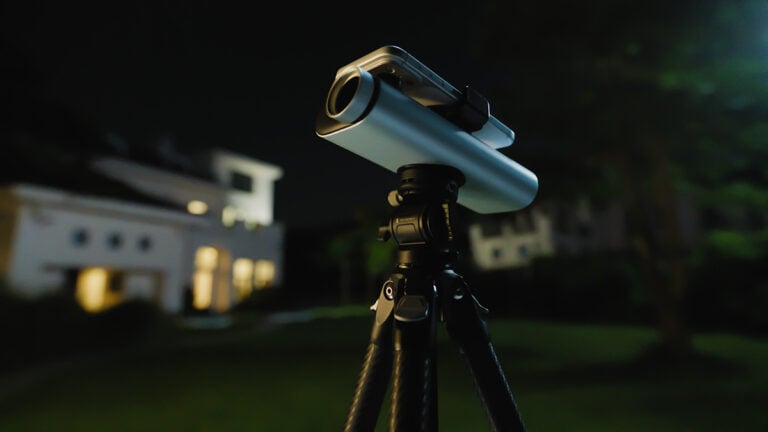
When Yongnuo teased a new mirrorless camera the other day, there wasn’t really any information to go along with it. Pretty much the only thing we new for sure was that it had 4G capability. But we could make a few assumptions based on what we saw and prior Yongnuo history.
Now, some of those assumptions have been confirmed as Yongnuo has released the specs for the yet-to-be-named new camera, which currently bears the code YN450. And there are a couple of surprises…
- Sensor: 16MP Micro Four Thirds CMOS sensor
- Lens mount: Canon EF
- Front camera: 8MP front camera (oh yes, it has a front camera)
- Display: 5″ 1080p Multitouch LCD
- Operating System: Android Nougat 7.1
- Photos: Supports RAW format (presumably DNG)
- Video: 4K video @ 30fps
- CPU: Qualcomm 8-core processor
- RAM: 3GB
- Connectivity: 4G, 3G, WiFi
- GPS: Yes
- Storage: 32GB + microSD slot up to an extra 32GB
- Mic input: Dual-mic Stereo input
- Headphones: 3.5mm headphone jack
- Battery: 4000mAh
- Flash: Built-in dual LED flash (no hotshoe)
Micro Four Thirds & EF-Mount?!?
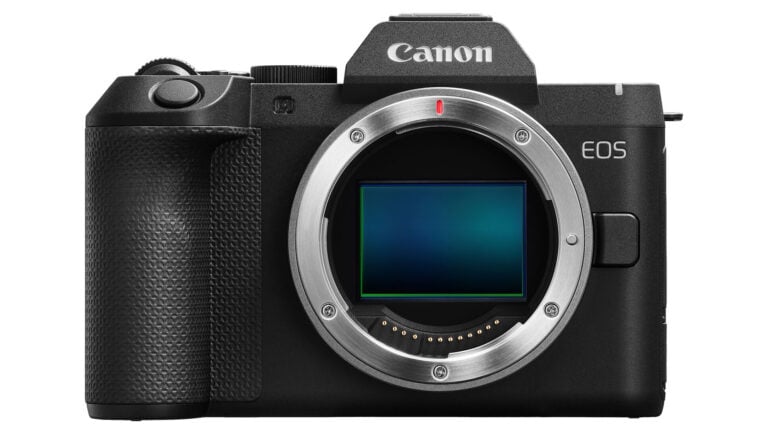
So, first thing’s first… Yes, like I guessed, it’s another weird Micro Four Thirds sensor & Canon EF mount combo like that funny smartphone camera thing they announced (which still doesn’t exist). I kind of get why, because they make cheap EF mount lenses. But it’s still odd. The fact that it uses EF mount lenses, though, with presumably an EF mount flange distance makes me wonder how thick this thing is going to be.
The Canon EF mount flange distance is 44mm. If we add another 0.6cm to cover the LCD a circuit board and the thickness of the sensor itself, that means this thing could be 5cm thick in total. It looks Yongnuo might be making the same mistake Sigma did with their SA mount lenses (which also have a 44mm flange distance) for their mirrorless cameras.
Operating system, storage & software
The version of Android they say it runs is pretty old. It’s Android Nougat 7.1, which was released in 2016. I’ve got two ASUS ZenFones here (a 4 and a 5) and both of them are running Android 8. Perhaps the YN450 will be upgradable, though.
A 1080p display is nice, as is 4K video at 30fps. Hopefully, it won’t be totally locked down to 30fps (although I suspect it will) and we can get 24fps out of it, too. I wonder how well Filmic Pro might work?
The storage is a little disappointing. 32GB in the camera is fine, but only supporting 32GB through microSD? When we’ve got cards designed specifically for exactly this type of application coming in at 512GB now. Of course, with built-in WiFi, you could use Resilio Sync to automatically transfer images to another device as you shoot them, and then delete them from your phone at will.
Other stuff…
4000mAh battery is nice. Hopefully, it’s got a Type-C USB socket on there for some fast charging out in the field, though. I think this could chug through the battery a lot quicker than a phone with the same capacity battery due to the fact that it has to run (hopefully runs) autofocus in your EF mount lenses. I wouldn’t hold out much hope for it supporting IS, but if it does then that is also going to drain the batteries.
The lack of a hotshoe is disappointing. Although perhaps all hope is not lost. The YN450 has a stereo microphone socket as well as a headphone jack. There’s nothing to potentially stop them turning the headphone jack into a PC Sync socket so that you can plug it into a flash trigger. Perhaps wishful thinking, though.
The other option is that Godox can work some more on their Android app for the A1. With the Flashpoint R2Pro Mark II also having built-in Bluetooth, this could be a decent combination for giving this camera some flash capability.
I’m still not entirely sure whether this camera is going to be amazing or awful, but I still want to have a play with one when they become available. Even if it’s not perfect (which it probably won’t be), it holds a lot of potential for the direction in which cameras could go.
When Samsung released their Android-powered Galaxy cameras a few years ago, and particularly the Samsung Galaxy NX, a lot of people who used them really liked them. They were fairly disappointed when Samsung ceased to making cameras.
Whether Yongnuo can really pick up that mantle and make it work remains to be seen, but it’s still an intriguing idea.
The camera’s set for an official announcement and final naming in January. So, I suppose these specs are subject to change. And I definitely want to see what it looks like from the other side and how thick that lens mount is. We’ll keep you posted as we hear more.
See more from DIYPhotography.net on Google
Add DIYPhotography.net as a trusted source. This makes
our stories more likely to appear in your Google Search results.
 Add as a preferred source on Google

John Aldred
John Aldred is a photographer with over 25 years of experience in the portrait and commercial worlds. He is based in Scotland and has been an early adopter – and occasional beta tester – of almost every digital imaging technology in that time. As well as his creative visual work, John uses 3D printing, electronics and programming to create his own photography and filmmaking tools and consults for a number of brands across the industry.
Related Posts
 Yongnuo to release the YN450M – A Micro Four Thirds version of their Android-powered mirrorless camera
 Yongnuo’s YN450 has a Micro Four Thirds sensor, Canon EF mount, Android OS and shoots 4K video
 Hands on with Alice – AI & smartphone-powered Micro Four Thirds camera
 The AI-powered Micro Four Thirds Alice Camera is finally shipping
Join the Discussion
DIYP Comment Policy
Be nice, be on-topic, no personal information or flames.
8 responses to “Yongnuo’s new Android-powered mirrorless camera is Micro Four Thirds with an EF mount”
Really cool idea, but unless this camera comes with a built-in focal reducer, it’s pretty much useless.
No more useless than any other Micro Four Thirds camera, really. You just have to accept that it’s a 2x crop. :)
No, every other Micro Four Thirds allows you to use appropriate focal lenghts to match their sensor size, so it’s definitely not like every other Micro Four Thirds camera.
FF lenses on Micro Four Thirds do not resolve as much detail, and then the whole DOF also being 2x less is less than ideal. I know this because I’ve tested it with my own cameras and my own lenses, so I know from first-hand experience that the two just don’t mix.
If you say so. :)
What type of customers they are targeting for? Definitely not for me
I really like the idea. I think Yongnuo has pioneered something remarkable. Typical camera manufacturers continue to disregard the obvious future of photography: fast powerful processors with Iphone-like software, combined with an interchangeable lens mount.
Imagine it having Google camera installed!!!
Kind of going the same route as the Yi M1with a strange choice of mount… how well did that work for Yi in the end? They sure had an interesting concept, somewhat lacking in the implementation, but after all, it was their first camera ever.