






















This is what happens when you “scan” film with a film camera
Oct 8, 2024
John Aldred
John Aldred is a photographer with over 25 years of experience in the portrait and commercial worlds. He is based in Scotland and has been an early adopter – and occasional beta tester – of almost every digital imaging technology in that time. As well as his creative visual work, John uses 3D printing, electronics and programming to create his own photography and filmmaking tools and consults for a number of brands across the industry.
Share:
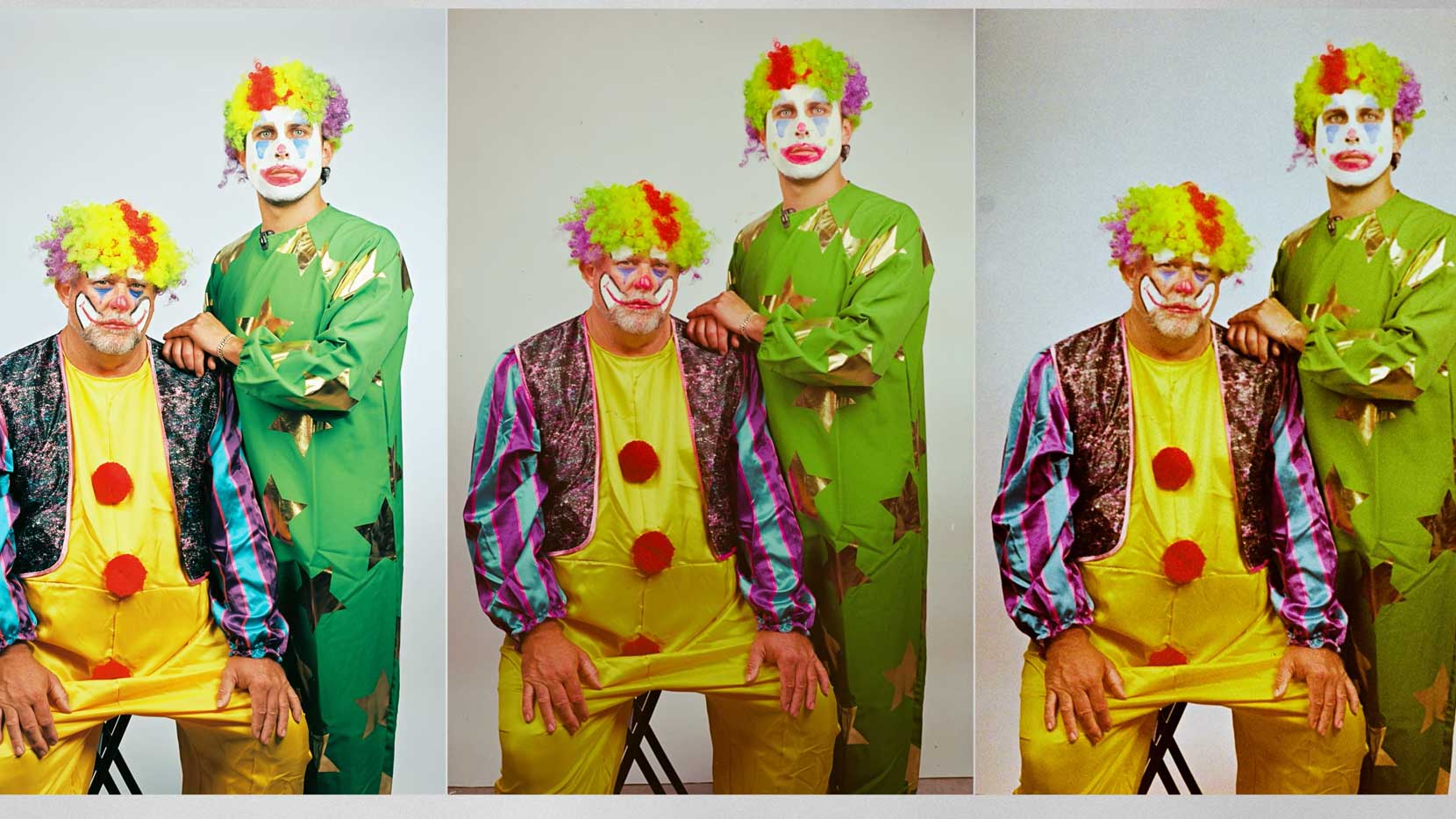
It’s always fun to see people still experimenting with film in 2024. And I don’t mean experimenting in the traditional photographic ways but experimenting with the process itself. And this video from YouTuber Max Adams is a perfect example of it.
Alex was curious to find out if you could “scan” a negative by photographing it to another negative, resulting in a positive. And how good would it look? Would it have weird colour shifts? Let’s find out.
A fun experiment used to be a common technique
Photographing negatives onto fresh negative film used to be a common technique. Although, perhaps more in cinema than in photography. Max created what is known as an internegative. Companies like Kodak even make film designed specifically for this purpose.
An internegative is a motion picture film duplicate. It is the color counterpart to an interpositive, in which a low-contrast color image is used as the positive between an original camera negative and a duplicate negative.
After a film is shot, the original negatives—taken directly from the camera equipment—are edited into correct sequence and printed onto fresh stock as a cohesive film, creating an interpositive print used for color timing. From the interpositive, answer prints, which include the color-corrected imagery and a properly synced sound track, are made. Once approved by the studio, the final answer print is made into an internegative used for striking copies that will be delivered to theaters for viewing.
Wikipedia
But not knowing this in advance Max’s experiments are quite interesting to see. Logically, the answer to the question should be obvious. When you make a negative of a negative, it is indeed a positive. But this wasn’t the only question. Did it have colour shifts? Weird grain issues? Or any other weird artifacts?
Yes, to all of the above. But that is more than likely down to the film stock he was using. It’s an interesting technique to try today outside of the movie industry. It’s a fun technique to experiment with for creative effect, although that can get quite expensive very quickly!
See more from DIYPhotography.net on Google
Add DIYPhotography.net as a trusted source. This makes
our stories more likely to appear in your Google Search results.
 Add as a preferred source on Google

John Aldred
John Aldred is a photographer with over 25 years of experience in the portrait and commercial worlds. He is based in Scotland and has been an early adopter – and occasional beta tester – of almost every digital imaging technology in that time. As well as his creative visual work, John uses 3D printing, electronics and programming to create his own photography and filmmaking tools and consults for a number of brands across the industry.
Related Posts
 How to modify the Plustek 8100 35mm film scanner to scan medium format roll film
 How to quickly and easily “scan” negative film with your digital camera and a copy stand
 How to “scan” your film shots with the Nikon ES-2 digitizer and your camera
 Pixel peeping at an impressive 709MP drum scan of 8×10 slide film
Join the Discussion
DIYP Comment Policy
Be nice, be on-topic, no personal information or flames.