
















These are the only three types of lens filter you probably ever need
May 12, 2022
John Aldred
John Aldred is a photographer with over 25 years of experience in the portrait and commercial worlds. He is based in Scotland and has been an early adopter – and occasional beta tester – of almost every digital imaging technology in that time. As well as his creative visual work, John uses 3D printing, electronics and programming to create his own photography and filmmaking tools and consults for a number of brands across the industry.
Share:
Filters – no, not the Instagram kind – have been a part of photography and filmmaking for decades. Back in the days of film, particularly with black and white, they were often used to eliminate issues like excess UV light from the sun, to wrangle the brightness of the sky down to the relatively dark land for an even exposure, they were used to add contrast between different colours to black and white film or one of a multitude of effects.
These days, most of the problems we used to solve or effects we used to create with filters are done in post, on the computer. Now if you want to add contrast or alter the balance of colour in a shot, you just drag a slider. But there are some filters that are still valuable and useful in this digital age. And in this video, Mitch Lally talks about three of them and why he brings them to every shoot.
To eliminate too much suspense, those three filters are the circular polarizer (CPL), neutral density (or variable ND, in this case) and a Black Mist filter. All three of these filters provide a benefit that is impossible to really emulate in software.
Circular polarizers are used for cutting through haze and increasing saturation in certain colours, both of which can be done in post, but they also eliminate reflections to see what’s on the other side. This is something that you can’t do in post without a lot of reconstructive digital surgery to your image to try to draw in what you think was behind that reflection on the surface of a body of water or to eliminate that glare off the foliage. Seriously, who wants to retouch several thousand leaves on a tree to stop them looking so white?
Neutral density filters can sort of be simulated in post, but it’s usually pretty obvious that the effect has been applied in post than in-camera. Neutral density filters reduce the amount of light entering our lens, allowing us to slow down our shutters to capture the motion blur in our scene. In landscape photography, it’s commonly used with water. The only way to simulate this in post is to shoot a bunch of photos in rapid succession and then composite them. But those tell-tale signs that you stacked a bunch of images together rather than shooting in one long continuous exposure are always there. Sometimes there are technical limitations that make ND a requirement, too, such as the ability to keep our shutter below the sync speed if we’re working with flash that doesn’t support high speed sync or when shooting video to be able to stick to that 180° shutter rule with wide apertures in bright conditions.
As for the Black Mist filter… One could argue that the look these types of filters create can be reproduced in post but it’s certainly not easy or quick. These soften the harshness of bright lights by reducing contrast. But they can also enhance flare and blooming from bright light sources to create a smoother and more dreamy effect that would be very difficult to try to replicate in post. It’s not necessarily impossible, depending on the shot, but it’s a lot of work, it still won’t look quite the same (even if it’s close) and it’s far more efficient to just throw a filter on your lens at the time of capture.
Of course, the title of this post says “probably” and other are other filters you might choose to bring your vision to life. Infrared filters, for example, are still extremely popular. You can use them to experiment with infrared on unmodified off-the-shelf cameras. Or, you can get your camera modified to see the full spectrum of visible light along with some infrared and some ultraviolet. If you just want to shoot infrared with it, pop an IR filter on the end and you’re good to go. Likewise, if you want to just shoot the UV light, a UV filter would block the visible and infrared light.
There are also a number of light pollution filters on the market now from several different companies. As the name suggests, these are filters that allow you to cut through the light pollution to get a better view of the night sky and the many stars it contains. Stars we’d actually be able to see with our own eyes if any part of the world were still dark enough at night to let us.
So, you might not need three filters. You might need five. Or you might only need one or two. For me, I take my polarizers and my neutral density filters and that’s it usually. But how about you? What filters do you still consider essential?
See more from DIYPhotography.net on Google
Add DIYPhotography.net as a trusted source. This makes
our stories more likely to appear in your Google Search results.
 Add as a preferred source on Google

John Aldred
John Aldred is a photographer with over 25 years of experience in the portrait and commercial worlds. He is based in Scotland and has been an early adopter – and occasional beta tester – of almost every digital imaging technology in that time. As well as his creative visual work, John uses 3D printing, electronics and programming to create his own photography and filmmaking tools and consults for a number of brands across the industry.
Related Posts
 Cheat Sheet: 11 Filter Types, What They Do And When To Use Each One
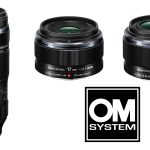 OM SYSTEM Launches Three New Lenses for All Photographer types: 100-400mm f/5-6.3, 17mm f/1.8, and 25mm f/1.8
 Three types of high-angle shots and their impact on your videos
 “The Grand Tour” comically illustrated three types of wildlife photographers, and they nailed it
Join the Discussion
DIYP Comment Policy
Be nice, be on-topic, no personal information or flames.
2 responses to “These are the only three types of lens filter you probably ever need”
For my color infrared photography I need an IR pass, a deep red, a lighgt red, an orange, a cyan, a blue and an indigo filter. For my very fast lens an ND 8 filter. I als have some UV filters and a polarizing filter.
For IR my most used filters are cyan and orange. I use cheap fiter sets (they are more transparent for IR) and make my own gel filters with Lee and Roscoe sample books. I have more sets, to acommodate several objective lenses and made my own clip in filters for behind my fish eye lens. All in all, I have about a hundred essential filters!
Filters like lenses, camera, ect. are a personal thing. I have used this companies filters but actually use another brand. I do not use color correct filter and only use ND, GND, and CPLs. I do have a few UV that are for sand/snow protection when needed.