





















Sony’s Triple-Layer Sensor Tech Could Double Your Camera’s Dynamic Range
Jul 30, 2025
Anzalna Siddiqui
A psychology major in her third year of Bachelor’s, Anzalna Siddiqui has endless curiosity for the human mind and a deep love for storytelling – both through words and visuals. Though she hasn’t taken up photography as a profession, her Instagram is where her passion finds its home. In addition to this, she’s a travel enthusiast who never travels without her camera because every place has a story waiting to be captured.
Share:
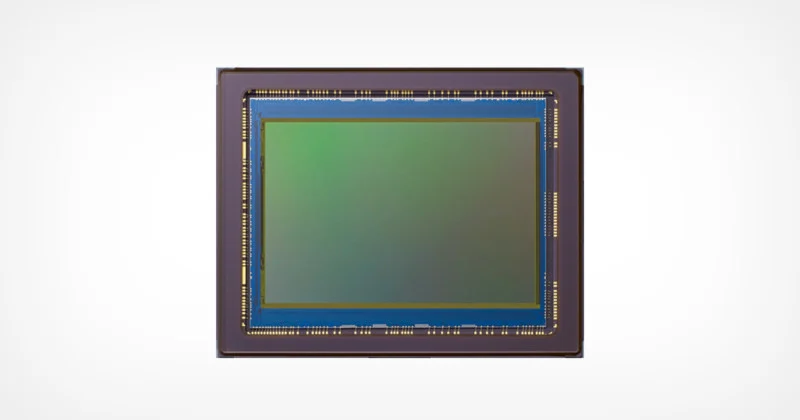
Sony is working on something exciting in its sensor labs that could really change how we think about camera upgrades. They’re developing a new Sony’s Triple-Layer Sensor that will outperform the current two-layer models.
This new sensor could offer better dynamic range, greater sensitivity, clearer shots at high ISO, faster readout speeds, and impressive video features. They plan to achieve this by adding an extra processing layer or separating pixel transistors onto a third layer, which could significantly increase the saturation signal levels.
This isn’t just a small improvement. It’s a significant advancement that could transform our expectations for cameras, whether you’re taking photos or shooting videos.
How Triple-Layer Tech Works
Your camera’s sensor currently has a two-layer setup. The top layer contains the photodiodes, which are responsible for capturing light with millions of pixels, while the layer below is made up of transistors, which do the processing work.
Sony’s innovative idea is to introduce a third layer to this setup. This added layer provides more processing power right at the sensor, leading to significant improvements in performance.
The advantage of this method is that it addresses performance issues directly at their source. Rather than trying to extract more power from the existing design, Sony is effectively creating more space for additional processing capabilities.
[Related Reading: Sony and National Hockey League Sign Multi-Year Worldwide Technology Agreement]
Performance Gains That Matter
What does all this added processing power really mean for you? First, your camera can take photos with a much wider range of light – you’ll get well-exposed shadows and highlights in the same picture. It also performs better in low light, giving you more explicit images even at higher ISO settings.
If you like speed, you’ll love the quicker readout features. This means less rolling shutter, faster continuous shooting, and autofocus that tracks subjects more effectively. Video creators benefit too, as this extra power removes the limits on video resolution for high-megapixel sensors. This could open up new recording options we haven’t even thought about yet.
Two Paths to Triple-Layer Glory
Sony isn’t sticking to just one way of doing things for this third layer. The first idea is to boost processing power, essentially giving your sensor a second brain. They could place the pixel transistors and photodiodes on separate layers, with the transistors below.
This second idea could change everything. Sony can improve each layer individually by allowing the pixel transistors to have their area instead of squeezing them next to the photodiodes. It could double the saturation signal levels compared to regular sensors. That’s right — twice the signal capacity, which leads to a broader dynamic range and better overall image quality.
Final Thoughts
Sony is well-respected for its advancements in sensor technology. Recently, its semiconductor division announced record sales and profits, and it’s investing heavily to turn its triple-layer vision into reality. But when will we see this technology in an Alpha or FX camera?
Sony isn’t revealing much about their plans. It could be next year, or it might take three years. What we do know is that the future of full-frame sensors looks very promising, and Sony is clearly moving forward quickly.
[via PetaPixel; Image credits: Sony]
See more from DIYPhotography.net on Google
Add DIYPhotography.net as a trusted source. This makes
our stories more likely to appear in your Google Search results.
 Add as a preferred source on Google

Anzalna Siddiqui
A psychology major in her third year of Bachelor’s, Anzalna Siddiqui has endless curiosity for the human mind and a deep love for storytelling – both through words and visuals. Though she hasn’t taken up photography as a profession, her Instagram is where her passion finds its home. In addition to this, she’s a travel enthusiast who never travels without her camera because every place has a story waiting to be captured.
Related Posts
 Canon has developed a new sensor with 20-stops dynamic range that’s good down to 0.08 Lux
 Canon’s new HDR sensor shoots multiple images simultaneously for over 24 stops of dynamic range
 Magic Lantern’s Dual ISO Feature May Boost Dynamic Range To 14 Stops (Or Fry Your Sensor)
 DJI’s new 6K drone camera packs a Super 35mm APS-C sensor with 14 stops of dynamic range
Join the Discussion
DIYP Comment Policy
Be nice, be on-topic, no personal information or flames.