
















Sony Camera Authenticity Stops Fake AI Videos in Their Tracks
Nov 3, 2025
Dunja Đuđić Kalinin
Dunja Djudjic is a multi-talented artist based in Novi Sad, Serbia. With 15 years of experience as a photographer, she specializes in capturing the beauty of nature, travel, concerts, and fine art. In addition to her photography, Dunja also expresses her creativity through writing, embroidery, and jewelry making.
Share:

In an era where AI-generated content is increasingly difficult to spot, Sony has introduced a new tool to help news organizations verify the authenticity of their footage.
Sony’s latest update to its camera authenticity system is the first in the industry to support video verification. This means broadcasters and journalists can now verify that the video content they shoot is genuine and not AI-generated or altered. The feature officially launched on October 30 and currently works with five Sony camera models, with support for four more coming by 2026.
[Related Reading: What is Content Authenticity in photos, and why does it matter?]
Fighting Fake Videos With Verified Footage
Sony previously introduced a beta version of its image verification feature, “Camera Verify,” which embedded authenticity markers in still photos. Now, the company has expanded that effort with full video verification support as part of its upgraded Camera Authenticity Solution.
Sony’s new system uses technology that follows C2PA standards. It’s a global framework that ensures content was captured by a real camera, not generated or edited with AI. These standards are backed by The Coalition for Content Provenance and Authenticity, of which Sony has been a core member since 2022.
“As generative AI continues to evolve, concerns are growing about the impact of tampered and fake images spreading widely,” Sony said in a press release.
“For news organizations and broadcasters in particular, the importance of providing accurate and reliable information has increased. To address this challenge, Sony has been providing camera authenticity solutions.”
How It Works
Sony’s camera authenticity verification site “enables authenticity verification for both still images and videos, confirming that content was captured by a Sony camera rather than AI-generated,” the company writes.
“The system can also detect 3D depth information in video content, enabling highly accurate verification that videos were captured of actual, existing subjects. Additionally, a trim function that allows extraction and verification of only necessary portions while maintaining signatures enables rapid authenticity verification even for large-capacity video files.”
In addition, Sony’s cloud-based collaboration platform, Ci Media Cloud, will display “C2PA standard-compliant digital signature information that certifies content authenticity,” making it easier for newsrooms to verify video files during production.
Why Authenticity Matters in the AI Era
As AI-generated photos and videos become more convincing, it’s harder for viewers to tell what’s real. This poses a serious threat to public trust, especially in journalism. When fake videos can spread online in minutes, it’s crucial that media organizations can prove their footage is authentic.
Sony emphasized this concern, stating:
“In response to growing demand for authenticity support, Sony has advanced its technology development to enable news organizations and broadcasters to verify the authenticity of video and image content, supporting the work of photojournalists, video journalists and photographers.”
Supported Camera Models
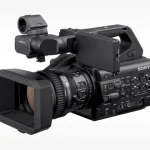
Right now, the system works with Sony’s Alpha 1 II, Alpha 9 III, FX3, FX30, and the new PXW-Z300 camcorder. Additional models including Alpha 7R V, Alpha 7 IV, Alpha 1, and Alpha 7S III will be supported by late 2025 and 2026.
For more details, visit Sony’s official camera authenticity website.
[Image courtesy: Sony]
See more from DIYPhotography.net on Google
Add DIYPhotography.net as a trusted source. This makes
our stories more likely to appear in your Google Search results.
 Add as a preferred source on Google

Dunja Đuđić Kalinin
Dunja Djudjic is a multi-talented artist based in Novi Sad, Serbia. With 15 years of experience as a photographer, she specializes in capturing the beauty of nature, travel, concerts, and fine art. In addition to her photography, Dunja also expresses her creativity through writing, embroidery, and jewelry making.



Join the Discussion
DIYP Comment Policy
Be nice, be on-topic, no personal information or flames.