











Finally! The BEST way to sharpen your images!
Jun 5, 2016
Joseph Parry
Joseph Parry is a Commercial and Editorial photographer based in the UK that provides cinematic photography and ounces of humour. Follow him on Instagram for stories and kick ass imagery.
Share:

Sharpening. A subject that has potentially endless possibilities when it comes to how it can be done, high pass, unsharp mask, sharpening etc are the main one’s that most of you will know about, however I’m here today to offer you a method of sharpening that I personally, have found so impressive that I just had to pass it on! I actually call this method “The Sharpening” because I find it to be hilarious and entirely unnecessary. ;)
Also for those of you who ask me about the Toolkit every time I post on YouTube! – A super quick shout out to the insanely talented and awesome friend Conny Wallstrom who created the BEST retouching toolkit Photoshop has ever seen, I use it for everything, check it out here.
Do any of you know what the opposite of sharpening is?
Of course, not a trick question! It’s blurring! With that in mind, how many options do we have for blurring vs sharpening? At a quick guesstimate I’d say there’s at least 10+ Blur filters and more around 5+ sharpening filters within Photoshop, and when we look at the degree of control that we get from those filters, in your opinion, which ones offer the most versatility? Because if you’re anything like me, we’ll agree on the fact that the amount of control and options you get in blurring your images is far more complex and varied in comparison.
So why am I talking about blurring instead of sharpening here?
Well my friends, it’s time to have your mind blown (and if you already know what’s coming next, you deserve a high five!). What if I told you that we could use all of that control within the blur tools, and invert that information to convert it back into sharpening? Giving us greater choice, control and precision in how we go about sharpening our images.
Now what if I told you that not only am I giving you an action that my dear friend and co-writer Stefan Kohler has made for you all (THANK YOU STEFAN!!!) but I’m also gonna break down the manual way to do it for you too!
Here’s the Action: The Sharpening Action
Step 1: – Have your image ready to be sharpened.

Step 2: Stamp Visible all the layers (CTRL+ALT+SHIFT+E / CMD+OPTION+SHIFT+E)

Step 3: Invert the image (CTRL+I / CMD+I)

Step 4: Set the opacity of the layer to 50%.

Step 5:
Select “Surface Blur” under Filter>Blur>Surface Blur.
I find a radius of 3-5 and Threshold of 15-20 to suit my taste (and default image size) best as it allows for duplicating the layers to gently increase the sharpening to taste.

Step 6: Stamp Visible the layer again and delete the old one below it.

Step 7:
Change the layer mode to “Overlay” (or “Soft Light” if you prefer it even softer).
Now duplicate the layers (CTRL+J / CMD+J) until you get the sharpening you level you like.

Before / After:


The thing I really love about this method is that it’s so damn respectful to the integrity of the image, it’s capable of being so gentle and so “peeling” of the softness. I love it! I hope you guys do too!
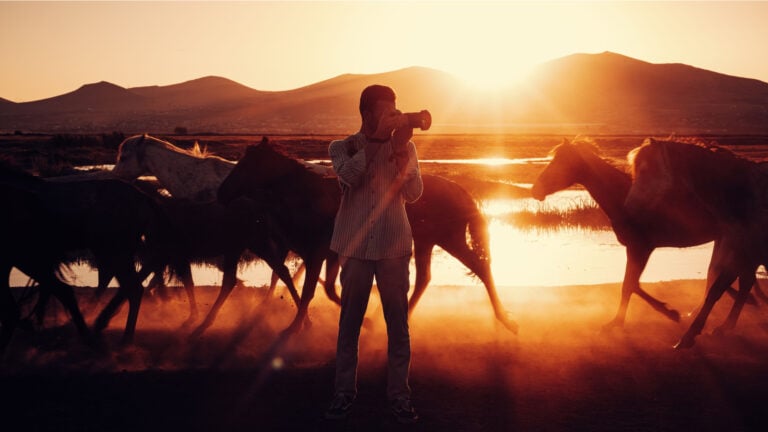
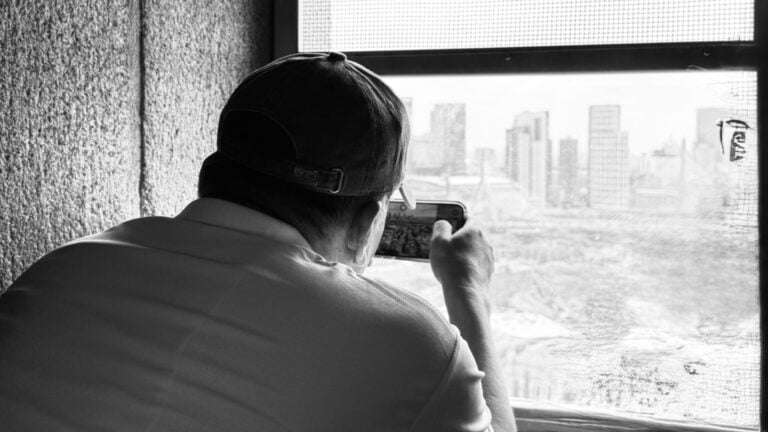
*I wanted to dedicate this article to Simon Sigrist (The man in the photo), who as of the publishing of this article is living out his last week with his battle to cancer. RIP my friend.*

Joseph Parry
Joseph Parry is a Commercial and Editorial photographer based in the UK that provides cinematic photography and ounces of humour. Follow him on Instagram for stories and kick ass imagery.


Join the Discussion
DIYP Comment Policy
Be nice, be on-topic, no personal information or flames.
40 responses to “Finally! The BEST way to sharpen your images!”
ultra yawn.. the beard is as long as my arm.
I have no idea what the beard is as long as my arm means hahaha this particular method may not be “new” in terms of how long the tech and steps have been around to do it. But it’s certainly an unconventional method to the majority.
today we could have way better ways of “sharpening”.
there are a few very interesting siggraph whitepapers .. but nothing happens.
as much as i like nik software sharpener.. i must admit i am a bit disappointed that it sharpens noise too (no matter what you do).
when you have a solid color wall and you use nik sharpener it will introduce (strengthen) grain into the solid color.
piccure+ in version 3 behaves much better in this regard but still has some issues.
i always sharpen localy but often it´s very time consuming.
especially for great batches of photos.
Yeah I hear ya brother! Hopefully it’ll be a focus (pun intended) of software companies sometime.
Ever wondered why they call it “unsharp mask”…?
I did actually! It’s from film days and this method emulates that somewhat. Blurring images to cancel each other out to increase sharpness etc.
…so that’s an unsharp mask, then.
Technically yes! Though this offers better control / results than using the preset unsharp filter in PS. This method gives you more control because you can choose the type of blur you wish to use AND you can control is with more finesse.
What about just focusing the lens?
Even with a perfectly focused lens, those of us whom shoot in RAW format will always have softer images unfortunately. So if we desire sharper images then methods like the above can help get you there!
As you said though my friend, starts at the source!
Even if the lens is focused and it is sharp you have to know the sensor has an anti alias filter to stop moire but this adds a blur or softness to the image you take.
In order to counter that blur caused by the AA filter in front of the sensor you need to sharpen the image.
Digital photography 101
Was reading about this earlier, always found it funny how even when cameras are sold without the AA filter they still put glass in there anyway hahaha!
yeah hahah I can imagine that is there to protect the real sensor from scratches and dust, however one can only wonder how much even that non AA filter affects IQ
A fair amount actually! Sharpness is impacted quite heavily considering!
Using blur to sharpen images isn’t something new o_o
Where did I say the technique was new? It dates back to film… That doesn’t stop it from being the best sharpening method for my uses does it ;)
The title claims it’s the best, not that it’s new, it was however a new technique to me, which is where the Finally comes in.
Take this to the next level by applying layer masks to the sharpening layers to control how much sharpening specific parts of your image receive.
That’s exactly right!
Just gave it a try. I like it :)
Excellent! :D
This does exacly same thing as “high pass”-filter without inverting. This way it reduces contrast a little bit butorherwice it is EXACLY the same.
No it’s not. Highpass has a focus on edges, this works on surfaces and avoids edges far more. Which personally I prefer as I use dodge and burn etc for edges.
Yes, but if you correct the contrast to same, then result is identical. Diffirence is just that it increases contrast and that reduces it.
I don’t understand what you mean, but OK hahaha :D
It’s mathematical thing, but after contrast corretions they do the same thing.
I’ll leave that to you mate, because if I high pass and image and surface pass an image (what I’m calling this technique just for this sentence) the outcomes are different.
One hits edges, one hits surfaces. though if you find the results the same after some addition work fair enough brother! I ain’t gonna argue!
Now I figured non-mathematical way to explain it!
High-pass layer increases the edges and your style decreases everything but the edges. Result is finally the same if you correct the contrast.
Excellent Joseph…
I didn’t know that method, until today…Thank you
Awesome Ben!
This is what they call the ‘ Golden Hour’!
Very moving portrait!
Thanks David. It means a lot to me to have caught Simon before he passes.
Very moving portrait!
Thanks for the tutorial. I will be utilizing this in my post processing
No problem at all!!!
is that possible sharpen a photo without gain noise or grainy?
hi
the link of action is no working
does it work with color images?
thanks
I’m not following it
I didn’t see any difference
What about using Negative Clarity as the softening agent?