























Canon EOS R100 Review: Best Budget Mirrorless for Beginners?
Nov 4, 2025
Darlene Lleno
Darlene Lleno brings a unique perspective to DIY Photography as someone who grew up surrounded by camera gear but chose words over lenses. With five years of writing experience, she specializes in photography content that’s both technically informed and genuinely passionate. Growing up with a photographer twin brother meant camera talk was everyday conversation in her household. While he mastered capturing moments, Darlene discovered she preferred being the subject and the storyteller behind the scenes. As a travel enthusiast and mother of two, she understands the importance of preserving life’s precious moments. When not exploring new destinations or writing for DIY Photography, you’ll find her reading or tending to her garden. Her approach to photography writing is refreshingly authentic, she may not be behind the camera, but she knows exactly what it takes to help others capture the shots that matter most.
Share:
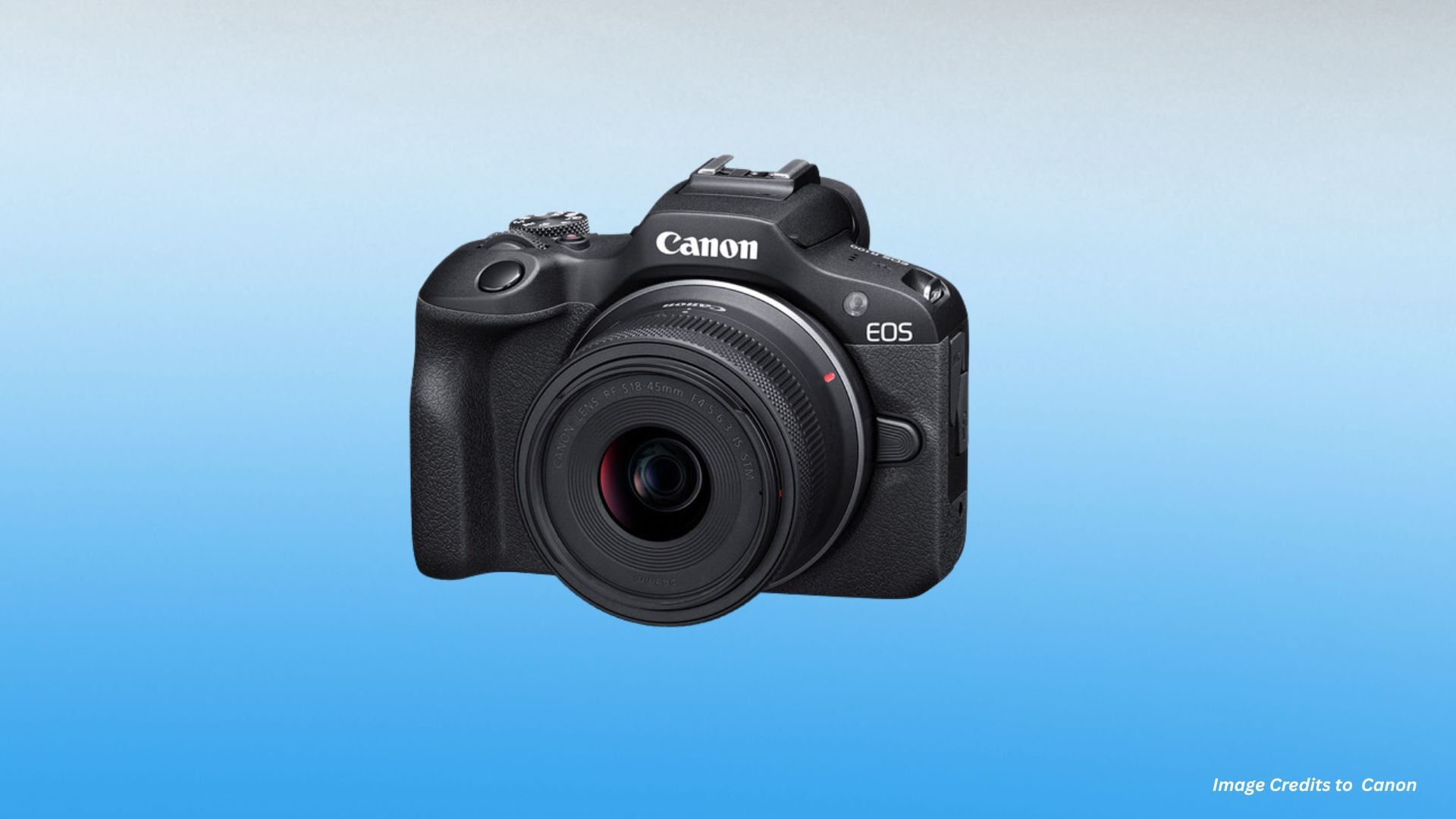
The Canon EOS R100 launched in 2023 as Canon’s most affordable mirrorless camera. This ultra-compact body costs just $479 without a lens. Canon built it as an entry point into RF mount mirrorless photography. But does the low price come with too many sacrifices?
What You Get with the Canon EOS R100
Canon packed a 24.2-megapixel APS-C sensor into this tiny camera. The body weighs only 12.6 ounces with battery and card. You can carry it all day without strain. The dimensions measure 116.3 x 85.5 x 68.8mm, making it incredibly compact.
The Canon EOS R100 uses Canon’s Dual Pixel CMOS AF system. This tech turns every pixel into a phase-detection focus point. The result is generally fast and accurate autofocus for people photography.
Pricing breaks down to $479 body only, $599 with the RF-S 18-45mm F4.5-6.3 IS STM kit lens, or $829 with both the 18-45mm and RF-S 55-210mm F5-7.1 IS STM telephoto zoom.
Build Quality and Design
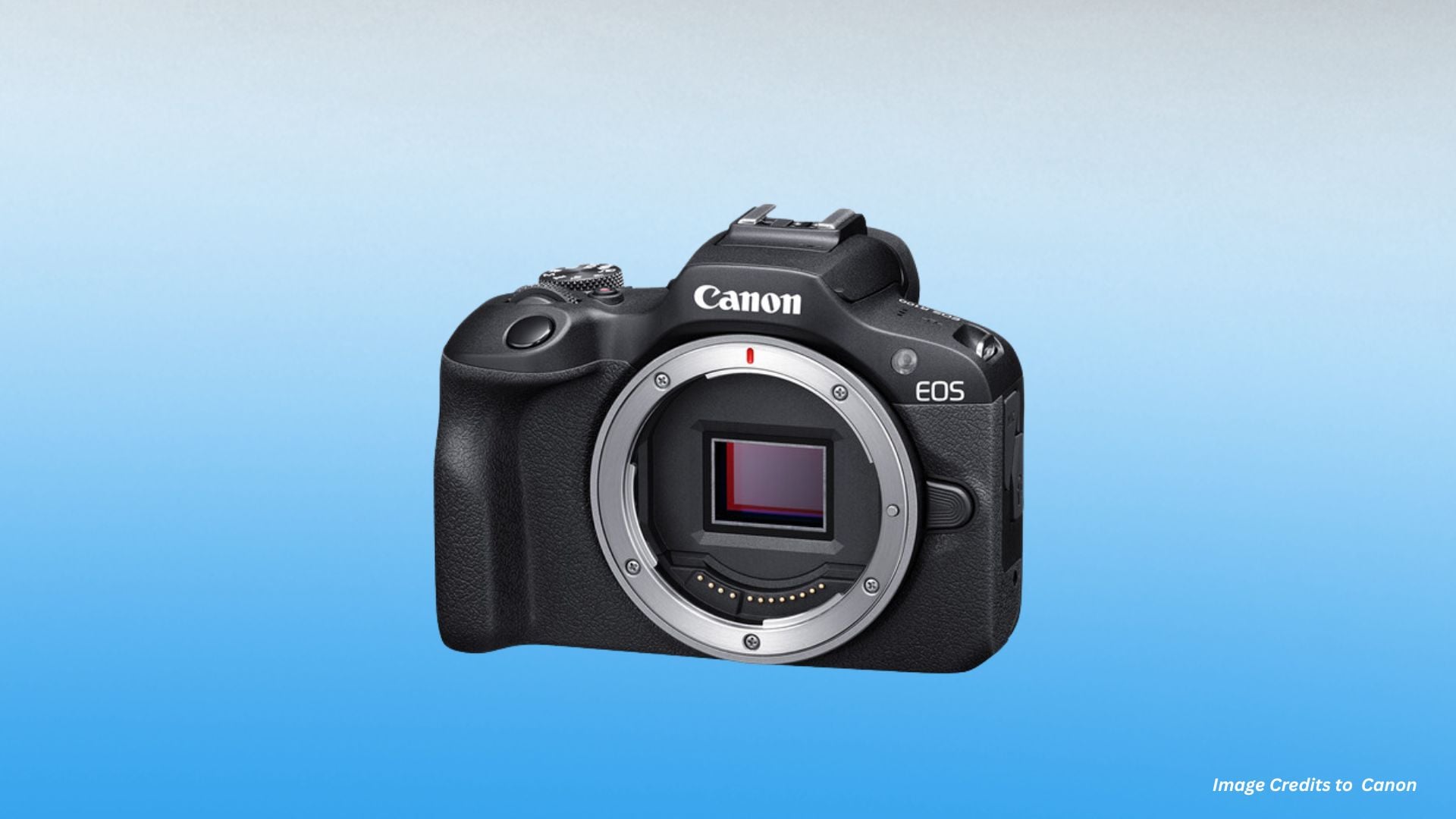
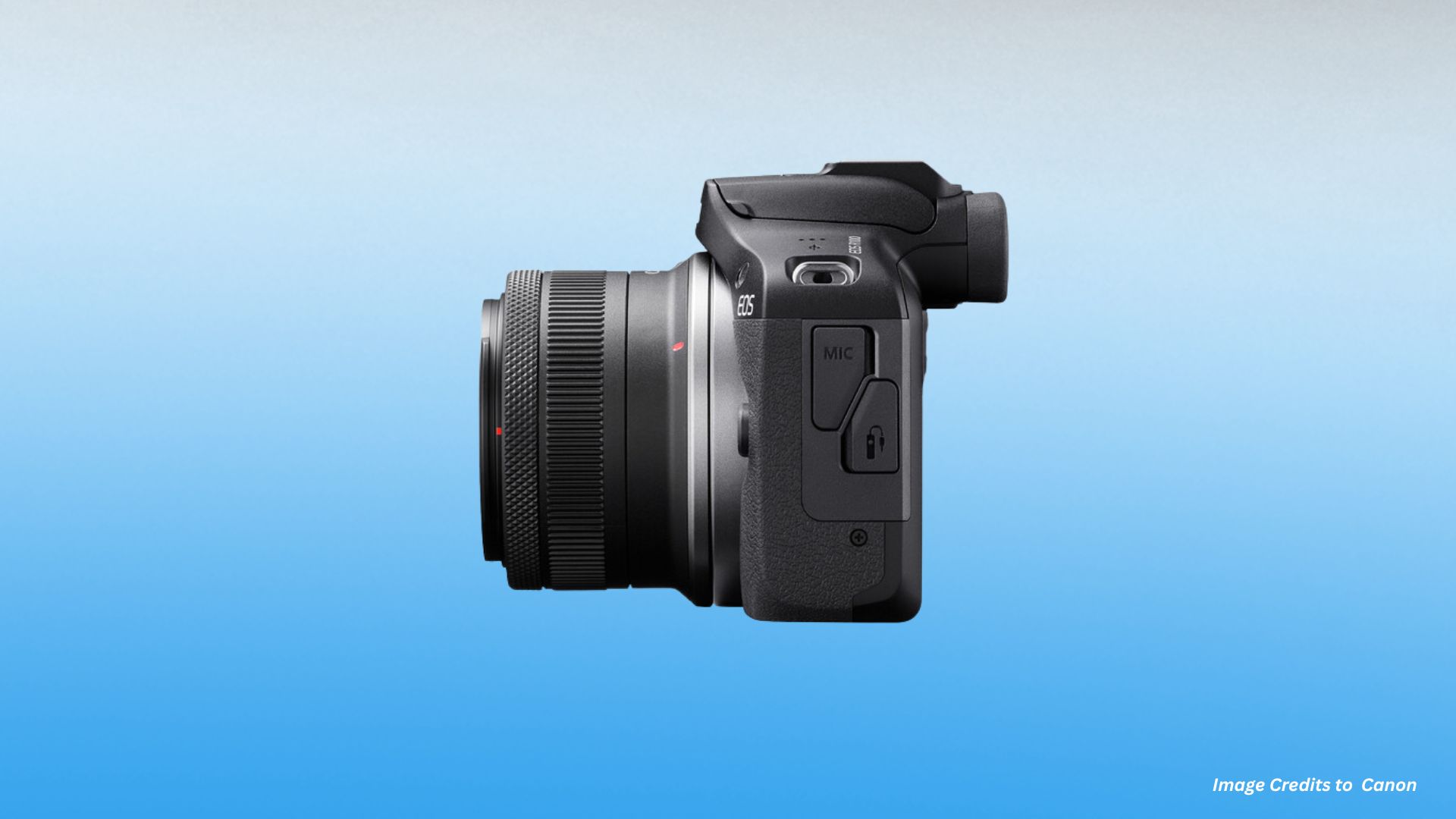
Canon constructed the Canon EOS R100 primarily from polycarbonate resin with glass fiber. This keeps weight minimal while maintaining decent durability. The grip surprises with its comfortable shape despite the small size. Your fingers wrap around it securely during shooting.
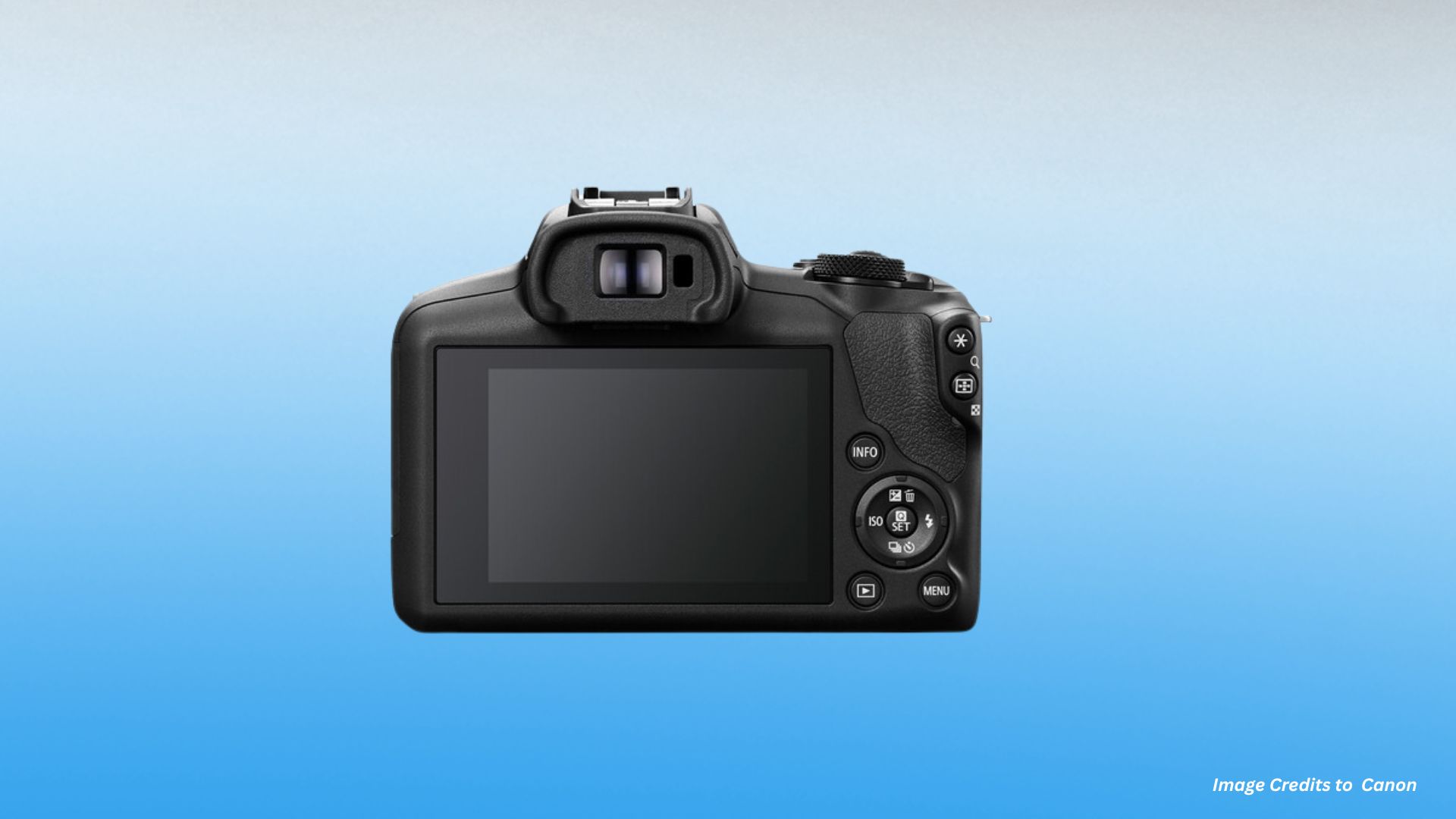
The 2.36-million-dot OLED viewfinder provides 0.95x magnification. It’s usable but small compared to higher-end models. The 3-inch LCD screen has 1.04 million dots. Here’s the problem: the screen is fixed and lacks touch functionality.
No touchscreen in 2025 feels outdated. Every smartphone has one. Most budget cameras include touchscreens too. This affects everything from menu navigation to moving your focus point around the frame.
Controls That Slow You Down
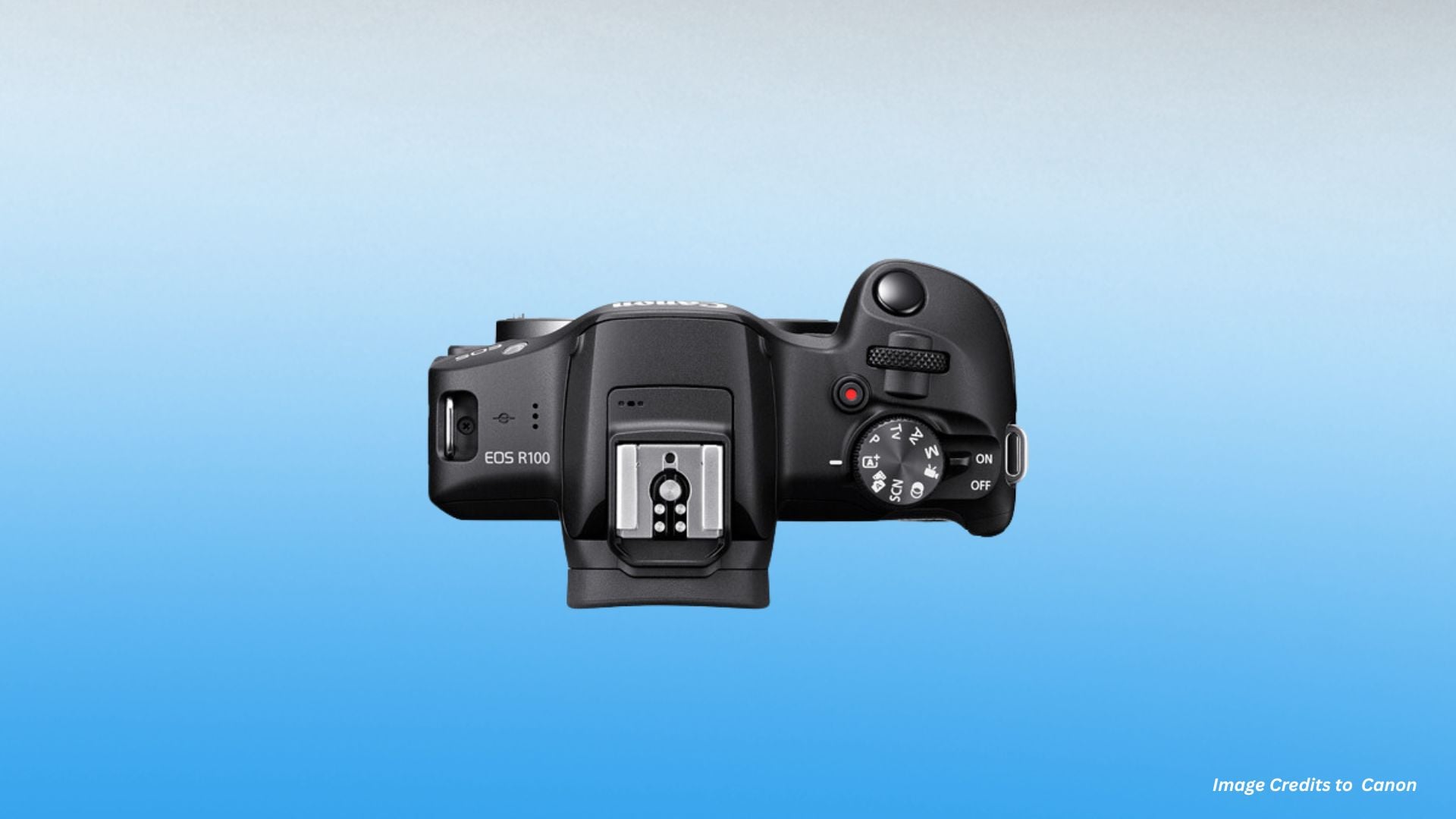
The Canon EOS R100 has only one control dial. You’ll rely heavily on the four-way controller for adjustments. Moving your autofocus point means repeatedly tapping the directional pad. No joystick option exists. No touch-to-focus either.
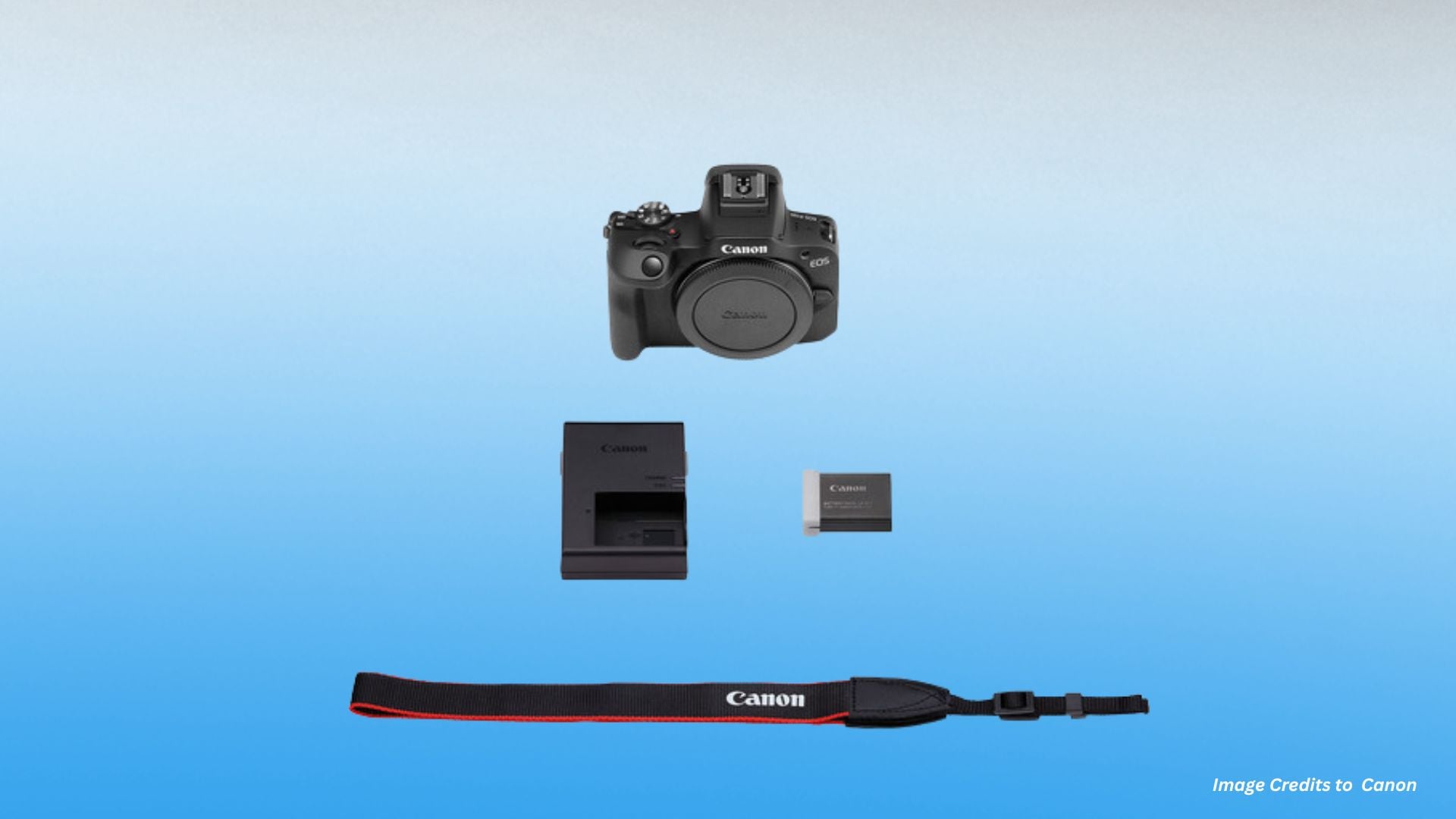
The camera takes SD, SDHC, and SDXC cards supporting UHS-I speeds. Canon included a USB-C port, but it only transfers files. You cannot charge the LP-E17 battery through USB. You cannot power the camera through USB either. Pack the dedicated charger for every trip.
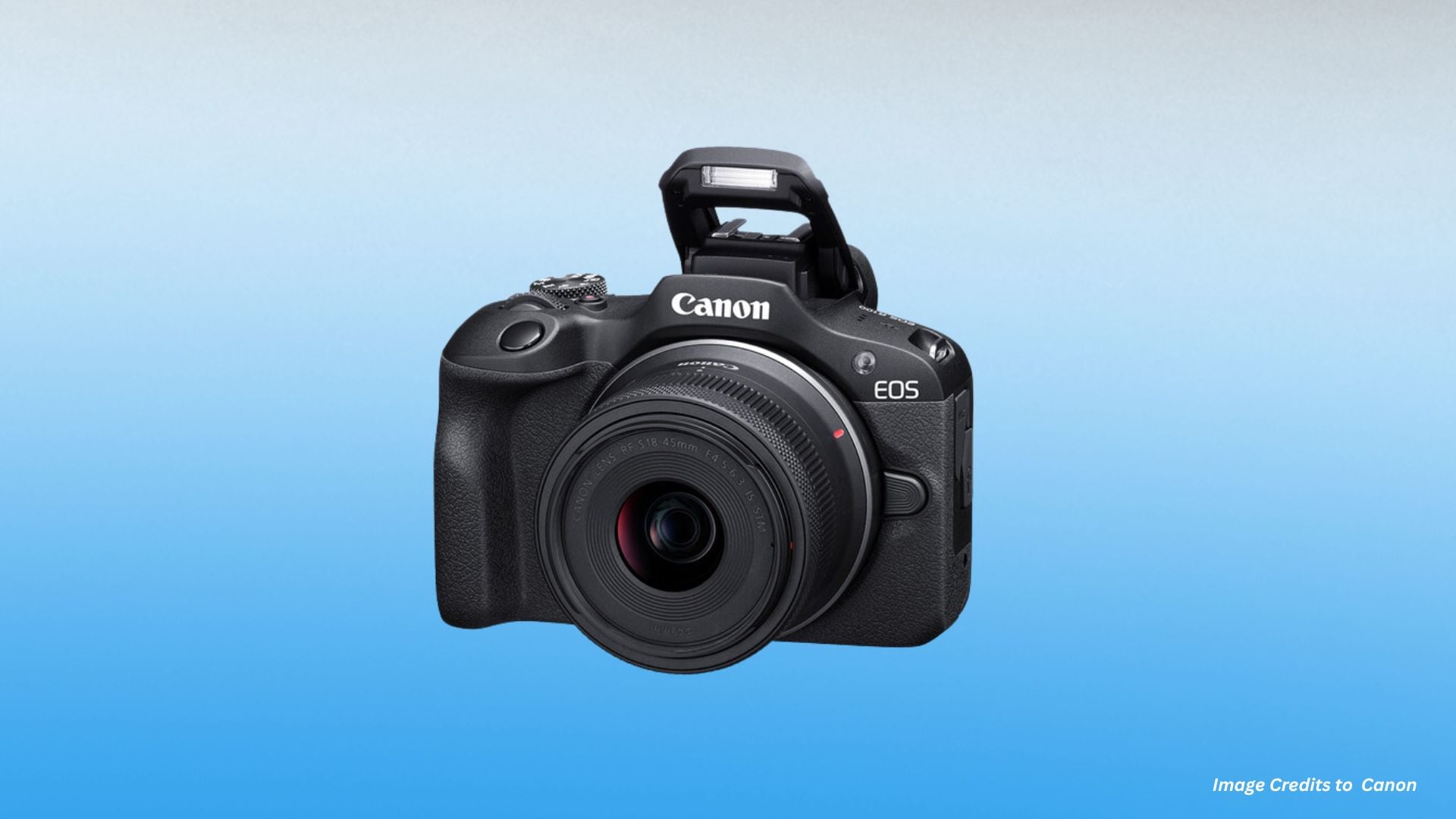
Image Quality That Delivers
The 24-megapixel sensor inside dates back to around 2018. Canon likely adapted it from the EOS M50 and M200 cameras. Despite its age, this sensor produces excellent results with strong color reproduction and good dynamic range.
The Digic 8 processor handles image processing. This chip first appeared in 2018, making it a generation behind Canon’s current Digic X processor. The older chip limits some advanced features. The Canon EOS R100 cannot detect animals or vehicles for autofocus tracking.
Face and eye detection work reliably for people photography. The system recognizes faces quickly and maintains focus as subjects move. This makes the camera solid for family photos and casual portraits.
ISO Performance and Detail
The native ISO range spans 100 to 12,800. An expanded setting reaches ISO 25,600. Image quality remains clean through ISO 1600. Noise becomes visible at ISO 3200 but stays manageable. By ISO 6400, you’ll see more grain than newer sensors produce.
The sensor handles shadow recovery surprisingly well. You can lift darker areas in post-processing without excessive noise. JPEGs come out vibrant with punchy colors straight from the camera. Canon applies moderate sharpening and goes easy on noise reduction.
RAW files offer decent flexibility for editing. Detail holds up well even when pushing the files around. The 24-megapixel resolution provides enough detail for prints up to 16×20 inches.
Autofocus Performance
Dual Pixel CMOS AF makes the Canon EOS R100 responsive in most situations. The system covers about 88% of the frame with 3,975 selectable AF positions for stills. Face and eye detection lock on quickly and track subjects across the frame.
The challenge comes from moving that AF point manually. Without a touchscreen or joystick, you tap the four-way controller repeatedly. This takes time and feels clunky compared to modern alternatives. Switching between detected faces requires pressing the AF select button first.
Continuous Shooting Limits
The Canon EOS R100 shoots 3.5 fps with continuous autofocus active. Switch to One-Shot AF and the rate increases to 6.5 fps. The buffer fills after just six RAW files or ten JPEGs. The camera then slows to a crawl while writing to the card.
Sports photographers and parents photographing active kids will hit these limits quickly. The slow burst rate and tiny buffer make action photography challenging. Posed shots and slower-moving subjects work fine.
Features for New Photographers
Canon included Creative Assist mode to help beginners understand camera settings. This interface uses simple language instead of technical terms. You adjust “Brightness” rather than exposure compensation. “Background Blur” controls the aperture setting.
Ten scene modes optimize settings for specific situations:
- Portrait mode for flattering people photos
- Landscape for scenic shots with deep focus
- Sports for freezing action
- Food with adjustable color tone
- Night Portrait combining flash and ambient light
Creative filters add artistic effects in-camera. Options include grainy black and white, soft focus, fisheye effect, toy camera, and miniature effect. The miniature filter creates convincing tilt-shift style images.
Video Capabilities Fall Short
The Canon EOS R100 records 4K video at 24fps only. This creates immediate problems. The sensor crops 1.5x for 4K recording. Your RF-S 18-45mm kit lens becomes equivalent to 43mm at the wide end. Activate digital stabilization and the crop increases to roughly 1.65x total.
The bigger issue is autofocus. The camera abandons Dual Pixel AF in 4K mode. It switches to contrast-detection autofocus instead. This causes visible hunting as the camera searches for focus. According to testing by DPReview, rolling shutter measures 35ms in 4K mode. That’s severe enough to cause obvious distortion when panning.
Full HD Performs Better
Drop to 1080p Full HD and performance improves dramatically. The Canon EOS R100 uses Dual Pixel AF in Full HD mode. Focus tracking becomes smooth and reliable. The camera records 1080p at up to 60fps with decent quality.
High frame rate recording at 120fps is available but only at 1280 x 720 resolution. Autofocus disables completely in this mode. You must use manual focus for slow-motion capture.
Canon included a 3.5mm microphone input, which helps audio quality. But the fixed screen makes vlogging awkward. You cannot see yourself while recording.
Battery Life That Impresses
The LP-E17 battery performs well for such a compact camera. Canon rates it for 430 shots using the LCD in power-saving mode. The viewfinder gives you 340 shots. Real-world use typically exceeds these conservative estimates.
Video recording drains power faster. Expect roughly 110 minutes of 4K recording or 160 minutes of Full HD. Carry a spare battery for long shooting days or video-heavy sessions.
The camera connects via Wi-Fi (2.4GHz only) and Bluetooth 4.2. Canon’s Camera Connect app works smoothly on iOS and Android devices. You can transfer images wirelessly, control the camera remotely, and update firmware through the app.
The RF-S Lens Problem
Canon’s RF-S lens selection remains extremely limited. Only four lenses exist for APS-C RF mount cameras as of late 2024:
- RF-S 18-45mm F4.5-6.3 IS STM (kit lens)
- RF-S 55-210mm F5-7.1 IS STM ($349)
- RF-S 18-150mm F3.5-6.3 IS STM ($499)
- RF-S 10-18mm F4.5-6.3 IS STM ($329)
You can mount full-frame RF lenses on the Canon EOS R100. But these cost significantly more than budget buyers want to spend. Most RF lenses start around $500 and climb quickly from there.
Third-party manufacturers like Sigma have announced RF mount lenses. But availability remains limited compared to Sony E-mount or Micro Four Thirds systems. Canon’s proprietary mount design keeps third parties at bay.
Adapting older EF and EF-S lenses works with Canon’s mount adapters. This adds bulk and cost while defeating the compact design advantage.
Real-World Shooting Results
The Canon EOS R100 handles everyday photography well in good lighting. Autofocus responds quickly for street photography and casual snapshots. Colors look vibrant and pleasing straight from the camera. Canon’s color science produces flattering skin tones consistently.
Indoor photography reveals limitations. The autofocus hunts longer in dim conditions. The kit lens has a relatively narrow maximum aperture of f/4.5 at the wide end. You’ll need higher ISO settings or a tripod for sharp indoor shots.
The electronic first-curtain shutter operates almost silently. This makes the camera excellent for discrete shooting in quiet environments. The built-in flash provides fill light for close subjects. It has a guide number of 6 at ISO 100.
Manual Control Experience
Manual mode works but feels awkward. The single control dial means toggling between shutter speed and aperture adjustments. This slows your workflow compared to cameras with dual command dials. Experienced photographers will find this frustrating.
The four-way controller handles most other adjustments adequately. But every operation takes longer than necessary. The missing touchscreen becomes more annoying the more you shoot.
Competition Comparison
The Sony a6100 costs around $750 but delivers better overall value. You get uncropped 4K at 24fps with excellent autofocus. The E-mount system offers dozens of native lens options plus extensive third-party support. The Canon EOS R100 wins on battery life and potentially simpler menus for absolute beginners.
The OM System OM-5 (successor to the E-M10 Mark IV mentioned in older reviews) includes in-body image stabilization. It shoots uncropped 4K video at 30fps. The Micro Four Thirds sensor is smaller than APS-C but the lens ecosystem is mature and affordable.
Canon’s own EOS R50 makes more sense for most buyers. The $200 price difference gets you critical upgrades. The R50 has an articulating touchscreen, 12fps continuous shooting, and advanced subject detection. It shoots uncropped 4K at 30fps. Factory refurbished R50 kits sometimes sell for around $600, making the gap even smaller.
Who This Camera Suits
The Canon EOS R100 works for specific photographers on very tight budgets. Parents documenting family events in good lighting will find it adequate. Travelers wanting better image quality than smartphones might appreciate the compact size. Students learning photography fundamentals can start here.
But most people should consider alternatives. The missing touchscreen feels outdated immediately. The 4K video barely qualifies as usable. The slow continuous shooting limits versatility for active subjects.
Better Alternatives
Used cameras often provide more value. An older Canon M50 Mark II sells for similar money with better video features and a touchscreen. The EF-M lens lineup, while discontinued, offers more affordable options currently available.
Sony’s a6000 or a6100 deliver more capability for slightly more money. The E-mount system provides extensive lens choices from Sony, Sigma, Tamron, and others.
If you want Canon’s RF system, wait for sales on the R50. The feature improvements justify the higher cost. You get modern video capability, faster shooting, and a touchscreen interface.
The Canon EOS R100 Verdict
The Canon EOS R100 captures good photos at an extremely low price. Image quality competes well with cameras costing more. Battery life impresses for such a small body. The simplified Creative Assist mode genuinely helps beginners grasp exposure concepts.
But the compromises add up quickly. No touchscreen in 2025 feels unacceptable. The 4K video implementation disappoints anyone wanting video capability. Slow continuous shooting restricts action photography. The minimal lens selection locks you into Canon’s expensive ecosystem.
This camera represents the absolute minimum for mirrorless photography. It functions but barely meets current expectations. Most photographers will regret not spending extra for better features and usability.
If your budget truly cannot exceed $500, the Canon EOS R100 accomplishes basic photography tasks. You’ll capture decent family photos and travel memories. Just understand you’re sacrificing convenience and future flexibility for that bargain price.
For most buyers, skip this model. Save for the R50 or explore used options from previous years. The Canon EOS R100 proves that the cheapest camera isn’t always the best value. The frustration from missing features often costs more than the money you save upfront.
See more from DIYPhotography.net on Google
Add DIYPhotography.net as a trusted source. This makes
our stories more likely to appear in your Google Search results.
 Add as a preferred source on Google

Darlene Lleno
Darlene Lleno brings a unique perspective to DIY Photography as someone who grew up surrounded by camera gear but chose words over lenses. With five years of writing experience, she specializes in photography content that’s both technically informed and genuinely passionate. Growing up with a photographer twin brother meant camera talk was everyday conversation in her household. While he mastered capturing moments, Darlene discovered she preferred being the subject and the storyteller behind the scenes. As a travel enthusiast and mother of two, she understands the importance of preserving life’s precious moments. When not exploring new destinations or writing for DIY Photography, you’ll find her reading or tending to her garden. Her approach to photography writing is refreshingly authentic, she may not be behind the camera, but she knows exactly what it takes to help others capture the shots that matter most.
Related Posts
 Canon announces the EOS R100 sub-$500 entry-level mirrorless camera
 Comparing the Canon EOS R, EOS RP, EOS R5 and EOS R6 head-to-head for portraits
 Canon pretty much confirms EOS M is dead as it announces the Canon EOS R50 APS-C mirrorless camera
 Samyang has announced two low budget 14mm f/2.8 and 85mm f/1.4 RF lenses for Canon EOS R mirrorless
Join the Discussion
DIYP Comment Policy
Be nice, be on-topic, no personal information or flames.
One response to “Canon EOS R100 Review: Best Budget Mirrorless for Beginners?”
Canon must have had a ton of those 2018 sensors left over and needed a way to get rid of them.
Great idea to put it into a beginner friendly budget camera. Might be something I look into for a cheap travel camera. http://www.markschoenfelt.com