


















How You Can Build a Portable Lighting Kit on a Budget
Nov 13, 2025
Alysa Gavilan
Alysa Gavilan has spent years exploring photography through photojournalism and street scenes. She enjoys working with both film and mirrorless cameras, and her fascination with the craft has grown over the decades. Inspired by Vivian Maier, she is drawn to capturing everyday moments that often go unnoticed.
Share:

There comes a moment in every photographer’s journey when natural light just isn’t enough. Maybe you are shooting portraits after sunset, product photos in dim rooms, or videos that need consistent illumination. Whatever the case, learning to control light is one of the most valuable skills you can develop and that starts with building your own portable lighting kit on a budget.
You do not need to spend thousands on high-end strobes or cinema-grade LEDs to create professional results. With the right approach, you can assemble a compact, reliable lighting kit that travels easily, adapts to different shoots, and still leaves room in your wallet.
This guide will show you how to build it, piece by piece, while understanding what really matters when working with light.
What Is a Lighting Kit and What to Consider Before Building One
A lighting kit is simply a collection of tools that help you shape, control, and balance light during a shoot. It can include lights themselves, modifiers, stands, batteries, reflectors, and accessories for diffusion or color. The goal is to create the right mood and exposure in any environment.
Before you start buying, think carefully about how and where you plan to shoot. Do you work indoors, outdoors, or both? Do you shoot portraits, products, or videos? Each of these affects what kind of lights you should invest in.
A portrait photographer might prioritize soft, flattering light. A filmmaker might look for color accuracy and consistency. A travel photographer will want lightweight gear that fits in a backpack.
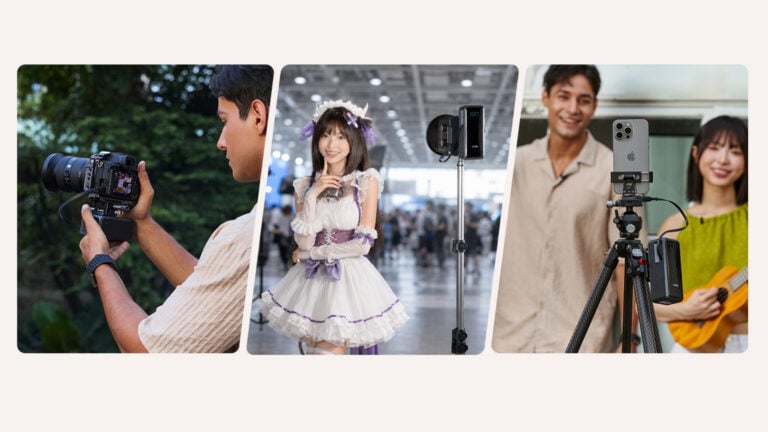
Also consider power sources. Studio lights often plug into the wall, but for a portable setup, battery power is key. The best kits are compact, easy to carry, quick to set up, and flexible enough to handle both stills and video.
Once you have thought about your shooting style, you can begin to assemble your budget-friendly kit.

Building a Portable Kit on a Budget
Creating an affordable lighting kit is about balancing quality, portability, and price. You do not need to buy everything at once. Start small, test each piece, and build up as you learn what you truly need.
Below are the essentials to focus on, along with tips for choosing cost-effective but reliable options.
Start with a Good LED Light
LED panels are the heart of many modern portable setups. They are lightweight, energy-efficient, and available at a wide range of prices. A small bi-color LED panel lets you adjust color temperature from warm to cool, which is useful when mixing with ambient light.
Many brands offer compact LED lights under $100 that still deliver impressive brightness. Look for lights with a built-in battery or USB-C charging port. These make travel easier and eliminate the need for bulky power packs.
If you shoot portraits or interviews, try a soft LED light with diffusion already built in. It gives a more flattering glow on skin tones. For more creative work, small RGB LED panels let you add color effects for mood and storytelling.
Include a Compact Softbox or Diffuser
Light straight from an LED panel or flash can look harsh. Diffusion softens it and makes the shadows more natural. You can find collapsible softboxes made specifically for portable lights, or you can improvise with translucent fabric or a pop-up diffuser.
A good trick for budget setups is to use a white umbrella or even a shower curtain as a diffuser. Clamp it to a stand or hold it with a lightweight frame. The goal is to enlarge the light source, spreading illumination evenly across your subject.
When packing for travel, choose modifiers that fold flat or collapse easily. Space and convenience are just as important as softness.
Get an Affordable Light Stand or Two
A light stand may not be glamorous, but it is one of the most essential parts of your kit. It holds your light securely and allows you to adjust height and angle. You can find sturdy yet lightweight aluminum stands for a fraction of the price of professional studio ones.
For location shoots, choose a stand that folds small and weighs less than two kilograms. Some photographers even use compact microphone stands for small lights because they are cheaper and easier to pack.
If you need to shoot in windy conditions or on uneven ground, carry a small bag you can fill with rocks or sand for stability.
Add a Reflector
A reflector is one of the simplest and cheapest tools you can own, yet it can dramatically change how your lighting looks. It bounces existing light back onto your subject, filling shadows or adding highlights.
You can buy a collapsible five-in-one reflector that includes white, silver, gold, black, and translucent surfaces for around $20. Each surface serves a purpose: white adds gentle fill, silver increases brightness, gold warms the tone, black reduces unwanted reflections, and the translucent layer can soften sunlight.
If your budget is extremely tight, a sheet of white foam board or even aluminum foil taped to cardboard can work surprisingly well.

Consider a Portable Flash or Speedlight
If you shoot photography rather than video, a small flash can be invaluable. Speedlights are compact, battery-powered, and versatile. They can work on-camera or off-camera for more control.
Many third-party brands offer reliable flashes for a fraction of the cost of major manufacturers. Look for models with adjustable power, tilt, and swivel heads. Pairing a speedlight with a wireless trigger allows you to move it off the camera and create dynamic lighting angles.
For even softer light, add a small diffuser cap or bounce the flash off a nearby wall or ceiling. The results will instantly look more natural and professional.
Bring Small Accessories That Make a Big Difference
Little details can turn a basic setup into a flexible lighting kit. A few must-haves include:
- Clamps and mounts: These help you attach lights or reflectors to almost anything.
- Rechargeable batteries: Bring extras for long shoots, especially in cold environments.
- Extension cables or power banks: Keep your lights running when outlets are far away.
- Gaffer tape: The universal fixer for holding gear, hiding wires, or marking positions.
You can also keep a small case for filters, gels, and diffusers. Color gels can be used to balance different light sources or create a specific mood without buying expensive RGB lights.

Add a Lightweight Carrying Case
Once you have your essentials, you need a way to transport them. A durable camera backpack or rolling case with customizable dividers works well. It keeps your gear protected and organized.
If you are really watching your budget, a padded gym bag or tool case with foam inserts can serve the same purpose. The key is to ensure that lights and accessories are easy to reach and safely cushioned from bumps during travel.
Know What to Skip at First
When building on a budget, it helps to know what can wait. You do not need expensive studio strobes, motorized light stands, or heavy modifiers right away. Focus on getting consistent light and learning to control it with what you have.
Once you master basic setups and understand how to shape light, you will know exactly which upgrades are worth the investment. Many photographers find that a simple LED panel and a reflector can carry them surprisingly far.

The Difference Between Portable on a Budget and Professional Studio Kits
A professional studio lighting setup can fill an entire room. It often includes multiple high-powered lights, stands, booms, modifiers, and controlled backdrops. These setups are powerful but require time, space, and assistance to manage.
A portable lighting kit on a budget, on the other hand, prioritizes flexibility and independence. You can set it up in minutes, carry it in one bag, and power it from batteries. You might not have the same intensity or precision as studio strobes, but you gain freedom and speed.
Portability also encourages creativity. You learn to use available light more effectively and to problem-solve on the spot. You can shoot in locations that would be impossible with bulky equipment. These include rooftops, forests, busy streets, or tight indoor spaces.
The most important difference is mindset. Studio photographers often plan every detail. Portable shooters learn to adapt. When you build a kit on a budget, you develop resourcefulness, and that makes you a better photographer overall.
That is the beauty of a portable lighting kit. It proves that good light is not about money. It is about understanding and control.
Start small, invest thoughtfully, and let your kit evolve with your skills. In time, you will discover that the best light is not the most expensive one. It is the one you understand completely and can take anywhere your imagination leads.
See more from DIYPhotography.net on Google
Add DIYPhotography.net as a trusted source. This makes
our stories more likely to appear in your Google Search results.
 Add as a preferred source on Google

Alysa Gavilan
Alysa Gavilan has spent years exploring photography through photojournalism and street scenes. She enjoys working with both film and mirrorless cameras, and her fascination with the craft has grown over the decades. Inspired by Vivian Maier, she is drawn to capturing everyday moments that often go unnoticed.


Join the Discussion
DIYP Comment Policy
Be nice, be on-topic, no personal information or flames.