















Askar SQA70 Pro Launched: Gets Six-Element Optics and a Faster Design
Nov 12, 2026
Soumyadeep Mukherjee
Soumyadeep Mukherjee is an award-winning astrophotographer from India. He has a doctorate degree in Linguistics. His work extends to the sub-genres of nightscape, deep sky, solar, lunar and optical phenomenon photography. He is also a photography educator and has conducted numerous workshops. His works have appeared in over 40 books & magazines including Astronomy, BBC Sky at Night, Sky & Telescope among others, and in various websites including National Geographic, NASA, Forbes. He was the first Indian to win “Astronomy Photographer of the Year” award in a major category.
Share:
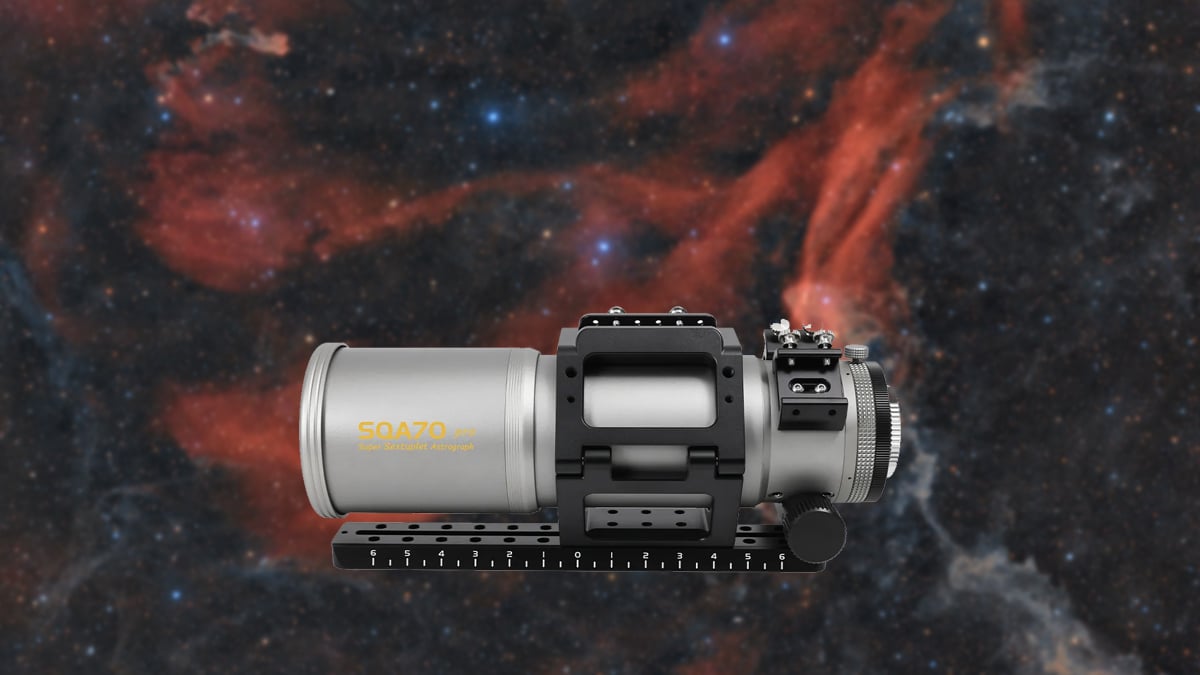
A 70mm telescope with a short focal length can cover a surprisingly large section of the night sky. This makes it useful for photographing extended nebulae, large star fields, and regions of the Milky Way. Askar has now updated one of its telescopes in this category. The new SQA70 Pro replaces the original SQA70 with a revised optical design and a slightly faster focal ratio.
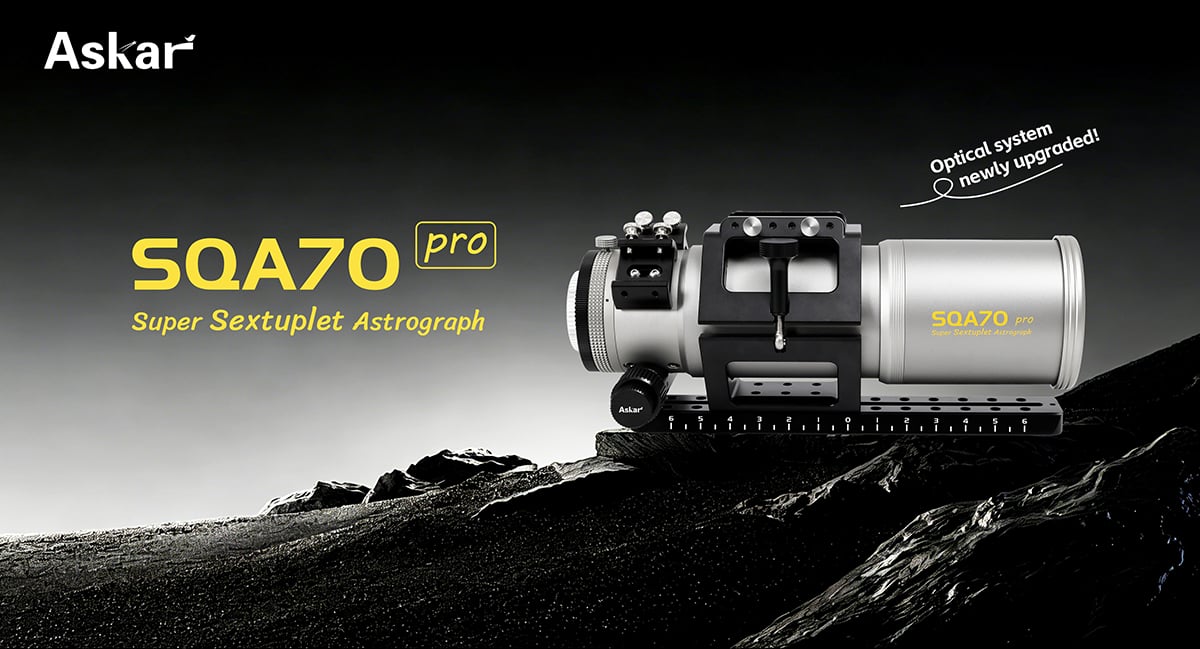
The recently announced SQA70 Pro retains the original model’s 70mm aperture but changes its five-element optical assembly to a six-element Petzval apochromatic design. It combines SD and ED glass and supports full-frame camera sensors. The new model also has a shorter focal length of 322mm, compared with 336mm on its predecessor.
Quintuplet design replaced with six optical elements
The original SQA70 uses five air-spaced optical elements in a Petzval apochromatic arrangement. Askar has added another element to the SQA70 Pro, creating a sextuplet design. The telescope uses one SD glass element and one ED glass element in the new assembly. Both materials help control chromatic aberration.
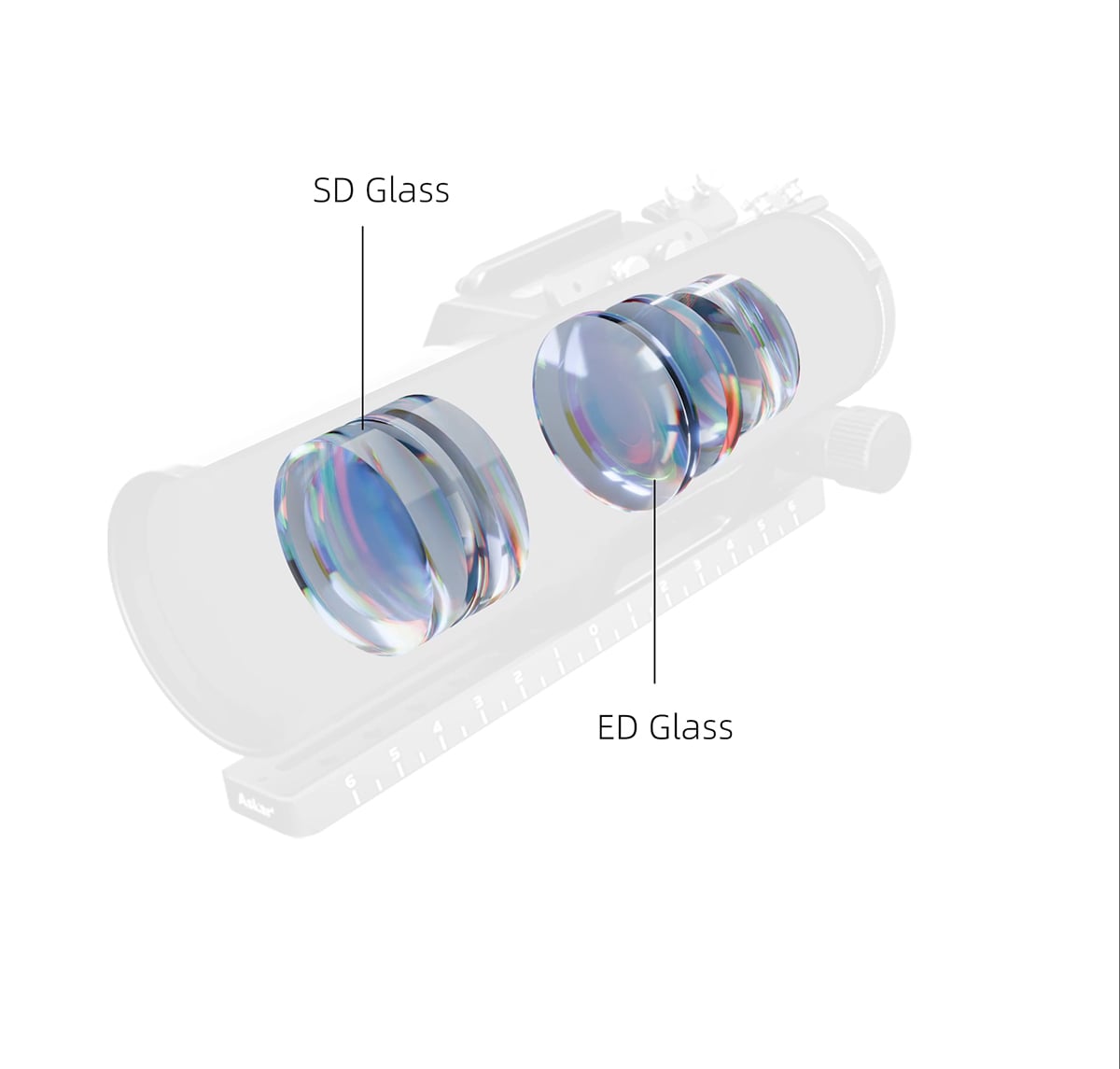
ED stands for Extra-low Dispersion, while SD refers to Super-low Dispersion glass. Telescope manufacturers use these materials to reduce color errors across the visible spectrum. Askar has combined both types in the SQA70 Pro’s six-element optical system. The new arrangement is a fully air-spaced Petzval APO design.
The Petzval configuration also addresses another common problem in astrophotography. A conventional refractor can produce sharp stars near the center while stretching stars towards the corners. A field flattener corrects this curvature and helps maintain sharpness across the sensor. The SQA70 Pro incorporates this correction into its optical assembly.
A shorter focal length and full-frame coverage
The SQA70 Pro retains a 70mm aperture but uses a 322mm focal length. The original SQA70 has a 336mm focal length. This 14mm reduction gives the new model a slightly wider field of view when photographers use the same camera.
Askar has also changed the focal ratio from f/4.8 to f/4.6. This makes the new telescope slightly faster than the original. A faster focal ratio helps record extended objects with shorter exposures, assuming the same aperture and imaging conditions.
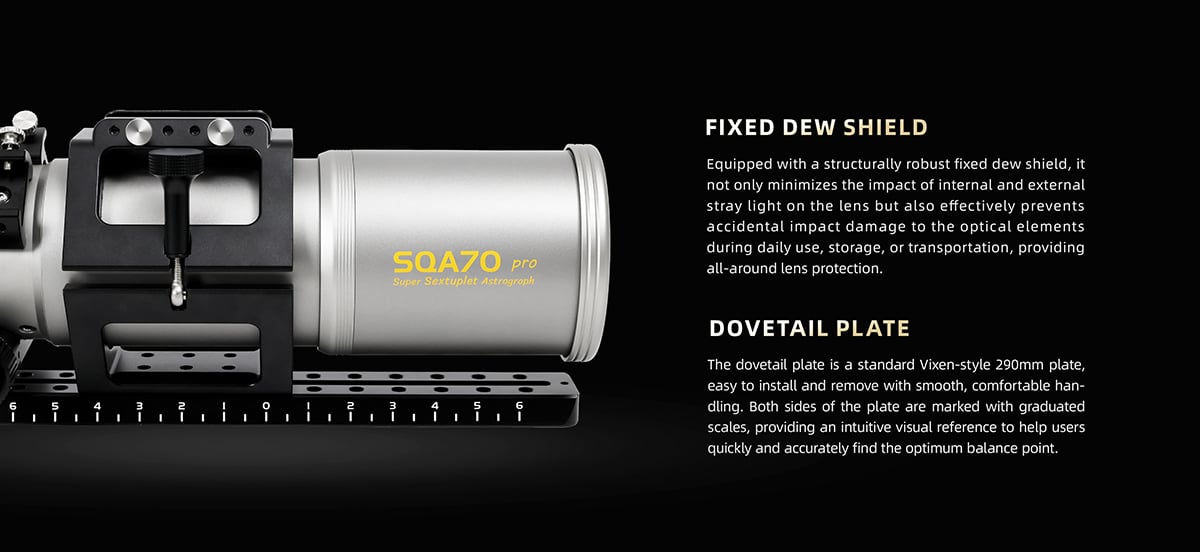
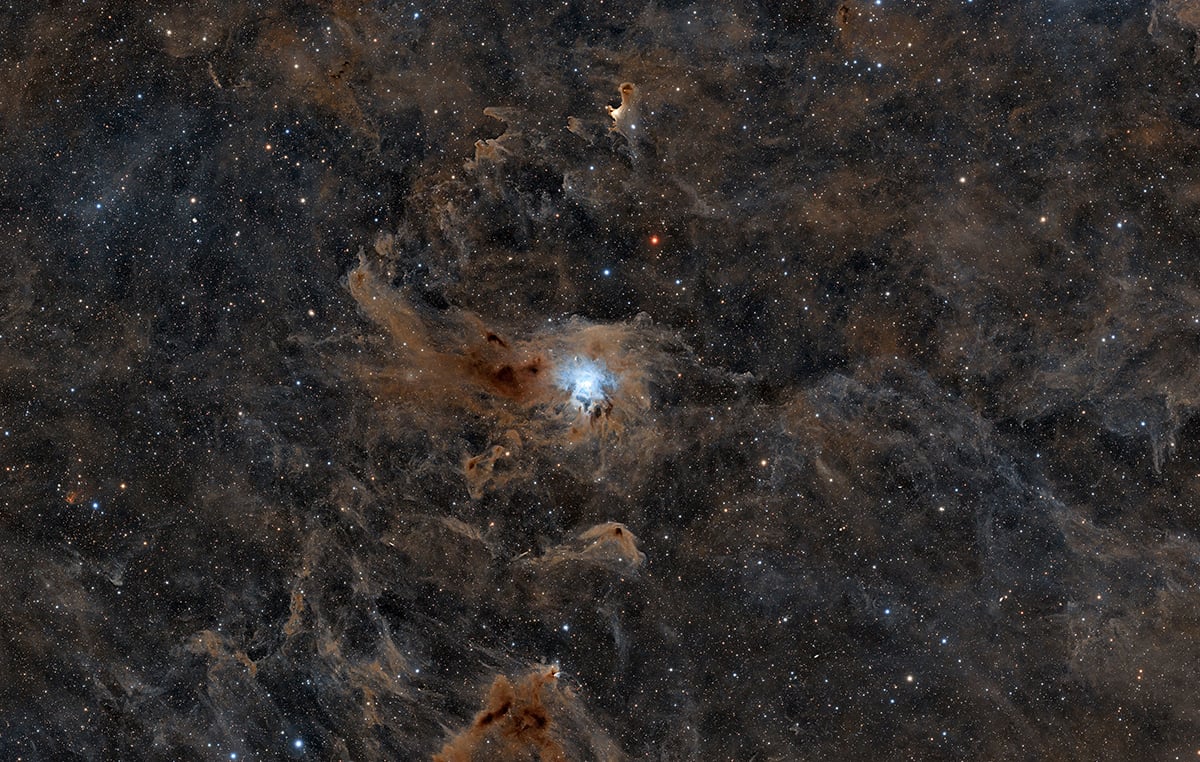
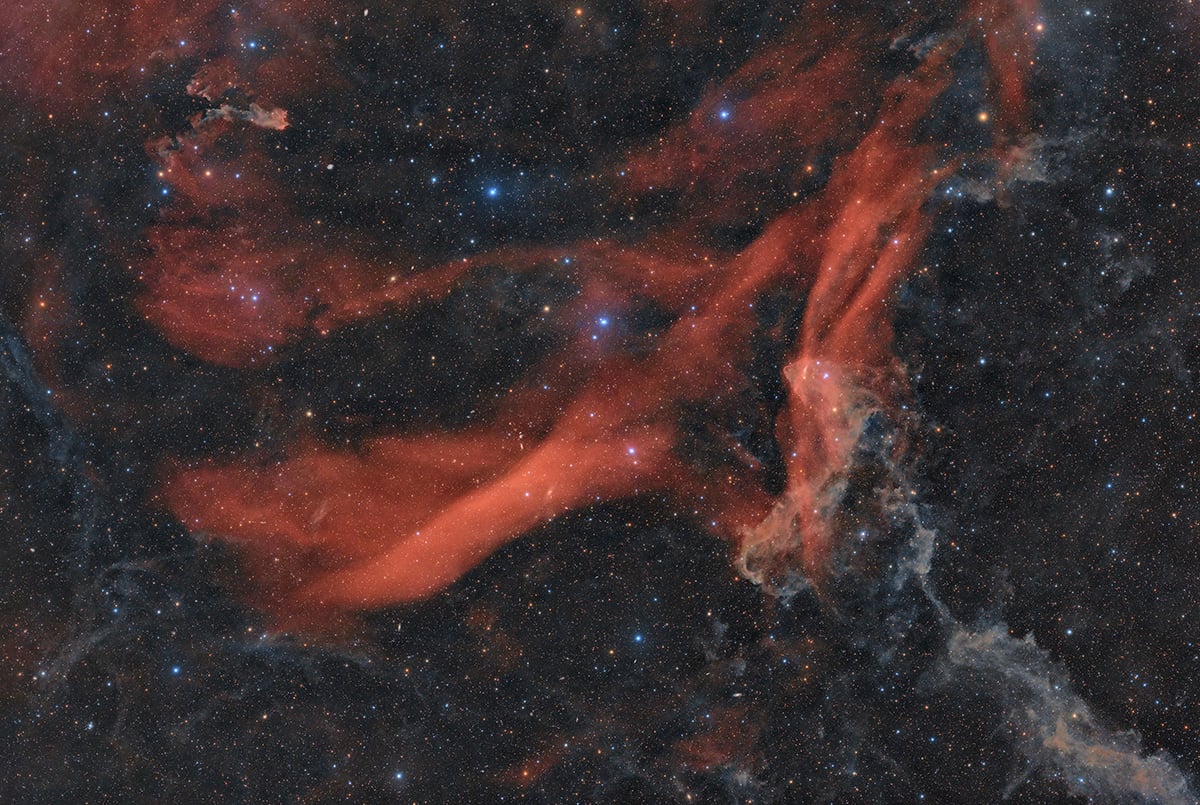
The SQA70 Pro provides a 44mm image circle, which covers the full-frame sensor format. This allows photographers to use compatible dedicated astronomy cameras, DSLRs, and mirrorless cameras.
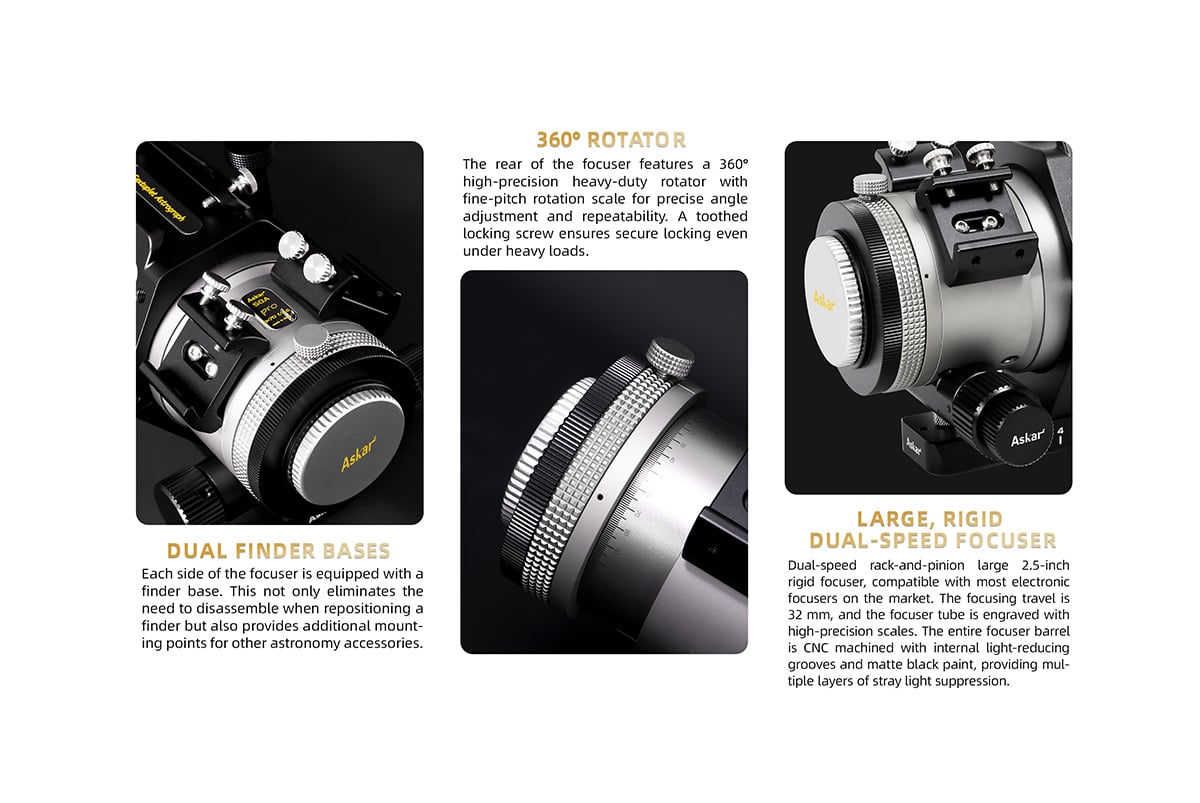
Askar provides three rear connection options: M42, M48, and M54. The M48 adapter includes an internal thread for a compatible 2-inch filter. This gives users a way to install a filter within the camera connection. It can simplify the imaging train for photographers who regularly use light-pollution or narrowband filters.
A compact telescope for portable setups
The SQA70 Pro measures 331mm in length and weighs 3kg as an optical tube assembly. Its weight increases to 3.8kg with the tube rings and dovetail plate. These dimensions make it a relatively compact option for astrophotographers who travel with their equipment.
A short optical tube can make packing and transport easier. It can also reduce the physical space required on a mount. However, the telescope’s total imaging load will increase once users add a camera, filter wheel, and other accessories.
Askar SQA70 vs SQA70 Pro: A quick comparison
The Pro version keeps the original telescope’s aperture and full-frame image circle. However, Askar has changed the optical arrangement, focal length, and focal ratio. The new model also weighs slightly more than its predecessor.
The original SQA70 uses a quintuplet Petzval design with two ED glass elements. The SQA70 Pro moves to a sextuplet arrangement with one SD and one ED element. Its focal length drops from 336mm to 322mm. The focal ratio improves from f/4.8 to f/4.6.
| Specification | SQA70 | SQA70 Pro |
| Aperture | 70mm | 70mm |
| Focal length | 336mm | 322mm |
| Focal ratio | f/4.8 | f/4.6 |
| Optical design | Quintuplet Petzval | Sextuplet Petzval |
| Special glass | 2 ED elements | 1 SD + 1 ED element |
| Image circle | 44mm | 44mm |
| OTA weight | 2.68kg | 3kg |
| Weight with rings and dovetail | 3.5kg | 3.8kg |
Price and availability
The Askar SQA70 Pro is priced at $1,880. It is currently available for ordering via Askar’s official website.
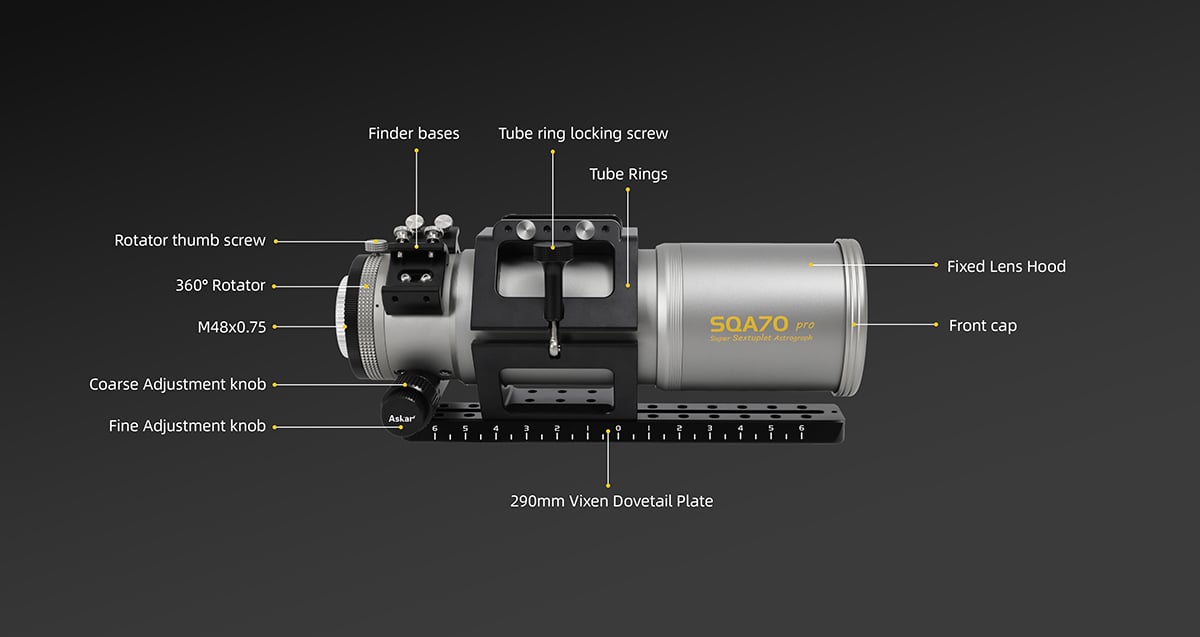
If you are an SQA70 user, would you be upgrading to this new telescope? Let us know in the comments.
Clear skies!
See more from DIYPhotography.net on Google
Add DIYPhotography.net as a trusted source. This makes
our stories more likely to appear in your Google Search results.
 Add as a preferred source on Google

Soumyadeep Mukherjee
Soumyadeep Mukherjee is an award-winning astrophotographer from India. He has a doctorate degree in Linguistics. His work extends to the sub-genres of nightscape, deep sky, solar, lunar and optical phenomenon photography. He is also a photography educator and has conducted numerous workshops. His works have appeared in over 40 books & magazines including Astronomy, BBC Sky at Night, Sky & Telescope among others, and in various websites including National Geographic, NASA, Forbes. He was the first Indian to win “Astronomy Photographer of the Year” award in a major category.


Join the Discussion
DIYP Comment Policy
Be nice, be on-topic, no personal information or flames.