
























These Images Capture the Youngest Exoplanet Ever Found
Sep 20, 2026
Soumyadeep Mukherjee
Soumyadeep Mukherjee is an award-winning astrophotographer from India. He has a doctorate degree in Linguistics. His work extends to the sub-genres of nightscape, deep sky, solar, lunar and optical phenomenon photography. He is also a photography educator and has conducted numerous workshops. His works have appeared in over 40 books & magazines including Astronomy, BBC Sky at Night, Sky & Telescope among others, and in various websites including National Geographic, NASA, Forbes. He was the first Indian to win “Astronomy Photographer of the Year” award in a major category.
Share:
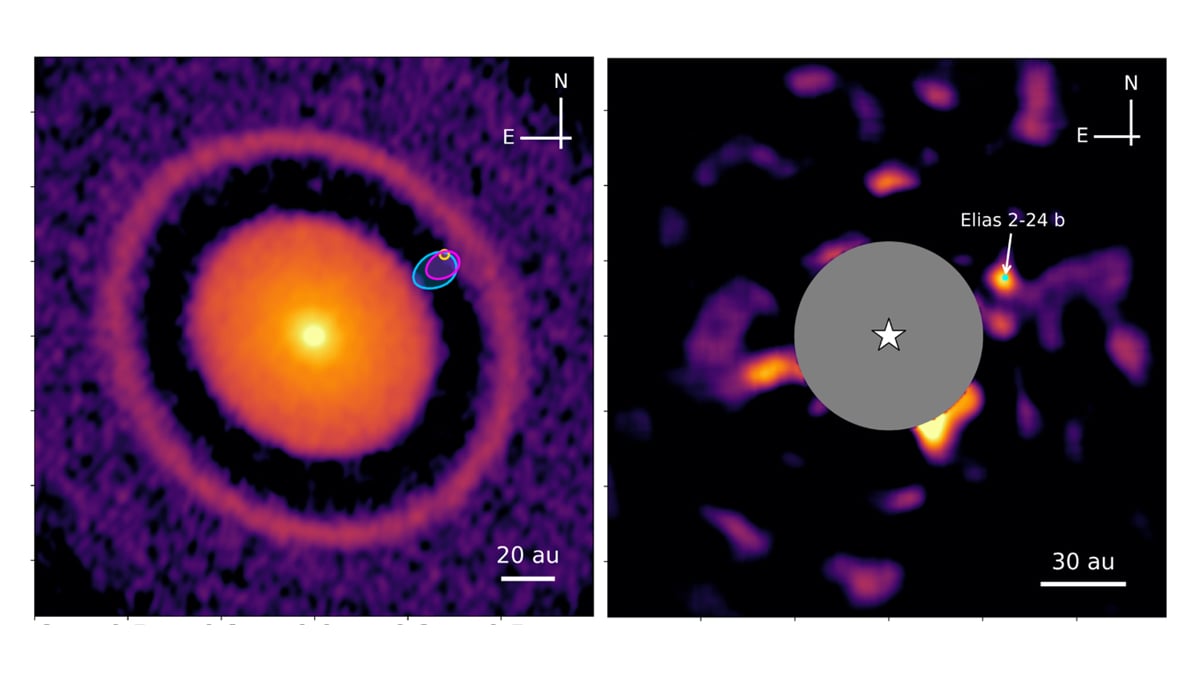
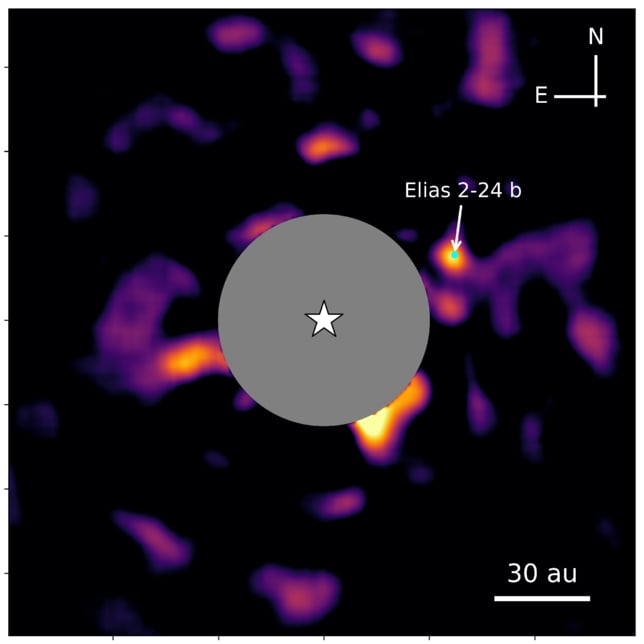
A faint point of light in old observations from the W. M. Keck Observatory has turned out to be something unusual: the youngest known exoplanet ever confirmed. The exoplanet, called Elias 2-24 b, is less than one million years old and still sits inside the disk of gas and dust around its young star. Astronomers identified it by combining Keck observations with data from ALMA and the European Southern Observatory’s Very Large Telescope.
The planet orbits about 55 times farther from its star than Earth does from the Sun. Its position inside a prominent gap in the surrounding disk gives astronomers evidence that the planet is shaping the material around it as it forms. The discovery also raises questions about how quickly giant planets can form.
A young star with a suspicious gap
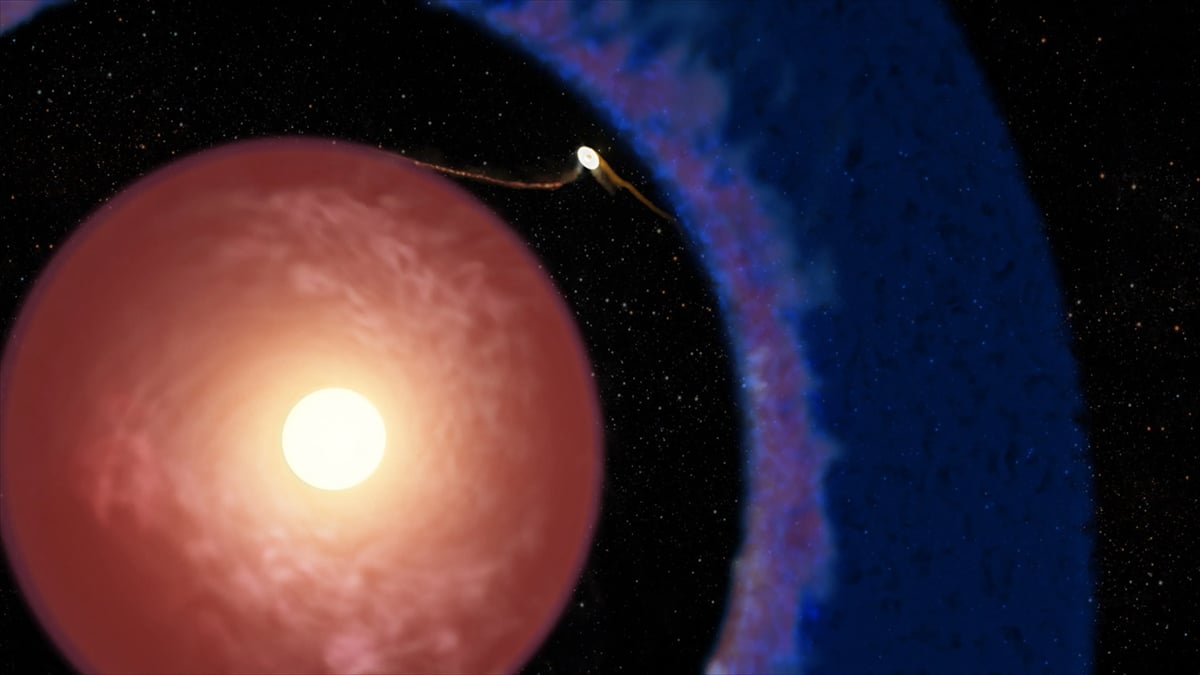
Elias 2-24 is a young star with a large disk surrounding it. The disk contains gas, dust, ice, and rocky material left over from the star’s formation. As a planetary system develops, some of that material can collect into planets.
Astronomers had already been studying this particular disk before Elias 2-24 b. ALMA observations revealed a prominent gap in the material around the star. The observations gave researchers a detailed view of the disk at millimeter wavelengths.
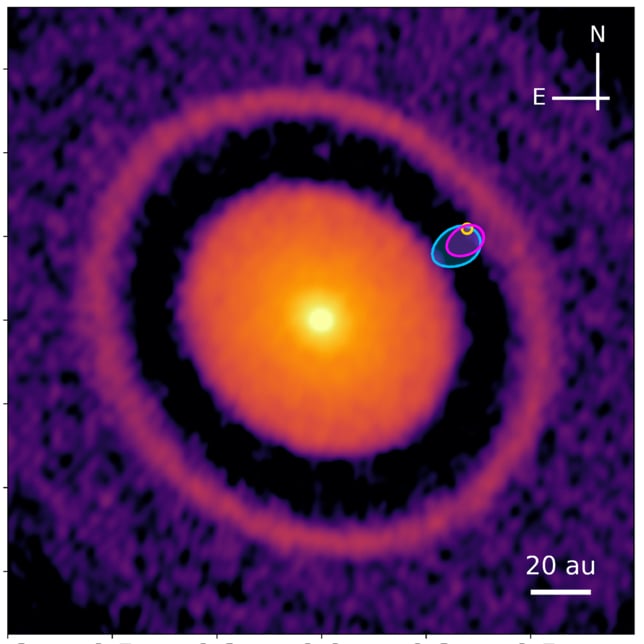
The gap around Elias 2-24 attracted further attention because astronomers later found a faint source within it. Observations from the European Southern Observatory’s Very Large Telescope picked up the object.
The object was incredibly faint compared with its host star. A bright young star can overwhelm the signal from a planet sitting nearby. Dust in the surrounding disk makes the problem harder.
Keck observations of the planet
The Keck Observatory captured the system in 2018 using its NIRC2 near-infrared camera. NIRC2 works with Keck’s adaptive optics system, which corrects for atmospheric turbulence and produces very sharp images. Astronomers also used a coronagraph to block much of the star’s intense light. The 2018 data contained a faint signal. At the time, however, the researchers did not have enough evidence to call it a planet.
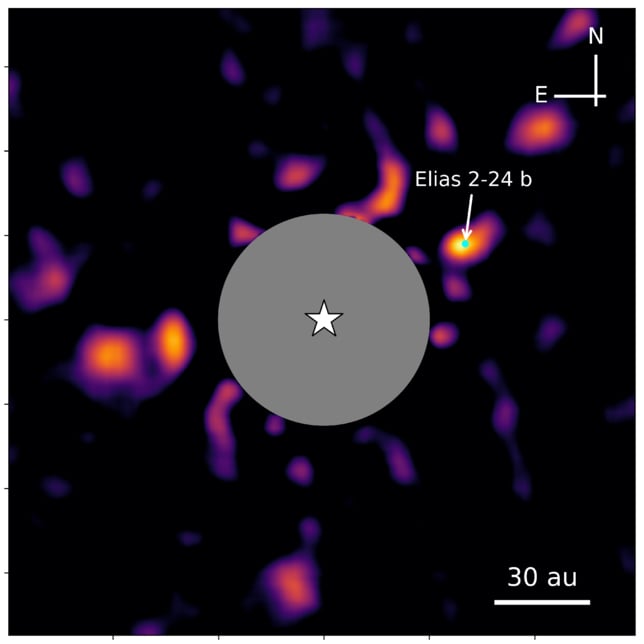
A distant background star would not follow the same apparent motion as an object orbiting Elias 2-24. An imaging defect would not move across the observations in a way that matched orbital motion either. The faint source moved as a planet around the young star should.
That result became much stronger when the team compared the Keck observations with the VLT and ALMA data. The different observations all pointed towards the same location in the disk. The planet had been hiding in data collected years earlier.
A planet less than one million years old
Astronomers estimate that Elias 2-24 b is less than one million years old. The previous youngest known planets were more than five million years old. Four planets shared that earlier record, with two orbiting PDS 70 and two orbiting WISPIT 2.
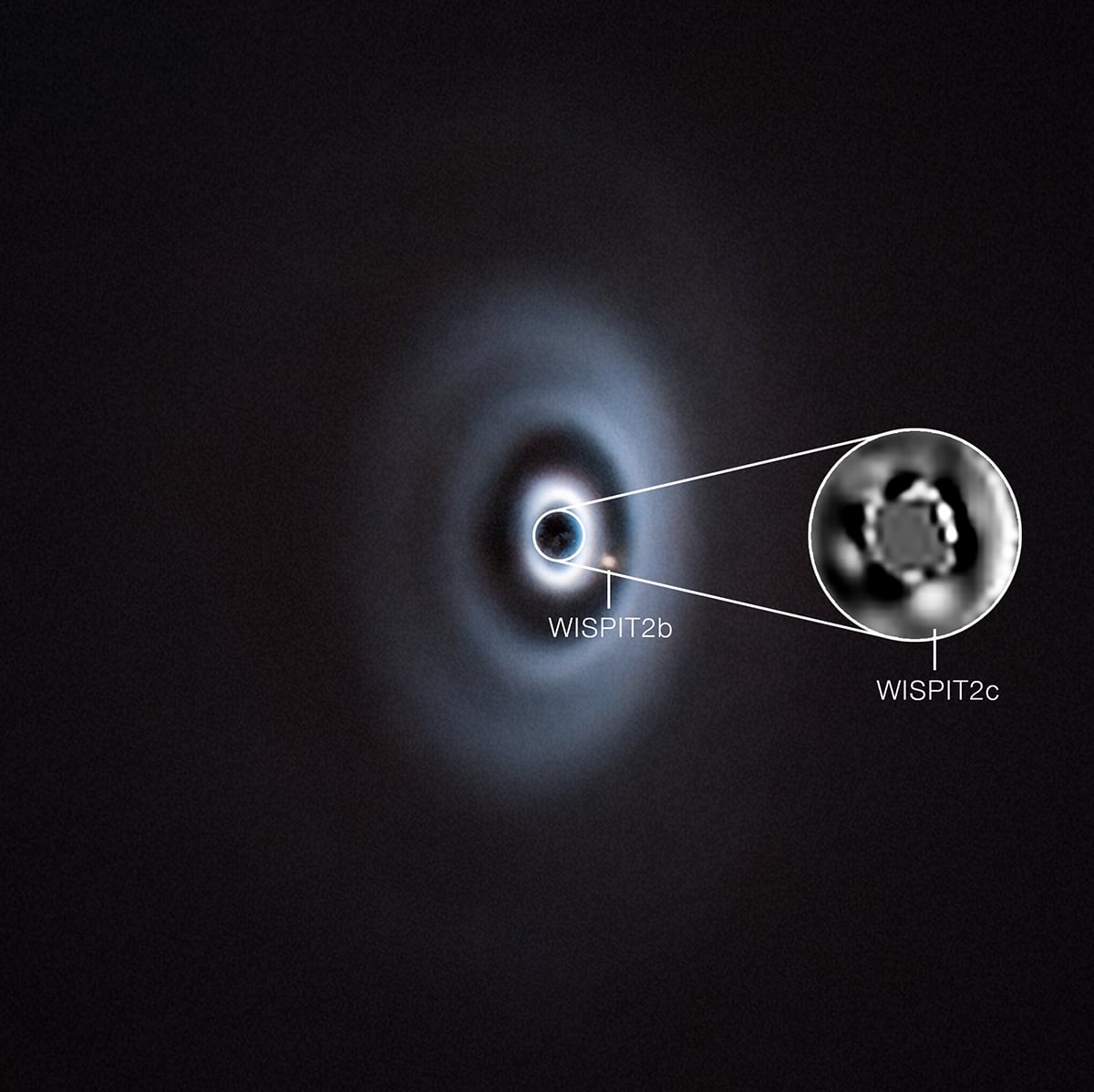
The planet still sits inside its natal disk. The research team also finds evidence that material from the disk continues to accrete onto it. In other words, the planet is still taking in material from its surroundings.
Astronomers estimate the mass of the exoplanet is roughly comparable to Jupiter‘s. The exact mass remains uncertain, and the researchers want additional observations to tighten that measurement.
Clear skies!
See more from DIYPhotography.net on Google
Add DIYPhotography.net as a trusted source. This makes
our stories more likely to appear in your Google Search results.
 Add as a preferred source on Google

Soumyadeep Mukherjee
Soumyadeep Mukherjee is an award-winning astrophotographer from India. He has a doctorate degree in Linguistics. His work extends to the sub-genres of nightscape, deep sky, solar, lunar and optical phenomenon photography. He is also a photography educator and has conducted numerous workshops. His works have appeared in over 40 books & magazines including Astronomy, BBC Sky at Night, Sky & Telescope among others, and in various websites including National Geographic, NASA, Forbes. He was the first Indian to win “Astronomy Photographer of the Year” award in a major category.

Join the Discussion
DIYP Comment Policy
Be nice, be on-topic, no personal information or flames.