




















Hubble Finds a Spiral Galaxy Whose Centre Spins at a Right Angle
Sep 19, 2026
Soumyadeep Mukherjee
Soumyadeep Mukherjee is an award-winning astrophotographer from India. He has a doctorate degree in Linguistics. His work extends to the sub-genres of nightscape, deep sky, solar, lunar and optical phenomenon photography. He is also a photography educator and has conducted numerous workshops. His works have appeared in over 40 books & magazines including Astronomy, BBC Sky at Night, Sky & Telescope among others, and in various websites including National Geographic, NASA, Forbes. He was the first Indian to win “Astronomy Photographer of the Year” award in a major category.
Share:
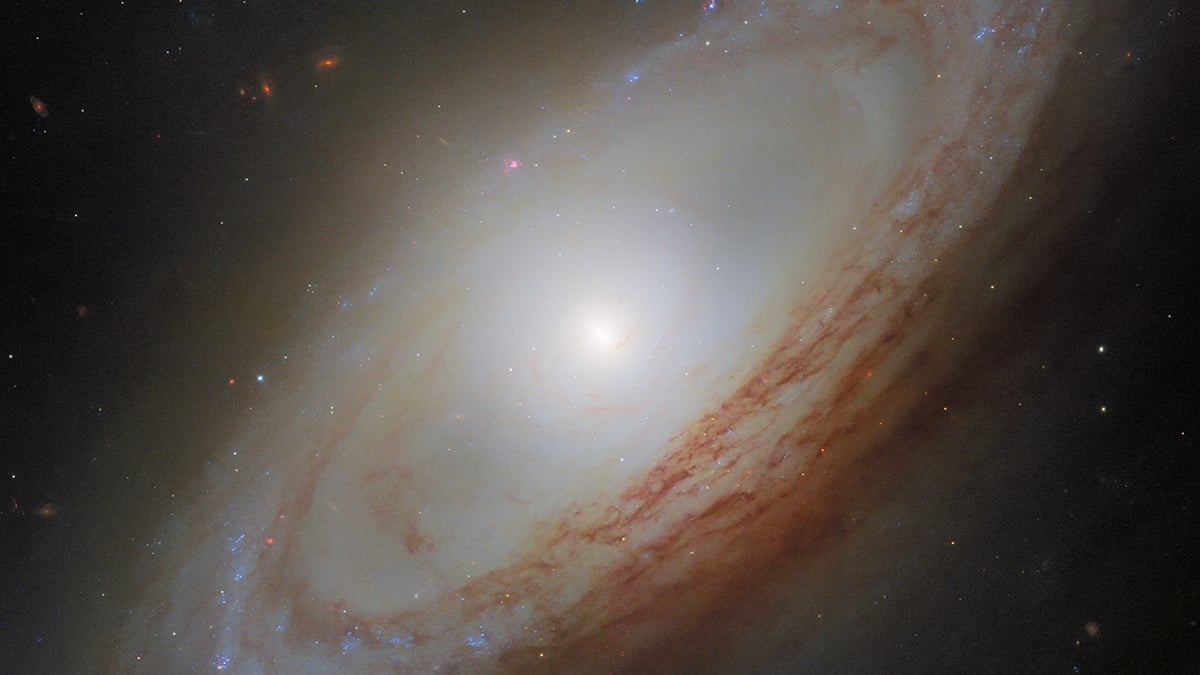
Most spiral galaxies have a familiar structure. A bright central bulge sits inside a broad disc of stars, gas, and dust. Spiral arms wind through that disc, following the galaxy’s overall rotation. With NGC 4698, things are a little different. Its spiral arms occupy the outer part of the disc, while the bright central bulge sits across it. The stars and gas around the center also move in a plane perpendicular to the main disc.
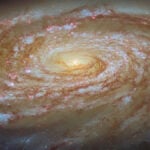
The Hubble Space Telescope has captured this unusual arrangement in a new image. NGC 4698 lies about 55 million light-years away in the constellation Virgo. It belongs to the Virgo Cluster, which contains more than 1,000 galaxies bound together by gravity.
The spiral arms stop around the center
NGC 4698 has a thin disc containing stars, gas, and dust. Its spiral arms show up most strongly around the outer part of that disc. Brown dust lanes run through the arms, while small groups of bright blue stars mark regions containing young, massive stars.
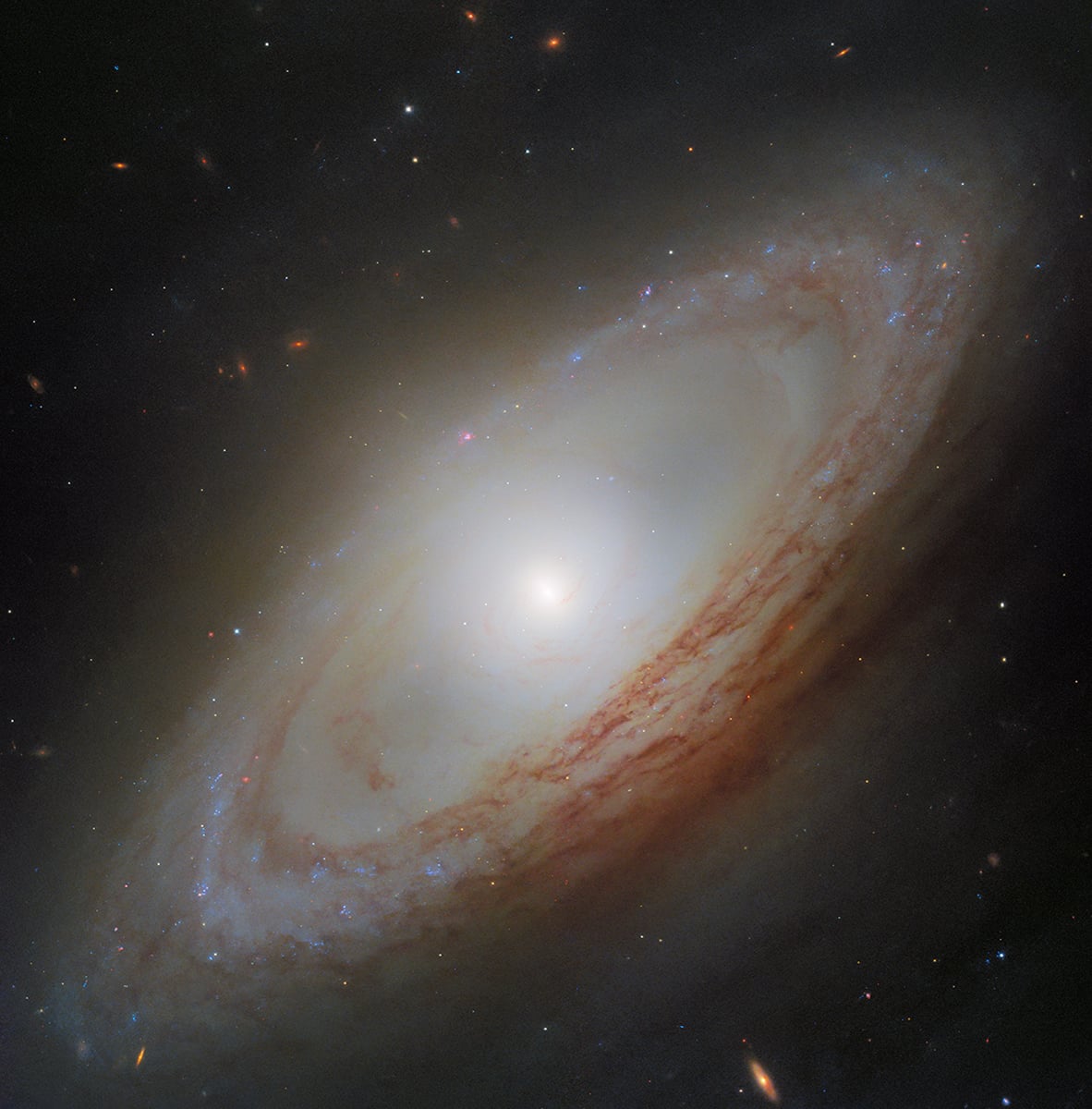
Many spiral galaxies show arms that wind much farther toward the center. NGC 4698 does not. Its arms seem to stay distant from the bright central region, forming a loose ring around the galaxy’s perimeter.
The contrast between the disc and the bulge is easy to see in the Hubble image. The dusty outer disc cuts across the bright center, while the bulge’s faint glow extends above and below it.
Its central bulge sits at a right angle
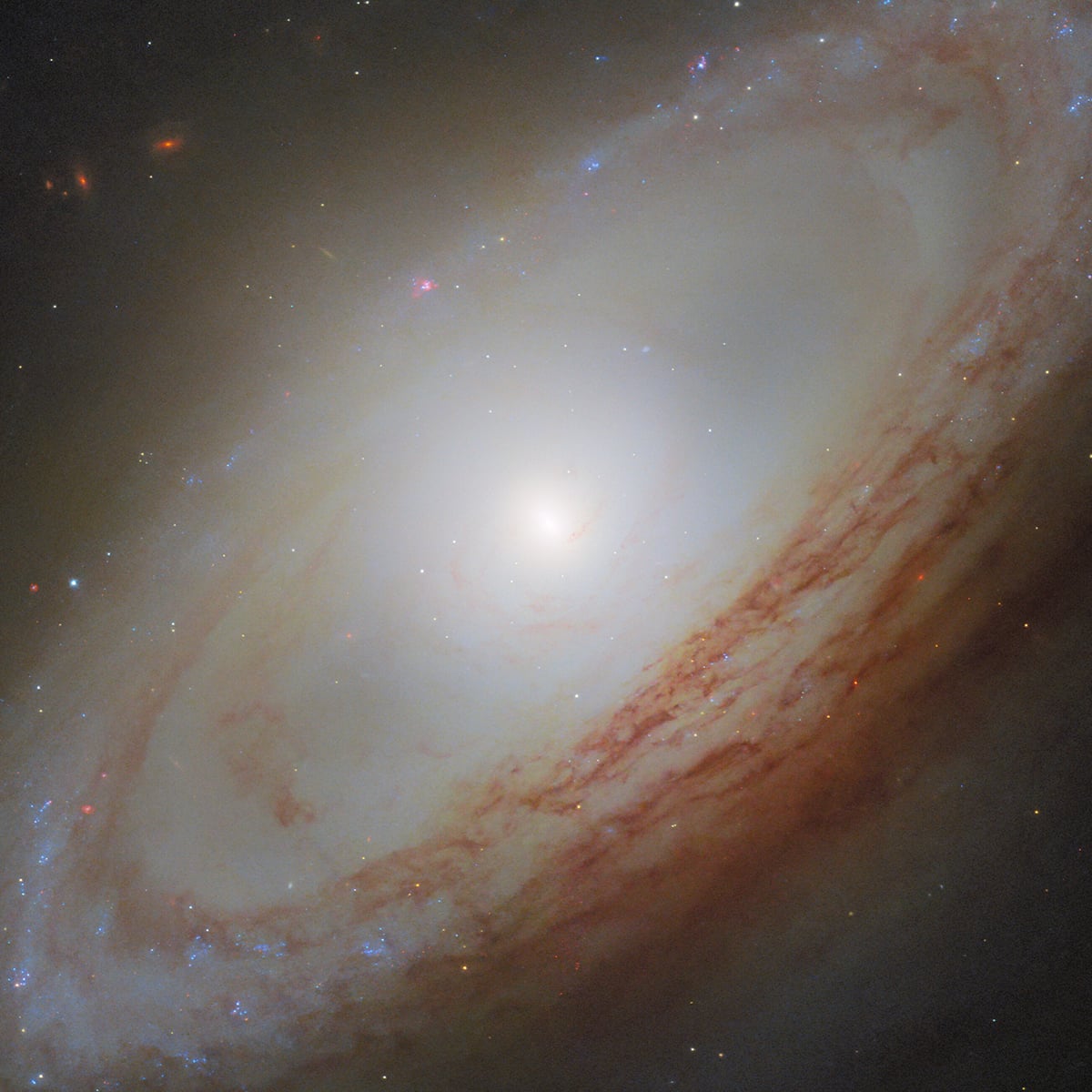
A spiral galaxy’s central bulge usually sits within the same general plane as its disc. In NGC 4698, its elongated bulge extends from the disc at roughly 90 degrees. Hubble‘s image catches the faint extension of this stellar component above and below the dusty disc.
The stars and gas nearest NGC 4698’s center rotate perpendicular to the main disc. The galaxy therefore contains two major components with very different orientations and motions. The outer disc follows one plane, while the central material follows another.
Hubble‘s image cannot show that rotation by itself. Astronomers established the difference through observations of the stars and gas. The image then gives us the visual context for the measurements.
A Black Hole Is Growing at the Center
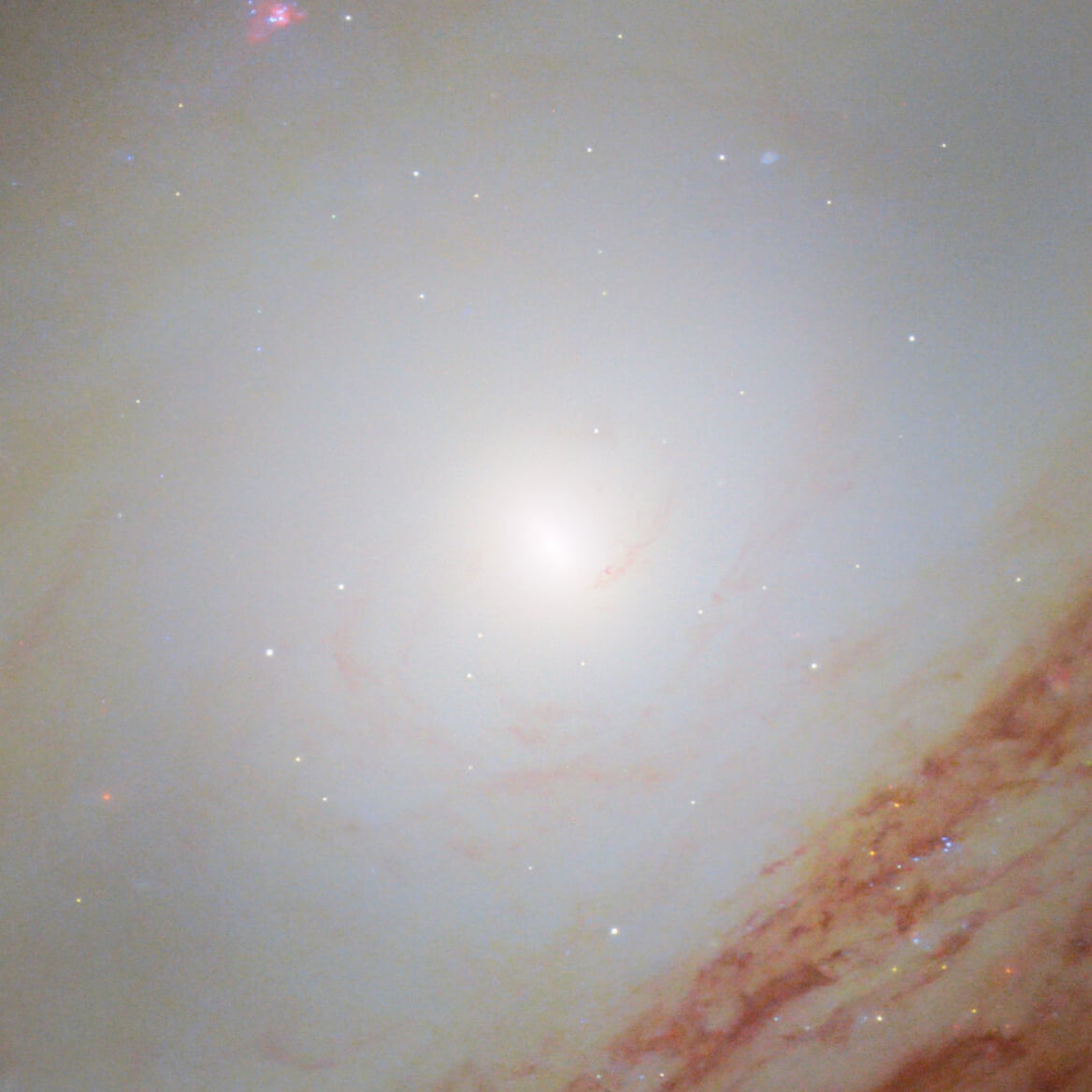
The strange central structure surrounds another object that makes NGC 4698 interesting: a supermassive black hole. The black hole contains millions of times the mass of the Sun. Older stars fill the surrounding bulge, while gas moves through the central region.
Astronomers have found signs that the black hole is actively growing. As gas moves toward it, the material can release energy and produce radiation. Studying this activity helps researchers understand what happens close to the centers of galaxies.
The black hole also gives the central region another connection to the galaxy’s larger history. Gas that enters a galaxy from outside does not necessarily remain in its original location. Gravity can move it inward over time. Some of it may form stars along the way, while some can eventually reach the central black hole.
Clear skies!
See more from DIYPhotography.net on Google
Add DIYPhotography.net as a trusted source. This makes
our stories more likely to appear in your Google Search results.
 Add as a preferred source on Google

Soumyadeep Mukherjee
Soumyadeep Mukherjee is an award-winning astrophotographer from India. He has a doctorate degree in Linguistics. His work extends to the sub-genres of nightscape, deep sky, solar, lunar and optical phenomenon photography. He is also a photography educator and has conducted numerous workshops. His works have appeared in over 40 books & magazines including Astronomy, BBC Sky at Night, Sky & Telescope among others, and in various websites including National Geographic, NASA, Forbes. He was the first Indian to win “Astronomy Photographer of the Year” award in a major category.



Join the Discussion
DIYP Comment Policy
Be nice, be on-topic, no personal information or flames.