






















Purple Swirls on the Red Planet: ESA Shares New View of Mars
Sep 18, 2026
Soumyadeep Mukherjee
Soumyadeep Mukherjee is an award-winning astrophotographer from India. He has a doctorate degree in Linguistics. His work extends to the sub-genres of nightscape, deep sky, solar, lunar and optical phenomenon photography. He is also a photography educator and has conducted numerous workshops. His works have appeared in over 40 books & magazines including Astronomy, BBC Sky at Night, Sky & Telescope among others, and in various websites including National Geographic, NASA, Forbes. He was the first Indian to win “Astronomy Photographer of the Year” award in a major category.
Share:
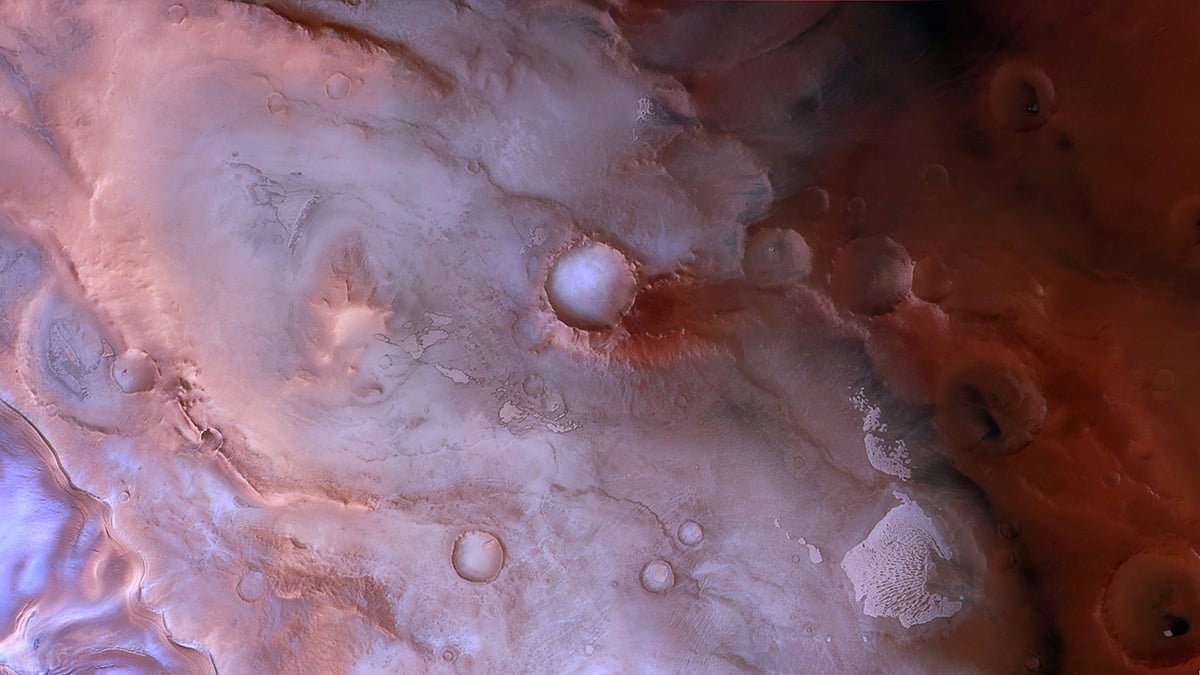
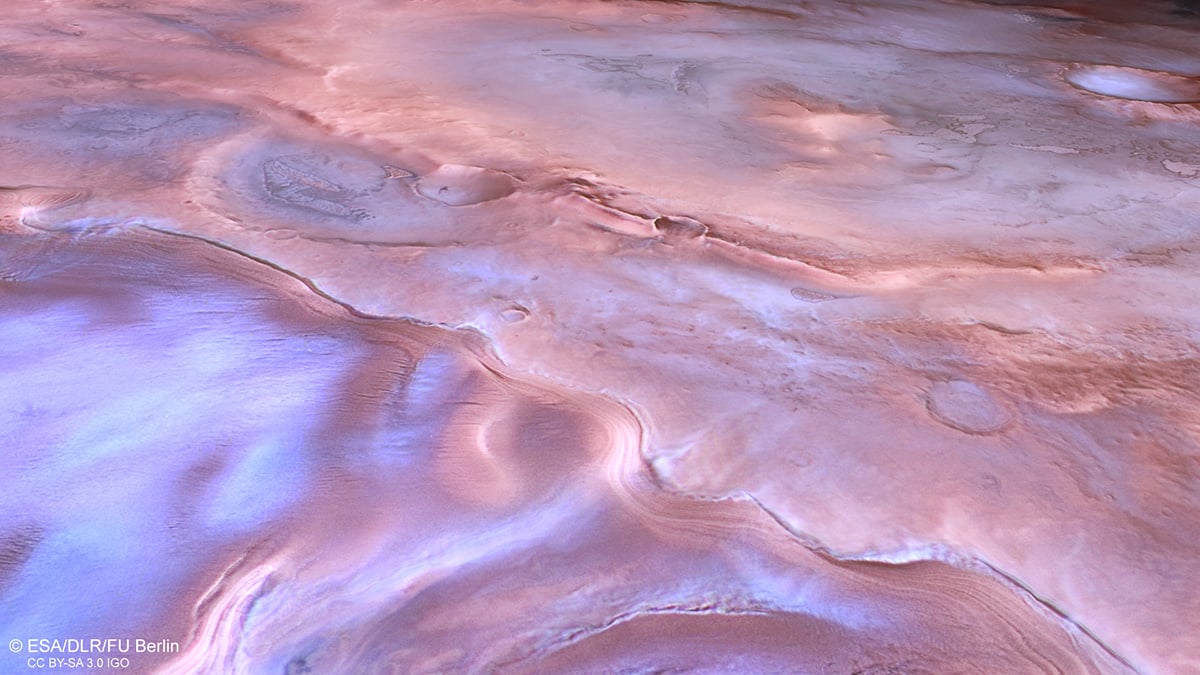
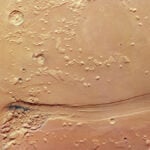
Mars has plenty of ice, volcanic rock, sand and dust, a heaven for landscape photographers. A new image from ESA’s Mars Express brings all of that together in a single image near the planet’s south pole. The landscape looks purple, pink and red, with bright patches of ice and darker material running across the scene. The name given to these swirls is also apt: Raspberry Ripples.
The photograph features Thyles Rupes, one of the most prominent cliff systems in Mars’s ancient southern highlands. In places, these cliffs rise more than a kilometer above the surrounding terrain. They cut across a landscape filled with impact craters, dunes, and deposits of polar ice. Mars Express captured the scene on 17 February 2026 with its High Resolution Stereo Camera, or HRSC.
Where do these colors come from?
Much of the darker ground contains volcanic material. Mars experienced extensive volcanic activity in the past, and wind has since moved and redistributed volcanic sand across large areas. The material contains mafic minerals such as olivine and pyroxene. Both minerals also occur in Earth’s mantle, beneath our planet’s crust.
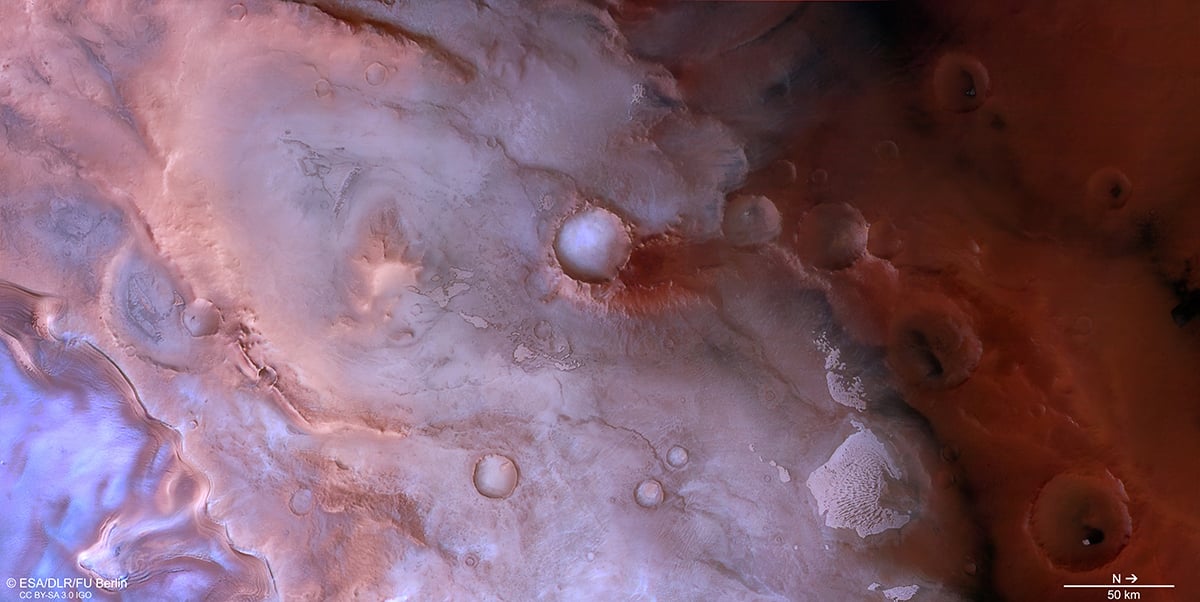
The brighter parts have another story. Carbon dioxide frost still covered parts of the landscape when Mars Express took the image. Some of it settled across dunes, while other deposits occupy impact craters. A section of the South Polar ice cap also appears in the lower-left part of the wider scene.
Then there is the atmosphere. Mars has a thin, dusty atmosphere, and the amount of dust suspended above the surface changes with time. ESA says the combination of dust, frost, and soft morning light helped produce the berry-purple appearance in this particular observation. Patches where ice and dust have mixed add further variation to the scene.
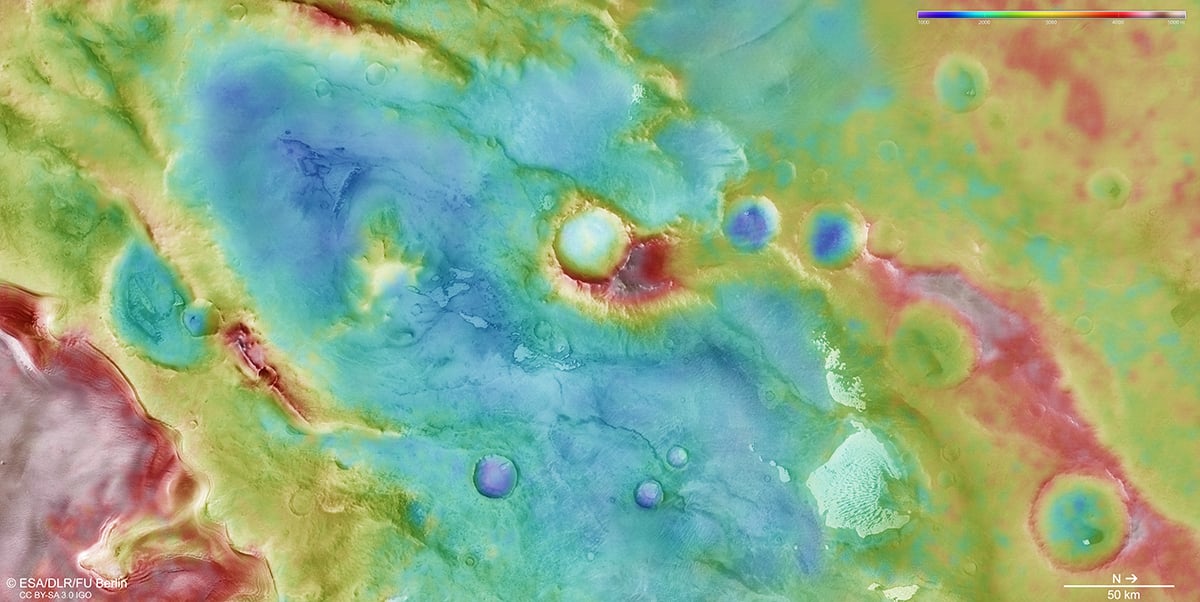
The direction of the illumination can make slopes appear to point the wrong way to our eyes. ESA notes that the large icy area at the lower-left is actually a mound, even though it can look like a depression when viewed in the original image.
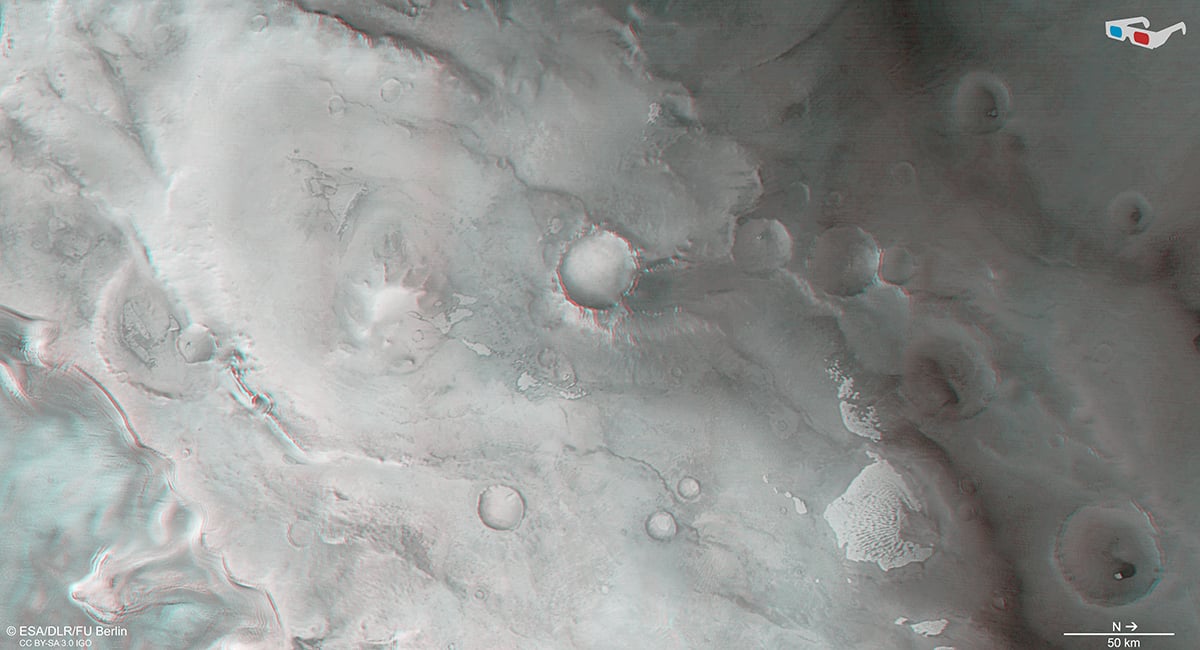
Thyles Rupes: The ancient cliffs
Thyles Rupes lies in Mars’s southern highlands, a region with some of the planet’s oldest terrain. The area has accumulated impact craters over immense periods. Some are small and sharply defined. Others are much older and have become worn and partly buried.
The cliffs cut through this cratered landscape. Some craters disappear beneath or across the rupes, while others sit on top of the cliff system. That relationship tells scientists when the features formed relative to one another.
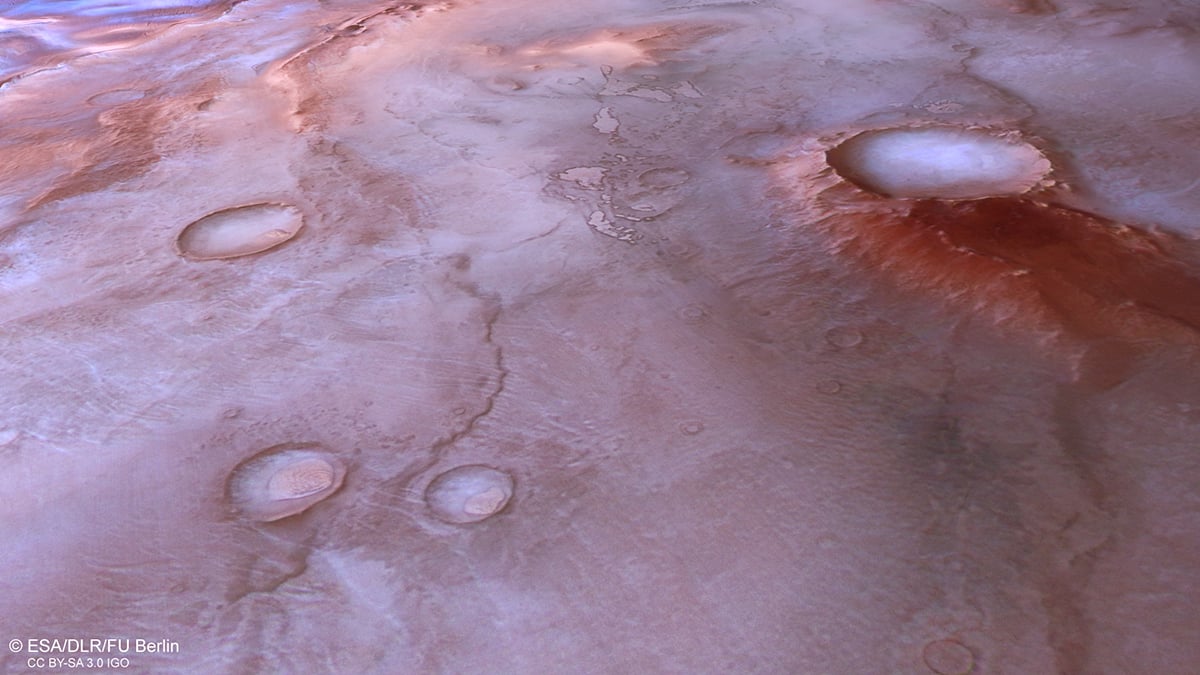
Thyles Rupes itself probably formed through tectonic activity. Scientists think forces within the cooling planet caused sections of the crust to deform. As Mars lost heat from its interior, the planet contracted. This process placed stress on the crust and helped push some blocks upwards.
The resulting cliffs now stand more than a kilometre high in places. Mars no longer has the active tectonic processes that shape Earth’s surface today, but its crust preserves evidence of much more active geological conditions in the distant past.
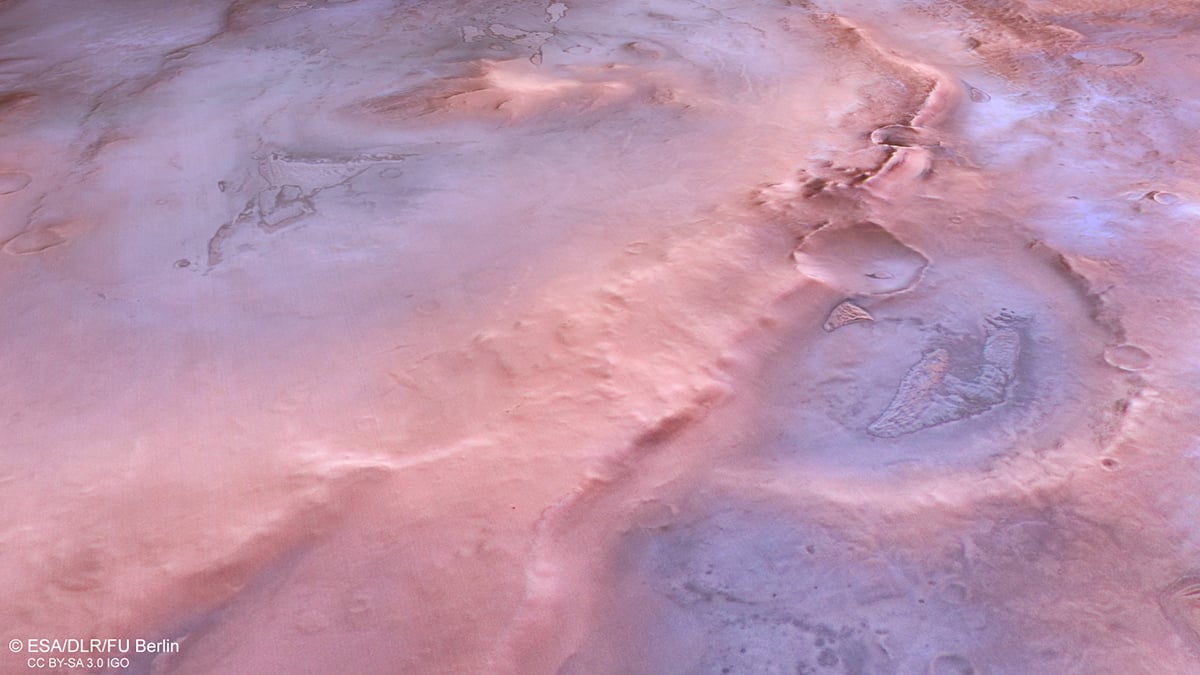
Frost-covered dunes and crater floors
Dunes spread across parts of the region. Some appear as pale, rippled patches in the image because frost has covered their surfaces. ESA’s views show several large dunes with bright ice deposits sitting over their darker material.
Mars has an atmosphere far thinner than Earth’s, yet its winds still move dust and sand. Over long periods, those winds reshape the loose material that covers the planet.
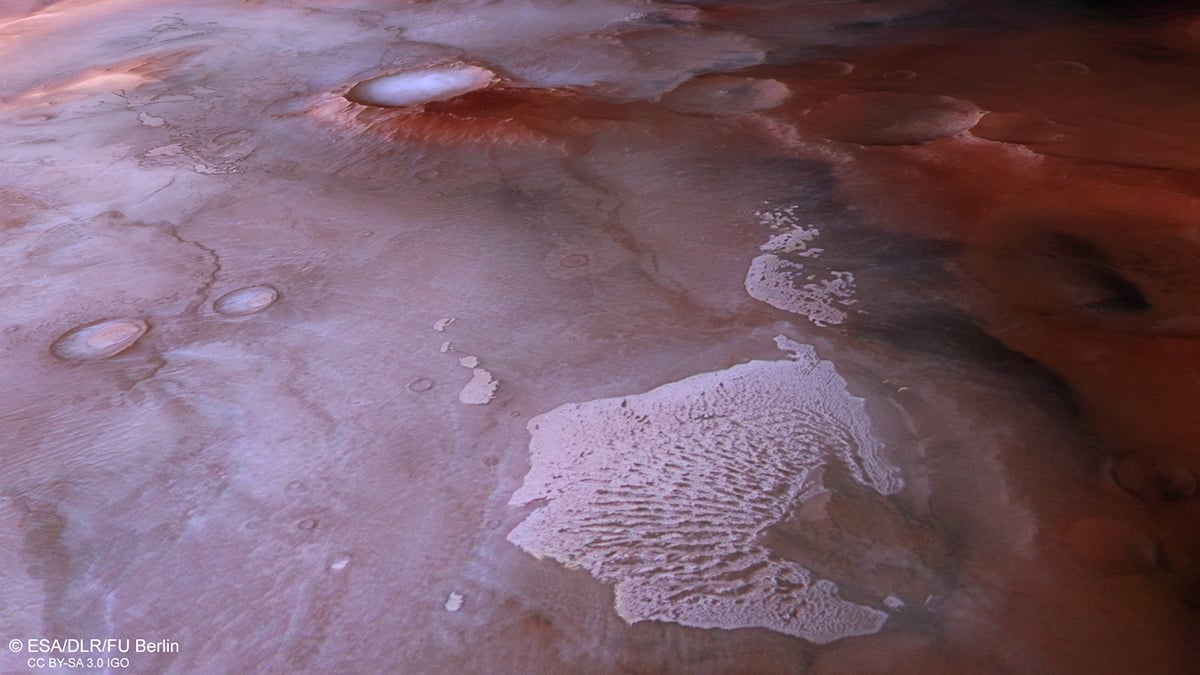
The dunes around Thyles Rupes come in several forms. ESA identifies longitudinal dunes, transverse dunes and barchanoid ridges in the region. Their shapes depend partly on the direction in which the winds move the sand.
Longitudinal dunes form elongated ridges. Transverse dunes develop across the prevailing wind direction. Barchanoid ridges have curved, sickle-like forms. Their presence gives researchers a record of how wind has transported sediment across the landscape.
Clear skies!
See more from DIYPhotography.net on Google
Add DIYPhotography.net as a trusted source. This makes
our stories more likely to appear in your Google Search results.
 Add as a preferred source on Google

Soumyadeep Mukherjee
Soumyadeep Mukherjee is an award-winning astrophotographer from India. He has a doctorate degree in Linguistics. His work extends to the sub-genres of nightscape, deep sky, solar, lunar and optical phenomenon photography. He is also a photography educator and has conducted numerous workshops. His works have appeared in over 40 books & magazines including Astronomy, BBC Sky at Night, Sky & Telescope among others, and in various websites including National Geographic, NASA, Forbes. He was the first Indian to win “Astronomy Photographer of the Year” award in a major category.

Join the Discussion
DIYP Comment Policy
Be nice, be on-topic, no personal information or flames.