
























World’s Largest Optical Telescope ELT Tilts for the First Time
Nov 1, 2026
Soumyadeep Mukherjee
Soumyadeep Mukherjee is an award-winning astrophotographer from India. He has a doctorate degree in Linguistics. His work extends to the sub-genres of nightscape, deep sky, solar, lunar and optical phenomenon photography. He is also a photography educator and has conducted numerous workshops. His works have appeared in over 40 books & magazines including Astronomy, BBC Sky at Night, Sky & Telescope among others, and in various websites including National Geographic, NASA, Forbes. He was the first Indian to win “Astronomy Photographer of the Year” award in a major category.
Share:
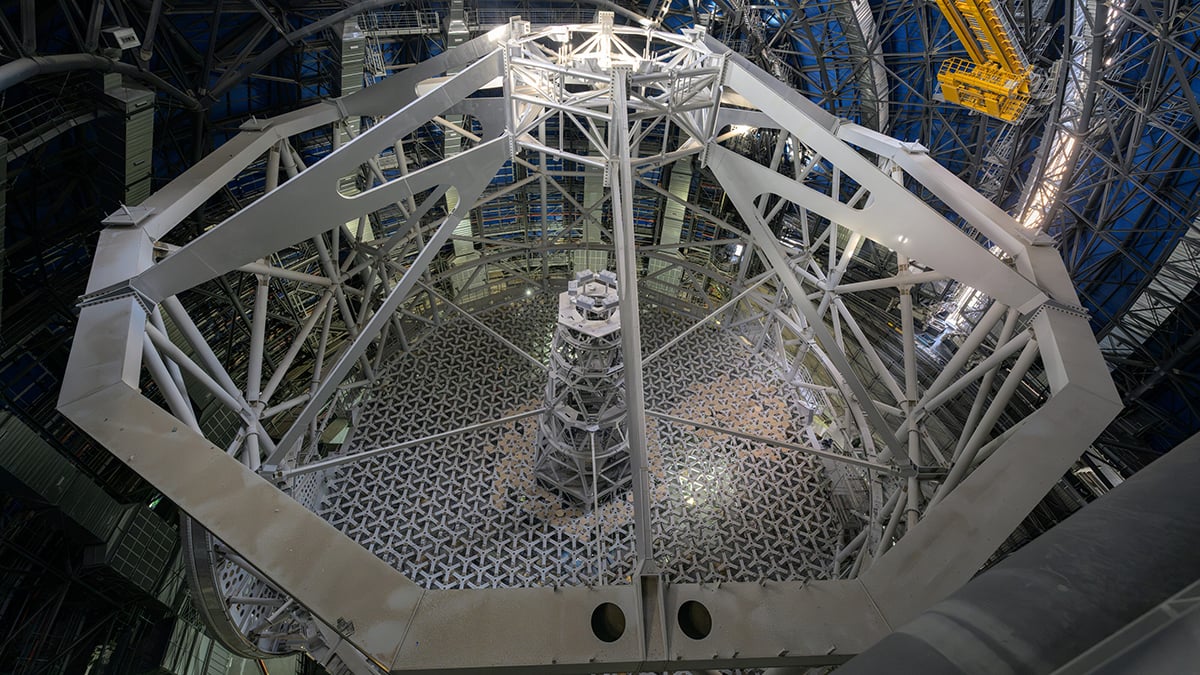
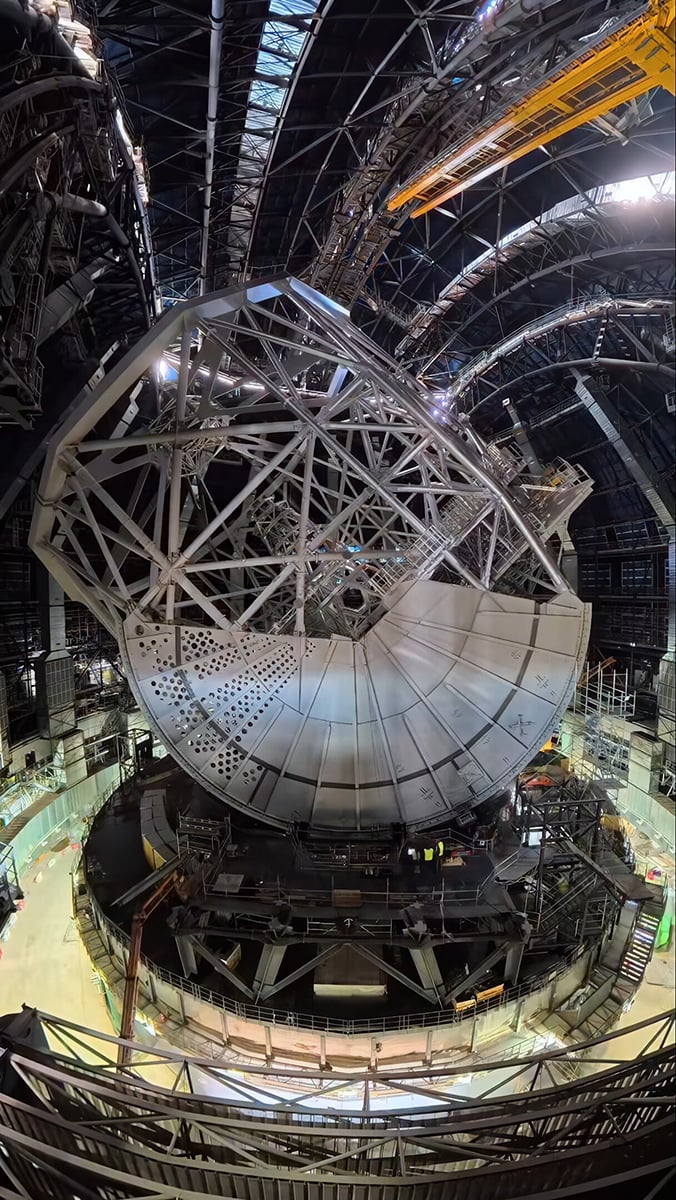
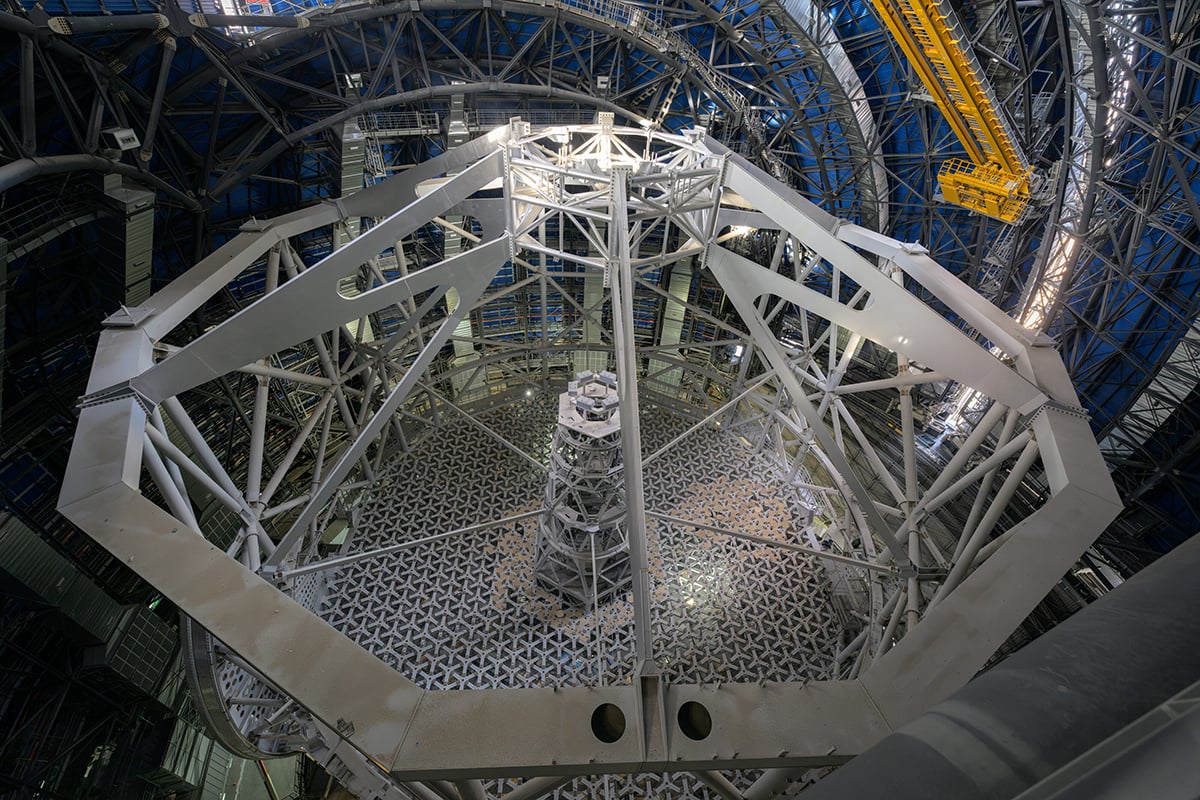
Engineers working on the European Southern Observatory’s Extremely Large Telescope (ELT) have reached a new construction milestone. In October 2026, they tilted the telescope’s massive steel structure on its horizontal axis for the first time. Images and videos from ESO show the framework moving from its upright position and returning after the test.
The movement is part of the work needed to make the ELT point at different regions of the night sky. The telescope is being built on Cerro Armazones in Chile’s Atacama Desert. Once complete, its 39-metre primary mirror will help astronomers study distant galaxies, stars and planetary systems.
The ELT tests its horizontal-axis movement
Along with collecting light, a telescope also needs to point towards the object an astronomer wants to observe and follow that object as the Earth rotates. The ELT’s mounting system must handle these movements while supporting the telescope’s mirrors and other equipment.
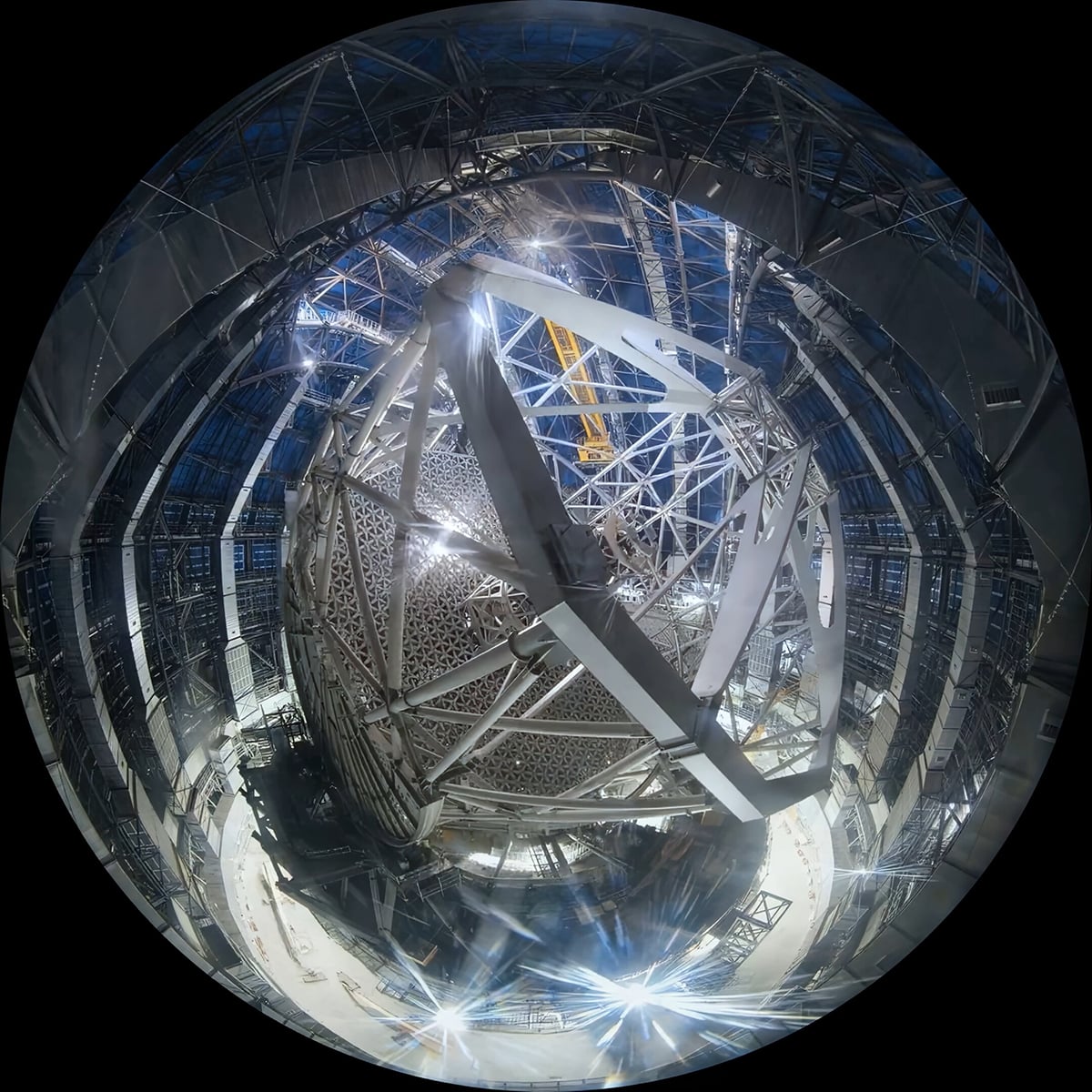
The telescope turns around two axes. Rotation around the vertical axis, known as the azimuth axis, changes its direction across the horizon. Movement around the horizontal axis, called the altitude axis, raises or lowers the telescope to point at different elevations in the sky. These movements will allow the ELT to target objects across the southern sky.
The October test marked the first time the ELT’s altitude structure tilted on its horizontal axis. A few months earlier, engineers had tested rotation around the vertical axis. The two milestones address different parts of the same challenge: making a very large structure move in a controlled way.
A steel structure weighing nearly 2,000 tonnes
The scale of the engineering becomes very clear when we consider what the mounting system must support. The ELT’s altitude structure is built from nearly 2,000 tonnes of steel. It will hold the telescope’s five mirrors, including the enormous 39-metre primary mirror that will gather light for its scientific instruments.
The primary mirror will be assembled from many individual segments. Even so, the telescope’s supporting framework must remain stiff while moving under a substantial load. Any unwanted flexing or vibration could affect the alignment of the optical system and make precise observations more difficult.
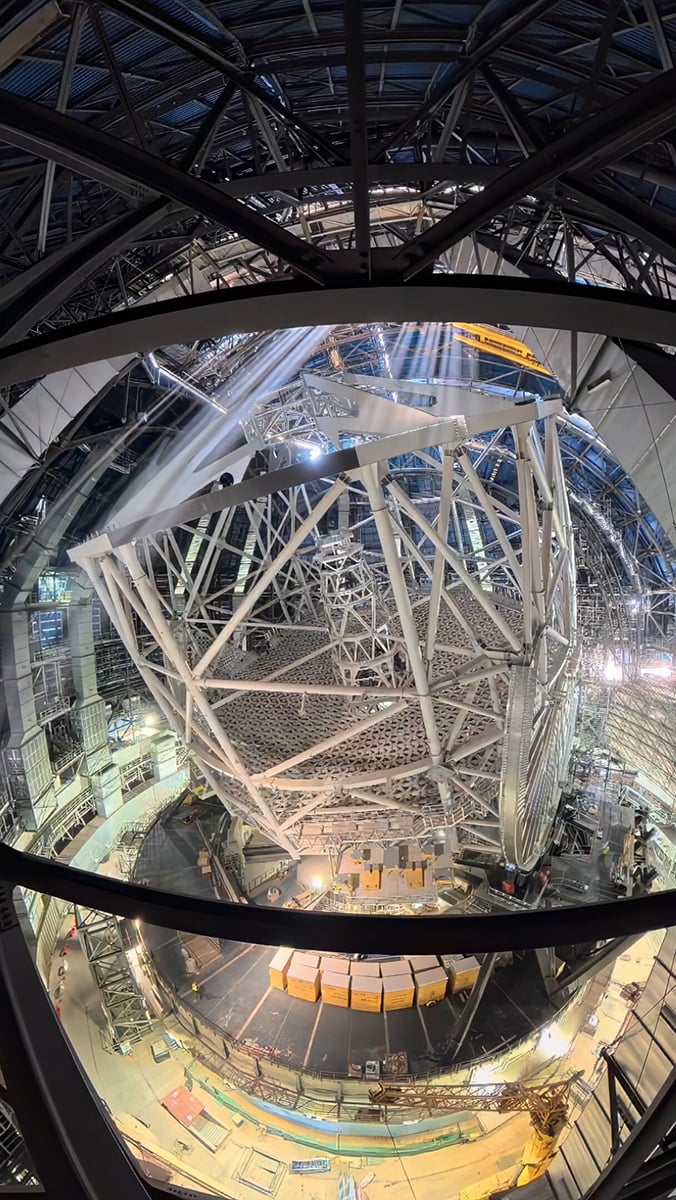
That creates a demanding engineering problem. The structure must be strong enough to support its load, yet its movement system must respond smoothly to commands. Engineers also need to account for the forces acting on the telescope as it changes angle. A mechanism that works while stationary is not enough; the team must test it under movement as well.
A thin film of oil supports the telescope
One of the most interesting details of the test is how the altitude structure moves under its own weight. Its movement relies on hydrostatic bearing pads. These pads use pressurised oil to separate the moving surfaces, allowing the structure to rotate without the usual direct contact between them.
During the first inclination test, the oil film was about 120 microns thick. ESO says the film is expected to be around 80 microns during normal operation. Both measurements are smaller than the thickness of a typical human hair. Yet this thin layer helps support the immense steel structure while reducing friction between the bearing surfaces.
The system must maintain that separation as the load shifts during movement. Engineers need to ensure that the oil reaches the bearing surfaces correctly and that the structure moves as intended. The bearing system is one part of a wider set of mechanical and control systems that will work together to position the telescope.
Clear skies!
See more from DIYPhotography.net on Google
Add DIYPhotography.net as a trusted source. This makes
our stories more likely to appear in your Google Search results.
 Add as a preferred source on Google

Soumyadeep Mukherjee
Soumyadeep Mukherjee is an award-winning astrophotographer from India. He has a doctorate degree in Linguistics. His work extends to the sub-genres of nightscape, deep sky, solar, lunar and optical phenomenon photography. He is also a photography educator and has conducted numerous workshops. His works have appeared in over 40 books & magazines including Astronomy, BBC Sky at Night, Sky & Telescope among others, and in various websites including National Geographic, NASA, Forbes. He was the first Indian to win “Astronomy Photographer of the Year” award in a major category.
Related Posts
 These Drone Images Capture World’s Largest Optical Telescope
 Huawei P30 Pro boasts four cameras, 5x optical zoom and optical image stabilization
 This DIY slider pans, slides and tilts in the most peculiar way
 Huawei P40 series announced: Leica cameras, 10x optical zoom and the largest sensor to date
Join the Discussion
DIYP Comment Policy
Be nice, be on-topic, no personal information or flames.