























GoPro Just Joined the Micro Four Thirds Club
Sep 17, 2026
Alysa Gavilan
Alysa Gavilan has spent years exploring photography through photojournalism and street scenes. She enjoys working with both film and mirrorless cameras, and her fascination with the craft has grown over the decades. Inspired by Vivian Maier, she is drawn to capturing everyday moments that often go unnoticed.
Share:

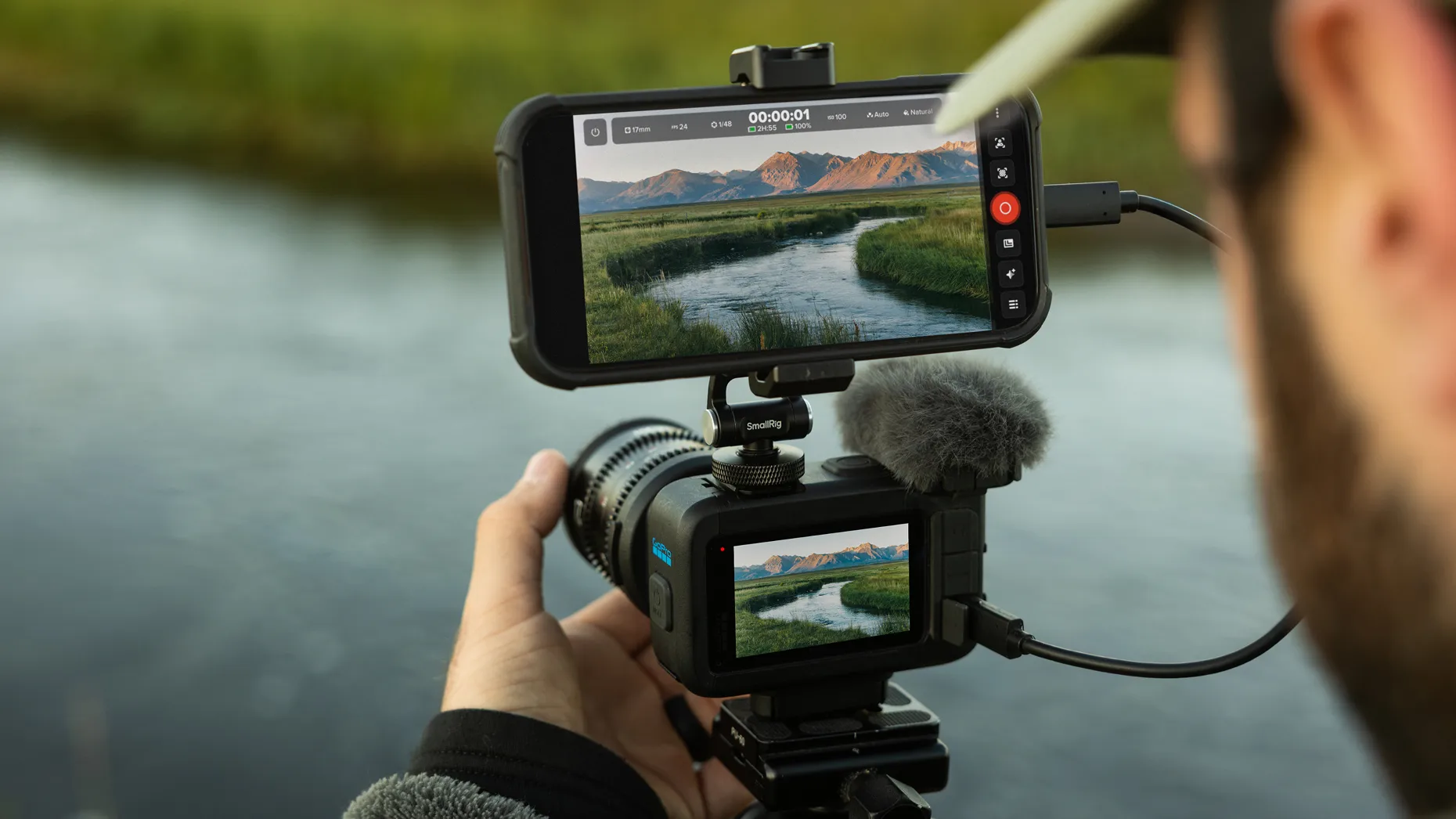
GoPro spent years making cameras that you could strap to a helmet, mount on a car, or toss into a bag. Its latest move is considerably less pocket friendly. The company has entered the interchangeable lens cinema camera market with the Mission 1 Pro ILS.
It is also bringing something else into the spotlight with that camera: the Micro Four Thirds system, an open standard that has quietly survived as larger sensors have taken over much of the camera conversation.
OM Digital Solutions and Panasonic announced the Micro Four Thirds System standard in 2008. GoPro formally declared its support for the standard with the launch of the Mission 1 Pro ILS on August 26, 2026.
What exactly is Micro Four Thirds?
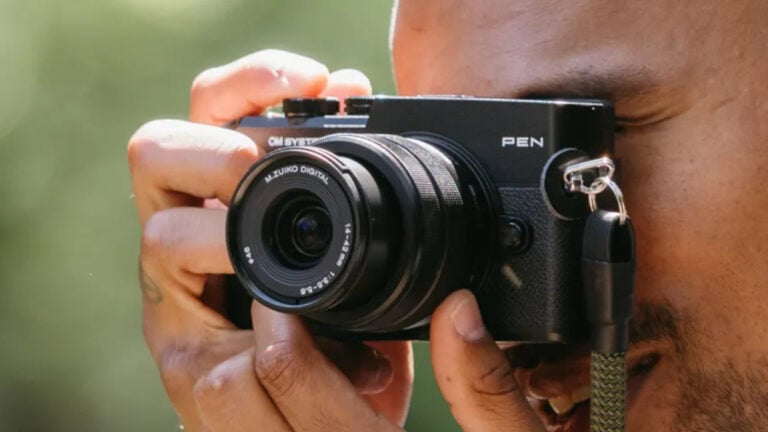
Micro Four Thirds is an interchangeable lens camera standard jointly developed by Panasonic and Olympus, now OM Digital Solutions. It defines the lens mount and communication between cameras and lenses, allowing compatible products from different manufacturers to work together.
The system uses a sensor measuring approximately 17.3 by 13mm, giving it a 2x crop factor compared with 35mm full frame. That makes Micro Four Thirds sensors smaller than full frame and APS C sensors, but it also allows manufacturers to build relatively compact cameras and lenses.
One of the system’s biggest advantages is its broad lens ecosystem. Panasonic, OM System and numerous third party manufacturers have produced Micro Four Thirds lenses, covering everything from wide angle primes to long telephoto zooms.
Unlike a proprietary camera mount, Micro Four Thirds was designed as an open standard. GoPro can therefore build a compatible camera while giving users access to an established lens ecosystem.
Why GoPro’s Mission 1 matters
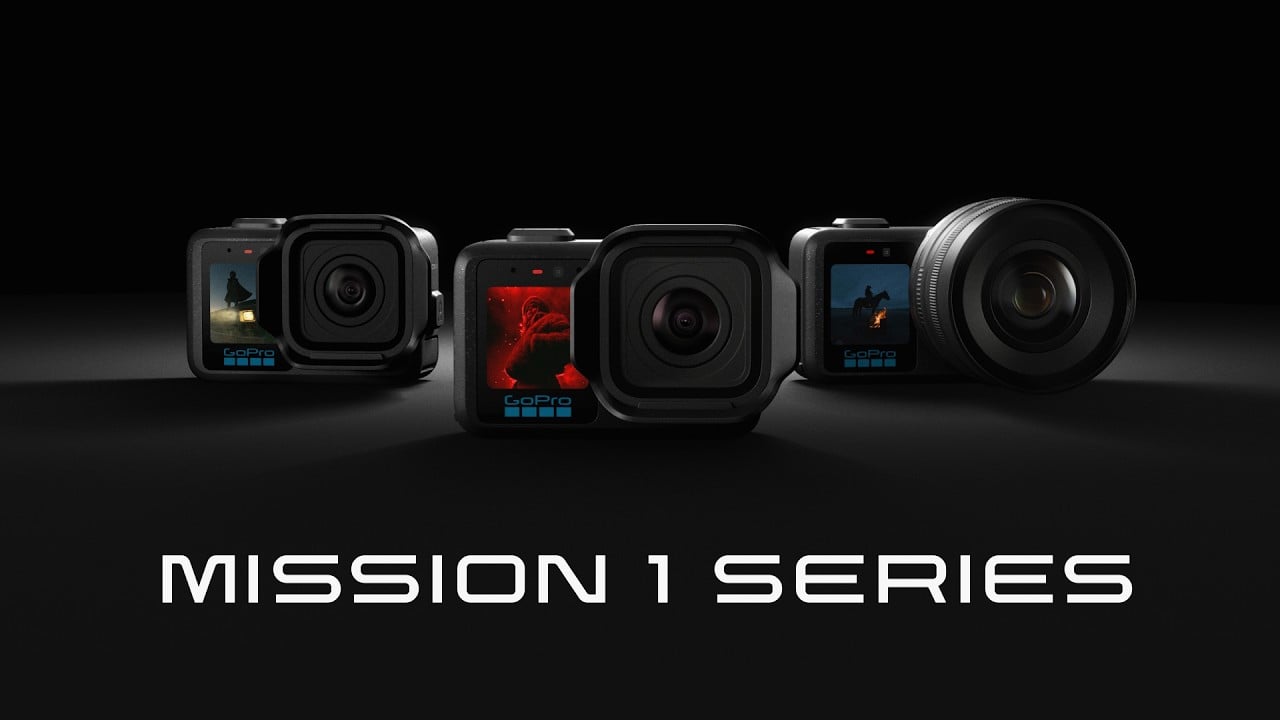
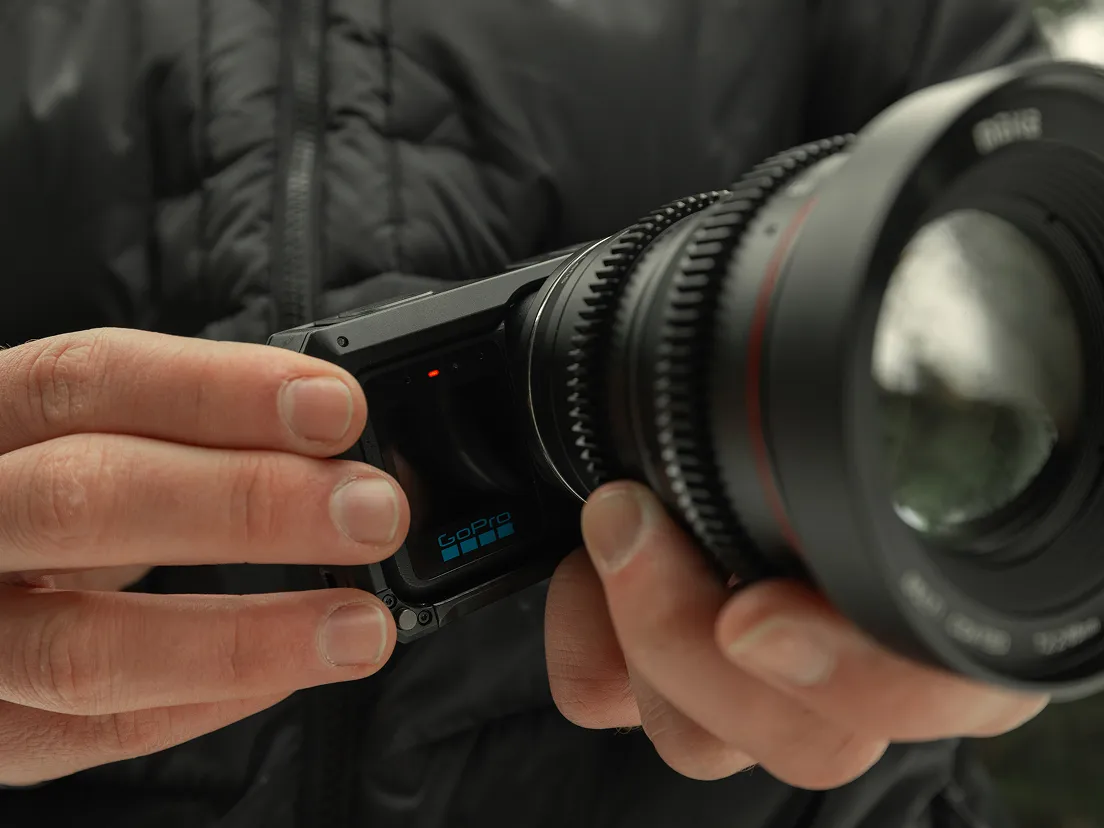
Mission 1 Pro ILS is GoPro’s first interchangeable lens camera and uses a Micro Four Thirds mount. It is a compact cinema camera with a 50 megapixel 1 inch sensor, 8K video and compatibility with Micro Four Thirds lenses and adapters.
That is a notable change in direction for GoPro. Its action cameras have traditionally relied on fixed lenses, with the company controlling the entire imaging package. An interchangeable lens mount gives filmmakers considerably more control over focal length, perspective and depth of field.
The Micro Four Thirds mount also gives Mission 1 access to an established selection of lenses instead of requiring GoPro to build an entirely new lens lineup.
That could be particularly useful for filmmakers who already own Micro Four Thirds equipment. A new camera can potentially slot into an existing setup rather than forcing users to start again with lenses.
GoPro needs a new act
GoPro’s decision to enter interchangeable lens cameras comes at a complicated moment for the company.
In the first quarter of 2026, GoPro reported $99 million in revenue, down 26% from a year earlier, and an $81 million GAAP net loss. Its board also began reviewing strategic alternatives, including a potential sale or merger.
The Mission 1 series was part of GoPro’s attempt to move into higher end imaging, but the company has also been looking beyond consumer cameras. In September, GoPro announced a proposed merger with Starman Optical that would give GoPro shareholders $285 million in cash while repaying approximately $92 million in debt. The combined company plans to expand into areas including AI data centers, government, defense and aerospace, while continuing to develop GoPro’s camera and subscription businesses.
That makes the Mission 1 Pro ILS more interesting than simply another new camera mount.
Micro Four Thirds has spent years proving that a smaller sensor does not have to mean a small ambition. Now GoPro is betting that its open lens system can help it build something bigger too. The question is how many filmmakers will follow GoPro into this new chapter.
See more from DIYPhotography.net on Google
Add DIYPhotography.net as a trusted source. This makes
our stories more likely to appear in your Google Search results.
 Add as a preferred source on Google

Alysa Gavilan
Alysa Gavilan has spent years exploring photography through photojournalism and street scenes. She enjoys working with both film and mirrorless cameras, and her fascination with the craft has grown over the decades. Inspired by Vivian Maier, she is drawn to capturing everyday moments that often go unnoticed.
Related Posts
 Panasonic Announces Four New Lenses for Full Frame and Micro Four Thirds
 This crazy modification adds a Micro Four Thirds mount to the Sony RX0 II action camera
 New Viltrox roadmap shows nine new lenses on the way including Micro Four Thirds cine lenses
 Sigma abandons the Micro Four Thirds camera system
Join the Discussion
DIYP Comment Policy
Be nice, be on-topic, no personal information or flames.