


















Rubin Observatory Begins 10 Year LSST Survey: An Ocean of Stars
Jul 3, 2026
Soumyadeep Mukherjee
Soumyadeep Mukherjee is an award-winning astrophotographer from India. He has a doctorate degree in Linguistics. His work extends to the sub-genres of nightscape, deep sky, solar, lunar and optical phenomenon photography. He is also a photography educator and has conducted numerous workshops. His works have appeared in over 40 books & magazines including Astronomy, BBC Sky at Night, Sky & Telescope among others, and in various websites including National Geographic, NASA, Forbes. He was the first Indian to win “Astronomy Photographer of the Year” award in a major category.
Share:
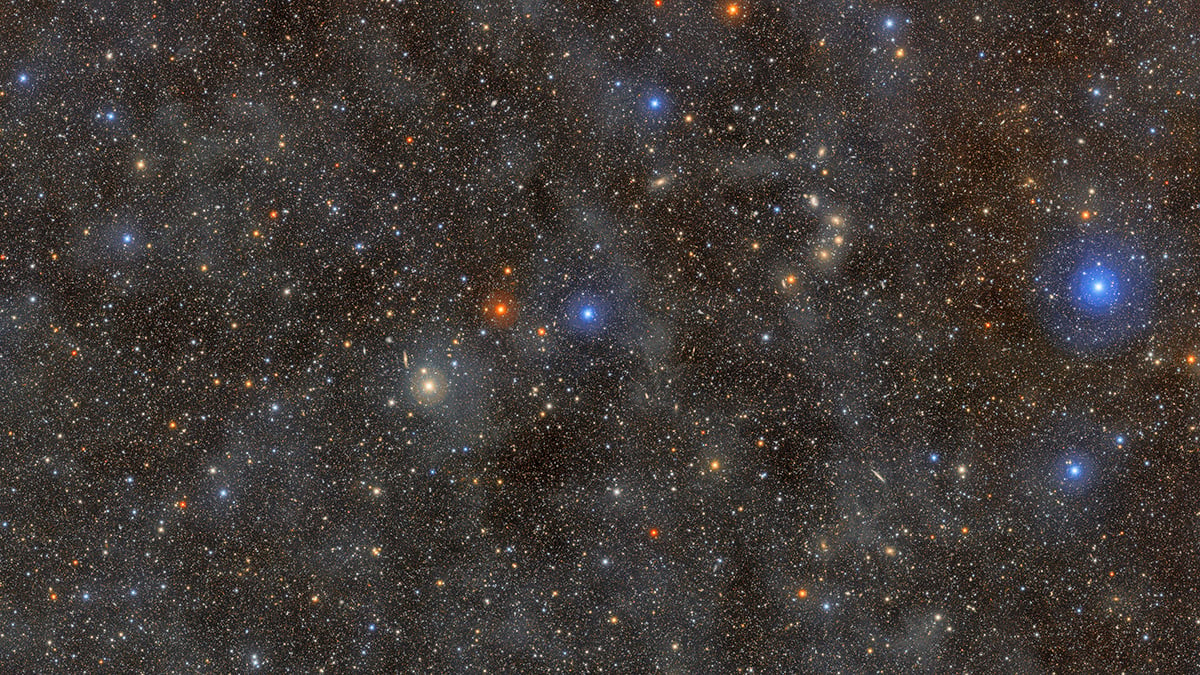
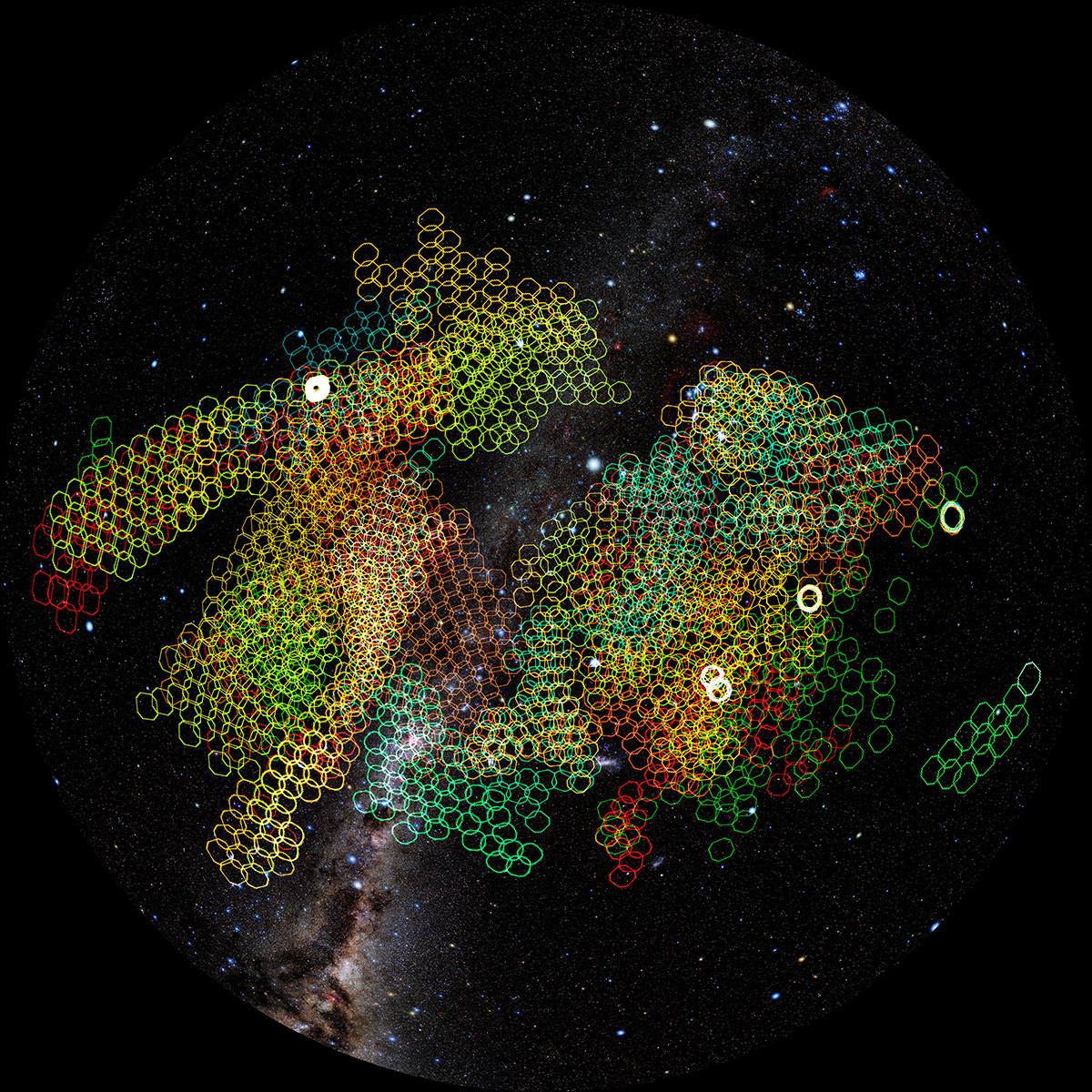
After nearly two decades of planning, construction, engineering, and testing, the NSF–DOE Vera C. Rubin Observatory has officially begun the Legacy Survey of Space and Time (LSST). The survey will continue for the next ten years and promises to improve almost every field of observational astronomy. Rubin Observatory will repeatedly scan the southern sky, creating an enormous archive that documents how the Universe changes from one night to the next.
Scientists expect the survey to detect billions of galaxies, millions of asteroids, countless variable stars, and an extraordinary number of transient events. It will also provide new data to investigate dark matter and dark energy, two of the biggest mysteries in modern physics.
Watching the sky, not individual targets
Astronomers have always faced a difficult compromise. They could observe a small part of the sky in great detail or study large areas with limited depth. Doing both at the same time remained out of reach for decades.
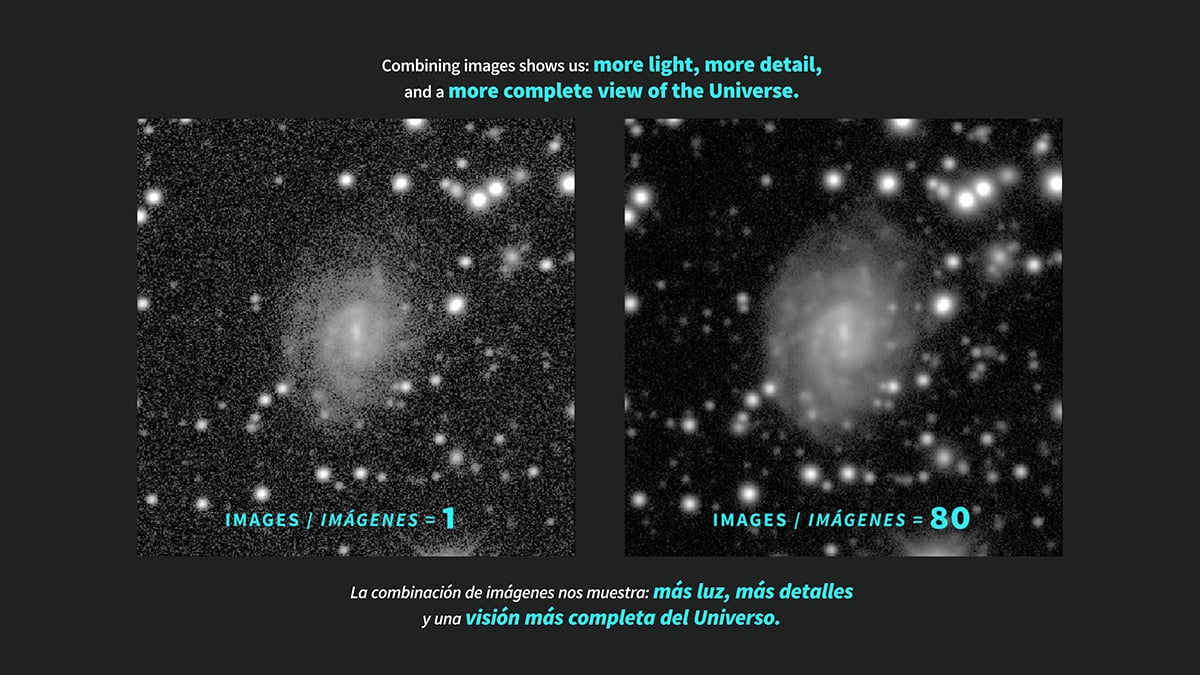
The Rubin Observatory was designed as a survey telescope. Its mission is not to spend an entire night observing a single galaxy or nebula. It moves rapidly across the sky, collecting image after image with remarkable efficiency. Every exposure lasts about 30 seconds before the telescope shifts to its next position. This process continues throughout the night, allowing the observatory to cover enormous areas before sunrise.
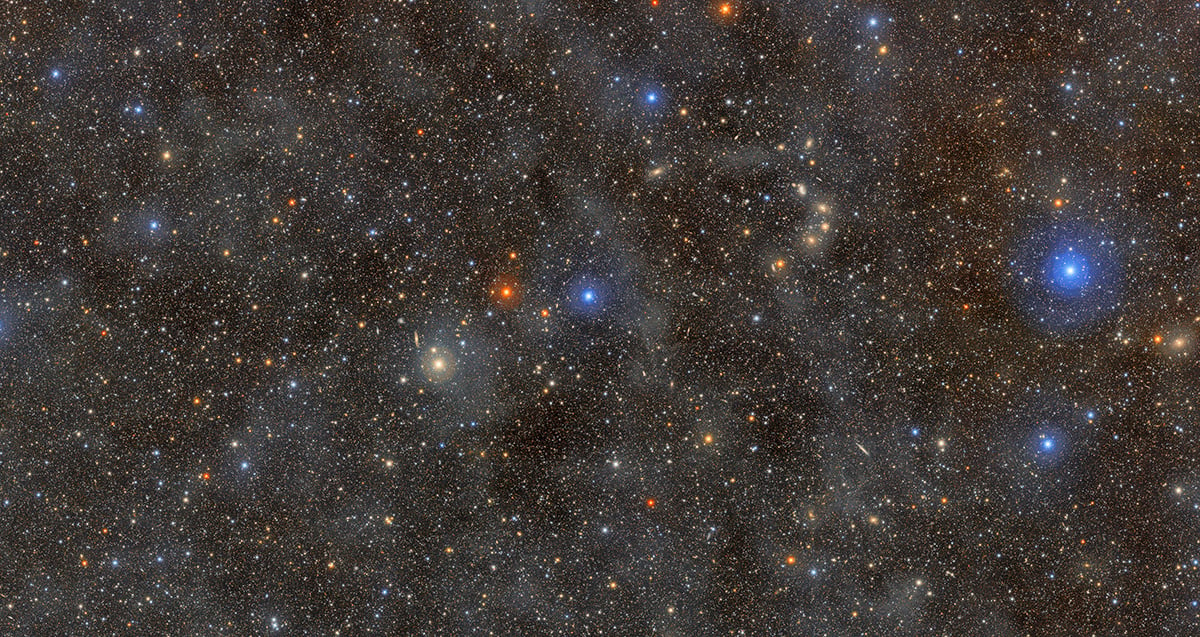
A few nights later, the telescope returns to the same locations and repeats the process. Over months and years, these repeated observations build a detailed record of every measurable change.
Imagine a distant star exploding as a supernova. Elsewhere, a faint asteroid drifts slowly against the background stars. A comet begins its long journey toward the Sun, while a variable star gradually brightens over several weeks. Most telescopes would detect only a small fraction of these events. The Rubin Observatory has been designed to find all of them simultaneously as it keeps returning to the same regions again and again.
The world’s largest digital camera is built for discovery
A telescope gathers light, but the camera determines how much information that light can reveal. For the Legacy Survey of Space and Time, engineers had to build an instrument capable of handling observations on an unprecedented scale. The result is the LSST Camera, the largest digital camera ever constructed for astronomy.
Its detector contains 3.2 billion pixels. Every exposure captures extraordinary detail across an immense section of the sky. A single image records so much information that displaying it at full resolution would require hundreds of ultra-high-definition television screens.
The camera weighs more than three tonnes and houses 189 highly sensitive CCD sensors arranged with extreme precision. Every component had to remain stable despite changing temperatures, long observing sessions, and continuous telescope movements. Even tiny mechanical shifts could reduce image quality, so engineers designed the system to maintain exceptional stability throughout every observation.
The camera also carries six scientific filters that observe different parts of the visible and near-infrared spectrum. These filters allow astronomers to measure far more than brightness alone.
Legacy Survey of Space and Time
The Legacy Survey of Space and Time was never intended to answer a single scientific question. Instead, it was designed as a foundation for research across almost every branch of astronomy. Every clear night will add fresh observations to a dataset that scientists will continue analyzing for decades.
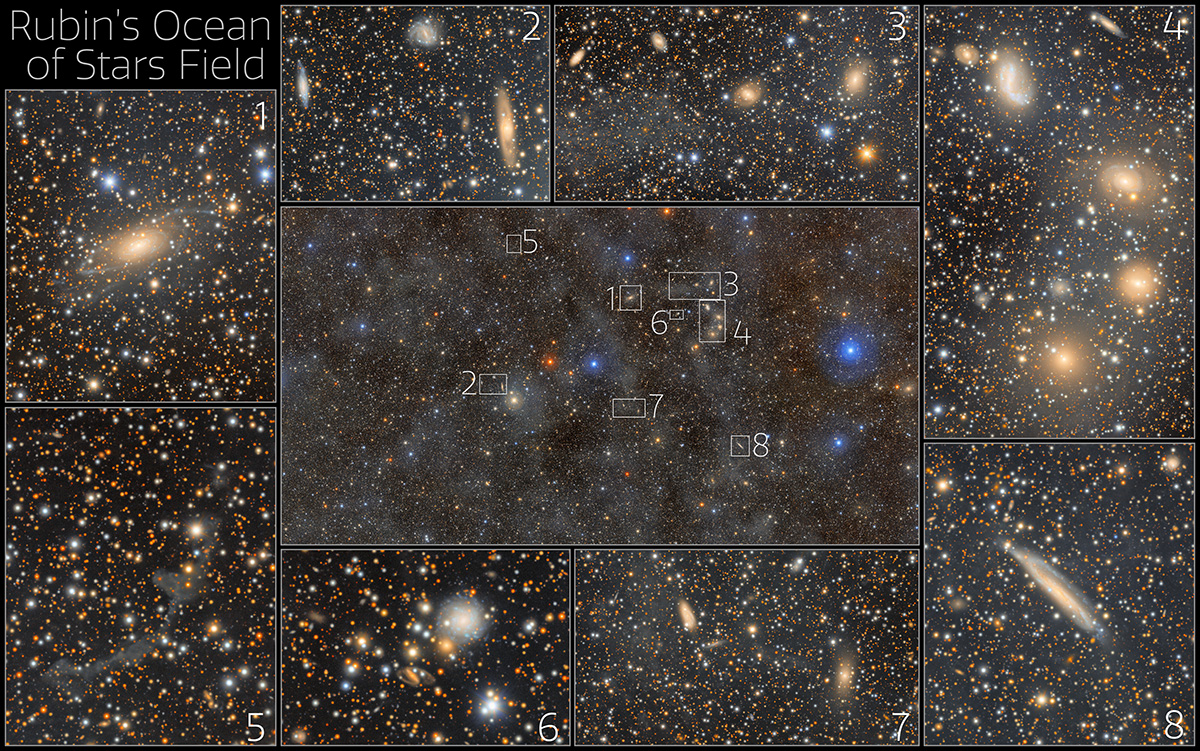
One of the survey’s biggest strengths lies in its scale. The Rubin Observatory will observe billions of galaxies and stars repeatedly over the course of ten years. That combination of depth, sky coverage, and time is something astronomers have never had before. It allows researchers to study not only what exists in the Universe but also how it changes.
Many astronomical events are unpredictable. A star may explode without warning. A black hole may suddenly begin feeding on surrounding material. A distant galaxy may brighten for reasons that remain unknown. These events often appear briefly before fading away. Missing the early stages can result in the loss of valuable scientific information.
The survey will also improve our understanding of the Milky Way. The Rubin Observatory will repeatedly observe billions of stars throughout our Galaxy. Those measurements will reveal how stars move, how they vary in brightness, and how the different components of the Milky Way are distributed. Over time, astronomers will build a much clearer picture of our Galaxy’s structure and its evolutionary history.
All these make the Legacy Survey of Space and Time one of the most versatile scientific projects ever undertaken.
Clear skies!
See more from DIYPhotography.net on Google
Add DIYPhotography.net as a trusted source. This makes
our stories more likely to appear in your Google Search results.
 Add as a preferred source on Google

Soumyadeep Mukherjee
Soumyadeep Mukherjee is an award-winning astrophotographer from India. He has a doctorate degree in Linguistics. His work extends to the sub-genres of nightscape, deep sky, solar, lunar and optical phenomenon photography. He is also a photography educator and has conducted numerous workshops. His works have appeared in over 40 books & magazines including Astronomy, BBC Sky at Night, Sky & Telescope among others, and in various websites including National Geographic, NASA, Forbes. He was the first Indian to win “Astronomy Photographer of the Year” award in a major category.


Join the Discussion
DIYP Comment Policy
Be nice, be on-topic, no personal information or flames.