




















Canon Brings Image Verification to the Camera Level With C2PA Rollout
May 18, 2026
Alysa Gavilan
Alysa Gavilan has spent years exploring photography through photojournalism and street scenes. She enjoys working with both film and mirrorless cameras, and her fascination with the craft has grown over the decades. Inspired by Vivian Maier, she is drawn to capturing everyday moments that often go unnoticed.
Share:
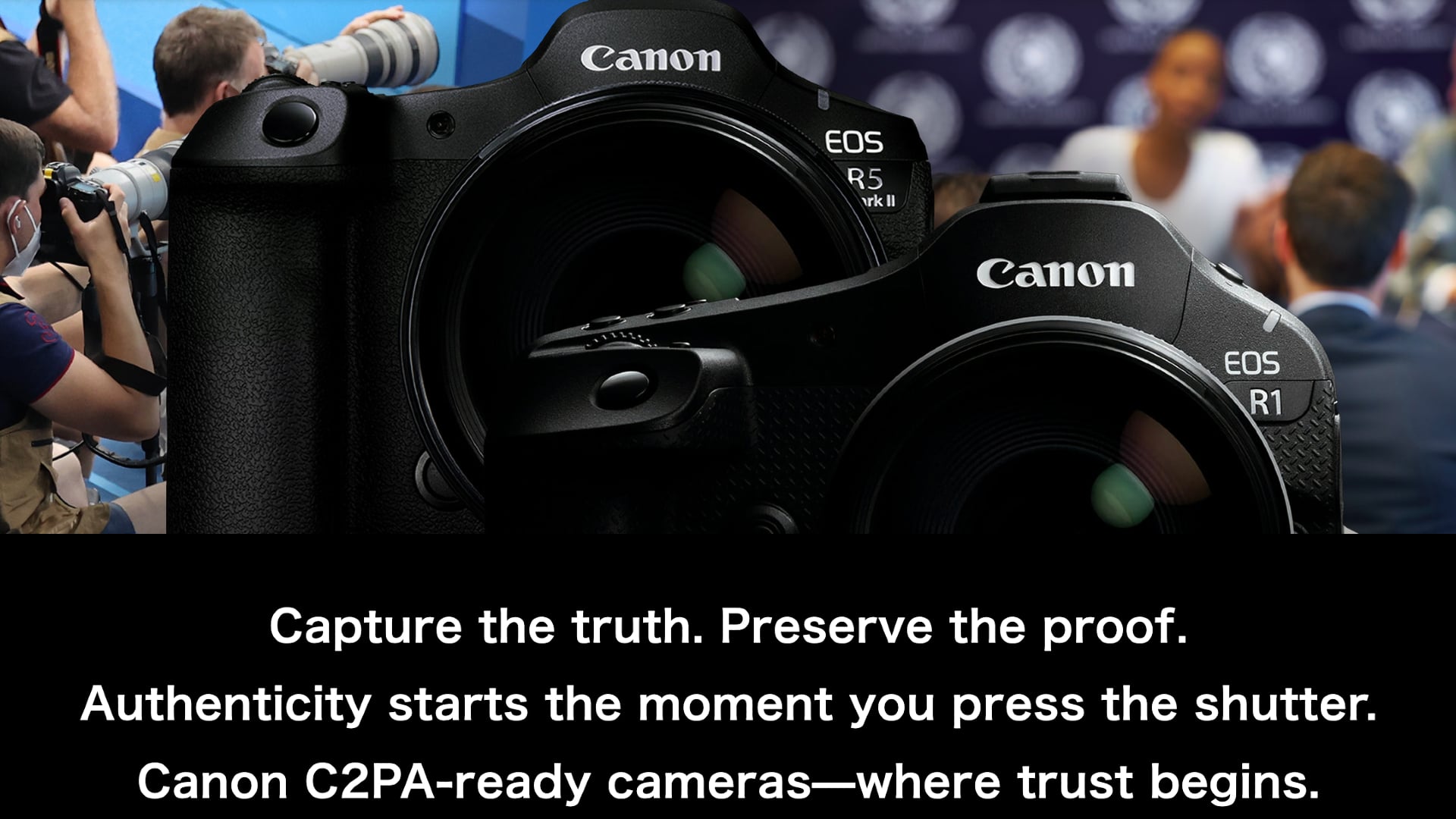
Images have long carried an assumption of truth in journalism, but that assumption is becoming harder to maintain in a landscape shaped by generative AI, rapid editing tools, and constant content reuse.
Canon’s new Authenticity Imaging System is designed to respond to that shift by embedding provenance data directly into the capture process.
Built on the C2PA standard, the system will roll out in May 2026 across EMEA for supported models including the EOS R1 and EOS R5 Mark II, linking authenticity records to images at the moment they are created.
A Capture Level Record Of Image History
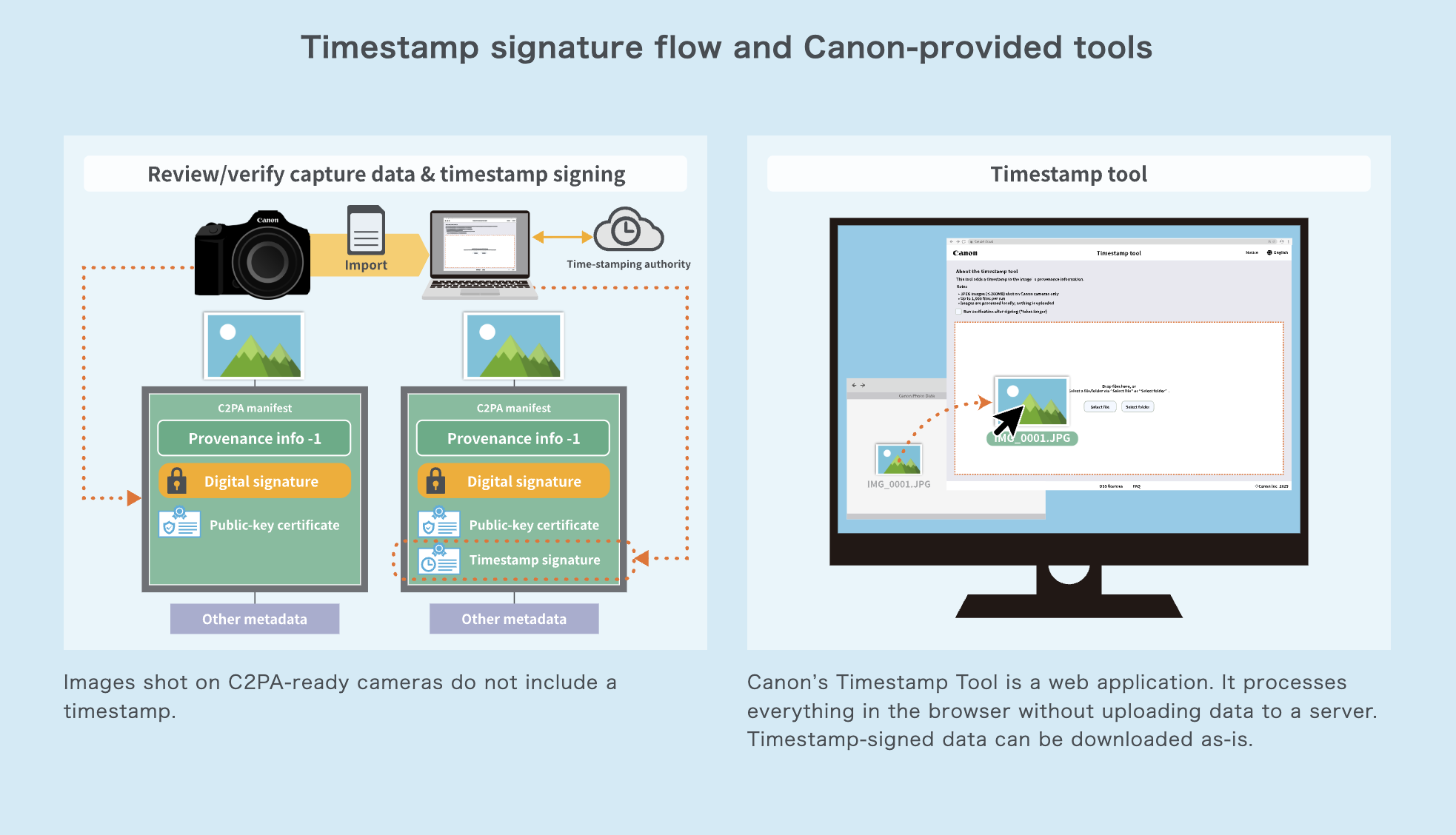
Canon’s system uses the C2PA framework to attach structured provenance information to image files from the point of capture. This includes digital certificates, trusted timestamps, and a record of how files are processed through editing and distribution workflows.
The intention is to maintain a traceable history that remains connected to the image as it moves through newsroom systems.
At capture, compatible cameras generate a manifest containing provenance data. Canon then applies certificates issued through trusted authorities and integrates timestamping services to support long term verification.
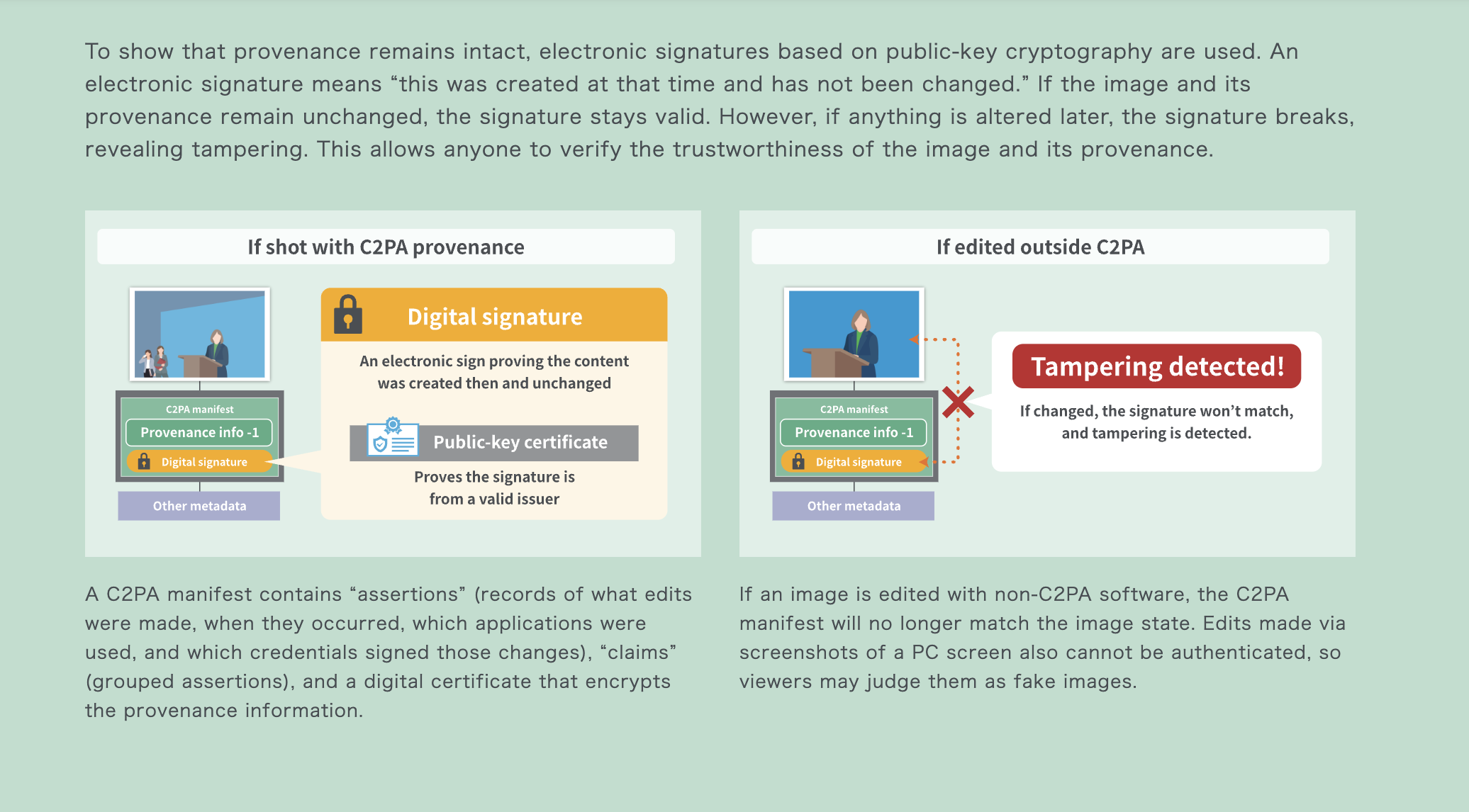
As images pass through editing or publication stages, additional information can be appended while maintaining a consistent record of origin and modification.
The system has already undergone early technical testing with Reuters using the EOS R1 and EOS R5 Mark II. According to Canon, these tests demonstrated that provenance data could be generated reliably in operational conditions where speed and consistency are essential.
Why This Matters For Journalism
For news organizations, image verification has traditionally relied on editorial processes, source confirmation, and internal workflows. These methods are now under pressure as synthetic media becomes more realistic and easier to produce at scale.
A major concern is that manipulated or fully generated images can circulate online without clear indicators of origin. In breaking news environments, where images are often shared quickly and widely, the ability to verify authenticity becomes more difficult once files leave the camera system.
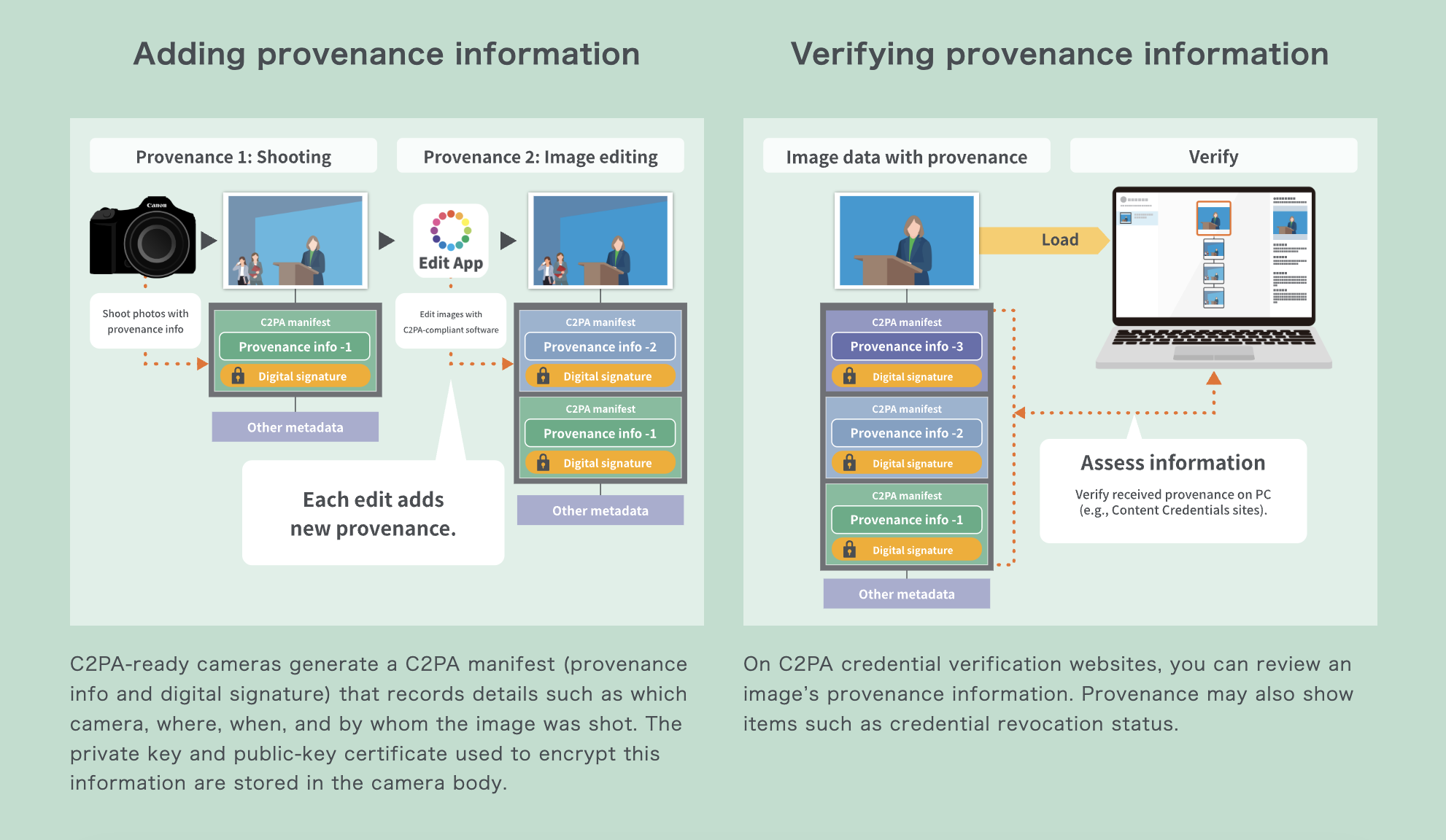
Canon’s approach shifts part of that responsibility to the point of capture. By embedding provenance data directly into the file at creation, newsrooms gain a structured record that can travel with the image through editing, archiving, and publication. This does not remove editorial verification, but it adds a technical layer that can be reviewed alongside it.
It also reflects a broader change in journalism, where images are no longer treated as self contained evidence. Instead, authenticity becomes something that needs to be demonstrated through verifiable data attached to the file itself.
Wider Industry Efforts
The broader industry push toward provenance standards has not been limited to camera manufacturers.
Adobe’s Content Credentials system allows photographers and editors to attach edit history and AI usage markers directly into exported files, forming a digital record intended to survive across platforms.
Leica has integrated authentication hardware into select cameras, focusing on embedding secure metadata at the device level. Sony has tested C2PA aligned workflows in professional video cameras, aiming at broadcast and documentary production environments where verification is critical.
Panasonic’s involvement in C2PA development reflects a similar direction, with a focus on building interoperability across hybrid photo and video systems.
The Limits Of Technical Verification
While C2PA based systems provide a structured method for tracking image history, their effectiveness depends on widespread adoption across the imaging ecosystem. If provenance data is missing at any stage, the chain of verification can be incomplete.
There are also practical considerations for newsrooms, including how to integrate these signals into fast moving editorial workflows without slowing down publication timelines. The value of authenticity data will depend on how easily it can be interpreted and trusted under deadline conditions.
Canon’s rollout marks a step toward making authenticity part of the image itself rather than a separate verification process.
As more cameras and platforms begin to adopt similar standards, image provenance may become a routine part of file handling rather than an additional layer of scrutiny added after questions arise.
See more from DIYPhotography.net on Google
Add DIYPhotography.net as a trusted source. This makes
our stories more likely to appear in your Google Search results.
 Add as a preferred source on Google

Alysa Gavilan
Alysa Gavilan has spent years exploring photography through photojournalism and street scenes. She enjoys working with both film and mirrorless cameras, and her fascination with the craft has grown over the decades. Inspired by Vivian Maier, she is drawn to capturing everyday moments that often go unnoticed.



Join the Discussion
DIYP Comment Policy
Be nice, be on-topic, no personal information or flames.