


















Stop Styling All Your Food Shots From Overhead, Do This Instead
Aug 18, 2025
Alex Baker
Alex Baker is a portrait and lifestyle driven photographer based in Valencia, Spain. She works on a range of projects from commercial to fine art and has had work featured in publications such as The Daily Mail, Conde Nast Traveller and El Mundo, and has exhibited work across Europe
Share:
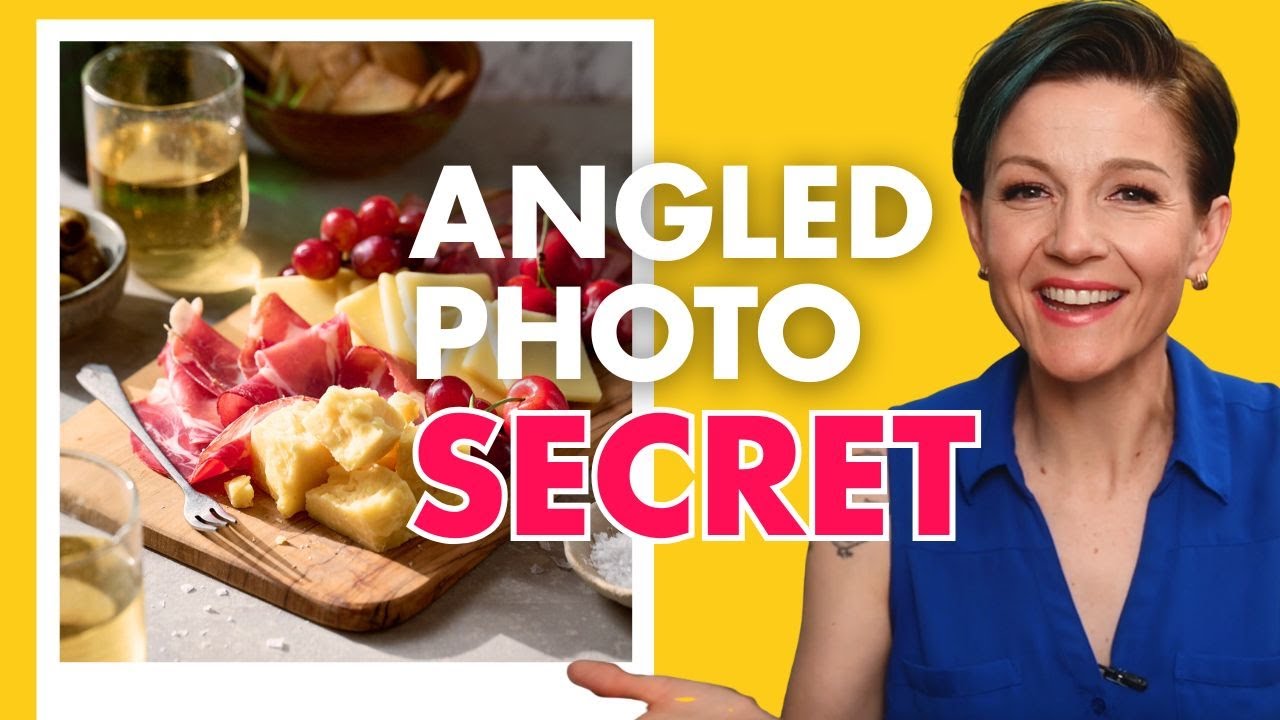
Food photography and food styling are most definitely an art in themselves. Sometimes it’s easy to get stuck in only shooting overhead flatlays. It’s popular because it can be eye-catching and graphic, especially on small real estate spaces like social media. However, mastering the three-quarter shot is a must, and it can throw photographers who are new to food photography.
In this video, Joanie from The Bite Shot walks us through the common pitfalls of shooting from the three-quarter angle. Here is her advice on how to nail this type of shot.
The Core Issue: Flatlays vs. Angled Shots
When shooting overhead (flatlay), the focus is on arranging elements decoratively on a flat surface, almost like graphic design. But angled shots demand a three-dimensional mindset.
“Overhead styling is like creating a graphic design, whereas angled styling is like designing a set stage,” Joanie explains. The shift in perspective changes how elements relate to each other, requiring a new approach to composition.
Tip 1: Build Height
Flat items can disappear in angled shots, so Joanie recommends introducing vertical layers to keep elements visible. Small tricks like risers, wedges, or tilting items toward the camera can create a natural height gradient that draws the viewer’s eye.
For instance, when shooting crackers or small bowls, she often uses hidden supports or subtly props them up to achieve extra height without looking artificial. This approach ensures the scene doesn’t flatten out and keeps the composition dynamic.
Tip 2: Mind Perspective Distortion
Perspective distortion can dramatically affect how props appear. Objects closer to the lens look larger, while items further back shrink. Joanie’s solution is to balance sizes thoughtfully:
- Use smaller props in the front.
- Larger props go toward the back.
She loves miniature forks and spoons for this reason because they keep foreground elements proportional without overwhelming the scene. Small adjustments go a long way in making a photo look balanced and natural.
Tip 3: Overlap for Depth
One of Joanie’s favourite techniques is overlapping elements like bowls, plates, or garnishes. Partial overlap is key here because it suggests a relationship between items without obscuring anything important. Transparent or translucent props, such as glasses, can help maintain visibility while adding dimension.
Some quick rules:
- Avoid awkward half-visible edges. Ask yourself: is it in or out?
- Don’t over-stack items. More isn’t always better, it can get messy quite quickly.
- Think in layers, not layouts. Each prop should contribute to depth and flow.
Tip 4: Test Shots and Tethering
Joanie stresses the importance of pre-shoot testing. Tangents (lines that awkwardly intersect) can ruin a shot if unnoticed. She suggests:
- Setting up the camera and shooting test images before adding the food.
- Using tethering to review compositions in real time.
This way, you can adjust props and angles before committing to the final image.
Tip 5: Practical Equipment Tips
While Joanie doesn’t emphasise fancy gear, her setup highlights a few key considerations:
- Use small props for front elements to combat perspective distortion.
- Employ wedges or risers to create subtle height differences.
- Transparent or translucent items can maintain visibility when overlapping.
Joanie doesn’t go into actual camera settings in this video, but a moderate aperture to control depth of field and proper lighting are usual (around f/8-f/11) and are enough to highlight the layers and textures Joanie talks about.
As Joanie puts it: “Styling for angled shots is about thinking in layers, not layouts. Build height, embrace depth, and use props that work with your perspective, not against it.” By applying these techniques, you can transform your food photos from flat and static to dynamic and immersive. Watch the whole video below:
See more from DIYPhotography.net on Google
Add DIYPhotography.net as a trusted source. This makes
our stories more likely to appear in your Google Search results.
 Add as a preferred source on Google
Alex Baker
Alex Baker is a portrait and lifestyle driven photographer based in Valencia, Spain. She works on a range of projects from commercial to fine art and has had work featured in publications such as The Daily Mail, Conde Nast Traveller and El Mundo, and has exhibited work across Europe


Join the Discussion
DIYP Comment Policy
Be nice, be on-topic, no personal information or flames.