
















Perseverance Photographs a Helmet-Shaped Rock on Mars
Aug 15, 2025
Soumyadeep Mukherjee
Soumyadeep Mukherjee is an award-winning astrophotographer from India. He has a doctorate degree in Linguistics. His work extends to the sub-genres of nightscape, deep sky, solar, lunar and optical phenomenon photography. He is also a photography educator and has conducted numerous workshops. His works have appeared in over 40 books & magazines including Astronomy, BBC Sky at Night, Sky & Telescope among others, and in various websites including National Geographic, NASA, Forbes. He was the first Indian to win “Astronomy Photographer of the Year” award in a major category.
Share:
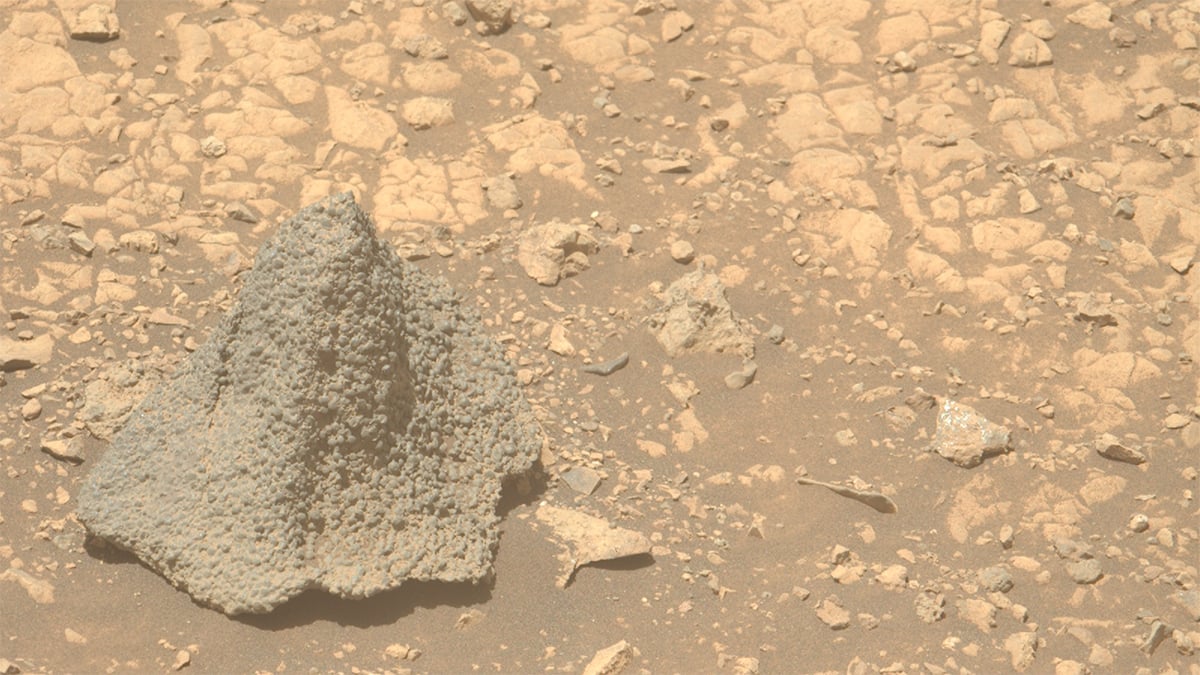
NASA’s Perseverance rover recently photographed an eye-catching rock in Jezero Crater. The shape looks like an old helmet, with a pointed crown and a flared base. The picture came from the rover’s Mastcam-Z system during Sol 1585. The frame is sharp, evenly exposed, and packed with surface detail. You can trace textures across the dome and down to the base, where loose grains gather in small drifts. They help scientists read the rock’s story. Perseverance is exploring Jezero Crater, a site chosen because it once held a lake and river delta. These settings preserve layered rocks and sediments. Such deposits can trap chemical clues and textures from the planet’s wetter past. The team continues to use Mastcam-Z and other instruments to record outcrops, loose boulders, and unusual clasts that appear along the rover’s route. Each scene adds to a growing archive of Mars’s geologic history.
What we are looking at
The “helmet” is a natural rock, and the resemblance is a classic case of pareidolia. The rock is studded with small, rounded nodules called spherules. In the current campaign, the rover team has reported clusters of spherules embedded in bedrock and scattered across nearby slopes. The team is studying their origin with targeted imaging and context observations. Spherules can form in different ways. They may grow through mineral precipitation in fluids moving through rock. They can also form during volcanic processes or impacts that melt and re-solidify material. Distinguishing among these pathways requires careful field context. The team utilizes stereo imaging, mosaics, and multispectral data to map the locations of the spheres and their relationships to surrounding layers.

Inside the camera that caught it
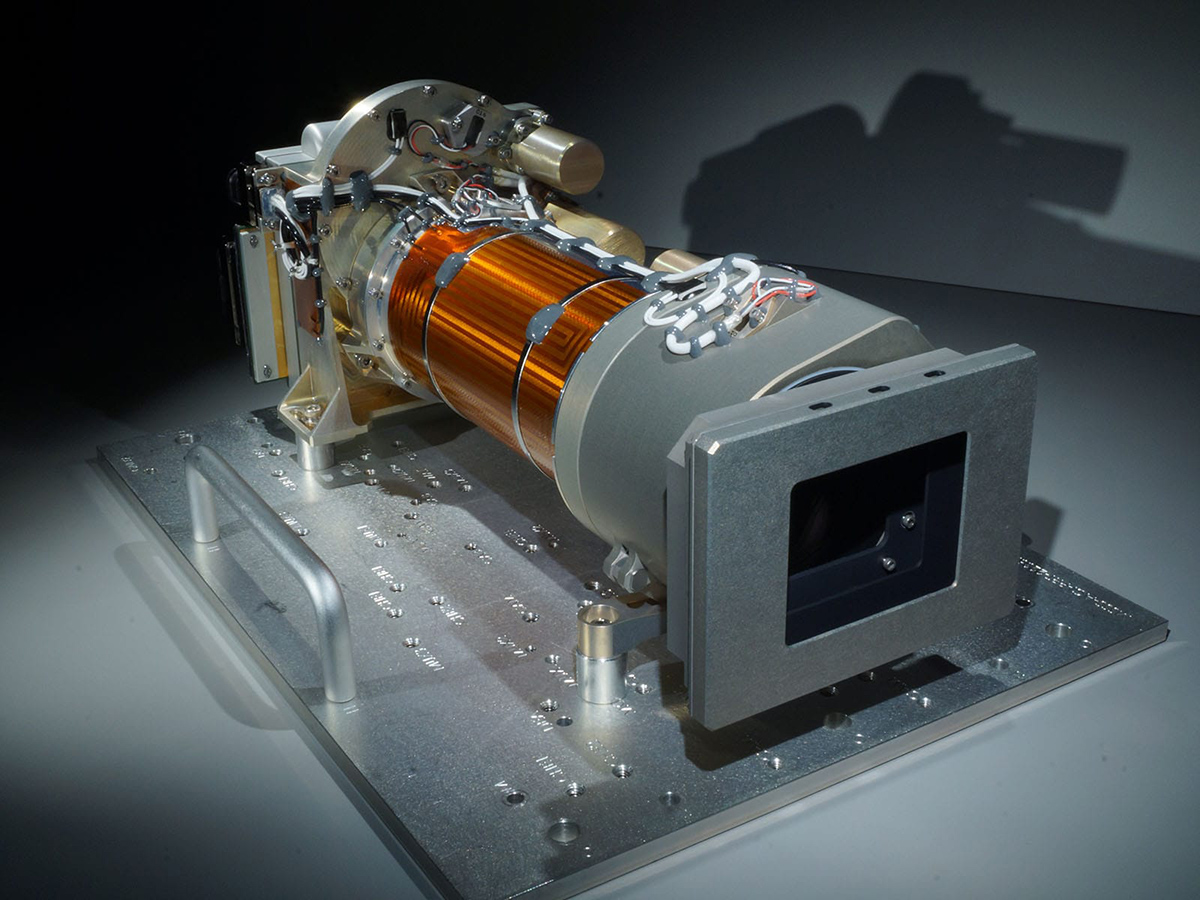
Mastcam-Z is Perseverance’s main color imaging system. It consists of twin, zoom-capable cameras mounted on the rover’s mast. The cameras can focus, zoom, and record stereo pairs for 3D views. That flexibility lets the team switch from wide panoramas to tight crops on small targets without moving the rover. Mastcam-Z produced its first 360-degree panorama on Sol 3 in February 2021, setting the standard for later surveys of Jezero’s rocks and dunes. The new “helmet” view benefits from the same design: stable optics, stereo geometry, and precise exposure control.
Jezero’s story
Jezero Crater preserves a broad delta where a river once entered a lake billions of years ago. Deltas are prime targets for astrobiology because they concentrate and bury sediments. Those sediments can preserve minerals that record water chemistry and, potentially, traces of ancient microbial life. Since landing, Perseverance has documented cross-bedded sandstones, fine-grained mudstones, and other units that support the lake-delta history inferred from orbit. Textures like spherules add another chapter by pointing to fluids, alteration, or igneous activity after those sediments formed. Context images show how materials move and break down on Mars today. Wind sorts grains, sculpts small ledges, and abrades protruding knobs. Over time, these processes can exaggerate shapes and expose internal textures. Mastcam-Z mosaics from climbs and ridgelines reveal these patterns across the crater walls and delta remnant.
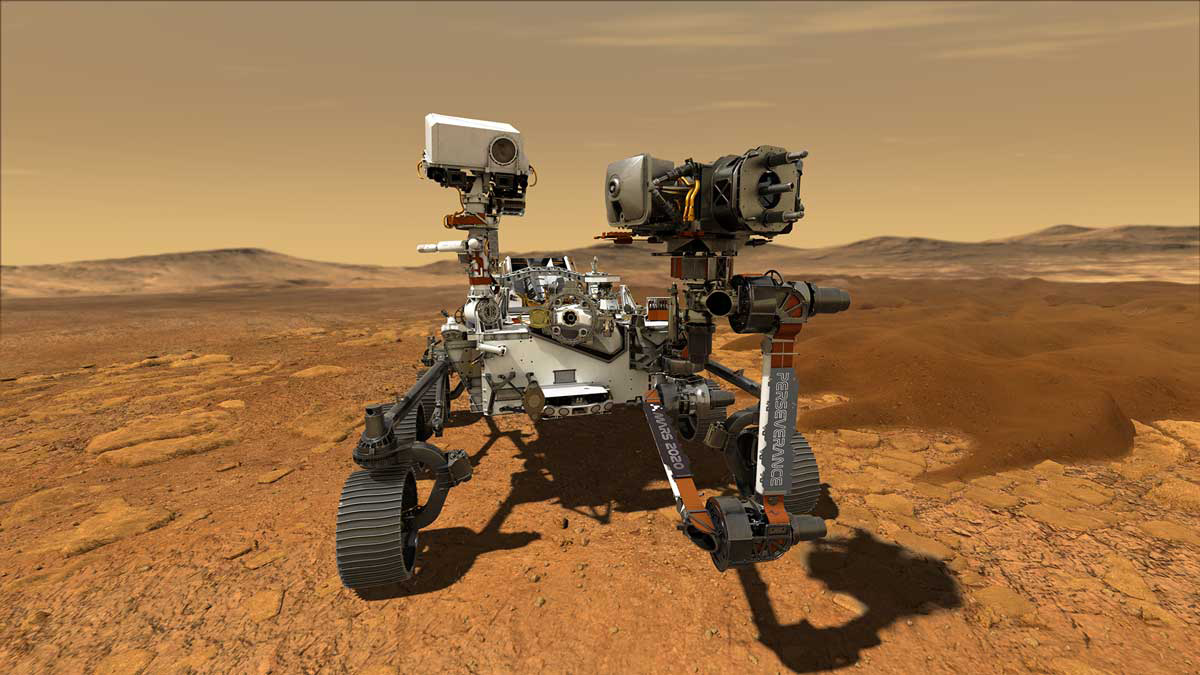
Perseverance is an astrobiology mission with a clear plan. It seeks signs of ancient microbial life. It characterizes Mars’ climate and geology. And it collects core samples for a future return to Earth. The rover has already built a sample depot and continues to core new targets as it explores the crater rim and delta remnants. Every unusual rock, including spherule-rich clasts, helps refine the location where the most informative samples can be found. The “helmet” image draws attention, but the value lies in the texture map it provides for that search.
Clear skies!
See more from DIYPhotography.net on Google
Add DIYPhotography.net as a trusted source. This makes
our stories more likely to appear in your Google Search results.
 Add as a preferred source on Google

Soumyadeep Mukherjee
Soumyadeep Mukherjee is an award-winning astrophotographer from India. He has a doctorate degree in Linguistics. His work extends to the sub-genres of nightscape, deep sky, solar, lunar and optical phenomenon photography. He is also a photography educator and has conducted numerous workshops. His works have appeared in over 40 books & magazines including Astronomy, BBC Sky at Night, Sky & Telescope among others, and in various websites including National Geographic, NASA, Forbes. He was the first Indian to win “Astronomy Photographer of the Year” award in a major category.

Join the Discussion
DIYP Comment Policy
Be nice, be on-topic, no personal information or flames.