























The Jewelled Ring in the Cosmos: JWST’s Portrait of RX J1131-1231
Aug 5, 2025
Soumyadeep Mukherjee
Soumyadeep Mukherjee is an award-winning astrophotographer from India. He has a doctorate degree in Linguistics. His work extends to the sub-genres of nightscape, deep sky, solar, lunar and optical phenomenon photography. He is also a photography educator and has conducted numerous workshops. His works have appeared in over 40 books & magazines including Astronomy, BBC Sky at Night, Sky & Telescope among others, and in various websites including National Geographic, NASA, Forbes. He was the first Indian to win “Astronomy Photographer of the Year” award in a major category.
Share:
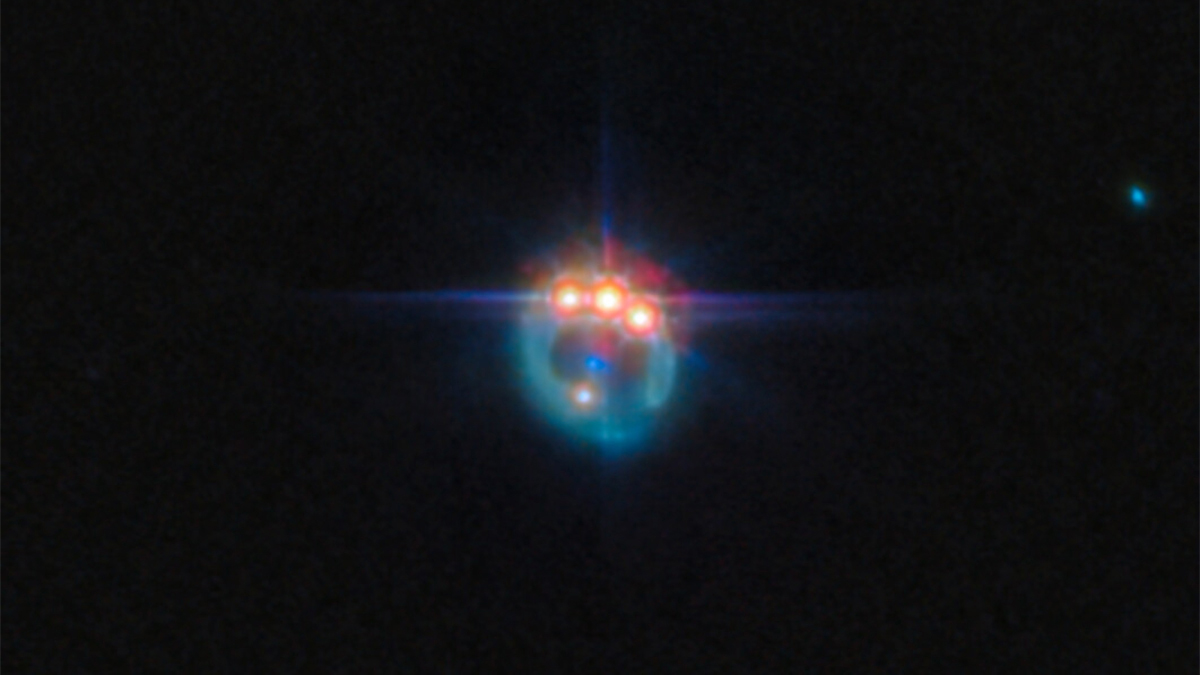
The James Webb Space Telescope never fails to amaze the world. It has photographed a stunning cosmic jewel. This image captures the gravitationally lensed quasar RX J1131-1231, located six billion light-years away in the constellation Crater. The image features a glowing ring of bright orange and a central splash of blue. These aren’t stars or galaxies clustered together. Instead, this formation is the result of a remarkable phenomenon known as gravitational lensing.
What is a gravitational lens?
A gravitational lens occurs when a massive object, such as a galaxy or a cluster, sits between Earth and a more distant source of light. The mass of the foreground object bends and magnifies the light of the background object. This creates arcs, rings, and multiple images of the same object. The effect was first predicted by Albert Einstein’s general theory of relativity. Observations in space later confirmed it. JWST’s image of RX J1131-1231 is one of the most striking examples of this effect.
The structure of the jewelled ring
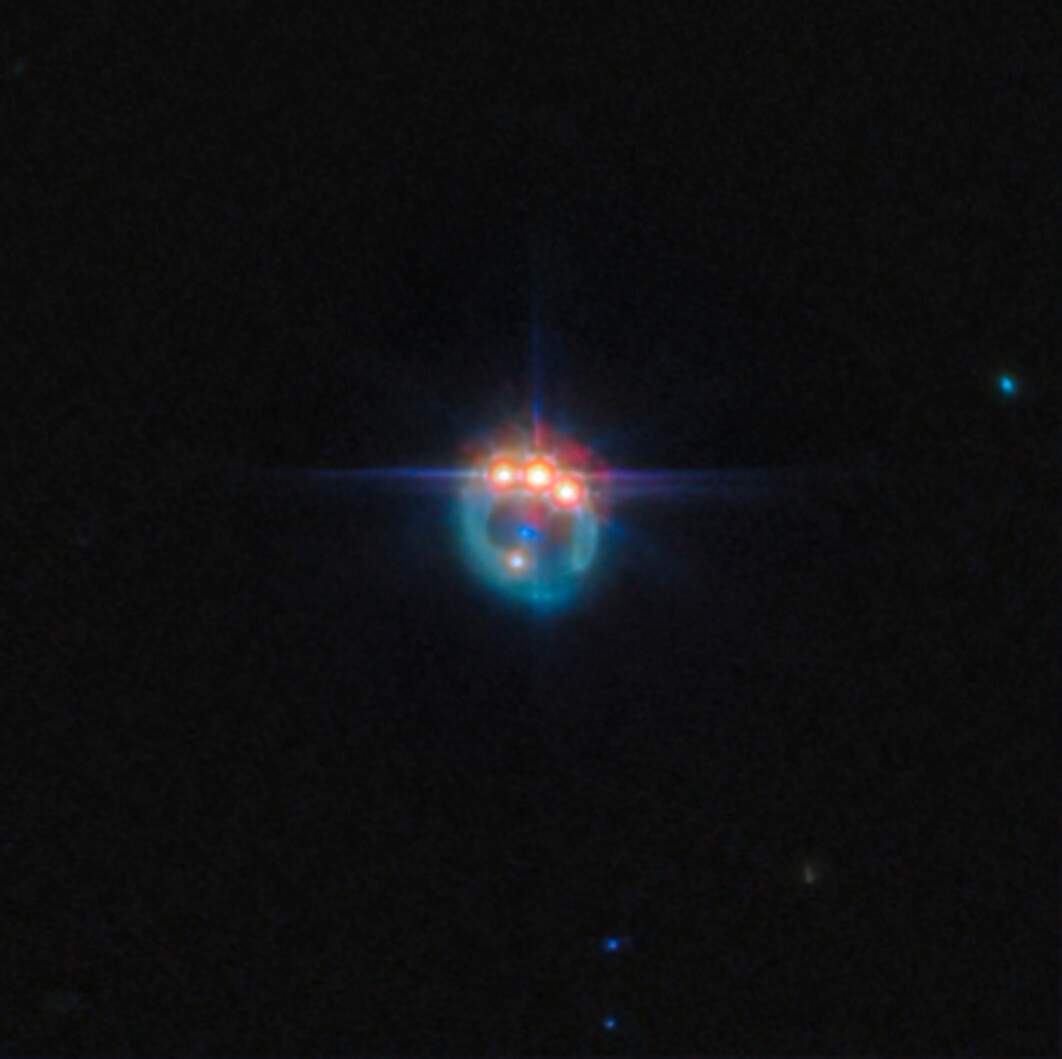
At the center of this image lies a giant elliptical galaxy. This foreground galaxy acts as the gravitational lens. Light from the distant quasar passes through this gravitational field and gets bent. As a result, we see four bright orange points surrounding the lensing galaxy. Each of these points is the same quasar, seen in different paths through space. The quasar RX J1131-1231 lies directly behind the lensing galaxy. It is one of the brightest lensed quasars known to astronomers. The lensing not only distorts its light but also magnifies it. This lets scientists study parts of the universe that would otherwise be too faint to observe. The orange “jewels” in the image are the lensed images of the quasar. The blue smudge in the center is the foreground galaxy doing the lensing. The final result resembles a jewelled ring floating in space.
Quasars: Beacons from the distant past
A quasar is a type of active galactic nucleus (AGN). It is powered by a supermassive black hole that is feeding on surrounding matter. As gas and dust fall into the black hole, they heat up and emit enormous amounts of light. Quasars are among the brightest objects in the universe. RX J1131-1231 is no exception. It lies more than halfway across the visible universe. JWST’s mid-infrared view allows astronomers to peer through dust and gas, revealing hidden structures around it. Without gravitational lensing, this quasar would be far too distant and faint to study in detail.
JWST’s mid-infrared eyes
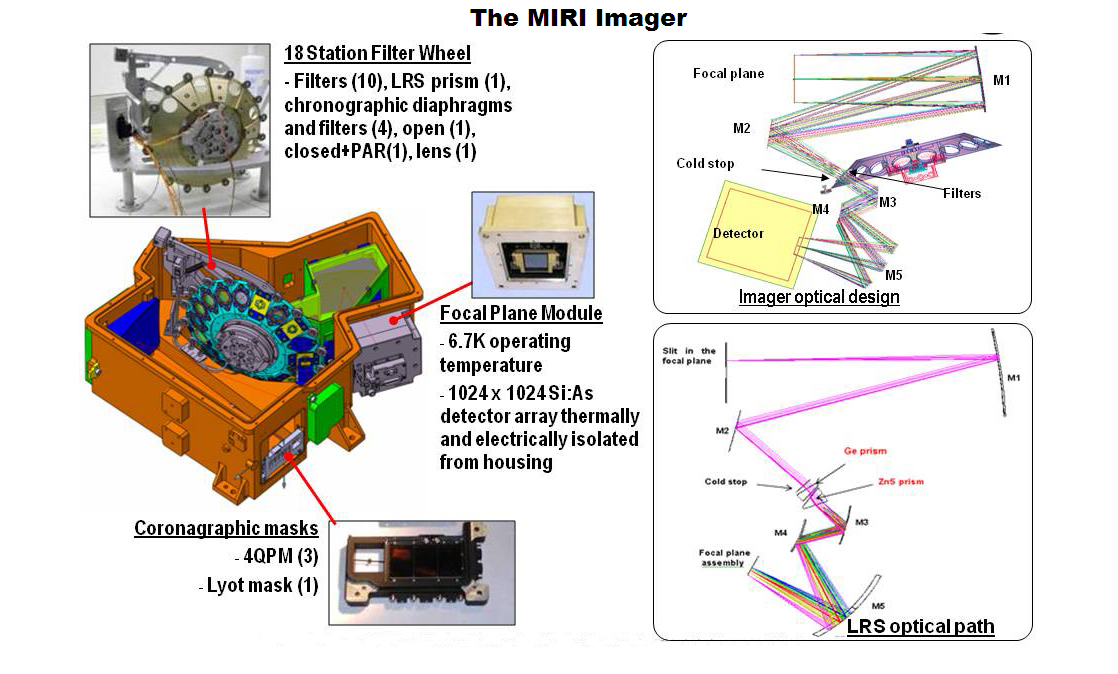
The image was captured using JWST’s Mid-Infrared Instrument (MIRI). This camera works in wavelengths between 5 and 28 microns. These wavelengths are ideal for studying cold objects like dust, as well as distant galaxies whose light is redshifted. MIRI is extremely sensitive. It can detect faint light that has travelled for billions of years. This makes it perfect for observing lensed quasars like RX J1131-1231. In this image, MIRI brings out the glowing orange of the lensed quasar images and the softer blue of the foreground galaxy. The result is a portrait that is both scientifically rich and visually stunning.
A glimpse into cosmic history
Light from RX J1131-1231 began its journey six billion years ago. That’s long before our Sun or Earth existed. Now, that light has reached us, bent and stretched by gravity, and captured by JWST. It tells a story of black holes, galaxies, and the structure of the universe. It reminds us that we live in a vast, dynamic cosmos. With tools like JWST, we are beginning to read its story in more detail than ever before.
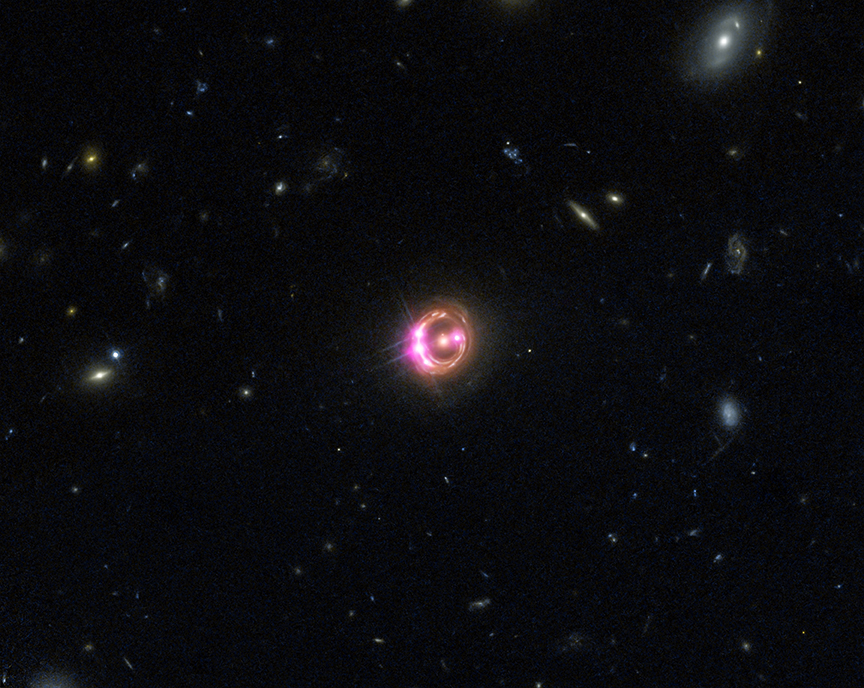
The jewelled ring around RX J1131-1231 is a bridge across time and space. It reveals the hidden workings of black holes and the invisible mass of galaxies. It shows how the universe bends light and stretches our understanding.
Clear skies!
See more from DIYPhotography.net on Google
Add DIYPhotography.net as a trusted source. This makes
our stories more likely to appear in your Google Search results.
 Add as a preferred source on Google

Soumyadeep Mukherjee
Soumyadeep Mukherjee is an award-winning astrophotographer from India. He has a doctorate degree in Linguistics. His work extends to the sub-genres of nightscape, deep sky, solar, lunar and optical phenomenon photography. He is also a photography educator and has conducted numerous workshops. His works have appeared in over 40 books & magazines including Astronomy, BBC Sky at Night, Sky & Telescope among others, and in various websites including National Geographic, NASA, Forbes. He was the first Indian to win “Astronomy Photographer of the Year” award in a major category.




Join the Discussion
DIYP Comment Policy
Be nice, be on-topic, no personal information or flames.