

























ALMA Photographs a Giant Cocoon around Stephenson 2 DFK 52
Aug 4, 2025
Soumyadeep Mukherjee
Soumyadeep Mukherjee is an award-winning astrophotographer from India. He has a doctorate degree in Linguistics. His work extends to the sub-genres of nightscape, deep sky, solar, lunar and optical phenomenon photography. He is also a photography educator and has conducted numerous workshops. His works have appeared in over 40 books & magazines including Astronomy, BBC Sky at Night, Sky & Telescope among others, and in various websites including National Geographic, NASA, Forbes. He was the first Indian to win “Astronomy Photographer of the Year” award in a major category.
Share:
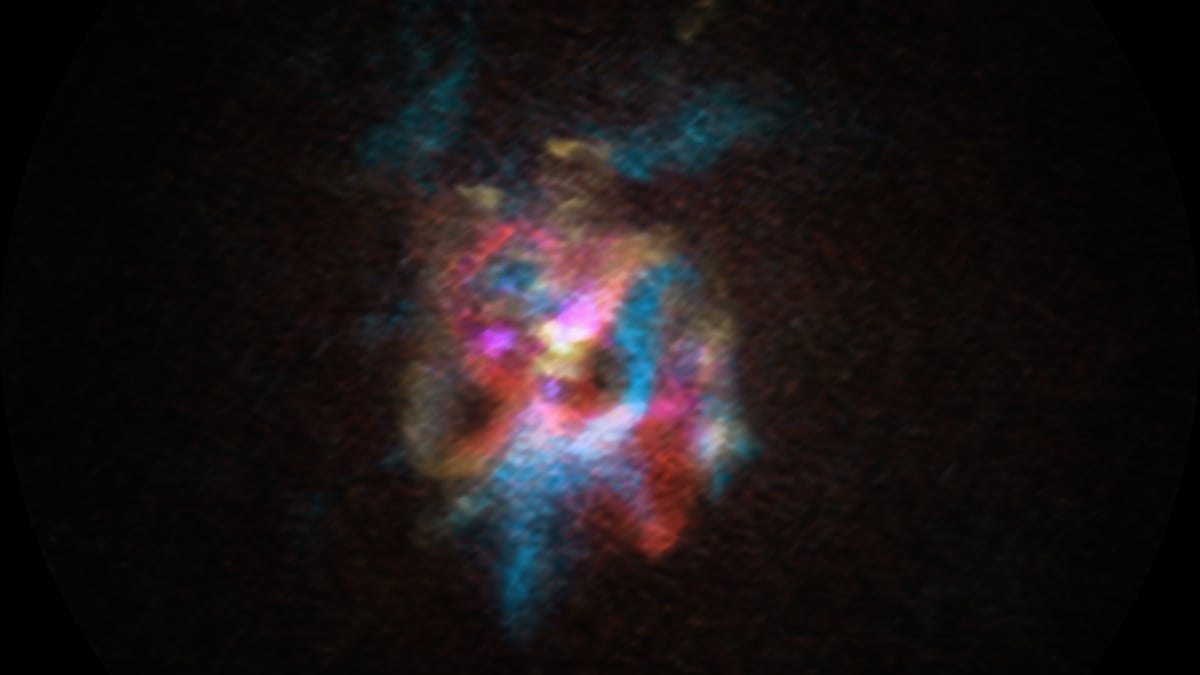
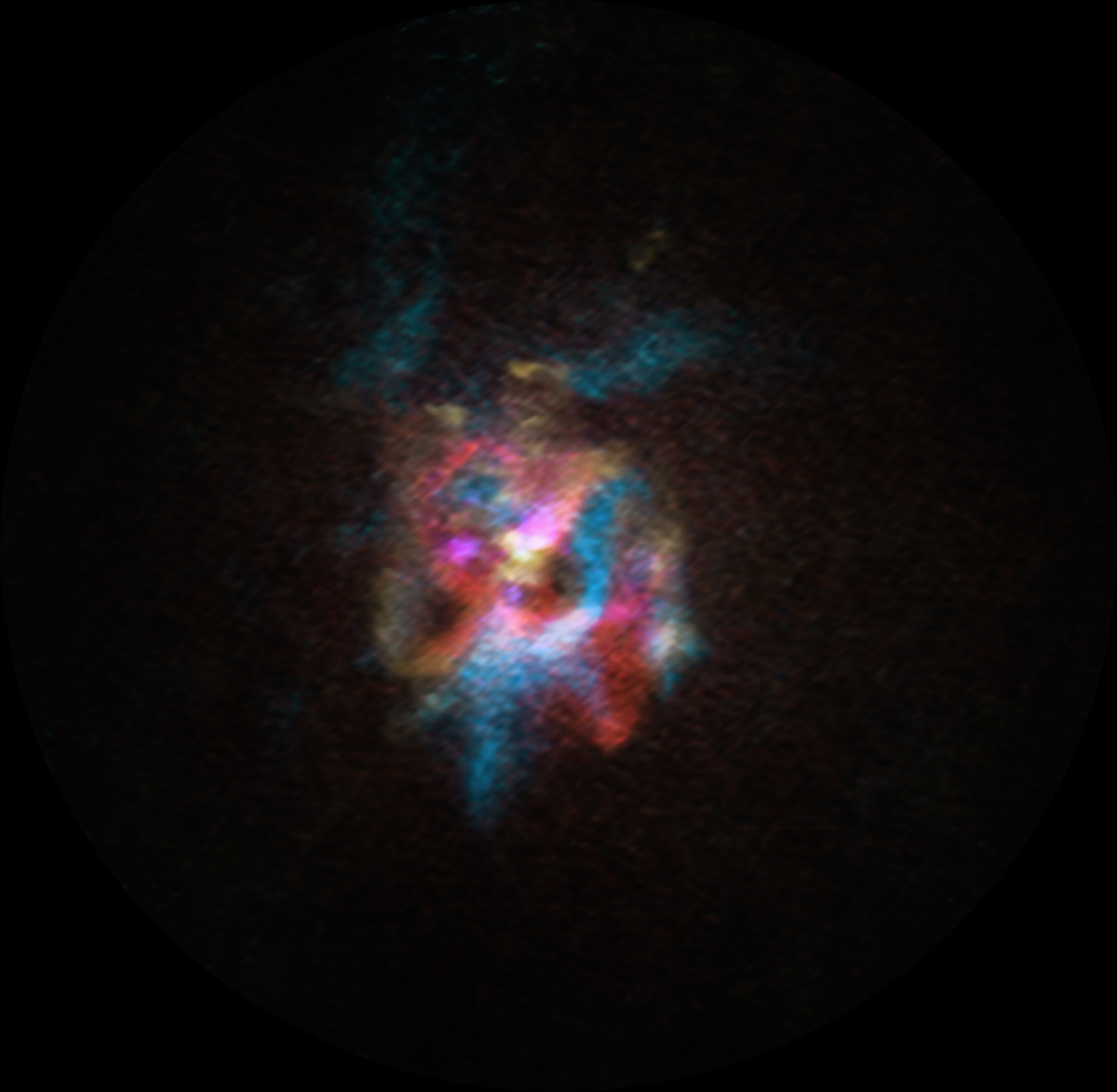
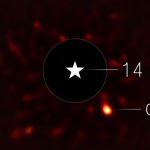
Deep in the Milky Way, nestled in the rich stellar cluster Stephenson 2, lies a massive red supergiant named Stephenson 2 DFK 52. This giant star has recently stunned astronomers with a breathtaking and rare sight, a vast, swirling shell of gas and dust enveloping it. Captured by the Atacama Large Millimeter/submillimeter Array (ALMA), the image reveals secrets about the late life of massive stars. This glowing cocoon is not just beautiful. It is scientifically vital. It provides new insights into how red supergiants evolve, lose mass, and prepare for a spectacular end: a supernova explosion.
A red supergiant in the spotlight
Stephenson 2 DFK 52 is no ordinary star. It is a red supergiant, a type of star that has entered the final stages of its life. These stars are massive; DFK 52 likely began with 10 to 15 times the mass of the Sun. As they age, they swell to enormous sizes and begin to shed their outer layers into space. ALMA’s image of Stephenson 2 DFK 52 is extraordinary. It shows an irregular, wispy structure surrounding the star. This cloud of material, made mostly of carbon monoxide gas, is the result of a powerful ejection event. It spans nearly 1.4 light-years. That’s almost 15 trillion kilometers, or about 900 times the distance between Earth and the Sun.
The image released by the European Southern Observatory (ESO) uses color to show motion. Blue areas represent gas moving toward Earth. Red areas show gas moving away. This Doppler effect helps scientists understand the dynamics of the shell. The shell’s shape is chaotic. It’s not a perfect sphere. Some parts are stretched. Others seem compressed or twisted. This suggests that the ejection was not a quiet event. Something disrupted it, maybe a companion star or complex magnetic fields.
A historic ejection
Astronomers believe the shell was formed about 4,000 years ago. During that time, the star expelled a huge portion of its mass in a short burst. This single event may have stripped away 5 to 10 percent of the star’s total mass. Since then, Stephenson 2 DFK 52 has calmed down. It now loses mass more gently, at a rate similar to Betelgeuse, another famous red supergiant. But this brief, violent episode continues to puzzle scientists.
ALMA’s role in the discovery
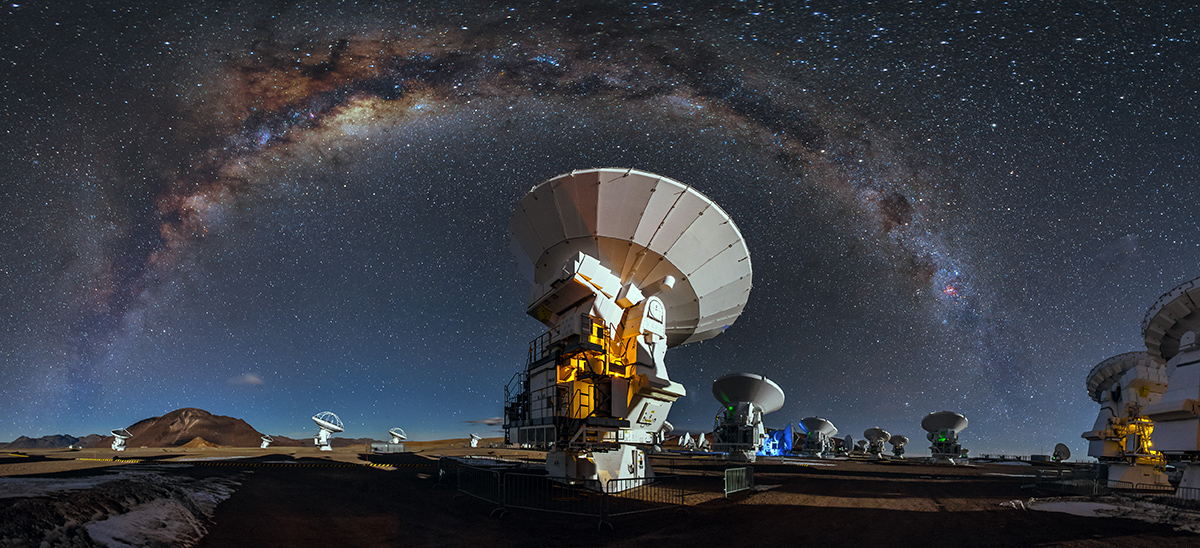
The Atacama Large Millimeter/submillimeter Array, or ALMA, made this discovery possible. Located in Chile’s high-altitude Atacama Desert, ALMA is one of the world’s most advanced radio observatories. ALMA observes the sky in millimeter and submillimeter wavelengths. These wavelengths are especially good at detecting cold gases, such as carbon monoxide. Optical telescopes can’t see this material well, especially when it’s cool and faint. By mapping the velocity and distribution of the gas, ALMA gives us a 3D view of the shell. This lets astronomers reconstruct the event in detail. Without ALMA, this massive cocoon might have remained hidden.
Final thoughts: A dying giant’s gift
Stephenson 2 DFK 52 is a giant nearing the end of its life. It may explode in the far future, but it’s already shaping its legacy. The massive shell it released is a final breath captured in cosmic stillness. Thanks to ALMA and ESO, we now see this breath in extraordinary detail. We can study the flow of gas, the structure of the shell, and the clues to what triggered such a vast eruption. This discovery doesn’t just deepen our understanding of red supergiants. It strengthens our connection to the stars. Their story is our story too, one of change, loss, rebirth, and awe.
Clear skies!
See more from DIYPhotography.net on Google
Add DIYPhotography.net as a trusted source. This makes
our stories more likely to appear in your Google Search results.
 Add as a preferred source on Google

Soumyadeep Mukherjee
Soumyadeep Mukherjee is an award-winning astrophotographer from India. He has a doctorate degree in Linguistics. His work extends to the sub-genres of nightscape, deep sky, solar, lunar and optical phenomenon photography. He is also a photography educator and has conducted numerous workshops. His works have appeared in over 40 books & magazines including Astronomy, BBC Sky at Night, Sky & Telescope among others, and in various websites including National Geographic, NASA, Forbes. He was the first Indian to win “Astronomy Photographer of the Year” award in a major category.

Join the Discussion
DIYP Comment Policy
Be nice, be on-topic, no personal information or flames.