

























Gemini North Photographs Betelgeuse’s Hidden Companion
Jul 27, 2025
Soumyadeep Mukherjee
Soumyadeep Mukherjee is an award-winning astrophotographer from India. He has a doctorate degree in Linguistics. His work extends to the sub-genres of nightscape, deep sky, solar, lunar and optical phenomenon photography. He is also a photography educator and has conducted numerous workshops. His works have appeared in over 40 books & magazines including Astronomy, BBC Sky at Night, Sky & Telescope among others, and in various websites including National Geographic, NASA, Forbes. He was the first Indian to win “Astronomy Photographer of the Year” award in a major category.
Share:
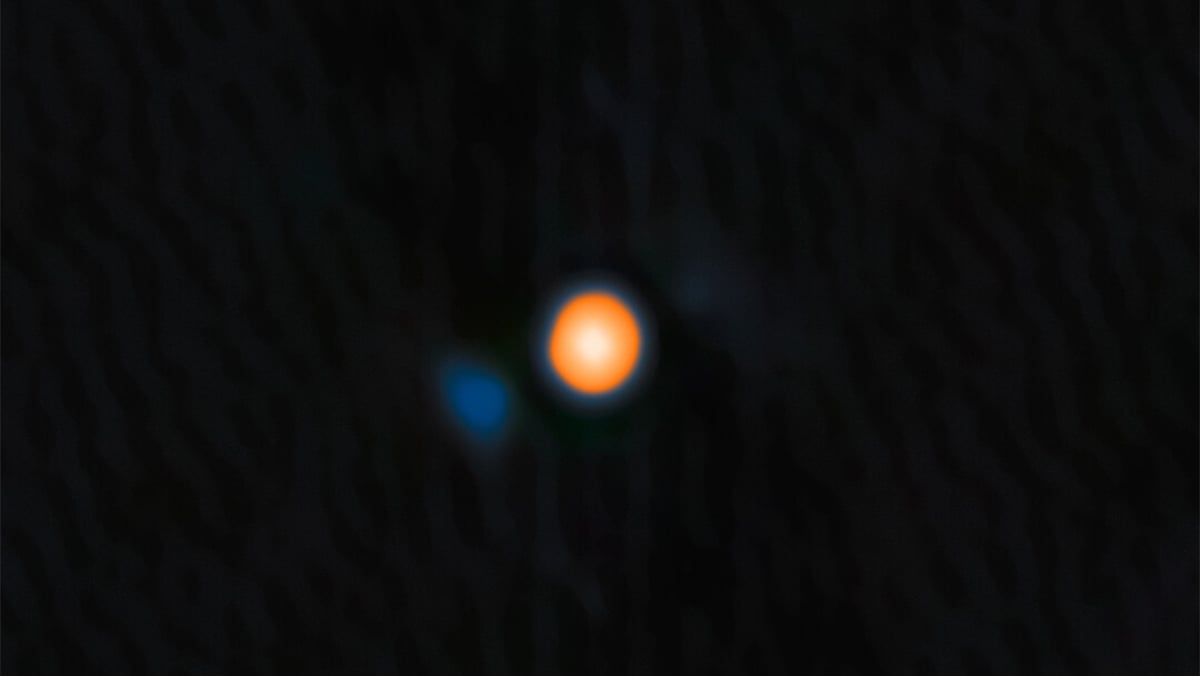
Betelgeuse has always fascinated astronomers. It is one of the brightest stars in the night sky. It shines red in the constellation Orion and marks the hunter’s shoulder. However, in recent years, Betelgeuse has exhibited unusual behavior. Its brightness dimmed. Then it returned. This behavior puzzled scientists for over a decade. Now, a major discovery by astronomers at NOIRLab has provided a stunning answer. Betelgeuse has a close companion star. This hidden neighbor may be the cause of Betelgeuse’s strange brightness cycle. The finding could change our understanding of how massive stars live and die.
A supergiant star in our backyard
Betelgeuse is no ordinary star. It is a red supergiant. It’s nearing the end of its life. Astronomers expect it to go supernova one day. When that happens, it will shine as bright as the Moon. The star is about 700 light-years away. It is roughly 700 times larger than the Sun. If placed in the center of our Solar System, it would reach beyond Jupiter. Betelgeuse is also very bright, about 100,000 times more luminous than the Sun. But unlike the steady light of most stars, Betelgeuse pulses and dims. It has two main brightness cycles. One lasts around 400 days. The other is much longer, about six years. Scientists have long understood the short cycle. But the longer one remained a mystery. Some guessed a hidden companion caused it. But no one could find it until now.
‘Alopeke cracks the case
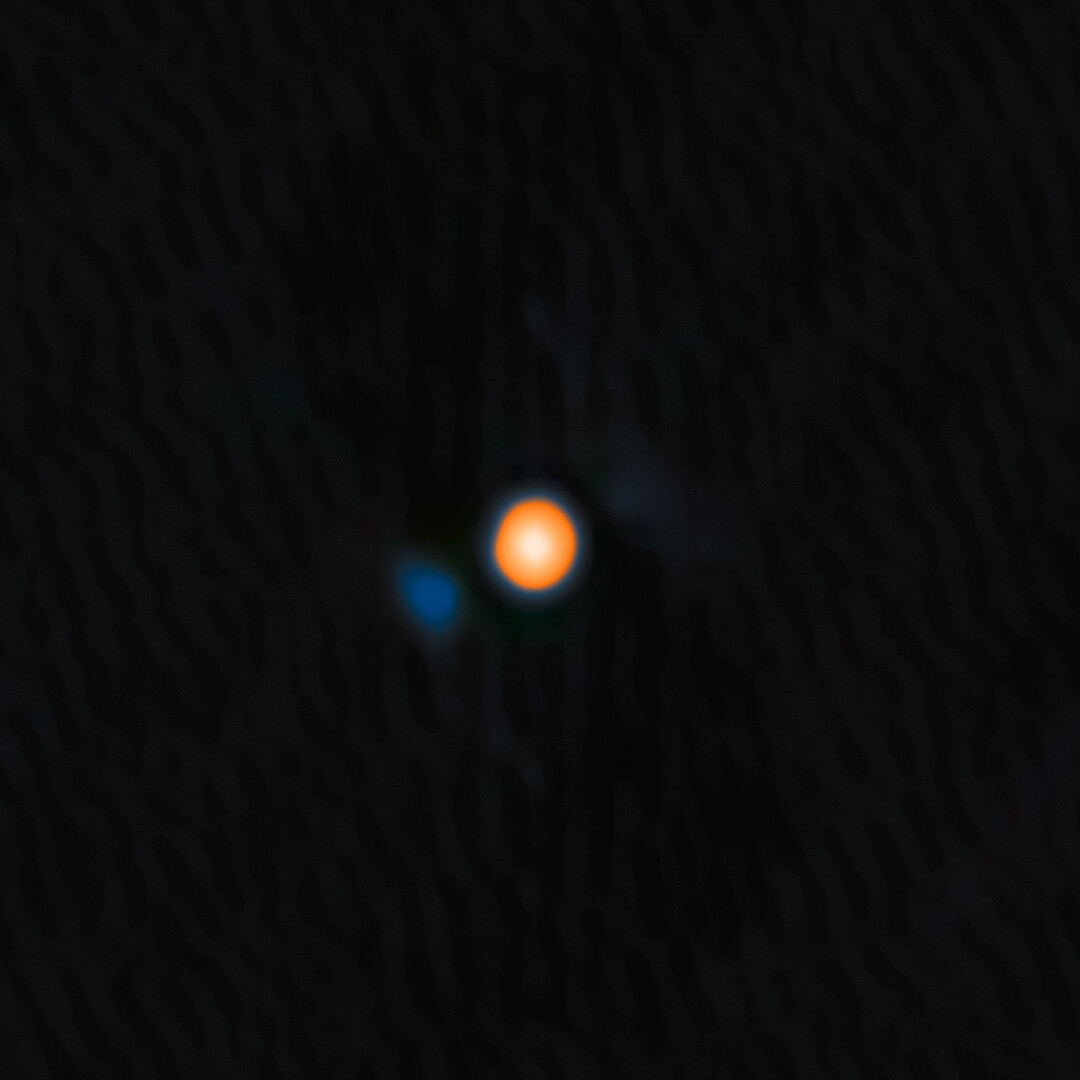
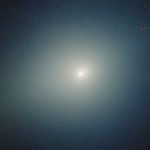
The breakthrough came from the Gemini North telescope in Hawaii. This 8.1-meter telescope is part of the International Gemini Observatory, operated by NSF’s NOIRLab. Attached to it is a special instrument called ‘Alopeke. ‘Alopeke uses a method called speckle imaging. This technique takes thousands of fast images of a star. It then combines them to remove the blurring effect of Earth’s atmosphere. This allows it to spot tiny details at very high resolution. In 2023, a team led by Dr. Michael Ireland of the Australian National University used ‘Alopeke to look at Betelgeuse. They weren’t expecting a huge find. But what they saw surprised everyone. They detected a faint object very close to Betelgeuse. It was orbiting the star, likely within its extended atmosphere. The team had found the long-suspected companion.

Meet Betelgeuse’s companion
The newly discovered star is much smaller than Betelgeuse. It is about six magnitudes fainter. That means it is over 250 times dimmer in visible light. The team estimates its mass to be around 1.5 times that of the Sun. That makes it an A- or B-type main sequence star. Or it might be a pre-main-sequence star. The companion orbits at a distance of just four astronomical units (AU). One AU is the distance between Earth and the Sun. So this star orbits at four times that, roughly the same distance as Jupiter from the Sun. For comparison, Betelgeuse’s radius is already more than 3 AU. This means the companion moves through its extended atmosphere.
Explaining the mysterious six-year cycle
This companion could explain Betelgeuse’s strange six-year brightness cycle. Scientists believe the companion may stir the atmosphere of Betelgeuse during its orbit. This may create waves or hot spots that change the star’s brightness. The gravity of the companion might also cause mass loss. Betelgeuse is known to shed large amounts of material. These could form clouds that briefly block its light. In 2019, Betelgeuse famously dimmed so much that people thought it might go supernova. But the dimming was likely caused by a dust cloud. This could have come from the same companion interaction. So the discovery helps explain not only long-term patterns, but sudden events too.
Why did it take so long to find
You might wonder why astronomers didn’t spot this companion earlier. After all, Betelgeuse is one of the most observed stars. It has been studied by telescopes around the world and in space, including Hubble, Chandra, and ALMA. But the problem is Betelgeuse itself. It is huge, bright, and surrounded by gas and dust. Its surface boils with convection cells. Its outer layers are not well defined. These features hide anything close to it. Even the Hubble Space Telescope couldn’t resolve the companion. But ‘Alopeke’s speckle imaging was the perfect tool. It could cancel out the fuzziness caused by the atmosphere. And it could isolate small details very close to the star. That’s how it revealed the companion at last.
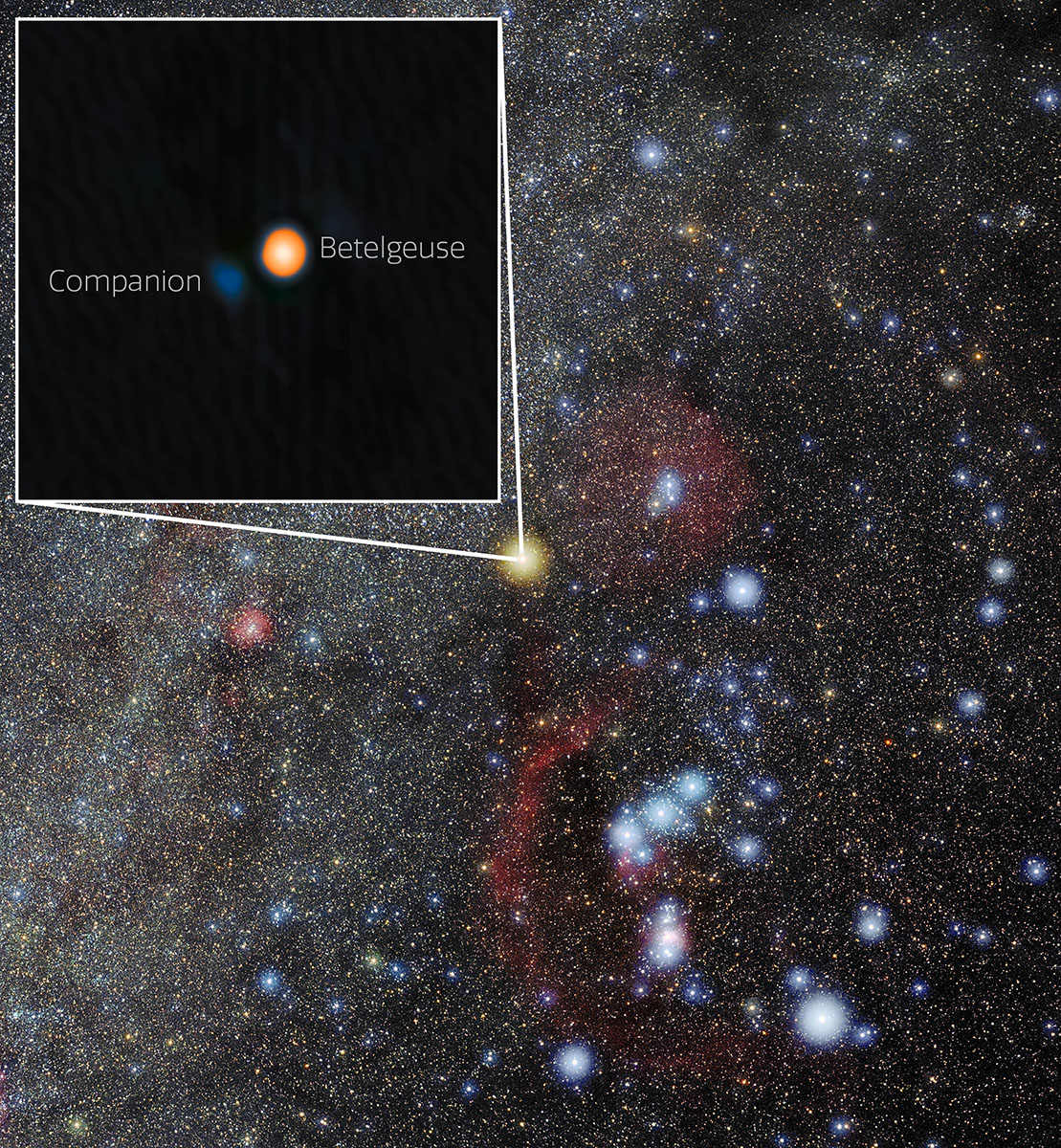
Thanks to the sharp eye of ‘Alopeke and the power of Gemini North, astronomers have solved a mystery that lasted for years. They have uncovered a hidden neighbor next to one of the most famous stars in the sky. And in doing so, they’ve opened a new window into the lives and deaths of the most massive stars in our galaxy.
Clear skies!
See more from DIYPhotography.net on Google
Add DIYPhotography.net as a trusted source. This makes
our stories more likely to appear in your Google Search results.
 Add as a preferred source on Google

Soumyadeep Mukherjee
Soumyadeep Mukherjee is an award-winning astrophotographer from India. He has a doctorate degree in Linguistics. His work extends to the sub-genres of nightscape, deep sky, solar, lunar and optical phenomenon photography. He is also a photography educator and has conducted numerous workshops. His works have appeared in over 40 books & magazines including Astronomy, BBC Sky at Night, Sky & Telescope among others, and in various websites including National Geographic, NASA, Forbes. He was the first Indian to win “Astronomy Photographer of the Year” award in a major category.

Join the Discussion
DIYP Comment Policy
Be nice, be on-topic, no personal information or flames.