




















The Fiery Heart of the Cigar Galaxy: JWST’s View of Messier 82
Jun 30, 2025
Soumyadeep Mukherjee
Soumyadeep Mukherjee is an award-winning astrophotographer from India. He has a doctorate degree in Linguistics. His work extends to the sub-genres of nightscape, deep sky, solar, lunar and optical phenomenon photography. He is also a photography educator and has conducted numerous workshops. His works have appeared in over 40 books & magazines including Astronomy, BBC Sky at Night, Sky & Telescope among others, and in various websites including National Geographic, NASA, Forbes. He was the first Indian to win “Astronomy Photographer of the Year” award in a major category.
Share:
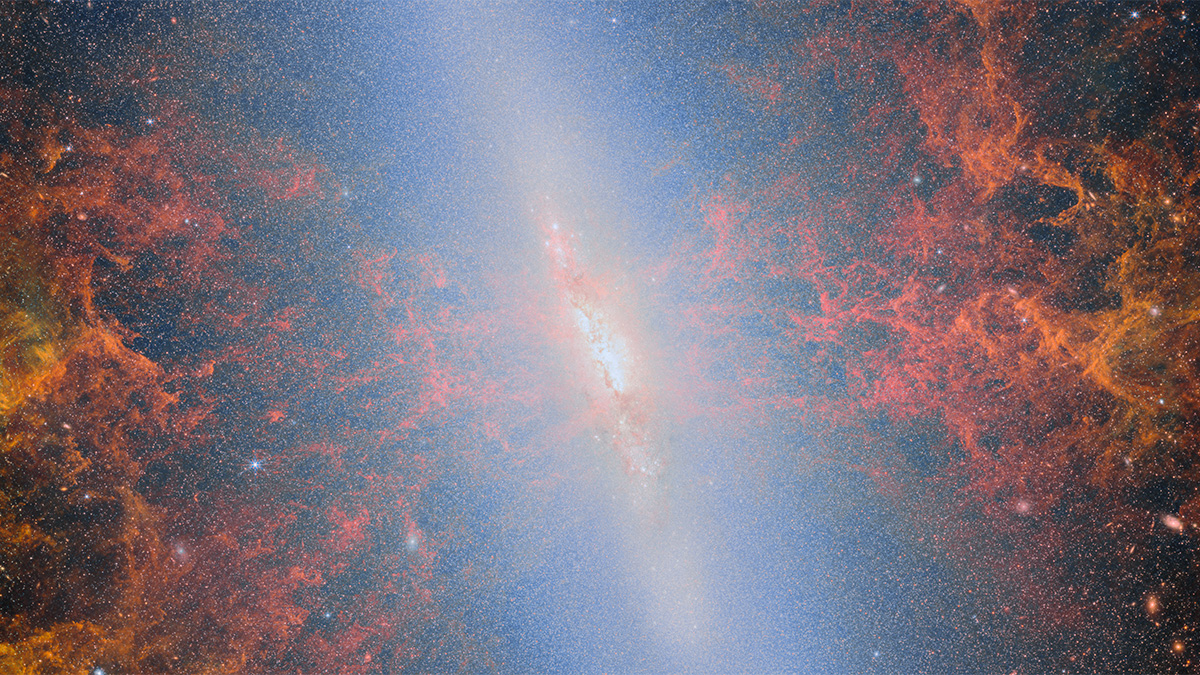
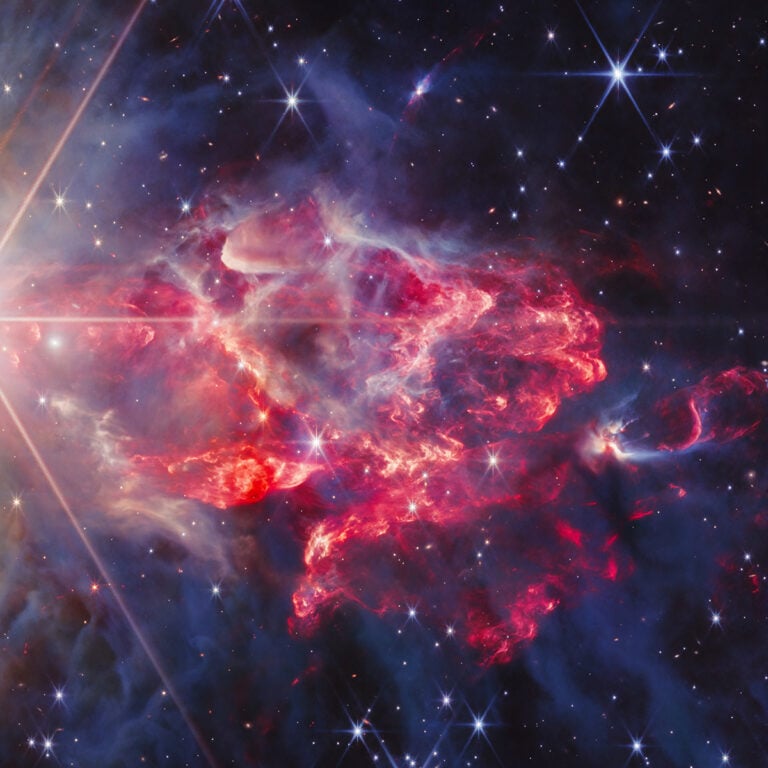
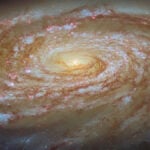
Recently, the European Space Agency (ESA) and NASA released a breathtaking image of Messier 82, also known as the Cigar Galaxy. Captured by the James Webb Space Telescope (JWST), this image reveals details never seen before. Using its Near-InfraRed Camera (NIRCam) and Mid-Infrared Instrument (MIRI), JWST peered through dense cosmic dust to show a starburst galaxy in full action.
A galaxy on fire
Messier 82 lies about 12 million light-years away in the constellation Ursa Major. It was discovered in 1774 by Johann Elert Bode. The galaxy is roughly 37,000 light-years across, much smaller than the Milky Way. Yet, it is five times more luminous. M82 is a starburst galaxy. That means it forms stars at an exceptionally high rate. In fact, it produces stars ten times faster than our own galaxy. This intense activity happens mostly in its central regions. Until now, much of that was hidden behind clouds of dust. JWST’s infrared capabilities allow scientists to see through that dust. The result is an astonishing view of the galaxy’s heart. We see plumes of gas and dust, glowing filaments, and powerful outflows. The core appears to be boiling with energy.
JWST’s infrared vision
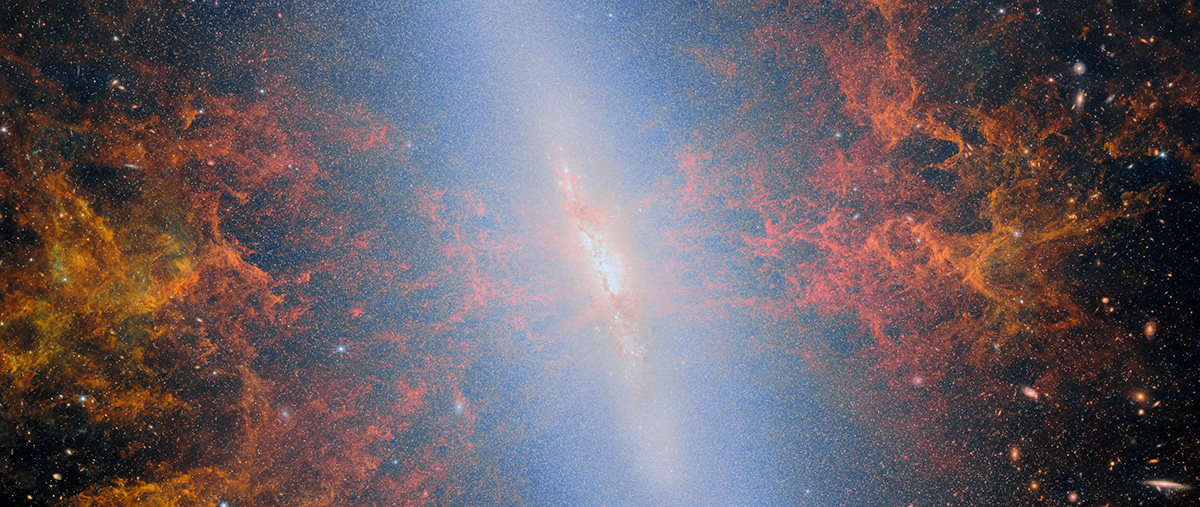
Visible light cannot pass through thick dust clouds. But infrared light can. This is why JWST is so powerful. It can reveal what was previously invisible. In this image, JWST uses NIRCam and MIRI to detect light in several infrared bands. This includes emissions from:
- Polycyclic Aromatic Hydrocarbons (PAHs)
- Ionized hydrogen gas
- Iron and other heavy elements
- Methane and other organic molecules
PAHs are complex organic molecules. They often form in the aftermath of star formation. They glow in the infrared and help trace the flow of energy in galaxies. The image shows bright pink and orange filaments. These are PAH-rich outflows, stretching far from the galaxy’s disk. Some of these filaments are over 160 light-years wide.
Super star clusters
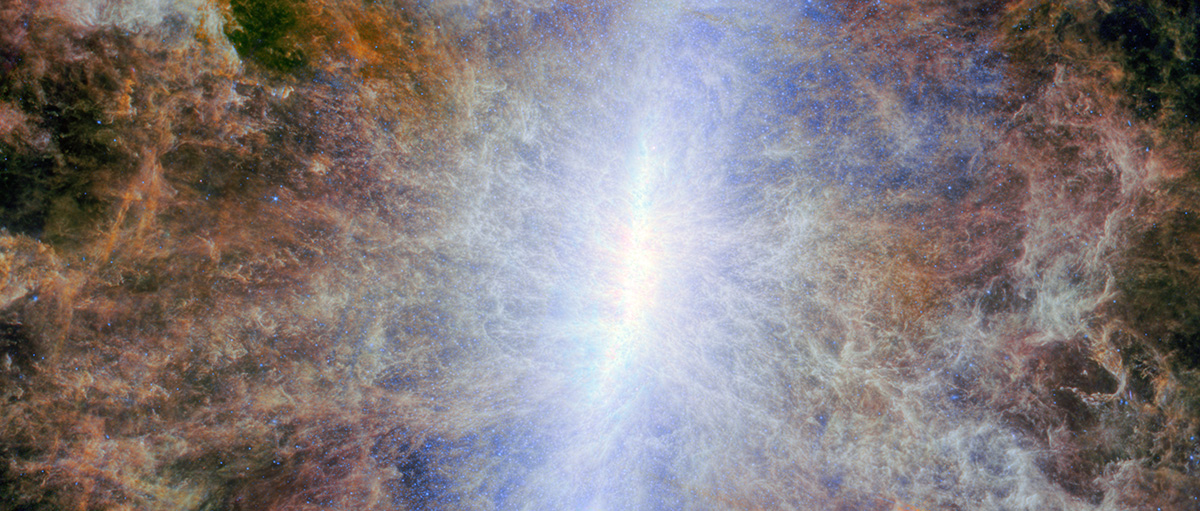
At the core of M82 lie dozens of super star clusters. These are huge groups of newly born stars. Each cluster contains hundreds of thousands of stars. They are only a few million years old. The energy from these young stars heats the surrounding gas and dust. This creates powerful winds. The winds push material out of the galaxy’s center. This process is called a galactic superwind.
In M82, this wind forms spectacular plumes. These appear as reddish-brown clouds in the image. They stretch above and below the galaxy’s plane. JWST resolved many fine structures inside these plumes. Some cloudlets are 16 to 49 light-years across. This level of detail was not possible before. The Hubble Space Telescope had revealed hints of these structures. But JWST shows them with much higher clarity.
A history of cosmic collisions
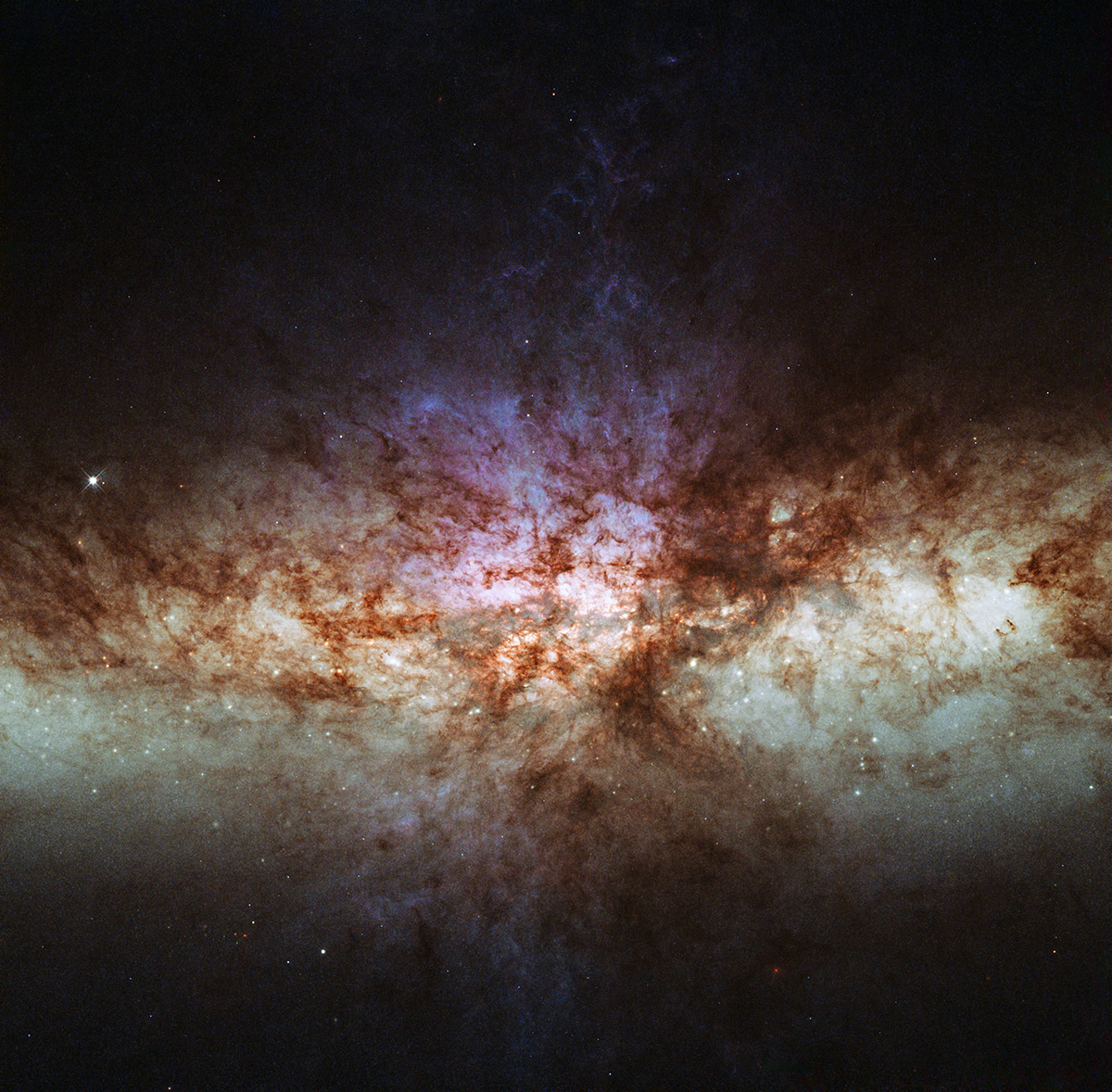
Why is M82 forming stars so rapidly? The answer lies in its past. M82 has interacted with its massive neighbor, Messier 81 (M81). About 100 million years ago, the two galaxies had a close encounter. That gravitational interaction disturbed M82’s gas and dust. It triggered massive flows of material into the galaxy’s center. This started a chain reaction of star formation. It transformed M82 into a starburst galaxy. These kinds of interactions are common in the universe. Galaxies collide and merge throughout cosmic history. M82 is a nearby laboratory to study such events in detail.
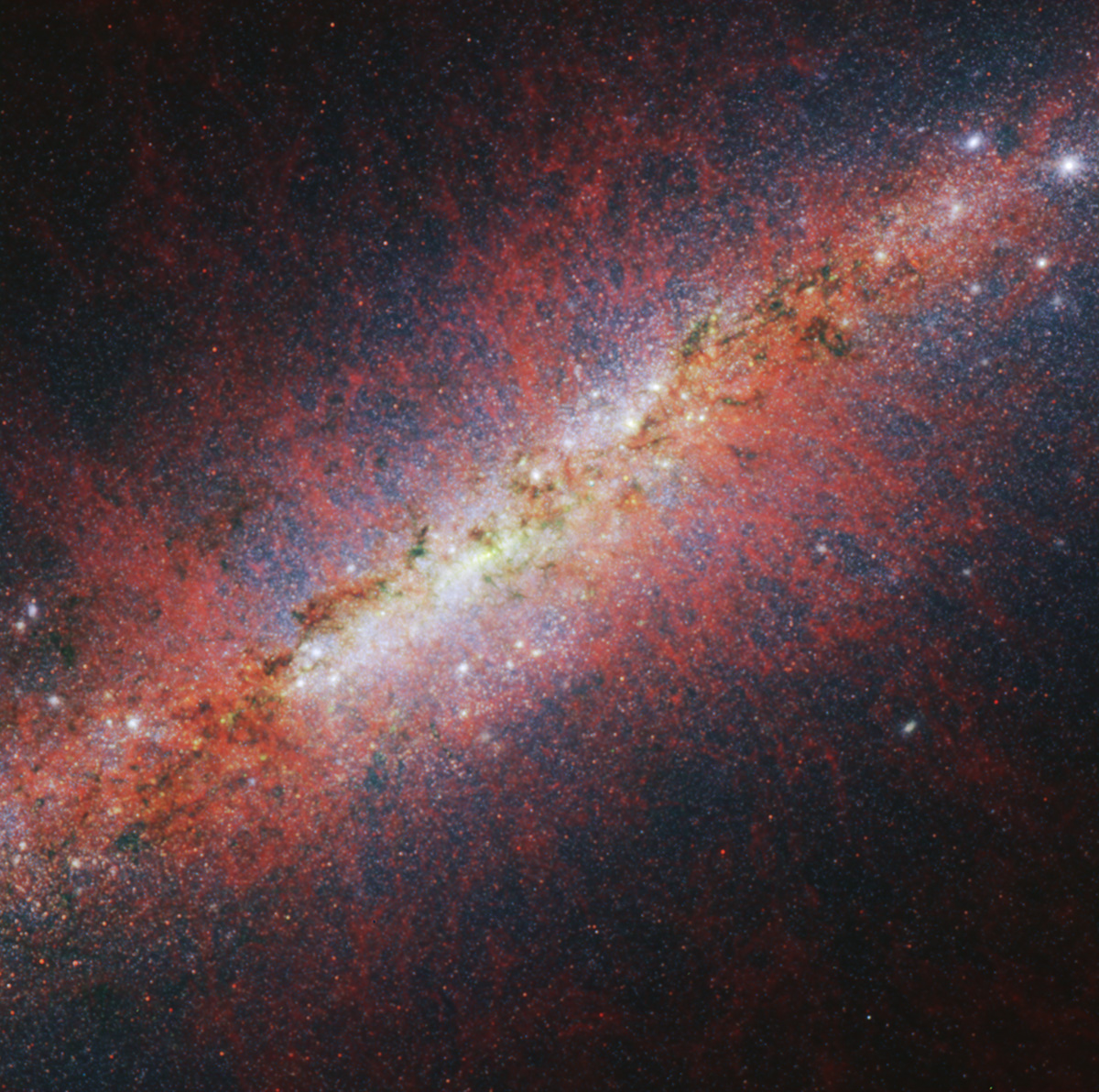
The James Webb Space Telescope’s view of Messier 82 is beyond beautiful. It shows the galaxy like never before. We see a cosmic furnace glowing with starbirth. We see winds, filaments, and plumes, all sculpted by gravity and light.
Clear skies!
See more from DIYPhotography.net on Google
Add DIYPhotography.net as a trusted source. This makes
our stories more likely to appear in your Google Search results.
 Add as a preferred source on Google

Soumyadeep Mukherjee
Soumyadeep Mukherjee is an award-winning astrophotographer from India. He has a doctorate degree in Linguistics. His work extends to the sub-genres of nightscape, deep sky, solar, lunar and optical phenomenon photography. He is also a photography educator and has conducted numerous workshops. His works have appeared in over 40 books & magazines including Astronomy, BBC Sky at Night, Sky & Telescope among others, and in various websites including National Geographic, NASA, Forbes. He was the first Indian to win “Astronomy Photographer of the Year” award in a major category.
Join the Discussion
DIYP Comment Policy
Be nice, be on-topic, no personal information or flames.