


















SmallRig RC 60C is a compact 60W RGB LED light with USB-PD charging
Oct 16, 2024
John Aldred
John Aldred is a photographer with over 25 years of experience in the portrait and commercial worlds. He is based in Scotland and has been an early adopter – and occasional beta tester – of almost every digital imaging technology in that time. As well as his creative visual work, John uses 3D printing, electronics and programming to create his own photography and filmmaking tools and consults for a number of brands across the industry.
Share:

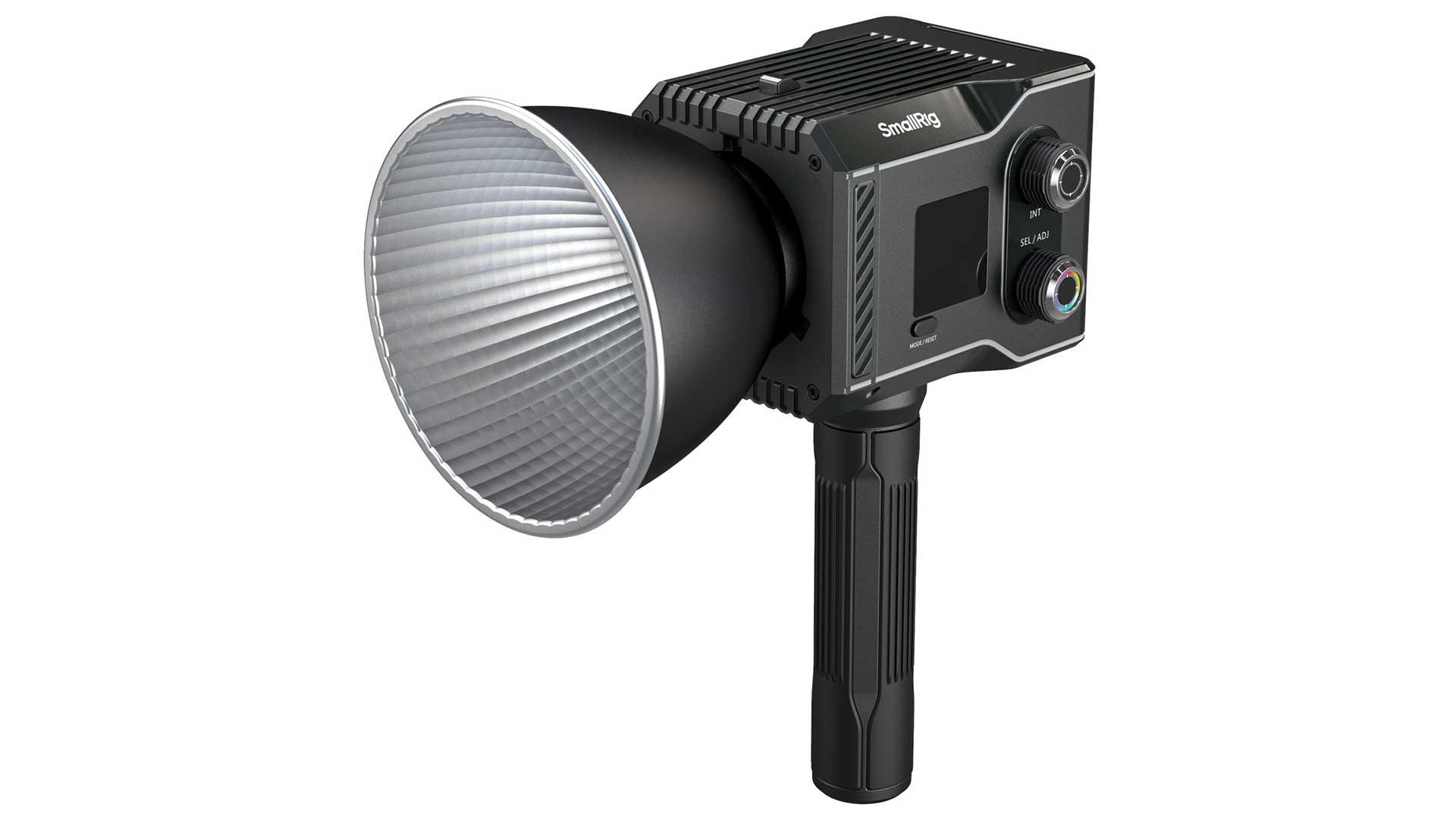
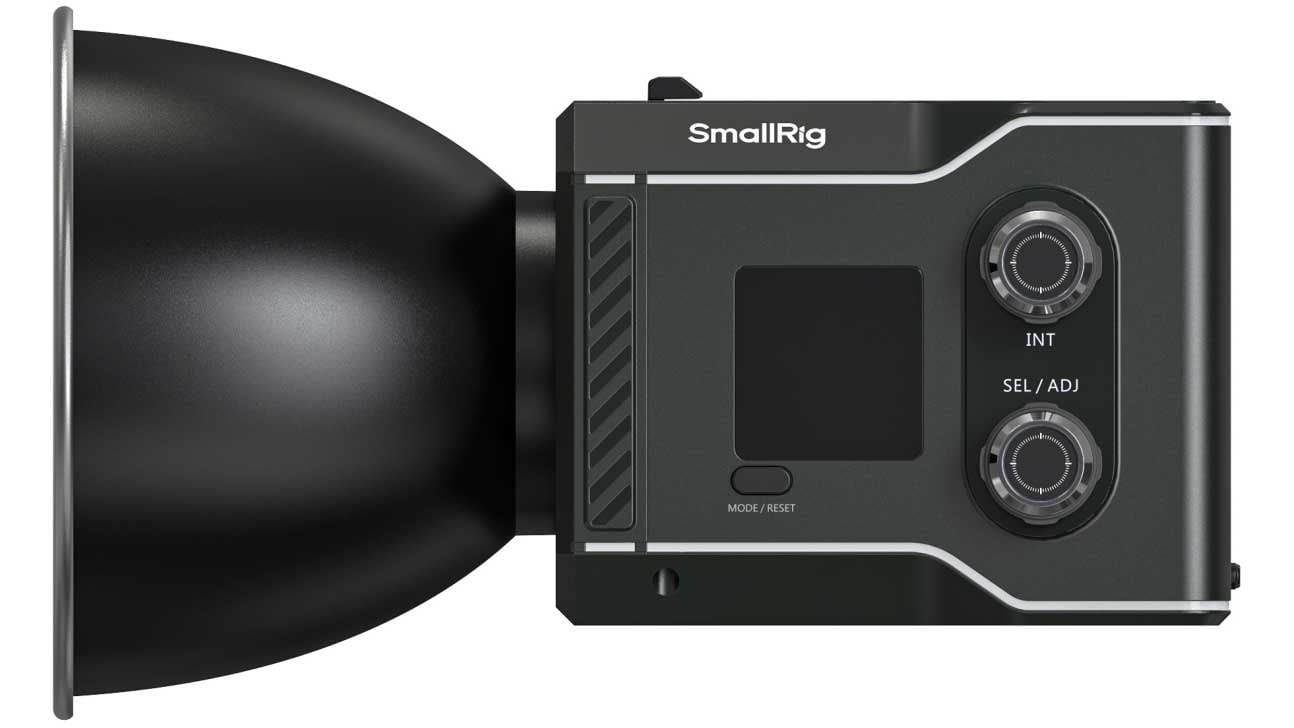
SmallRig has announced the RC60C RGB LED video light ($179+). As the name suggests, it’s an RGB LED light. But it’s quite compact compared to others on the market, and it has a built-in battery that can be charged over USB Power Delivery (USB-PD).
As an RGB light, it also has a very wide colour temperature range from 2500K all the way up to 10000K with green/magenta adjustment. Gel modes for both Rosco and Lee are included, along with HSI, RGBCW and colour-picking modes.
SmallRig RC 60C RGB LED Light
The SmallRig RC 60C RGB LED light is a “palm-sized” (SmallRig’s words) LED light designed for photographers, content creators or anyone else who needs a compact and portable RGB LED light they can take anywhere. It has a CRI of 96+ and TLCI of 97+.
You get 45 minutes of life using the built-in battery or 75 minutes in Eco mode. Charging goes from flat to full in 2 hours using 65W USB-PD, but it looks like you can also power the light from USB-PD, too. So, if you need longer running times, you can plug into a suitable USB-PD charger, or keep swapping power banks every so often, using the internal battery to keep the light going during the swap.
It has a wide colour temperature range of 2500K to 10000K, with 2,430 lux at its maximum white brightness at 6900K. At a more practical 5600K daylight, it puts out 2,350 lux, and at 3200K tungsten, you get 1,980 lux. For colour, red, green and blue offer 257 lux, 1,120 lux and 266 lux, respectively.
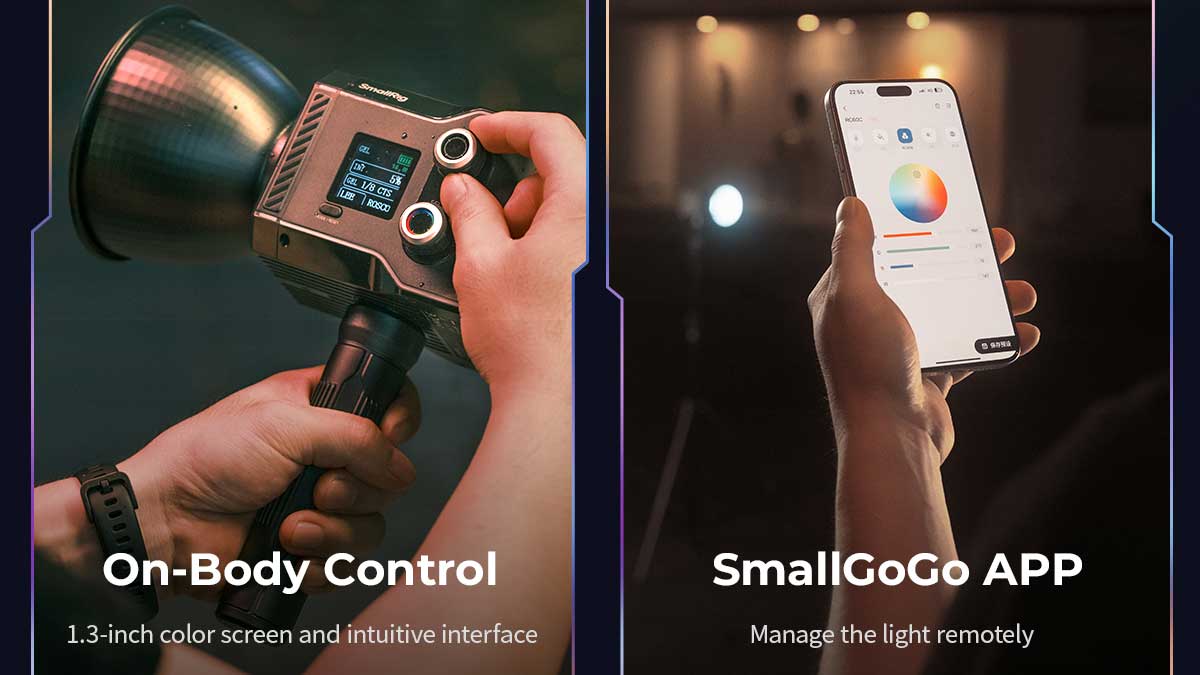
Control on the light or smartphone app
The RC 60C can be controlled via the interface built into the back of the light or by using the SmallGoGo app for iPhone, iPad and Android. Both methods let you control all of the usual features such as brightness, colour, etc. but the smartphone app has an extra trick up its sleeve.
SmallGoGo actually lets you shoot a photo of your scene with your camera and then match the RC 60C’s colour to a point of your choosing on that photo. The reliability of this will obviously vary depending on the quality of your phone’s camera, but you’re also able to upload images, too, allowing for more control and accuracy.
Gel mode support both Lee and Rosco gels, allowing you to switch to known standards that you may already be using with other white lights. You get the full HSI and RGBCW modes, along with green/magenta adjustment when shooting white.
Twelve lighting effects are also included. These are Flash, Paparazzi, Lightning, Party, Faulty Bulb, TV, Flame, Fireworks, Breath, CCT Cycle, Colour Cycle and Police Lights. And while it’s doing all these, SmallRig says it’s near silent, at only 26dB of noise to keep it running cool. In Eco mode, that drops down a little further to 23dB.
Price and Availability
The SmallRig RC 60C RGB LED Light is available to pre-order now for $179 in the basic configuration, including the light itself, a mini reflector and a 3-metre USB-PD cable.
It also comes in a “Power Bank Clamp Edition”, which also includes a power bank clamp, a second 2-metre USB-PD cable, handle, support mount, and a carry bag that’s available to pre-order for $229.
See more from DIYPhotography.net on Google
Add DIYPhotography.net as a trusted source. This makes
our stories more likely to appear in your Google Search results.
 Add as a preferred source on Google

John Aldred
John Aldred is a photographer with over 25 years of experience in the portrait and commercial worlds. He is based in Scotland and has been an early adopter – and occasional beta tester – of almost every digital imaging technology in that time. As well as his creative visual work, John uses 3D printing, electronics and programming to create his own photography and filmmaking tools and consults for a number of brands across the industry.


Join the Discussion
DIYP Comment Policy
Be nice, be on-topic, no personal information or flames.