






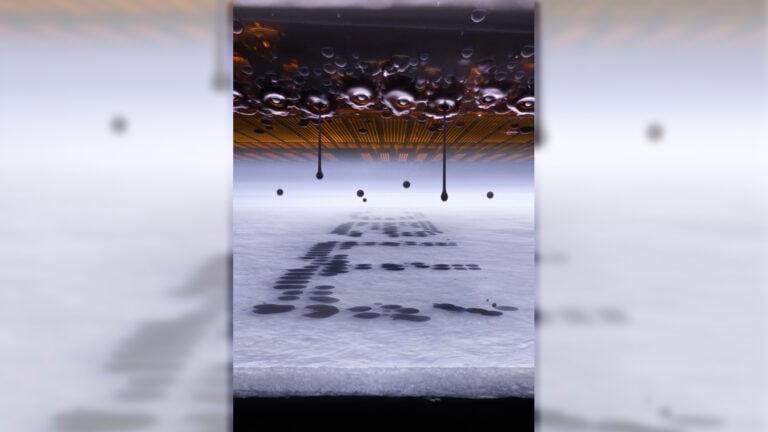












Shutter Dragging Explained
Feb 20, 2014
Laya Gerlock
Laya Gerlock is a Portrait and Product photographer based in the Philippines. His passion is teaching and sharing his knowledge in Photograpy and has been doing this for 6 years.
Share:

A participant in one of my workshops asked me about taking a photo of their iPhone while using an off-camera flash. The main problem he had was that he couldn’t see the iPhone’s screen when using a flash.
So for this week’s article I am going to talk about dragging the shutter – or in layman’s term – how-to or why-to lower your shutter speed while using a flash. I will show different scenarios so you can better understand much how (and why/when) to do this.
Generally speaking, the Aperture and power setting of your flash will control the exposure of light coming from the flash, and the shutter speed will control the exposure of your ambient light. The longer your shutter is open, the more ambient light will enter your camera.
Ambient light
One problem you might encounter when shooting ambient light and using your flash is getting a dark background. The way to brighten up your background is to lower your shutter speed (dragging the shutter) to expose more of the ambient light. Below is an example of lowering the shutter to expose more of the ambient light. The overall change is about a stop and a half – the photo looks very different.

Shutter speed is at 1/160th (background is dark)

Shutter speed is at 1/100th (Background getting brighter)

Shutter speed is at 1/80th
 Shutter speed is at 1/60th
Camera, Tablet, Computer Screens
When shooting a subject that has a screen (camera LCDs, smartphones and so on), you can also use this technique to expose for the screen of your subject. The longer you set your shutter the more your camera can expose for your subject’s screen. Another trick is to adjust the screen brightness of the gadget to lessen the exposure time.

Shutter speed is at 1/125th. Power of the screen is at the brightest yet you still can’t see the screen.

Shutter speed is at 1/30th (Screen getting brighter)

Shutter speed is at 1/8th (Almost to the exposure I want it)

Shutter is at 1/4th (The exposure I wanted)

Shutter is at 0.6sec (If you expose for too long you could also overexpose for the screen)
NOTE that you must also switch off all ambient light in the room when shooting this or else it will also expose your shot.
Lamp
For this shot I lowered my shutter speed from 1/160 (Max sync speed of my camera) to 1/50th to expose for the bulb of the lamp.

Shutter speed is at 1/160th (too dark exposure on the bulb)

Shutter speed is at 1/50th (Got the exposure of the bulb that I wanted)

The Final Shot (changed the color of the flash on the background with blue gel)
Flame
One of my favorite subjects is shooting fire. To do this right, you have to set your shutter to expose for the flame. The final shutter speed will also depend of how bright the flame is – the brighter the flame, the faster the shutter you need to set to avoid over-exposing the flame.

Shutter speed is at 1/160th

Shutter speed is at 1/30th

Shutter speed is at 1/13th

Shutter speed is at 1/6th (The exposure I wanted)

Shutter speed is at 2.5sec (What it looks like if you Overexpose the flame)
More examples of this technique


My friend Ej Quiroz aka G. Shot this awhile back.
See more from DIYPhotography.net on Google
Add DIYPhotography.net as a trusted source. This makes
our stories more likely to appear in your Google Search results.
 Add as a preferred source on Google

Laya Gerlock
Laya Gerlock is a Portrait and Product photographer based in the Philippines. His passion is teaching and sharing his knowledge in Photograpy and has been doing this for 6 years.


Join the Discussion
DIYP Comment Policy
Be nice, be on-topic, no personal information or flames.
7 responses to “Shutter Dragging Explained”
So the next question is: how did you make the flames?
70% solution isopropyl alchohol
What was the 30% and what was it poured on? IPA is pretty lively stuff!
Back to basics. Like way back. As in no $hit Sherlock basics :)
I used the same technique here to achieve the same end result: http://thephotophile.blogspot.se/2013/06/slow-shutter-speeds-with-studio-flash.html
Why not just take a screen and if you need a copy email the screen to your self and print it if you like.
This article might just be the thing that would help me in upcoming events! Thank you!
Question: Is Shutter Dragging a common method used by concert photographers and in my case, EDM / nightlife photographers?
I just started in this field and noticed that even with a gun flash, the subject is indeed lit but the rest of the crowd or a person just a row or two behind gets dark greatly at a 1/125 setting.
Follow-up question, how come even at a slower shutter speed, it doesn’t seem to get that much blurry? I was expecting something of a motion blur effect.