




















Pegasus Astro Launches FlatMaster Neo 120: A Smart Retractable Flat Panel
Nov 5, 2025
Soumyadeep Mukherjee
Soumyadeep Mukherjee is an award-winning astrophotographer from India. He has a doctorate degree in Linguistics. His work extends to the sub-genres of nightscape, deep sky, solar, lunar and optical phenomenon photography. He is also a photography educator and has conducted numerous workshops. His works have appeared in over 40 books & magazines including Astronomy, BBC Sky at Night, Sky & Telescope among others, and in various websites including National Geographic, NASA, Forbes. He was the first Indian to win “Astronomy Photographer of the Year” award in a major category.
Share:

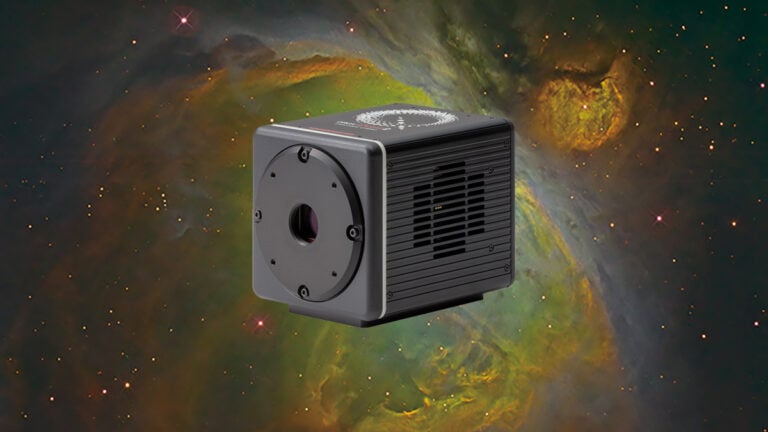
Creating perfect flat frames is one of the least glamorous yet most critical parts of astrophotography. Every deep-sky photographer knows how vignetting, dust motes, and sensor shadows can ruin an image. For years, imagers have relied on everything from homemade light boxes to tablet screens to produce calibration flats. Pegasus Astro’s FlatMaster Neo 120 completely changes that approach. It is a sleek, automated flat-field panel designed to make flat-frame creation effortless, repeatable, and accurate.
Pegasus Astro, known for its precision astronomy accessories, has reimagined the humble flat panel. The FlatMaster Neo 120 introduces smart automation, Wi-Fi control, and a motorized retractable lid. It is purpose-built for astrophotographers who want professional-grade flats without the clutter or guesswork.
Designed for reliability
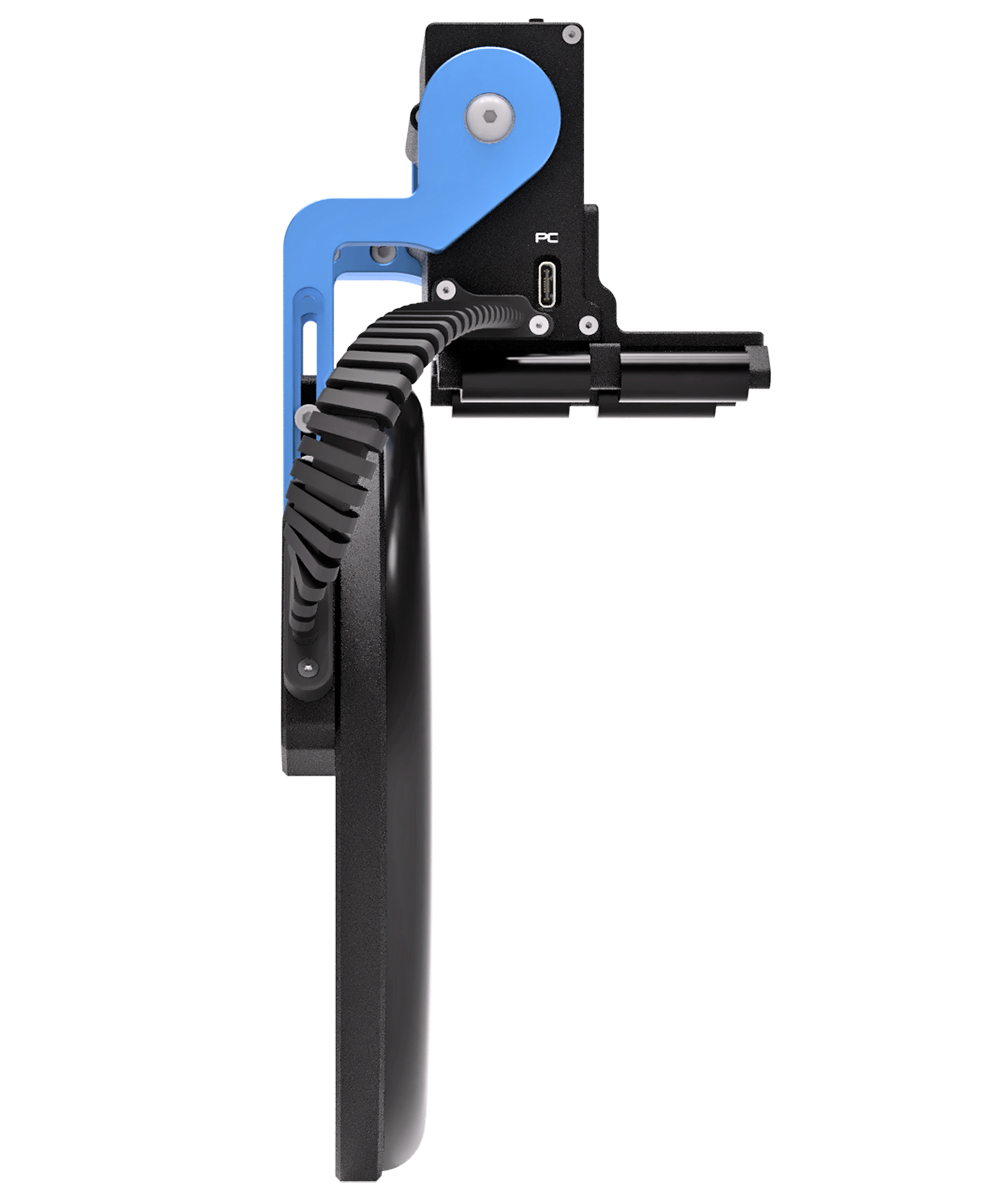
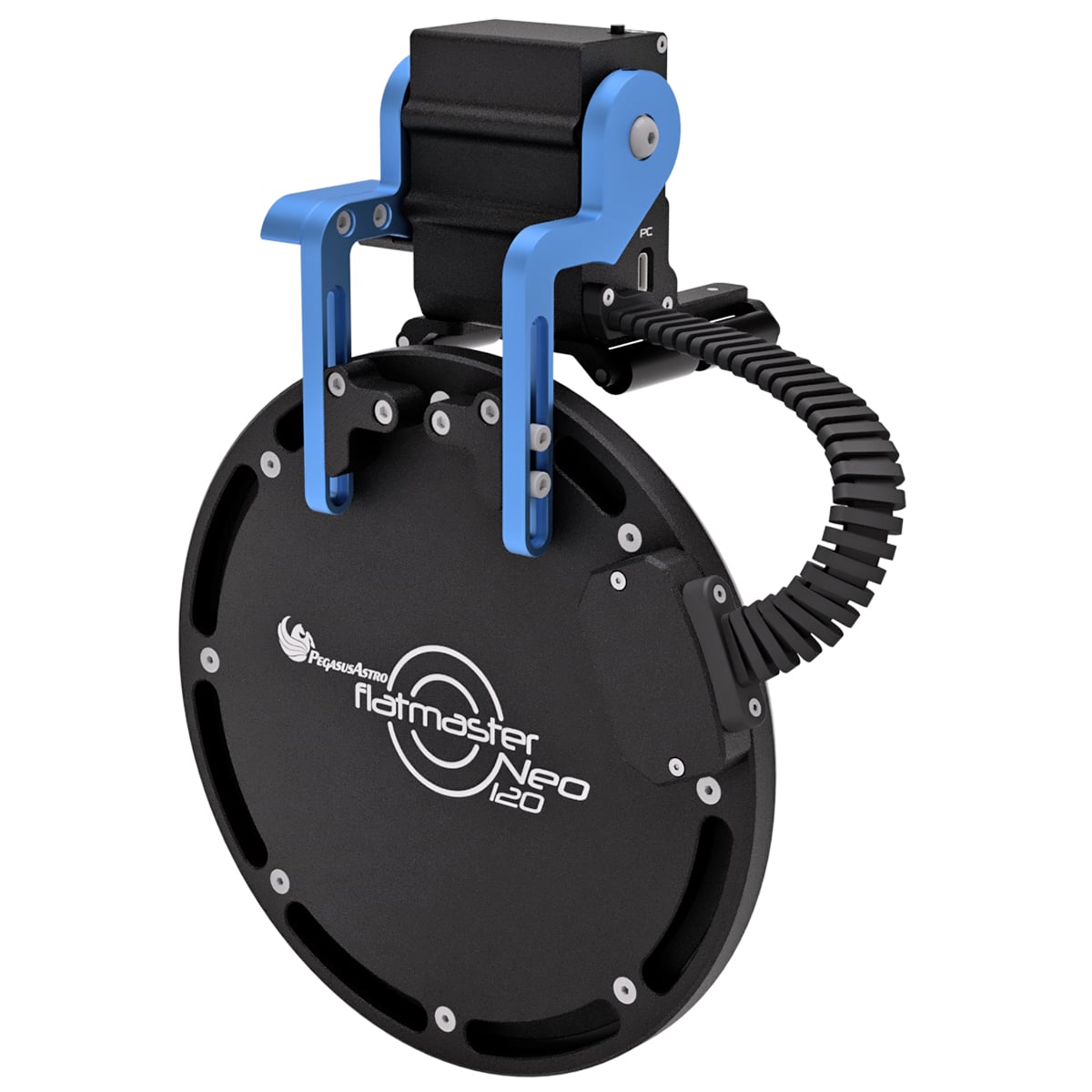
The FlatMaster Neo 120 is a finely engineered tool designed to produce perfectly uniform light across the aperture of small to medium telescopes. The official product listing describes it as a “smart retractable flat-field generator,” and that description fits well. The design centers around an LED panel enclosed in an aircraft-grade aluminum body. It is paired with a servo-controlled rotating lid that can open anywhere from 0° to 270°.
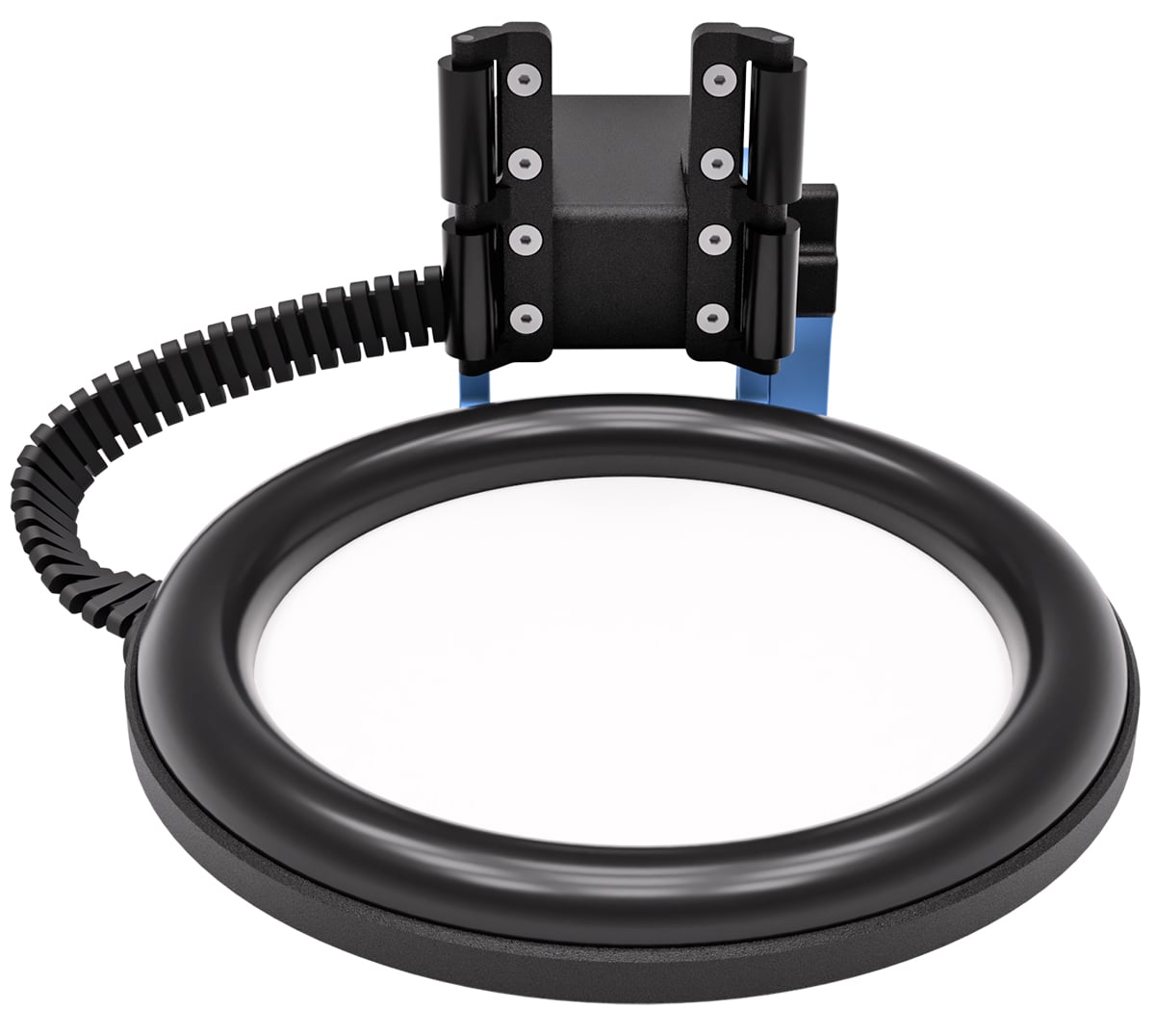
When the lid closes, it completely seals the panel, protecting it from dust, moisture, and accidental scratches. This feature alone addresses one of the most persistent issues astrophotographers face: keeping equipment clean during long nights in the field. The silicone flange around the edge ensures a light-tight and dust-tight fit against the telescope. This feature prevents light leaks that could corrupt the flat frames.
The panel’s usable illuminated circle is 120 mm, making it suitable for refractors and smaller reflectors. Despite its sturdy construction, the FlatMaster Neo 120 remains compact and lightweight. It has a diameter of around 250 mm and weighs about 400 grams. Its thin profile (just 8 mm) makes it easy to pack and transport, an important advantage for those who travel for astrophotography.
Intelligent illumination and complete control
Flat-field calibration relies on even illumination, and Pegasus Astro pays close attention to that. The FlatMaster Neo 120 uses uniform white LEDs to ensure consistent brightness across the entire surface. Astrophotographers can precisely adjust the brightness from 0 to 100 percent, allowing them to fine-tune exposure times for different filters and optical setups.
What makes the device truly smart is how it remembers your preferences. The Neo 120 allows users to store brightness settings for each filter, so you can recall the exact illumination level whenever you switch filters. This saves valuable time during imaging sessions, especially for those using multi-filter imaging trains that require individual flats for luminance, RGB, and narrowband filters.
Pegasus Astro also claims that the panel’s brightness is sufficient for use with narrowband filters. According to the official specifications, the FlatMaster Neo 120 can easily support short exposures of two to three seconds at f/7 with 3 nm filters, a useful metric that shows it can handle high-contrast optical setups without demanding impractically long flat exposures. This level of control ensures repeatable results night after night. The panel’s brightness is smooth, flicker-free, and stable, essential for calibration accuracy.
Connectivity built for modern astrophotography
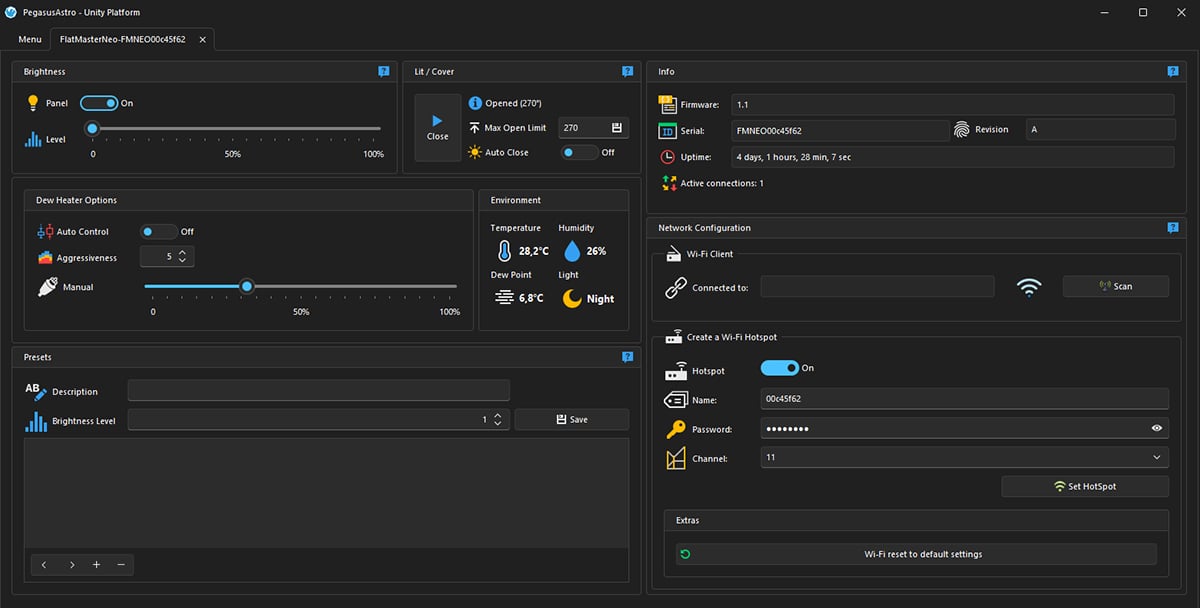
The FlatMaster Neo 120 brings the convenience of remote operation. It includes built-in Wi-Fi connectivity, and you can control it through the Unity Platform. Users can connect directly to the device’s Wi-Fi hotspot or add it to their local network. The web interface lets you adjust brightness, operate the lid, monitor temperature, and control the dew heater, all from a smartphone, tablet, or computer.
This modern interface removes the need for driver installation or proprietary software. Everything runs from any standard web browser. For those who prefer full automation, Pegasus Astro provides ASCOM 7 and ASCOM Alpaca support, making the FlatMaster Neo 120 compatible with most observatory automation software. That means it can integrate seamlessly into sequencing programs like NINA, Voyager, or SGP, allowing flat frames to be captured automatically at the end or beginning of an imaging session.
Another thoughtful inclusion is a built-in light sensor. The Neo can detect ambient brightness and automatically close its lid at sunrise, protecting the panel and the telescope’s optics from daylight exposure. This sensor makes it possible to leave the system unattended during automated imaging runs, a practical benefit for remote observatories and robotic setups.
Dew protection and environmental sensing
Flat-field panels are often used right after imaging, when dew and humidity can be at their peak. Pegasus Astro addresses this with a built-in dew-prevention system. Under the LED panel lies an integrated heater element, controlled by an onboard temperature and humidity sensor. The system automatically calculates the dew point and can activate the heater to keep the surface dry. Users can also control heater power manually through the web dashboard.
This dew-control feature is more than a convenience. It prevents condensation on the panel that could distort light uniformity, and it also keeps the telescope lens or corrector plate free of moisture when the lid is closed. Combined with the protective cover, it makes the FlatMaster Neo 120 an all-season device, usable in humid tropical climates or cold mountain locations.
The attention to environmental protection extends to safety. When closed, the lid shields both the LEDs and your telescope from dust and scratches. This reduces the need for extra covers or cloths in the field. Pegasus Astro designed the lid mechanism to operate quietly and smoothly through its full 270° range, driven by an internal servo motor that locks it securely in position.
Built for field and observatory use
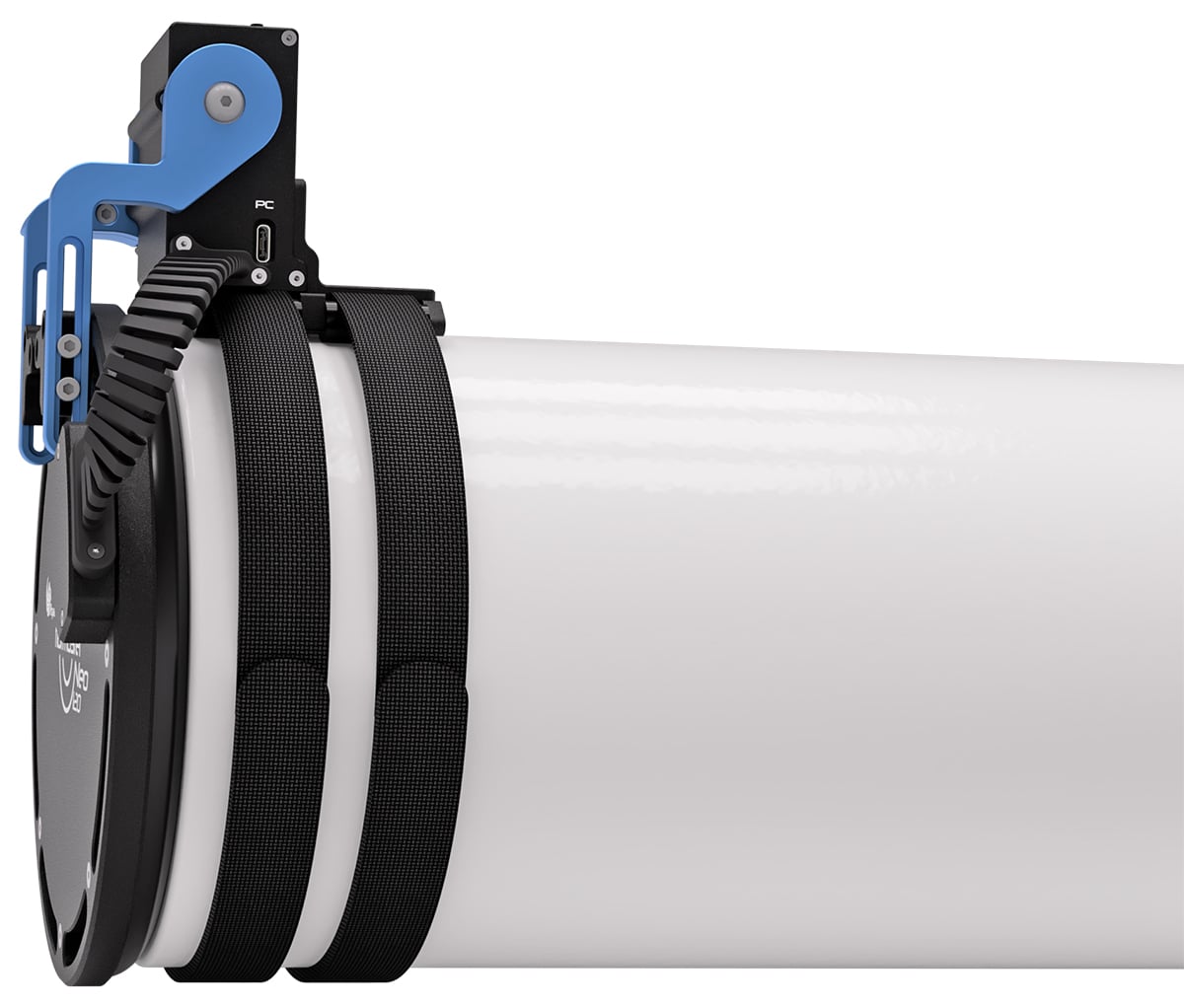
Despite its advanced features, the FlatMaster Neo 120 keeps things simple in power and setup. It operates on 5 V DC via USB-C, drawing about 1.5 A at full brightness. This makes it compatible with most modern power hubs, field batteries, and portable power stations. There are no bulky power bricks or complex cables to manage.
This approach shows that Pegasus Astro designed the FlatMaster Neo with both mobile imagers and fixed observatories in mind. The aluminum construction offers durability for travel, while the Wi-Fi and ASCOM connectivity make it suitable for permanent installations. You can use it at a remote site with a small refractor or mount it in a dome as part of a larger automated system.
Pegasus Astro also highlights that the unit’s servo lid mechanism has been tested for reliability in long-term use. The motorized design removes the need for manual handling in cold or damp conditions. You can open or close the lid remotely, whether you are standing beside your telescope or operating it from across the observatory.
Price and availability
The Pegasus Astro FlatMaster Neo 120 is priced at $550 and is now available for pre-order via retailers.
The FlatMaster Neo 120 standardizes this process of flat frames. It provides uniform, adjustable, and repeatable illumination with a sealed housing and automatic operation. The retractable lid doubles as protection and as a dust barrier. When paired with automation software, it can become part of a complete imaging workflow, capturing flats automatically after each session without the need for human intervention.
Clear skies!
See more from DIYPhotography.net on Google
Add DIYPhotography.net as a trusted source. This makes
our stories more likely to appear in your Google Search results.
 Add as a preferred source on Google

Soumyadeep Mukherjee
Soumyadeep Mukherjee is an award-winning astrophotographer from India. He has a doctorate degree in Linguistics. His work extends to the sub-genres of nightscape, deep sky, solar, lunar and optical phenomenon photography. He is also a photography educator and has conducted numerous workshops. His works have appeared in over 40 books & magazines including Astronomy, BBC Sky at Night, Sky & Telescope among others, and in various websites including National Geographic, NASA, Forbes. He was the first Indian to win “Astronomy Photographer of the Year” award in a major category.

Join the Discussion
DIYP Comment Policy
Be nice, be on-topic, no personal information or flames.