





















LC-Tec creates world’s first Electronic Variable Diffusion filter
Sep 17, 2024
John Aldred
John Aldred is a photographer with over 25 years of experience in the portrait and commercial worlds. He is based in Scotland and has been an early adopter – and occasional beta tester – of almost every digital imaging technology in that time. As well as his creative visual work, John uses 3D printing, electronics and programming to create his own photography and filmmaking tools and consults for a number of brands across the industry.
Share:

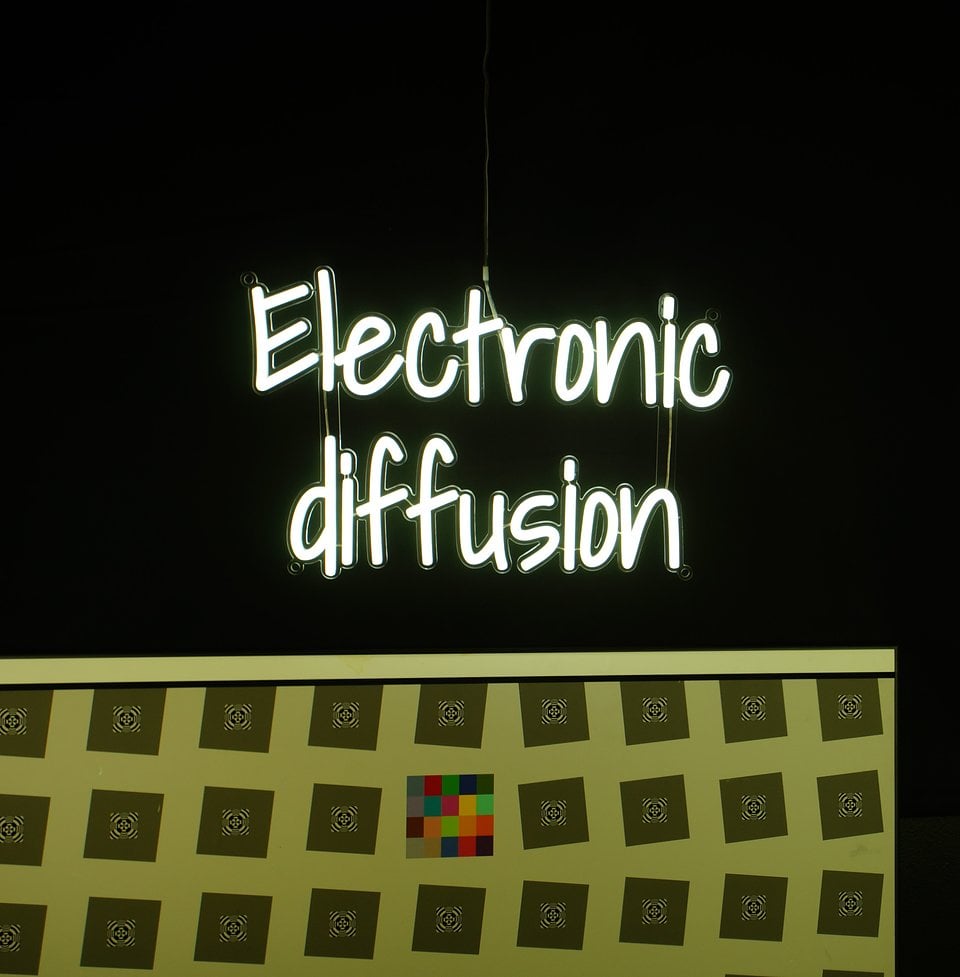
Diffusion isn’t something we typically think of being able to be done electronically. At least, not on a filter that sits over the lens at the point of capture. LC-Tech, though, is here to show us otherwise with their new Electronic Variable Diffusion (EVD) filter.
The Swedish company specialises in liquid crystal optical technology, and this isn’t its first electronic filter. The company also produces electronic neutral density filters. But the new EVD is a world’s first, offering something we haven’t seen before.

LC-Tech Electronic Variable Diffusion filter
The LC-Tec EVD filter currently being shown off at IBC 2024 is designed to live inside a matte box. At least, the current prototype unit is, as it’s a cinema-standard 4×5.65″ in size. It sits over the lens like any other filter, but the user has the ability to adjust the voltage going through the device to increase or decrease the diffusion effect.
The company’s electronic neutral density filters are well regarded amongst those who use them. They offer a high level of accuracy with almost non-existent vignetting. You can even get them to mount on drones, controlling your ND as you fly through the sky.

You might even already own something with an LC-Tec ND filter inside it, as a number of camera manufacturers incorporate LC-Tec’s electronic NDs into their products.
If the new filters are as good as suggested, they’ll be an excellent addition to many filmmakers’ kit bags.

It offers interesting possibilities
The filter essentially sits in front of your camera’s lens, doing its job. A single dial allows you to vary the strength. The obvious benefit of this is the convenience and time saved. You don’t have to keep swapping out filters all the time for each shot.
But it also opens up other possibilities – at least in theory. Because it’s an electronic filter, it can potentially be “keyframed” in the same way we animate keyframes in DaVinci Resolve or Adobe After Effects. The filter strength can be matched to the lens so that it increases or decreases as you zoom in and out.

That’s something impossible to do with existing diffusion filters. You’d need to stick with the same strength all the way through or swap out the filters at each end and not have any zooming footage. But with the LC-Tec EVD, it’s as easy as just changing a voltage over time.
This, as mentioned above, is all hypothetical. The official phrasing from the company is that it may “theoretically be possible” to implement this, although it does suggest that they’re either working on it or they’re trying to plant the seed in 3rd party manufacturers who will license and use their tech.

It’s also possible that in the future, we may see localised diffusion. This would allow us to diffuse out one section of a scene, say bright lights, while having other sections of the image – like skin – with no diffusion whatsoever, showing the original skin tone and texture.


Price and Availability
We won’t be seeing it anytime soon, though. LC-Tec says the tech won’t be ready to ship until Q2 2025. Even then, it’s going to be going to be going to equipment manufacturers to incorporate into their products, first. Whether we’ll see filters we can just buy, like the company’s ND filters, is currently unknown.
See more from DIYPhotography.net on Google
Add DIYPhotography.net as a trusted source. This makes
our stories more likely to appear in your Google Search results.
 Add as a preferred source on Google

John Aldred
John Aldred is a photographer with over 25 years of experience in the portrait and commercial worlds. He is based in Scotland and has been an early adopter – and occasional beta tester – of almost every digital imaging technology in that time. As well as his creative visual work, John uses 3D printing, electronics and programming to create his own photography and filmmaking tools and consults for a number of brands across the industry.
Related Posts
 Z Cam’s electronic variable ND filter for their 6K and 8K cameras is now available
 Here are some ideas on how to use a variable ND filter for shooting landscapes
 I wanted to see if K&F’s variable NDs can stand up to a regular neutral density filter
 Haida bring the Variable ND filter to the M10 100mm system; a review
Join the Discussion
DIYP Comment Policy
Be nice, be on-topic, no personal information or flames.