


























Largest known cosmic structure photographed: 19 Million Light-years across
Jun 11, 2025
Soumyadeep Mukherjee
Soumyadeep Mukherjee is an award-winning astrophotographer from India. He has a doctorate degree in Linguistics. His work extends to the sub-genres of nightscape, deep sky, solar, lunar and optical phenomenon photography. He is also a photography educator and has conducted numerous workshops. His works have appeared in over 40 books & magazines including Astronomy, BBC Sky at Night, Sky & Telescope among others, and in various websites including National Geographic, NASA, Forbes. He was the first Indian to win “Astronomy Photographer of the Year” award in a major category.
Share:

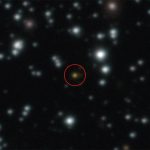
In June 2025, NASA’s Chandra X-ray Observatory released a breathtaking image. It showed a colossal galaxy cluster called PLCK G287.0+32.9. This object lies about 4.2 billion light-years away. Astronomers call it “PLCK G287” for short. This image is special. It combines data from X-rays, optical light, and radio waves. It reveals structures stretching across 19 million light-years. That’s one of the largest known features in the universe. The image comes from a team using Chandra, Pan-STARRS, and MeerKAT radio telescopes. Together, they captured a cosmic masterpiece. But this is more than just a pretty picture. It tells a powerful story of shockwaves, cosmic collisions, and mysterious particles.
What is PLCK G287?
PLCK G287 is a massive galaxy cluster. Galaxy clusters are the largest structures held together by gravity. They contain thousands of galaxies, hot gas, and dark matter. This cluster was first spotted by the Planck satellite. Planck detected it through its Sunyaev-Zel’dovich effect, how hot gas affects cosmic background radiation. Later, Chandra observed it in X-rays, revealing hot gas clouds. Optical telescopes saw the galaxies. Radio telescopes found strange glowing patterns around it. These combined views showed something amazing: a giant radio structure larger than any previously seen.

A multiwavelength marvel
The image consists of data from three wavelengths coming from separate sources:
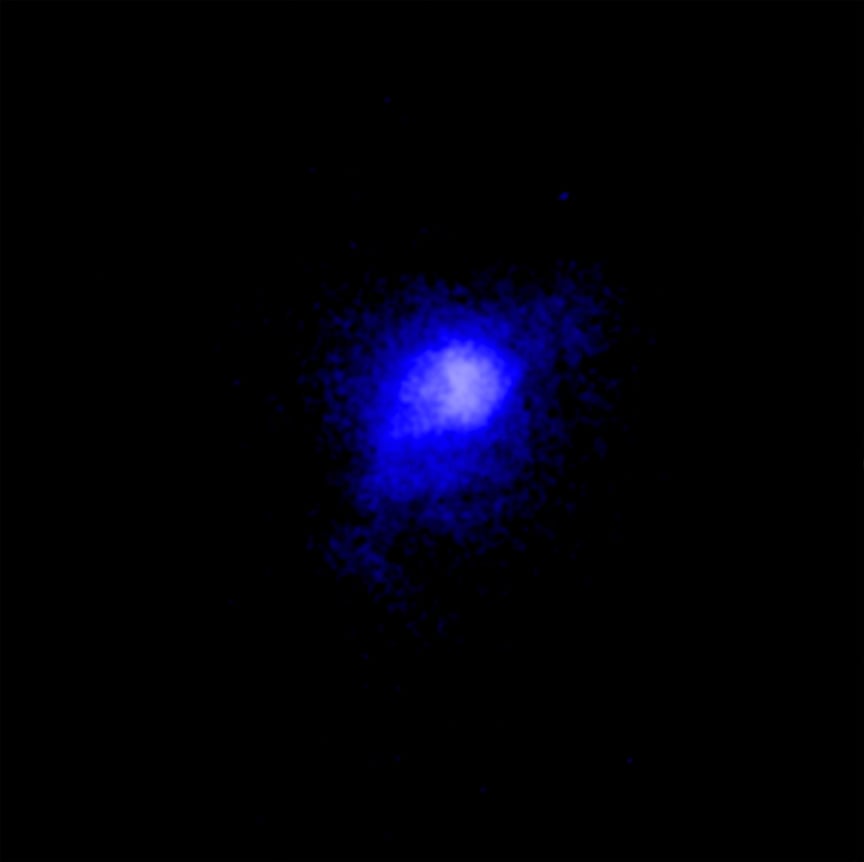
1. X-ray data from Chandra (shown in purple) highlight hot gas between galaxies. This gas reaches millions of degrees. It glows brightly in X-rays.
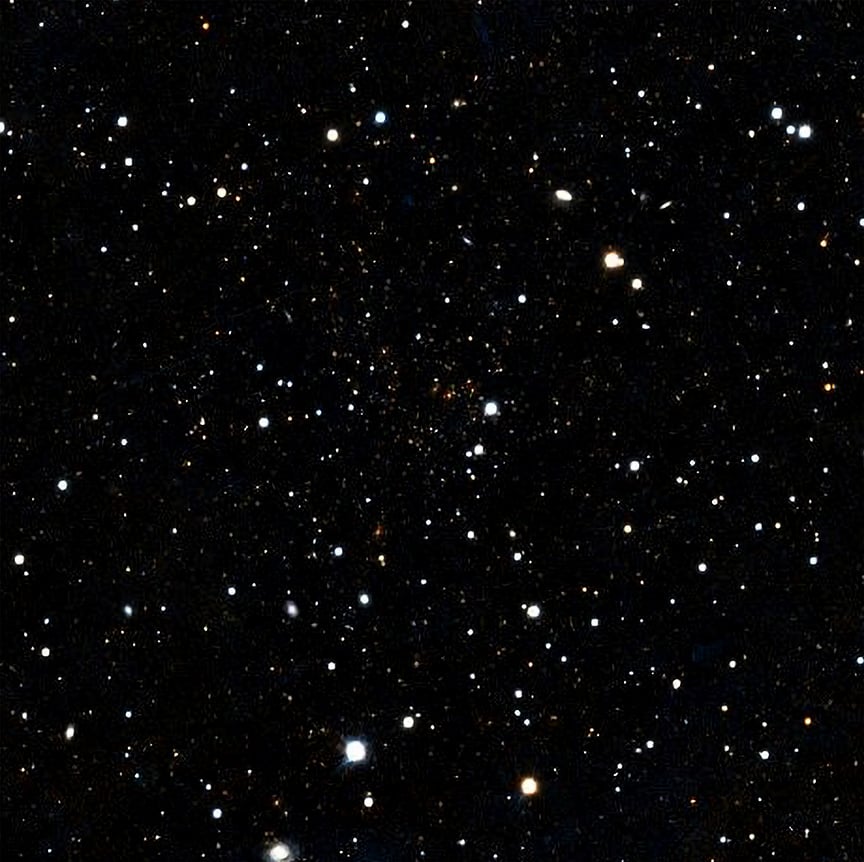
2. Optical data from Pan-STARRS (in white and blue) reveal the cluster’s galaxies. These are the stars and galaxies we usually see.
3. Radio data from MeerKAT (shown in orange and red) expose large-scale radio emission. These include “radio relics” and “radio halos”.
Each wavelength tells a different part of the story. Together, they help astronomers understand what’s going on.
Cosmic collision in progress
The image shows that PLCK G287 is not quiet. It’s a cluster in turmoil. The X-ray data show that the hot gas has a strange shape. Instead of being round, it looks stretched, almost like a comet. This means something big happened here. Astronomers believe that two or more galaxy clusters merged. When clusters merge, they create shockwaves. These shockwaves heat gas and accelerate particles. That’s what Chandra detected. The radio data from MeerKAT shows giant arcs and filaments. These are radio relics, leftovers from past collisions. One arc alone stretches over 16 million light-years. That may be the largest known radio structure. This indicates that massive shockwaves once traveled through the cluster.
How big is this structure?
PLCK G287 is about 19 million light-years wide. That’s about 200 times larger than the Milky Way. It’s one of the largest cosmic structures ever observed. The giant radio relic alone spans over 16 million light-years. That makes it the largest known radio relic to date. Such large features challenge current theories. How can particles stay energetic across such vast scales? How do magnetic fields stretch over millions of light-years? Astronomers are still searching for answers.
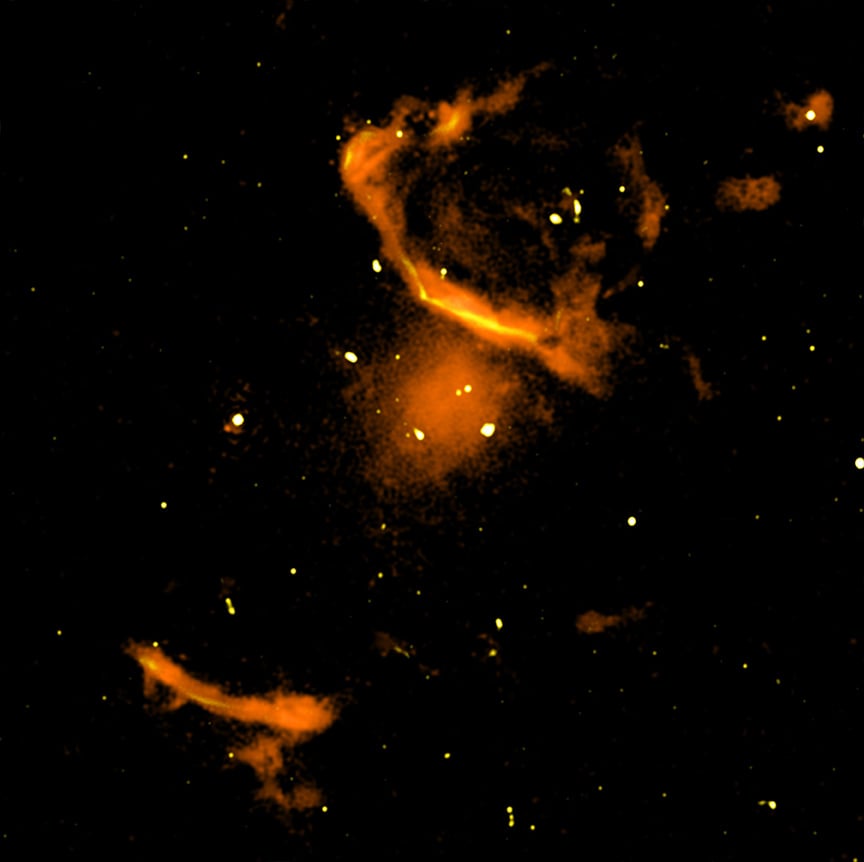
PLCK G287 is a cosmic monster. It tells the story of a colossal collision. Hot gas swirls. Shockwaves travel at millions of kilometers per hour. Electrons race through magnetic fields. Galaxies drift through chaos. This image is a reminder: the universe is dynamic. Galaxy clusters grow through mergers. These events shape the cosmos on grand scales. Thanks to Chandra, MeerKAT, and Pan-STARRS, we can now see this drama in action. In the vast dark of space, PLCK G287 stands as one of the biggest and brightest players on the cosmic stage.
Clear skies!
See more from DIYPhotography.net on Google
Add DIYPhotography.net as a trusted source. This makes
our stories more likely to appear in your Google Search results.
 Add as a preferred source on Google

Soumyadeep Mukherjee
Soumyadeep Mukherjee is an award-winning astrophotographer from India. He has a doctorate degree in Linguistics. His work extends to the sub-genres of nightscape, deep sky, solar, lunar and optical phenomenon photography. He is also a photography educator and has conducted numerous workshops. His works have appeared in over 40 books & magazines including Astronomy, BBC Sky at Night, Sky & Telescope among others, and in various websites including National Geographic, NASA, Forbes. He was the first Indian to win “Astronomy Photographer of the Year” award in a major category.
Join the Discussion
DIYP Comment Policy
Be nice, be on-topic, no personal information or flames.