

















Is Spirit Photography Real? The Strange History and Tricks Behind Ghost Photos
Aug 27, 2026
Leonard Skapp
Alex Baker is a portrait and lifestyle driven photographer based in Valencia, Spain. She works on a range of projects from commercial to fine art and has had work featured in publications such as The Daily Mail, Conde Nast Traveller and El Mundo, and has exhibited work across Europe
Share:
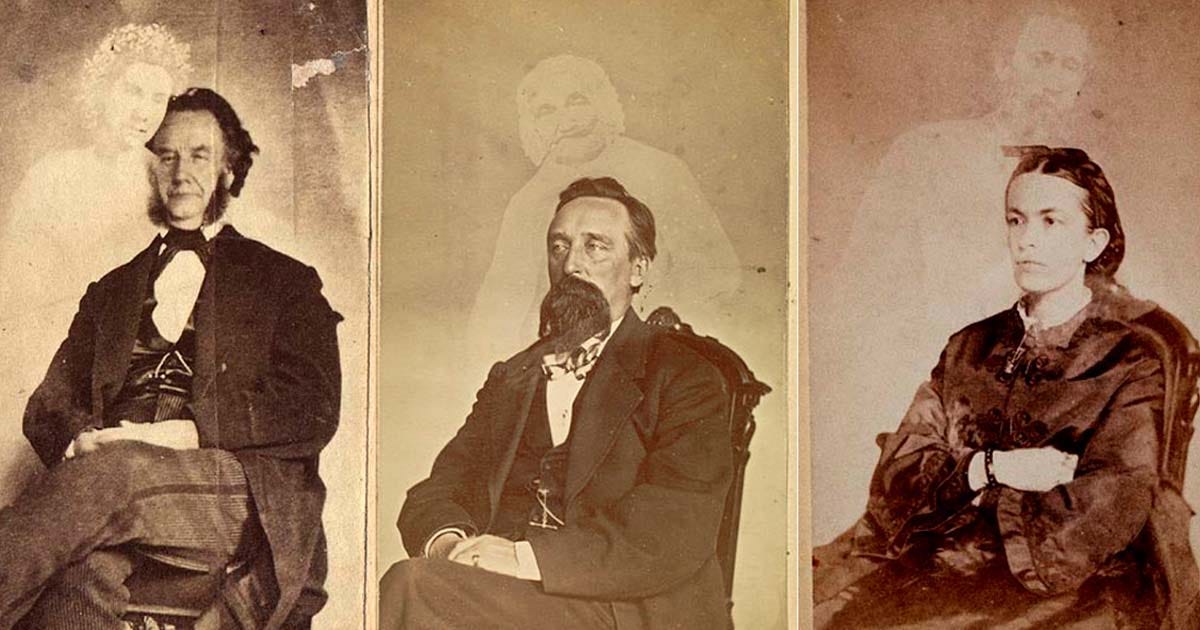
Spirit photography is one of the strangest chapters in photographic history. For more than a century, photographers have produced images that appear to show ghosts, spirits and deceased relatives standing alongside the living. Some people genuinely believed these photographs offered proof of life after death, while others recognised them as clever photographic tricks.
There is no reliable scientific evidence that cameras can photograph ghosts or spirits. But the photographs themselves are very real, and their history tells us something fascinating about photography: when people first encountered a technology that seemed capable of recording reality with incredible accuracy, they also started wondering whether it could reveal things that the human eye couldn’t see.
What is spirit photography?
Spirit photography is the name given to photographs that supposedly show the spirits of dead people alongside living subjects. The idea became particularly popular during the second half of the 19th century, when Spiritualism was spreading through Europe and the United States.
The typical spirit photograph shows a living person posing for a conventional portrait with a faint, translucent figure somewhere in the frame. Sometimes the supposed spirit was claimed to be a deceased family member; other photographs featured mysterious figures that nobody could identify.
To modern eyes, many of these images look fairly obviously manipulated. But photography was still a relatively new technology, and photographic manipulation was nowhere near as familiar to the general public as it is today. That combination made spirit photography surprisingly convincing.
Why did people start photographing ghosts?
The rise of spirit photography happened alongside the growing popularity of Spiritualism, a movement based around the idea that the living could communicate with the dead.
There was also a particularly grim reason why the idea became so appealing. The American Civil War caused enormous loss of life, leaving hundreds of thousands of families grieving. Spirit photography offered bereaved people the possibility of seeing their dead loved ones again, even if only in a photograph.
Photography already had a close relationship with death. Victorian families commonly commissioned photographs of deceased relatives, particularly children, as memorials. So the idea that a camera might somehow capture a person’s spirit wasn’t as far-fetched to people at the time as it might seem now. And there was another important factor: people trusted photographs.
Photography was still relatively mysterious, but it appeared to provide an objective record of the world. If something appeared on a photographic plate, why wouldn’t you believe it had actually been there? That question would become increasingly important as photographers discovered just how easy it was to manipulate what appeared in a photograph.
William Mumler and the first famous spirit photographs
The person most closely associated with the birth of spirit photography is William H. Mumler, a Boston-based engraver and amateur photographer.
In 1861 or 1862, Mumler made a self-portrait that appeared to contain a faint figure of a woman. He claimed that the figure resembled his deceased cousin, and the photograph quickly attracted attention. The image was circulated among Spiritualists, and Mumler soon realised there was considerably more money to be made photographing ghosts than there was making ordinary portraits (evidence that photographers have always had to hustle!).
Mumler opened a studio and began producing photographs in which living clients appeared alongside supposed deceased relatives. He reportedly charged around $10 for a dozen photographs, an expensive price at the time, and there was no guarantee that a spirit would actually appear.

His most famous image was made for Mary Todd Lincoln. The photograph, made in the early 1870s, appears to show the ghostly figure of Abraham Lincoln standing behind his grieving widow with his hands resting on her shoulders. Mary Lincoln reportedly visited Mumler’s studio using a false name and wearing a heavy veil. It remains one of the most famous spirit photographs ever made.
Mumler eventually went on trial
Mumler’s success inevitably attracted skeptics. Other photographers already knew that double exposures, superimposed negatives and other techniques could create exactly the sort of ghostly effects appearing in his photographs. Eventually, Mumler was accused of fraud and stood trial in New York in 1869.
The case became something of a public spectacle, with skeptics and Spiritualists arguing over whether photography was revealing supernatural beings or simply being manipulated. P.T. Barnum even testified for the prosecution and demonstrated how easily a fake spirit photograph could be produced. Mumler was ultimately acquitted because the prosecution failed to prove fraud beyond the required standard.
Being acquitted didn’t prove that Mumler had photographed actual ghosts. It simply meant that the prosecution couldn’t prove how he had made the photographs or establish the fraud to the legal standard required.
How were Victorian ghost photographs made?
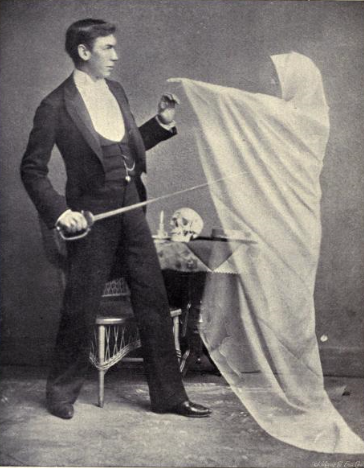
There wasn’t one single technique. Photographers could manipulate negatives, combine multiple exposures, use an existing photograph of a person and superimpose it over a new portrait, or have another person dressed in pale clothing appear briefly during an exposure. Some images were also created using reflections and other optical tricks.
Long exposures created another opportunity. Early photographic processes could require subjects to remain still for quite some time. Someone moving through the scene could therefore appear faint, blurred or partially transparent because they weren’t present for the entire exposure.
Some of these effects could also happen accidentally. In fact, Mumler’s first famous spirit photograph may have resulted from a photographic plate that had not been properly cleaned before being reused, leaving an earlier image behind.
Once photographers realised that these accidents looked remarkably like ghosts, it probably wasn’t difficult to imagine somebody deciding to do it deliberately.
Spirit photography didn’t disappear
Mumler wasn’t the last person to make a living from photographing supposed spirits. Spirit photography continued through the late 19th and early 20th centuries, with photographers producing increasingly elaborate images. The practice experienced another surge in popularity after the First World War, when enormous numbers of people were grieving lost relatives.
One particularly famous later practitioner was William Hope, whose photographs appeared to show spirits alongside living people. His images were eventually investigated by skeptics, and double-exposure techniques were identified as a likely explanation for some of them.
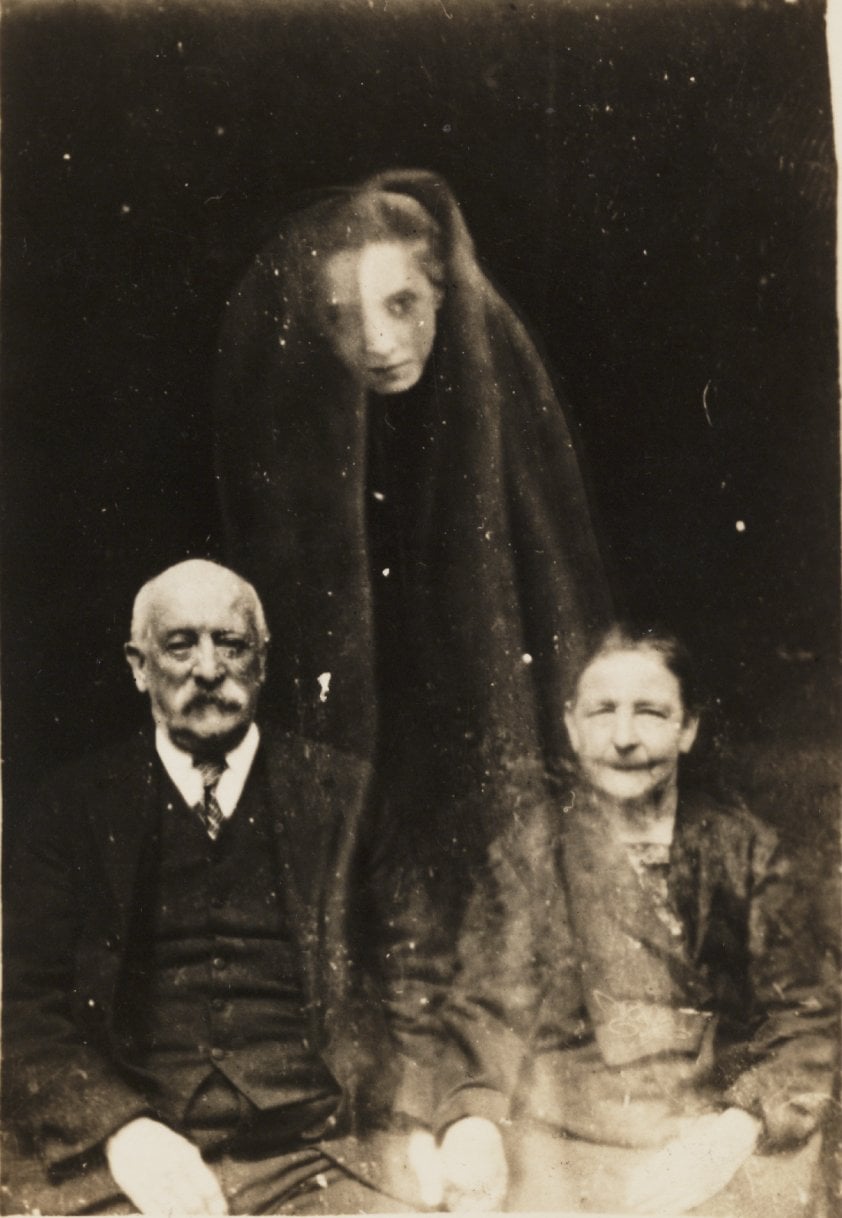
The popularity of spirit photography gradually declined as photographic techniques became better understood and investigators became more skilled at exposing fraudulent methods. But the basic idea never completely disappeared. And you can still find modern photographs online that supposedly show ghosts.
How to make your own ghost photograph
Here’s the fun part: you don’t need a Victorian glass plate, a séance or a particularly convincing fake medium. You can make a ghost photograph with a modern digital camera.
The simplest method is a long exposure. Put your camera on a tripod and compose your scene. Set a relatively slow shutter speed, perhaps several seconds, and have your “ghost” stand in the scene for part of the exposure before walking out of frame.
For example, with a five-second exposure, your subject could stand still for two seconds before moving out of the frame. The camera will continue recording the background after they’ve left, so the person will appear partially transparent.
Experiment with the timing. The longer your ghost remains still, the more solid it will appear. If they move quickly through the frame, they’ll become increasingly faint and blurred. You can also deliberately introduce movement during the exposure to create a more dramatic, smeared apparition.
Try a double exposure
If your camera has a multiple-exposure mode, you can create something even closer to a traditional spirit photograph. Take one photograph of your empty scene and another with your “ghost” standing in it. Combine the two exposures and adjust the settings so the second exposure is relatively faint.
If your camera doesn’t have a multiple-exposure function, you can achieve essentially the same effect in Photoshop or another image editor by placing two photographs on top of each other and reducing the opacity of the ghost layer.
Congratulations: you have just recreated a photographic technique that Victorian photographers used to make people believe they’d captured the dead. You can now charge $10 a dozen!
Why do ghost photographs still look convincing?
Our brains are extremely good at finding patterns and faces, even when there isn’t actually a meaningful pattern there. This is known as pareidolia. It’s why you can see faces in clouds, shadows or the front of a car. A strange shape in the background of a photograph can suddenly look exactly like a person once someone tells you there’s a ghost in the picture.
Photography also produces plenty of genuine optical oddities. Lens flare, reflections, dust, condensation, motion blur, shallow depth of field and exposure problems can all create strange shapes and patches of light. Modern cameras add computational processing, noise reduction and other layers of image processing that can occasionally produce results that look downright bizarre. A strange photograph isn’t necessarily a fake. But it also isn’t automatically paranormal.
What about infrared and thermal cameras?
Infrared photography is sometimes presented as a way of photographing things that are invisible to the human eye, and that’s technically true.
Infrared cameras can record wavelengths of light outside the visible spectrum, while thermal cameras detect infrared radiation associated with heat. These technologies can reveal things we can’t see with our eyes, but they’re still recording physical phenomena.
If a thermal camera produces a strange shape, that doesn’t mean it has detected a ghost. It could be a warm object, a reflection, air movement or simply an unusual temperature difference. Seeing something invisible doesn’t automatically make it supernatural.
What about aura photography?
Aura photography is related to the same general idea that cameras can reveal something invisible, but it’s a different practice from traditional spirit photography.
Aura photography claims to show an energy field surrounding a person, often represented by colourful areas around their body. Modern aura photography systems can use physical measurements and software to generate these colourful images, but that isn’t the same as photographing an invisible energy field. There is no reliable scientific evidence that these images demonstrate the existence of human auras.
So, is spirit photography real?
There is no reliable scientific evidence that cameras can photograph ghosts, spirits or supernatural entities. But spirit photography itself is absolutely real as a photographic tradition. For more than 150 years, photographers have been using multiple exposures, long exposures, overlays, reflections and other techniques to create convincing images of the supposedly dead.
What’s particularly fascinating is that the technology hasn’t changed the fundamental problem. Victorian photographers had double exposures and glass plates. Today we have Photoshop, compositing and generative AI. The tools have become dramatically more sophisticated, but the question remains the same: did the camera record something that was really there, or did somebody make it look that way?
If you want to photograph a ghost yourself, you don’t need to wait around for one to wander into your living room. All you need is a camera, a tripod, a willing friend and a few seconds of exposure. Which is considerably easier than arranging a séance!
[Cover photo: William H Mumler, CC0, via Wikimedia Commons]
See more from DIYPhotography.net on Google
Add DIYPhotography.net as a trusted source. This makes
our stories more likely to appear in your Google Search results.
 Add as a preferred source on Google

About Leonard Skapp
Leonard “Len” Skapp is a photographer with a particular interest in cameras, lenses, accessories, camera bags, lens filters, tripods, camera straps, and, on rare occasions, photography itself. Equal parts reviewer and enthusiast, he enjoys digging into the technical details behind the latest gear and translating them into plain English for fellow photographers. He maintains that every purchase is a carefully considered investment, although his bank account and overflowing camera cupboard continue to dispute this claim.
We love it when our readers get in touch with us to share their stories. This article was contributed to DIYP by a member of our community. If you would like to contribute an article, please contact us here.



Join the Discussion
DIYP Comment Policy
Be nice, be on-topic, no personal information or flames.