



















How to Photograph a Solar Eclipse: Tips, Settings and Gear for the 2026 Eclipse in Spain
Jun 17, 2026
Leonard Skapp
Alex Baker is a portrait and lifestyle driven photographer based in Valencia, Spain. She works on a range of projects from commercial to fine art and has had work featured in publications such as The Daily Mail, Conde Nast Traveller and El Mundo, and has exhibited work across Europe
Share:

Photographing a solar eclipse is one of those bucket-list photography moments that looks simple until you try it. You’ve got a rare astronomical event, changing light, fast-moving phases, and the small detail that you’re photographing the sun itself, which means safety becomes just as important as technique.
With the 2026 solar eclipse visible across parts of Spain, interest in eclipse photography is about to spike. If you want to capture it properly (and safely), preparation is everything. Here’s how to photograph a solar eclipse without damaging your eyes or your camera.
First: never photograph the sun without proper protection
This is the most important rule in solar photography. You must use a certified solar filter (such as ND5 solar film or dedicated solar glass filters) over your lens at all times when photographing any partial phase of an eclipse. Regular ND filters are not safe for direct solar imaging.
Looking at the sun through an optical viewfinder without protection can cause permanent eye damage, and the same applies to your camera sensor if you point it directly at the sun without a filter.
The only time you can safely remove the filter is during the brief period of totality in a total solar eclipse, which is when the sun is completely covered by the moon. Outside of totality, the filter stays on.
Understanding what you’re photographing
A solar eclipse happens when the moon passes between the Earth and the sun, temporarily blocking its light. There are different stages you can photograph:
- Partial eclipse – the moon gradually covers the sun
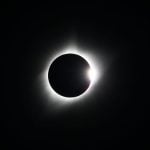
- Total eclipse – the sun is completely obscured (where visible)
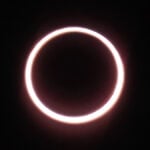
- Annular eclipse – the moon is too far away to fully cover the sun, leaving a “ring of fire”
The 2026 eclipse in Spain (August 12, 2026) is expected to be a total solar eclipse in parts of northern and Eastern Spain, making it one of the most significant astronomical photography events in Europe for years. In other regions, it will appear as a partial eclipse.
Gear you’ll need
You don’t need extreme astrophotography setups, but the right gear makes a huge difference:
- DSLR or mirrorless camera with manual control
- Telephoto lens (200mm minimum, 300–600mm ideal)
- Sturdy tripod
- Certified solar filter for your lens
- Remote shutter or interval timer (to avoid vibration)
A longer focal length helps you capture detail of the sun’s surface and the progression of the eclipse, while a tripod keeps everything stable during long shooting sessions. You can use a mobile phone, but again, you’ll need some solar filter paper to cover the lens.
Camera settings for eclipse photography
There’s no single “correct” setting because the light changes constantly, but a good starting point for the partial phases is:
- ISO: 100–200
- Aperture: f/8 to f/11
- Shutter speed: start around 1/500s and adjust as needed
The key is to expose for the sun itself, not the surrounding sky. You’ll likely need to adjust settings frequently as the eclipse progresses. During totality (when it occurs), conditions change dramatically. You may need:
- Higher ISO (400–800 or more)
- Slower shutter speeds
- Wider apertures (f/2.8–f/5.6 depending on lens)
This is also the only time you can safely remove your solar filter, revealing the solar corona—a faint outer atmosphere of the sun that is normally invisible.
Composition: don’t just shoot the sun
A common mistake is zooming in too tightly and forgetting the environment. Some of the strongest eclipse images include foreground elements such as:
- Landscapes or mountains
- Buildings or landmarks
- Silhouetted people
- Wide sky compositions showing scale
The 2026 eclipse in Spain will be especially photogenic because of the varied landscapes across the eclipse path, from coastal regions to mountainous inland areas. Planning your location in advance will make a huge difference to your final images. You could even plan something adventurous, like including a bird in the image like this photographer.
Plan ahead, this is not a last-minute shoot
Eclipse photography rewards preparation more than almost any other genre. Scout your location in advance, check the direction of the sun at eclipse time, and make sure you understand the timing of each phase. Arrive early, set up calmly, and avoid rushing adjustments once the event begins.
It’s also worth practising solar photography beforehand if you can, so you’re comfortable working with filters and manual exposure settings.
Photographing a solar eclipse is a mix of technical discipline and once-in-a-lifetime timing. The 2026 solar eclipse in Spain offers a rare opportunity to capture one of nature’s most dramatic events without travelling halfway across the world.
If you prepare properly, especially with safety in mind, you’ll not only come away with strong images, but also a deeper understanding of how light, time, and astronomy come together in photography. Unlike most types of photography, you don’t get a second chance. When the moment happens, it’s gone in minutes. Although there will be another one in Spain in 2027 with a 6 minute totality so actually, you sort of do have another chance!
Here’s a video about the 2024 total solar eclipse that happened in the USA:
See more from DIYPhotography.net on Google
Add DIYPhotography.net as a trusted source. This makes
our stories more likely to appear in your Google Search results.
 Add as a preferred source on Google

About Leonard Skapp
Leonard “Len” Skapp is a photographer with a particular interest in cameras, lenses, accessories, camera bags, lens filters, tripods, camera straps, and, on rare occasions, photography itself. Equal parts reviewer and enthusiast, he enjoys digging into the technical details behind the latest gear and translating them into plain English for fellow photographers. He maintains that every purchase is a carefully considered investment, although his bank account and overflowing camera cupboard continue to dispute this claim.
We love it when our readers get in touch with us to share their stories. This article was contributed to DIYP by a member of our community. If you would like to contribute an article, please contact us here.
Join the Discussion
DIYP Comment Policy
Be nice, be on-topic, no personal information or flames.