



















From Blah to Blockbuster: Why Anamorphic Lenses Give Your Work Cinematic Vibes
Mar 11, 2026
Alex Baker
Alex Baker is a portrait and lifestyle driven photographer based in Valencia, Spain. She works on a range of projects from commercial to fine art and has had work featured in publications such as The Daily Mail, Conde Nast Traveller and El Mundo, and has exhibited work across Europe
Share:
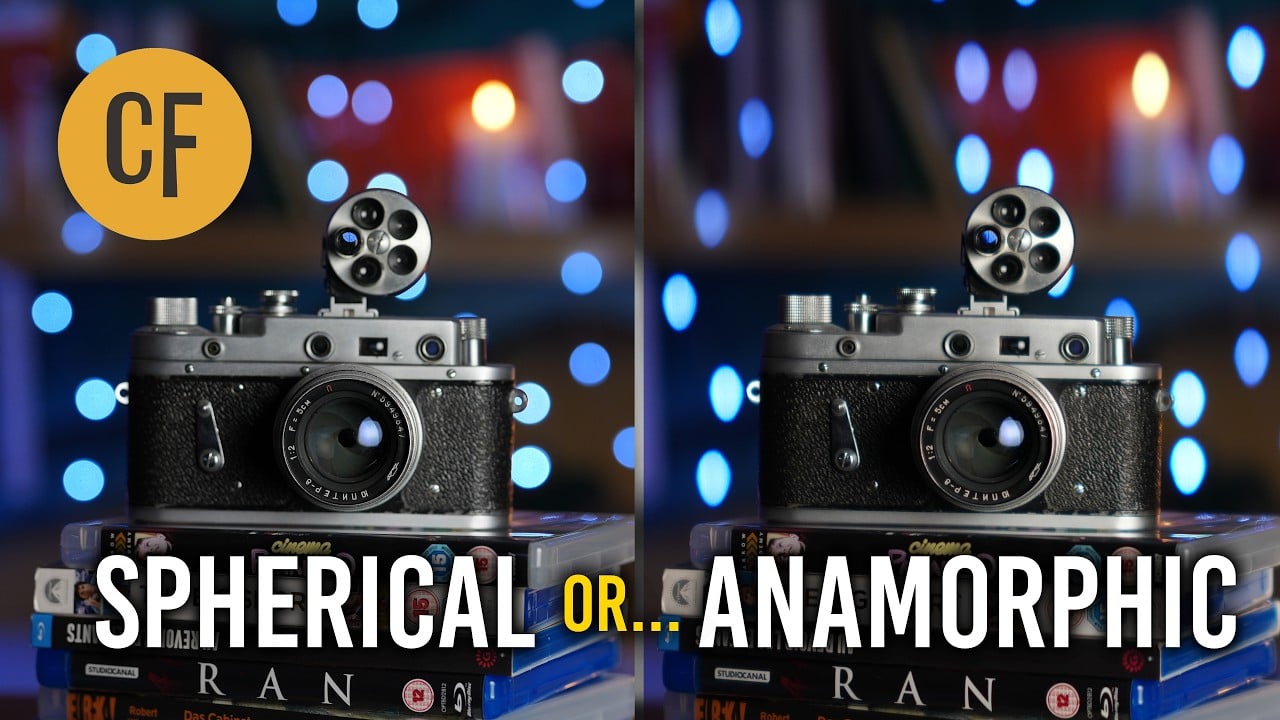
Anamorphic lenses are definitely having a moment. The term seems to be getting thrown around so much it’s almost becoming a bit of a hipster cliché. It’s certainly a bit niche, and unless you regularly work in the cine or broadcasting world, you probably won’t have much need for it.
But now the influencer world seems to have caught up, thinking that using an anamorphic lens will give you instant Hollywood-quality footage. Obviously, that’s not the case, but what exactly is an anamorphic lens, and when should you use one? In this video, Christopher Frost looks at a few Sirui anamorphic lenses and gives us all the information we need.
Anamorphic lenses aren’t actually new, they’ve been around since the 1950s. Their magic lies in their ability to compress a wide horizontal field of view into a standard frame, which can then be expanded later in post-production to create widescreen images.
Unlike cropping the top and bottom of a shot, this method preserves far more image quality. That said, there’s a trade-off: anamorphic lenses often have softer corners due to their complex optics, even in high-end models. But as Christopher points out, the cinematic payoff often outweighs these quirks.
Understanding the Technical Differences
One of the first things Christopher emphasises is the unique focal behaviour of anamorphic lenses. Horizontally, they appear much wider than their nominal focal length. For instance, a 35mm 1.6x anamorphic lens can produce roughly the same horizontal field of view as a 20mm spherical lens. This means you can capture expansive vistas without stepping back, giving you more flexibility in tight spaces.
Depth of field is another key factor. Even a T2.9 anamorphic lens, which lets in roughly the same light as an f/2.8 spherical lens, can produce beautifully shallow backgrounds. This effect enhances the cinematic feel, isolating your subject and creating that “film look” that audiences subconsciously associate with professional movies.
Why Choose Anamorphic Today?
Anamorphic lenses have been steadily gaining popularity, and it’s not just to sound cool. The look of a desqueezed anamorphic shot is distinct. It has oval-shaped specular highlights, dramatic flares, and unusual distortions that give footage a unique personality. Christopher recalls his own studies in film school, where he first noticed how these characteristics shape the language of cinema. For night scenes, the oval highlights and wide flares can be especially striking, transforming streetlights or neon signs into cinematic jewels.
Soft corners, often seen as flaws in still photography, can actually work in your favour for video. They naturally draw the viewer’s eye to the subject in the centre, creating a subtle emphasis without post-production manipulation. If you need sharper corners, stopping down the aperture to f/11 can help, as long as there’s enough light.
Practical Tips for Photographers
If you are thinking of jumping onto the anamorphic bandwagon, consider these pointers:
- Compare Before You Buy: Christopher suggests testing anamorphic lenses alongside standard spherical lenses to see how they alter your framing, depth of field, and flaring.
- Mind Your Aperture: While T2.9 lenses don’t necessarily make your image brighter, controlling aperture is key for managing focus and corner softness.
- Experiment with Light: Take advantage of anamorphic flares and highlights. Position bright light sources creatively to add drama.
- Think Horizontally: Anamorphic lenses give extra horizontal coverage. Use this for wide shots or to create a sense of space in your composition.
- Balance Look and Practicality: Spherical lenses are sharper, often lighter, and brighter. They may be better for run-and-gun shooting or low-light work. Anamorphic lenses are about style and storytelling.
Conclusion
In Christopher’s experience, the choice between anamorphic and spherical lenses comes down to what you want your footage to say. Spherical lenses provide clarity, low distortion, and practicality. Anamorphic lenses, meanwhile, offer a distinctive cinematic aesthetic that has shaped the visual language of film for decades. The good news is that modern options are becoming lighter, more affordable, and even available with autofocus, making them accessible to both seasoned filmmakers and ambitious hobbyists.
Ultimately, Christopher encourages photographers to experiment. Try different lenses, explore their quirks, and find what best expresses your creative vision. Check out the full video below:
See more from DIYPhotography.net on Google
Add DIYPhotography.net as a trusted source. This makes
our stories more likely to appear in your Google Search results.
 Add as a preferred source on Google

Alex Baker
Alex Baker is a portrait and lifestyle driven photographer based in Valencia, Spain. She works on a range of projects from commercial to fine art and has had work featured in publications such as The Daily Mail, Conde Nast Traveller and El Mundo, and has exhibited work across Europe
Related Posts
 This is what it looks like when you use an anamorphic adapter with an anamorphic lens
 “Great Joy” launches full-frame 60mm T2.9 1.33x Anamorphic lens and 1.35x Anamorphic adapter
 Vazen’s new 135mm T2.8 1.8x anamorphic lens completes their full-frame anamorphic trio
 Cooke Brings Anamorphic Cinematic Look to Smaller Mirrorless Rigs With AP3
Join the Discussion
DIYP Comment Policy
Be nice, be on-topic, no personal information or flames.